

Wayne Shorter: How the Future Would Be
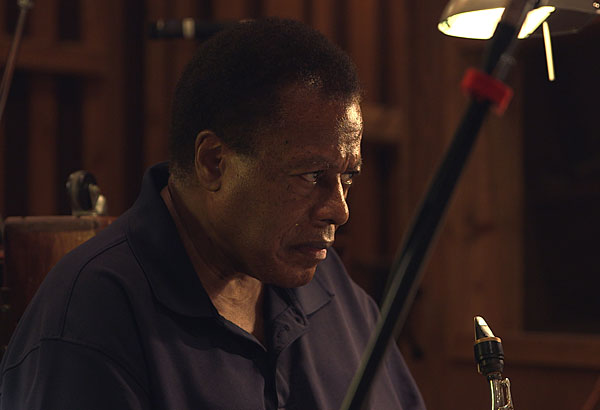
Wayne Shorter is 85. His mind moves at warp speed, a million miles from Art Blakey's Jazz Messengers, who rescued him from Newark, New Jerseyor the Miles Davis's second great quintet, for which the saxophonist wrote the compositions that would establish his genius. Shorter's constellation of classic Blue Note recordings from 196467Night Dreamer, JuJu, The All Seeing Eye, ETC, The Soothsayer, Adam's Apple, Speak No Evil, Schizophreniais now but a dim cluster of stars in his ever-expanding musical galaxy.
Weir Science: A Fare-Thee-Well to Bob Weir

The Grateful Dead ushered in an era of open-minded experimentation and endless touring that paused occasionally but never really expired until its participants did. It follows that saying goodbye to cofounding Grateful Dead guitarist/vocalist Bob Weir, who passed away at age 78 on January 10, 2026, truly signifies the end of an era.
Welcome to the EDM Jungle

In the mid-1990s, record labels were cash-flush and music magazines plentiful. Warner Bros., Capitol, Universal, Mercury, RCA, Arista, Mute, and Astralwerks shuttled US-based music journalists across the Atlantic to cover England's burgeoning Britpop, trip hop, drum and bass, and techno music scenes. The latter three genres were hailed by the press as the "electronic dance music revolution."
What Kind of Music Do You Listen To? (Survey)
[The survey is now closed - thanks to all who participated!]
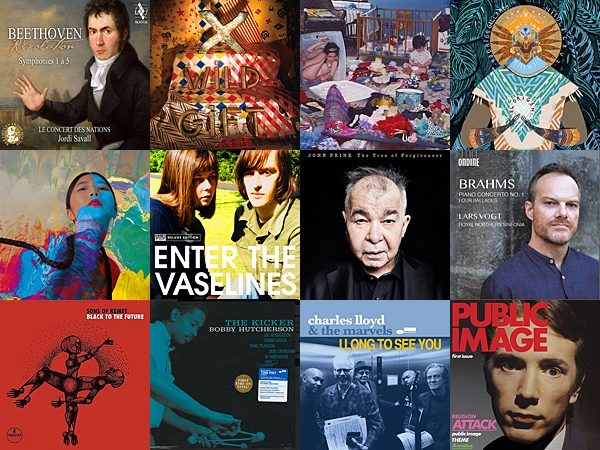
In order to better fulfill our readers' musical desires, we'd like to know what music you prefer to listen to. Please take our survey.
What's Wrong With Classical Record Reviews
I attend at least a couple of dozen classical-music performances each year. I also read reviews of recordings and live performances, and have even dabbled in writing them. Why, then, do I find classical music reviews so frequently annoying?
It's the vocabulary. In these reviews I often see words that I rarely see used elsewhere: scintillating, irresistible, delightful. One venerable reviewer for Gramophone magazine has used the word "beguiling" 100 times in some 900 reviews. When I read such words, I envision the poor music critic writhing in his (occasionally her) listening chair, approaching an involuntary state of aesthetic ecstasy. It isn't a pretty image.
When Britain Went Postal: a Post-Punk Survey

Few would have predicted that the Sex Pistols' first gigin November 1975, at the Saint Martin's School of Art in central Londonwould be the start of an explosion of music. Not many even knew it was happening. That soon changed. Punk would create a space that other bands rushed to fill. Inspired by the DIY ethos and the rejection of the notion that pop music had to be a 30-minute conceptual track on the lives of elves, punk was just grab an instrument and form a band.
Whole Lotta Horns for the Holidays

In order to get in the right mindset for the Dallas Wind Symphony's first ever Christmas CD, Horns for the Holidays, from Reference Recordings and recording engineer Keith O. Johnson, you have to understand something about Dallas.
Willie Nile: Places He Has Never Been
Before I even turn on the recorder, Willie Nile is telling me his theory of how the granite under Manhattan Island conducts electricity, which accounts for the perceptible charge that many people feel makes New York City so special. It's also what draws artists like flies, none more passionate than singer-songwriter Nile, who's personally contributed a few volts during his years in NYC.
Willie Nile: the Bard on Bleecker
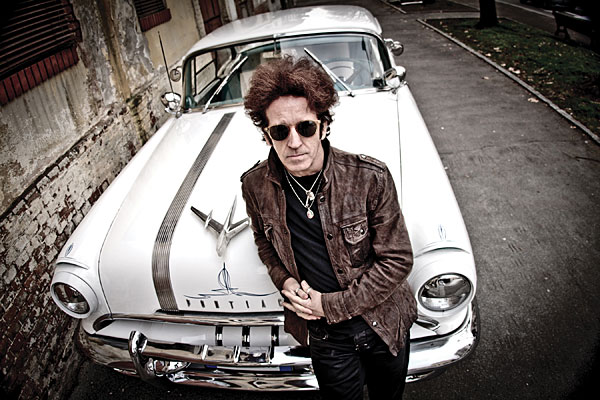
"You see that empty space?" says Willie Nile, motioning toward a lot between buildings on Bleecker Street, an impish Irish grin flickering across his face. "They haven't built anything there yet because Anna Wintour lives around the corner. And that red-brick house over there, the one with the white door? That's where Dylan lived. I used to see Bob around the neighborhood now and again."
Wilson Audiophile Recordings Return
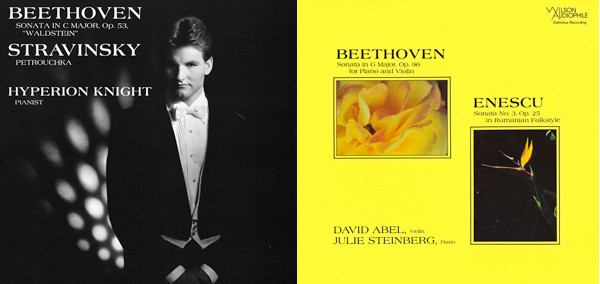
Many of David Wilson's highly acclaimed, long out-of-print recordings are poised to make old and new generations of audiophiles very happy. On August 1, the first two of a selected batch of Wilson Audiophile Recordings will return to circulation as high-resolution (176.4kHz/24-bit), CD-quality, and MP3 downloads. Distributed by Naxos via a host of mass-market and hi-res digital music stores, including Chandos' "The Classical Shoppe," eClassical24bit, HDMusic, HDTracks, HiResAudio, Linn Records, Onkyo, and Qobuz24bit, the first titles in the series are Recital, James B. Welch's disc of four centuries of organ music, and Beethoven and Enescu Sonatas, performed by violinist David Abel and pianist Julie Steinberg, this magazine's "Recording of the Month" for February 1984.