

Music in the Round #36
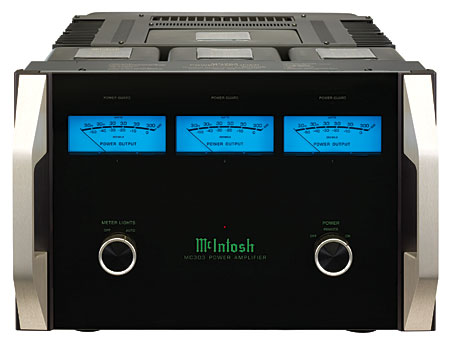
The first time I ever heard stereo sound, it was in a shop on Manhattan's Radio Row. In addition to the Studer staggered-head tape deck, the system consisted of pairs of McIntosh C8 preamps, MC60 power amps, and monster Bozak B-310 speakers. I can still picture the room and almost hear the sound. I was then an impecunious high-schooler, and while I always strived to buy the best equipment I could afford, I unfortunately was never able to own any of these iconic products. However, when I saw McIntosh's new MC303 three-channel power amp glowing brightly on silent display at the 2008 CEDIA Expo, a light bulb went on over my head: I'd been assessing a series of three-channel and monoblock amps, and the MC303 would fit nicely into my New York City system.
Music in the Round #51
As I write this, in early August, the global economy is in flux and the stock market gyrates, seeming in stark contrast with the gleaming, luxurious audio components that surround me. Perhaps there is some prescience in my rising interest in reasonably priced, high-performance products, as exemplified by the Oppo Digital BDP-95 universal Blu-ray player, which I reviewed in this column in September. Surely there must be other products that provide truly excellent sound at prices strikingly lower than expected.
Music in the Round #68
Power amplifiers are unglamorous but essential. In theory, they have only one task. But, according to audio sage Yogi Berra, "in theory, theory and practice are the same. In practice, they are not." Amplifiers must take a voltage input signal and provide an output of somewhat higher voltage but of substantially higher current, the product of which is power. The task is complex in that this output must be applied to electrical interfaces whose characteristics vary widely from speaker to speakeracross the audioband and, for some, even at different power levels. There are no control mechanisms or feedback signals to help. The power amp must just stand and deliver.
Music in the Round #83: ATI & Monoprice 3-Channel Amplifiers
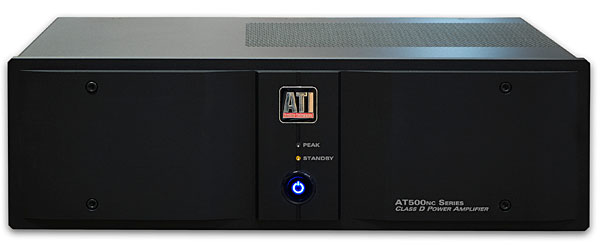
The power-amp saga continues. For months, I've been plowing through the market, searching for something to drive my three front speakers. (I use a two-channel amp for the surrounds.) It can be a three-channel amp or three monoblocksit just has to sound great with my speakers, and be light enough that I can lift it by myself when I need to rearrange my system. I'd finally settled on Classé's Sigma Monos for their transparency, and because I can manage their weight, one at a time. At the CEDIA Expo in September 2016, I saw two more candidates worthy of consideration. Review samples of both arrived here almost simultaneously.
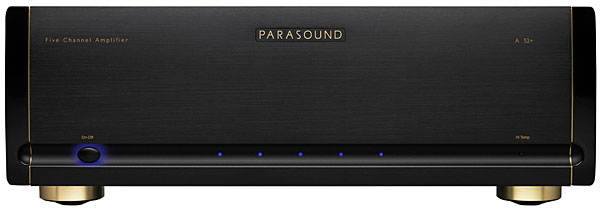
Music in the Round #91: Parasound Halo A 52+
For some years now, I've tried to free myself from playing physical media and get all my music organized on a server. It's not that I don't enjoy handling and playing discs, but it's almost impossible to keep track of them. When my collection was only a thousand or two LPs, I felt I could remember each one individually. But now I have several times that many silver discs, and I know I can't.
Music in the Round #97: Hegel C53 and DSPeaker Anti-Mode X4
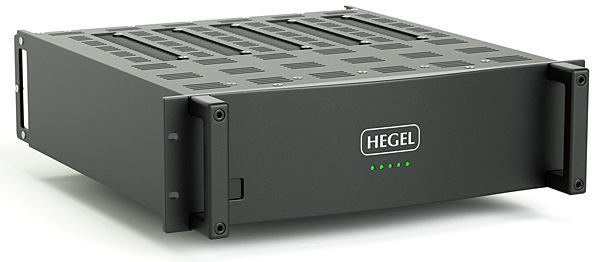
Sometime near the turn of this century, I wandered into a demo room at a Consumer Electronics Show and discovered, in the exhibit of a company I'd never heard of, an integrated amplifier that sounded clean and refreshing. It was the only product Hegel Music Systems displayed at that CES, and I don't recall its name or the associated equipment, but I've always remembered that model's striking appearance and impressive sound quality.
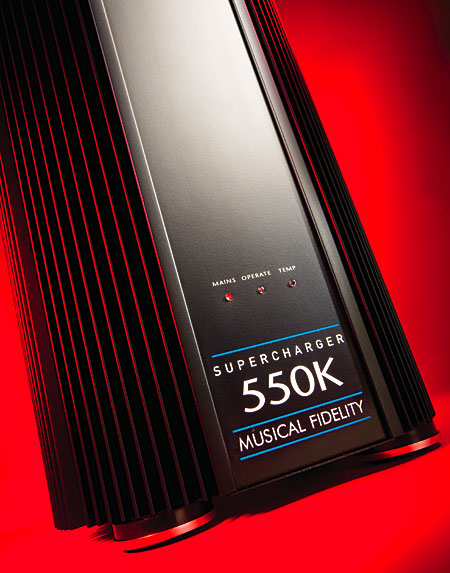
Musical Fidelity 550K Supercharger monoblock power amplifier
How much amplifier power do you need? Most audiophiles figure a maximum of a few hundred watts per channel—beyond that, you're wasting your money or showing off. Others think that anything more than a few watts will mess up an amplifier's musical coherence or "purity," so they stop there and find uncommonly sensitive speakers, usually compression horns with cone woofers.
Musical Fidelity 750K Supercharger monoblock power amplifier
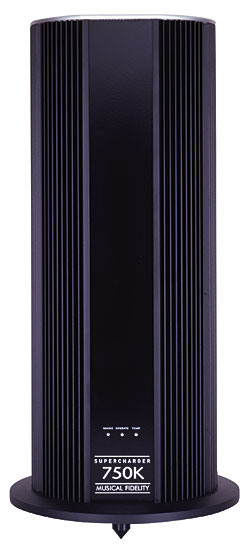
Musical Fidelity's "Supercharger" concept is simple, which is perhaps why no one had thought of it before: If you love the sound of your low-powered amplifier but your speakers are insensitive, or you just need more loudness, you insert the high-power Supercharger amplifier between your low-powered amp and speakers. The Supercharger loads the small amplifier with an easy-to-drive 50 ohms, and, in theory, has so little sonic signature itself that it passes on the sonic signature of the small amp unchanged, but louder.
Musical Fidelity AMS100 power amplifier
"That's just silly on so many counts, Antony."
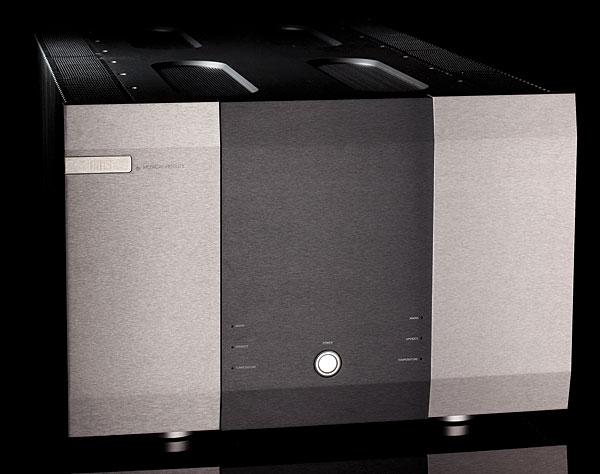
I was talking last winter to Musical Fidelity's Antony Michaelson, who had been enthusing about his forthcoming stereo amplifier, the AMS100. It would be physically enormousalmost a yard deepand commensurately heavy at 220 lbs. Despite its bulk, its maximum rated output would be just 100Wpc into 8 ohms. It would also be expensive, at $19,999. And to cock a snoot at environmentalists and their concerns, the AMS100's output stage would be biased into class-A up to its rated 8 ohm power, meaning that, even when not playing music, it will draw around 10 amps from a typical US wall supply of 120V. This also means that it will run very hot, making the amplifier impracticable for summer use in homes without central air-conditioning. Like mine.
Musical Fidelity kW Hybrid line preamplifier & kW750 power amplifier
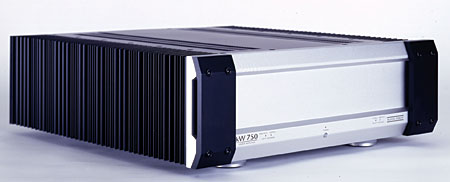
Not every audiophile needs an amplifier powerful enough to tax a small town's power grid while simultaneously draining his or her bank account. So, having quickly sold out of its ultra-limited-edition, extravagantly powered and priced combo of kWp preamplifier ($14,995) and kW power amp ($27,995) that I reviewed">http://www.stereophile.com/tubepoweramps/104mf">reviewed in January 2004, Musical Fidelity (footnote 1) set about capitalizing on the enthusiastic reviews earned by those giants with less expensive, less powerful, "real-world" replacements.