

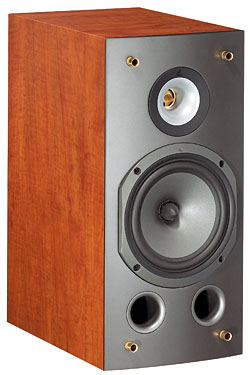
Triangle Esprit Comete Ex loudspeaker
The first reference I saw to the Count of Saint Germain was in Foucault's Pendulum, Umberto Eco's dense novel about a man whose paranoid delusions become so overpoweringly real that, by the end of the book, the reader is left wondering whether the protagonist's enemies actually exist. That their number should include Saint Germain was a nice touch: Part cabalist, part confidence man, the real-life Count was thought by some to be immortal (in Pendulum he's pushing 300), and while Casanova wrote vividly of meeting Saint Germain at a dinner party in 1757, so did the English writer and pederast C.W. Leadbetter—in 1926. Like Aleister Crowley, the Count of Saint Germain can be seen peering over the shoulders of countless parlor (but not parleur, or even haut-parleur) occultists: He keeps popping up all over the place.
Two Follow-Up Reviews: Dynaudio Focus 10 loudspeaker & Innuos Statement Music Server
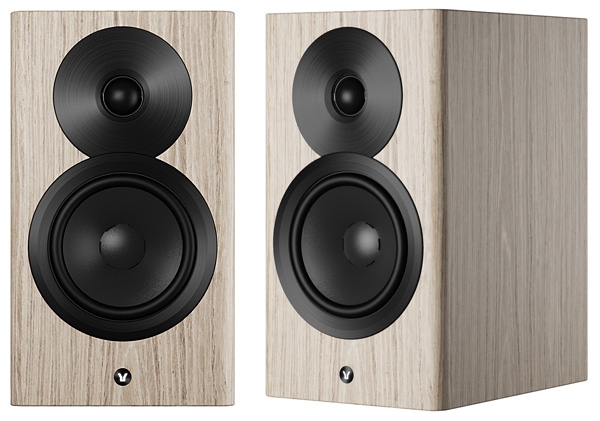
The November 2023 issue of Stereophile included follow-up reviews of two products: the Dynaudio Focus 10 active loudspeaker and the Innuos Statement Music Server/Streamer.
Usher Audio Technology Be-718 loudspeaker
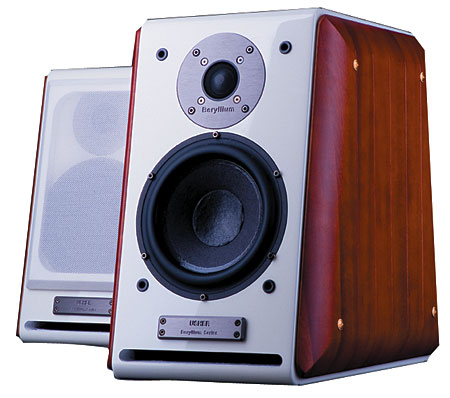
When I attended the 2006">http://www.stereophile.com/news/120406language">2006 GuangZhou Hi-Fi Show in China, it seemed as though most of the Asian-built loudspeakers I saw were huge, astonishingly efficient, and had horns. When I walked into Usher Audio Technology's room, however, Paul Chen was making music happen with the Usher S-520s ($500/pair).
Usher Audio Technology Compass X-719 loudspeaker
I love attending Stereophile's Home Entertainment shows. I get to check out the latest gear, hobnob with manufacturers and writer colleagues, hear some live music, and play a little jazz with John Atkinson, Zan Stewart, and Immedia's Allen Perkins. Unfortunately, work commitments at my day job meant I couldn't attend HE2003, in San Francisco, so I directed my team of Stereophile scouts to find me some hot new budget speakers. Robert Deutsch was quickest to respond, the week following the show: "Bob, you've got to check out these new speakers from Usher Audio in Taiwan! They have a number of models within your budget." One phone call later, and a $1000/pair of Compass X-719 bookshelf speakers was on its way to me.
Usher Audio Technology S-520 loudspeaker
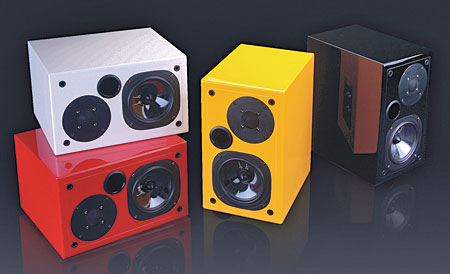
The last few years at our annual Home Entertainment Show, many readers have come up to me and asked: "How do you select which speakers to review?" In my case, most candidates are either new products that have impressed me when demonstrated at our HE Shows, or new products from manufacturers whose designs have impressed me in the past. Occasionally, editor John Atkinson gets wind of a speaker and asks if I'd like to review it. But once in a while, a manufacturer reads a rave review of a competing product that makes his or her blood boil.
Vanatoo Transparent One Encore powered loudspeaker system
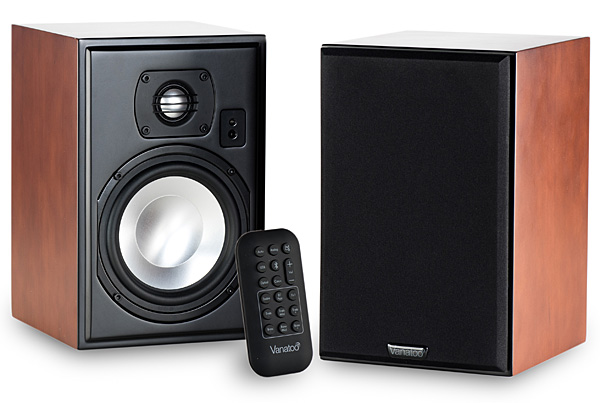
Has Serinus been demoted? You might well ask. This month, instead of reviewing a $58,000 stereo amplifier, I'm tackling a $599 powered loudspeaker system.
Truth be told, I'm always on the lookout for products that deliver outstanding sound at bargain prices. And since I maintain in my living room a modestly priced system built around powered speakersthis in addition to the far costlier system in my dedicated listening roomit's an easy fit for me to evaluate low-priced products in a real-world context.
Velodyne DF-661 loudspeaker
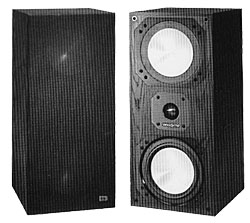 Silicon Valleybased Velodyne was founded in 1983 to develop a range of subwoofers that used servo-control to reduce non-linear distortion to vanishingly small levels. They succeeded in this goal to the extent that Velodyne is now perhaps the best-known subwoofer company in the US, currently employing 65 people. At the 1994 Winter CES, Velodyne launched the subject of this review: the DF-661 ($1800$2600/pair), their first full-range loudspeaker (the "DF" stands for "Distortion-Free").
The three-way DF-661 was designed from the ground up to continue the Velodyne tradition of ultra-low distortion. "We had developed the technology and resources to attack distortion elsewhere in the audio chain," wrote company President David Hall, "and started with the premise that, by definition...distortion in loudspeakers is wrong." (His italics.) "We went to the laboratory for a solution, with the living room as the ultimate goal." Velodyne calls this attention to technological detail "The Silicon Valley approach to sound."
Silicon Valleybased Velodyne was founded in 1983 to develop a range of subwoofers that used servo-control to reduce non-linear distortion to vanishingly small levels. They succeeded in this goal to the extent that Velodyne is now perhaps the best-known subwoofer company in the US, currently employing 65 people. At the 1994 Winter CES, Velodyne launched the subject of this review: the DF-661 ($1800$2600/pair), their first full-range loudspeaker (the "DF" stands for "Distortion-Free").
The three-way DF-661 was designed from the ground up to continue the Velodyne tradition of ultra-low distortion. "We had developed the technology and resources to attack distortion elsewhere in the audio chain," wrote company President David Hall, "and started with the premise that, by definition...distortion in loudspeakers is wrong." (His italics.) "We went to the laboratory for a solution, with the living room as the ultimate goal." Velodyne calls this attention to technological detail "The Silicon Valley approach to sound."Vivid Audio B1 loudspeaker
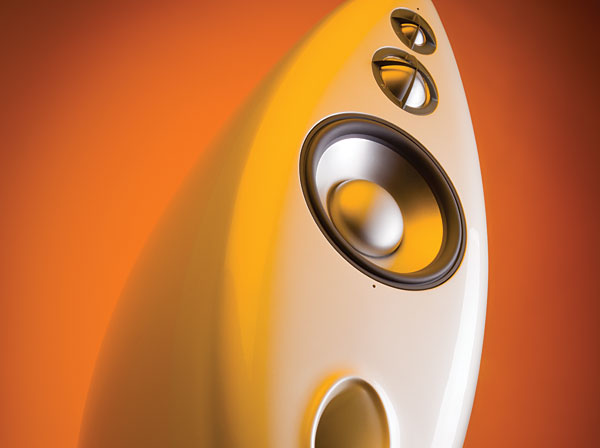
When John Marks wrote about the Vivid B1 in his column, "The Fifth Element," in February 2011, he was so excited about the sound he was getting that he asked me to drive up to Rhode Island to give a listen for myself. Not only was I impressed by what I heard at John's, I decided to do a full review of the speaker.
Vivid Kaya S12 loudspeaker
Back when Steve Urkel (in the sitcom Family Matters, portrayed by Jaleel White) was showing everybody the best way to dress (and do property damage), my friend Ken Kessler, the high-level audio scribe at Hi-Fi News & Record Review, explained to me the secret of how to write a proper audio review: "Herb, the secret of writing an effective review is not to lose the reader in the middle." I took that to mean, put all the technological meatand some tawdry storiesin the product description. Then sneak some spicy double entendre into the setup part.
Unfortunately, that strategy hasn't worked for me.
Westlake Audio Lc5.75F loudspeaker
What's a pro audio company doing at CES?