

Wharfedale Linton Heritage loudspeaker
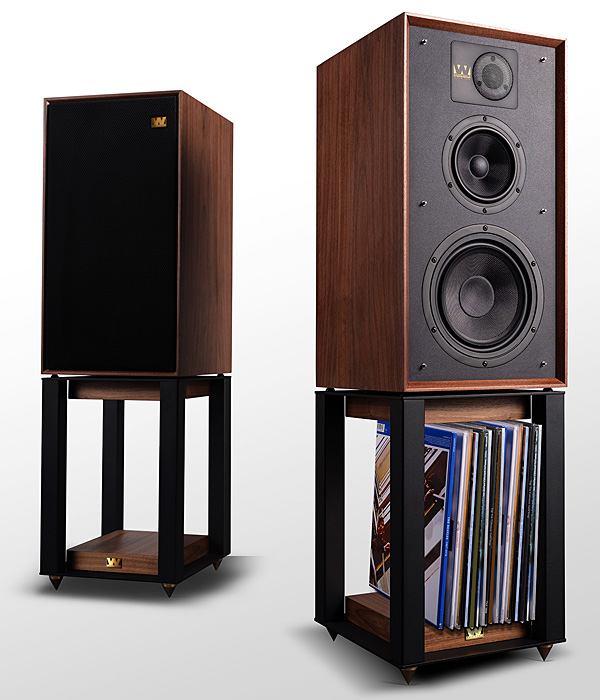
A dale is a broad valley. The Yorkshire Dales are broad, picturesque valleys in Northern England, mostly named for the rivers or streams that run through them. One of these is Wharfedale, which is the upper valley of the River Wharfeand which was the original home of British firm Wharfedale Wireless Works, founded in 1932 by Gilbert Briggs.
Wilson Audio Specialties CUB loudspeaker
Scratch an audiophile and, chances are, you'll find a closet Wilson Audio fan. The Wilson">http://www.stereophile.com/loudspeakerreviews/477">Wilson WATT/Puppy would probably make almost anyone's list of the most significant high-end loudspeaker designs. David Wilson first built his reputation with the custom-built WAMM loudspeaker—a monumental piece invariably included with products like the Infinity IRS, Genesis I, and Apogee Grand when the world's most awesome loudspeakers are discussed. But it was the WATT, followed by the WATT/Puppy—the latter now several">http://www.stereophile.com/loudspeakerreviews/920">several generations improved over the original design—that really put the company on the high-end audio map.
Wilson Audio Specialties Duette loudspeaker
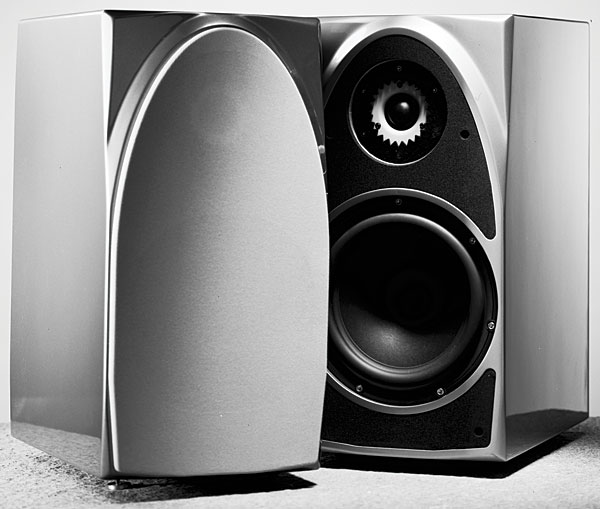
I had had it in the back of my mind for some time to try to hear the Wilson Duette, if only because celebrated classical recording engineer Tony Faulkner had, some time ago, shared with me his opinion that the Duette's simpler crossover made it the most coherent speaker in Wilson's line. Faulkner told me that when a cramped recording venue makes it impossible for him to use his favorite Quad electrostatic speakers for monitoring, he uses Duettes.
Wilson Audio Specialties Duette Series 2 loudspeaker
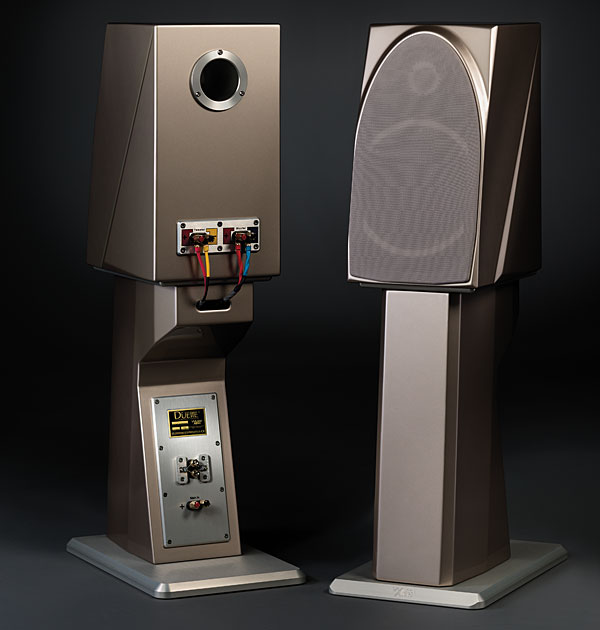
I've seen how most manufacturers work. They start out by making products they believe inproducts consumers are likely to love. But after a while they begin listening to their dealers and distributors and marketing consultants, most of whom are inclined to say things like: "You need to make a six-figure turntable, to compete with all the other six-figure turntables." "You need to make a $1500 amplifier, to fill that price gap in your product line." "You need to make a small, stand-mounted loudspeaker."
Wilson Benesch Square One Series 2 loudspeaker
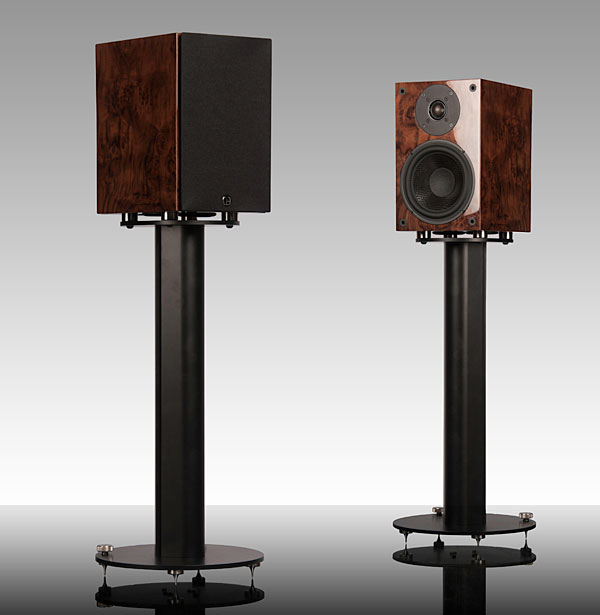
For many years, I've been a fan of the loudspeakers made by the British audio company Wilson Benesch. Their speakers definitely have their own personality. I first reviewed a Wilson Benesch loudspeaker while a columnist and reviewer for The Abso!ute Sound, and how that came about was amusing. As WB's then US importer was packing up his exhibit at the 1999 Consumer Electronics Show, by mistake he put labels with my address on them on the boxes containing the show samples of WB's revolutionary A.C.T. One, the first loudspeaker to have a curved carbon-fiber enclosure, a sloping top, and a baffle of cut steel. And a very nice late Christmas present they were, too.
Wilson WATT loudspeaker
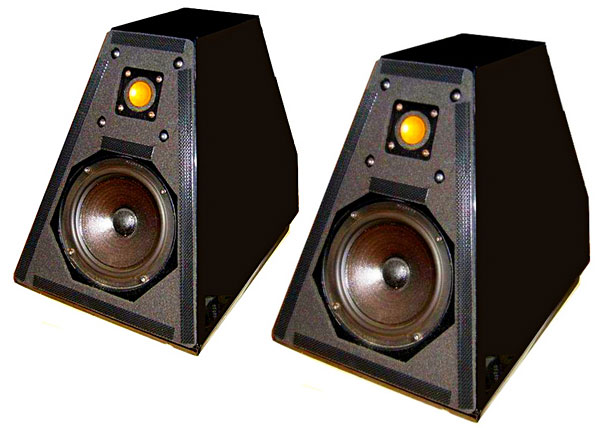
Landmarks in speaker design have been few and far between. There are a few certain contenders: in the UK, the original Quad Electrostatic and the ESL-63 qualify, while the Celestion SL600 scored a big point for all small monitors; the Spendor BC1 changed forever the notion that cone speakers were always colored and that big boxes were essential for good sound. In the States, Apogee has taught us much with their surprising mid-treble ribbon-based designs. Other technologies have shown promise but have not achieved real commercial success.
Yamaha NS-1000 Loudspeaker
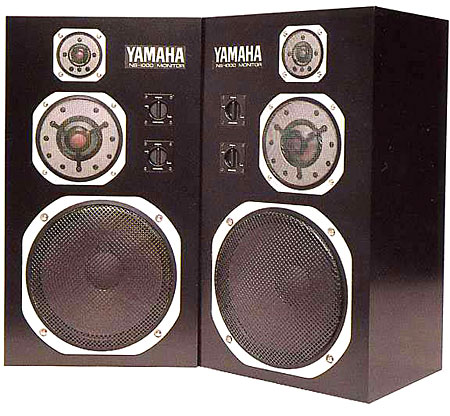
Every engineer has known for years that, while beryllium has excellent physical qualities for use as a speaker radiatorlight weight, rigidity, and a remarkable degree of internal dampingit is not usable as such because it cannot be stamped out like most other materials. It will not stretch, and any attempt to shape it simply causes it to split.