

Sony ES SS-M9 loudspeaker
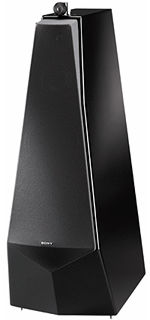
Conventional wisdom has it that large Japanese corporations are insular. But when it comes to audio, Sony bucks the conventional wisdom as much as it does in pretty much everything it does. In Europe, the company has long had an excellent reputation for producing loudspeakers using local design talent, so I wasn't surprised to see Sony launching a line of American-designed and -made speakers at Stereophile's 1994 High-End Hi-Fi Show in Miami. Stereophile writer Barry Willis came away from that Show raving about the Sonys: "What we heard was gorgeous, absolutely beautiful: rich, warm, and deep, with a seductive midrange, a shimmering, delicate, grain-free top-end, and a soundstage to die for," he wrote about the sound of the three-way SS-M7 in Miami (footnote 1), 1 concluding that "WATT/Puppy performance is now available at Vandersteen prices in an American-made loudspeaker sporting a Japanese badge."
Sony ES SS-M9ED loudspeaker
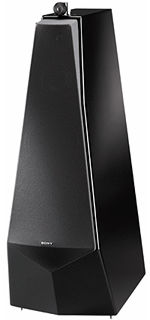
The occasion was the 1999 Consumer Electronics Show, and I had sought out the Sony suite at Bally's—the word in the Las Vegas bars where audio journalists hung out was that Sony was demonstrating the production version of their SCD-1">http://www.stereophile.com//digitalsourcereviews/180/">SCD-1 Super Audio CD player. I was glad I'd made the trek along the Strip: As I reported in the May 1999 Stereophile, the sound of a DMP recording—of unaccompanied choral music recorded and mixed in DSD by Tom Jung—was breathtaking, I felt, with an exquisite sense of space. It was definitely the best sound at the CES.
Sony SS-AR1 loudspeaker
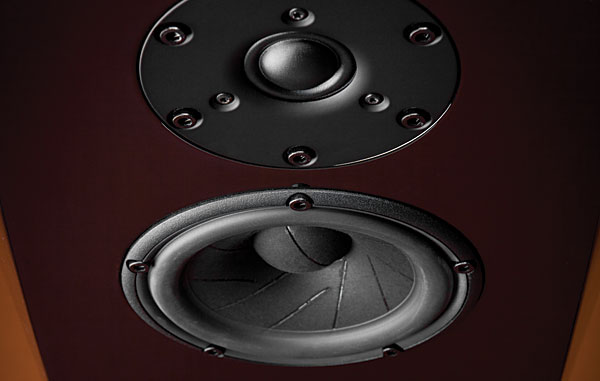
Every few years, it seems, Sony offers a statement product. Sometimes they do it to define a new product categorythe SCD-1 introduced to the world the SACD/CD player. Sometimes they do it because they can, as with the outstanding ES SS-M9 and ES SS-M9ED loudspeakers, enthusiastically reviewed by John Atkinson in Stereophile in September 1996 and August 2001, respectively. So when I heard that Sony would introduce a special new speaker at a "by invitation only" event at the 2011 Consumer Electronics Show last January, my interest was piqued. I've always kicked myself for not buying a pair of ES SS-M9s ($3500) when I could have. The ES SS-M9EDs were even better, said JAand, at $16,000/pair, a lot more expensive. Now, a decade later, Sony has decided to make another "statement."
Sony SS-AR2 loudspeaker
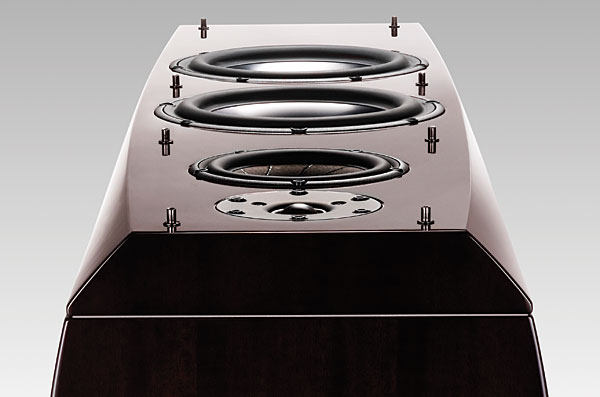
A highlight for me of Stereophile's 2011 equipment reviews was Kalman Rubinson's report on Sony's SS-AR1 loudspeaker in July. I had been impressed by this unassuming-looking floorstander at the 2009 Rocky Mountain Audio Fest, when, courtesy Ray Kimber, I had used a pair for my "Loudness Wars" demonstrationand was equally impressed when I used another pair for a dem of my recordings at Massachusetts retailer Goodwin's High End, in summer 2011. The SS-AR1 costs $27,000/pair and combines a full frequency range with an uncolored, detailed midrange, sweet-balanced highs, and excellent dynamics. "The Sony SS-AR1 is an impressive loudspeaker," summed up Dr. Kal; "it brings the analytical capabilities of studio monitoring to the listening room." So when I learned that Sony had introduced a smaller, less-expensive version, the SS-AR2 ($20,000/pair), it took me less than the proverbial New York minute to request a pair for review.
Sony SS-NA2ES loudspeaker
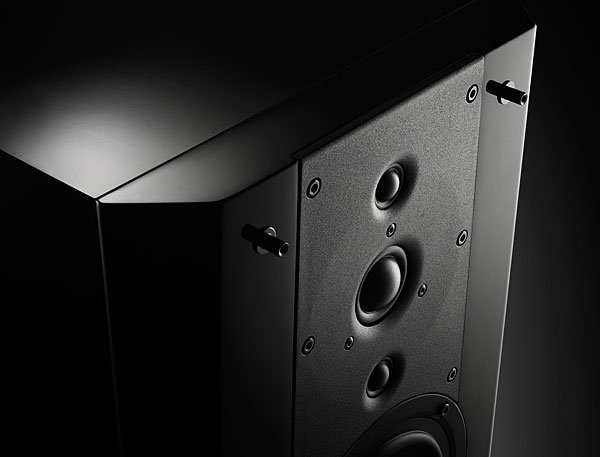
The door to a professional reviewer's listening room is one that revolves: As one product leaves, another enters. After a while, it becomes difficult to remember exactly when you auditioned any specific component. But some products stick in your memoryyou fondly remember the time you spent with them, and wish they hadn't departed quite so quickly. With loudspeakers, I recall a few such: Revel's Ultima Salon2 ($22,000, footnote 1), MBL's 111B ($17,000), Dynaudio's Confidence C4 ($16,000), Sonus Faber's Amati Futura ($36,000), Vivid's B1 ($14,990), TAD's Compact Reference CR1 ($40,600 with stands), and even the much less expensive Harbeth P3ESR ($2195$2395) and KEF LS50 ($1500). Among the most recently reviewed of those fondly remembered speakers is Sony's SS-AR2ES ($20,000).
Sound-Lab A-1 electrostatic loudspeaker
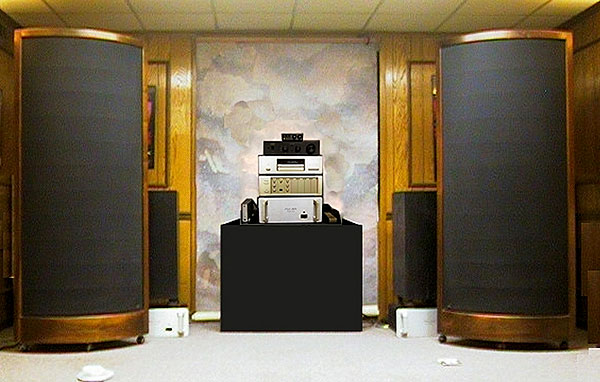
Designer Dr. Roger West got his first taste of electrostatic transducers many years ago during a stint with Janszen (remember the Janszen tweeter?). To realize the potential of the full-range electrostatic loudspeaker (ESL), he and Dr. Dale Ream formed a new company dedicated to ESL research and development. West describes this company, Sound-Lab Corp., as "the electrostatic speaker specialists."
Sound-Lab A-3 loudspeaker
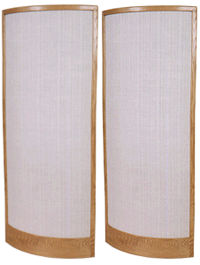
The Sound-Lab electrostatic loudspeakers are legendary. Many serious audiophiles have heard of them, and rumors of their existence abound in audio circles. But, like gnomes, UFOs, and poltergeists, Sound-Lab loudspeakers are sufficiently hard to find that it is sometimes difficult to prove to skeptics that they exist at all. Well, I can now report that they do. As proof of this contention, I can point to the two which are actually occupying solid, tangible space in my listening room at this very moment. I have even taken a photo of them, which will be published along with this report if they leave any sort of an image on the film emulsion. (Many such apparitions do not!)
Spendor A7 loudspeaker
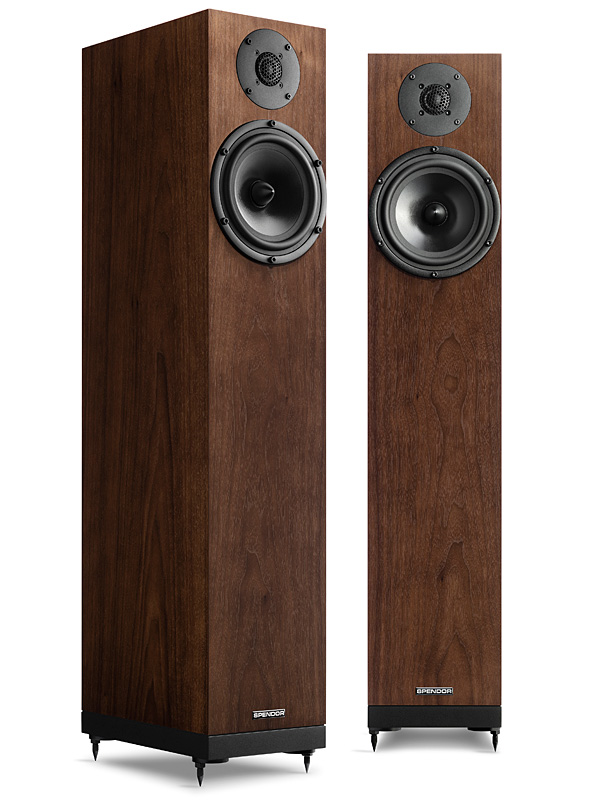
As Stereophile's lone New York City bachelor, I sometimes search for amore on Internet dating sites. One such encounter led me to Park Slope, Brooklyn, where I met a woman who, I soon learned, was at the top of the food chain of Manhattan's gold-encrusted arts community.
The single child of an upper-Westchester family, Jane So (not her real name) assists her employer in curating fine art for the city's premier galleries and museums. Her job also includes gifting her employer's millions to charitable organizations and the like. But in her off hours, when the boss isn't watching, Jane enjoys a bit of kink. As she told me over dinner, "Ken, I'm not looking for anything serious. I have several men who visit me during the week."
It dawned on me: I had stumbled into New York's subterranean sex world.
Spendor D7 loudspeaker
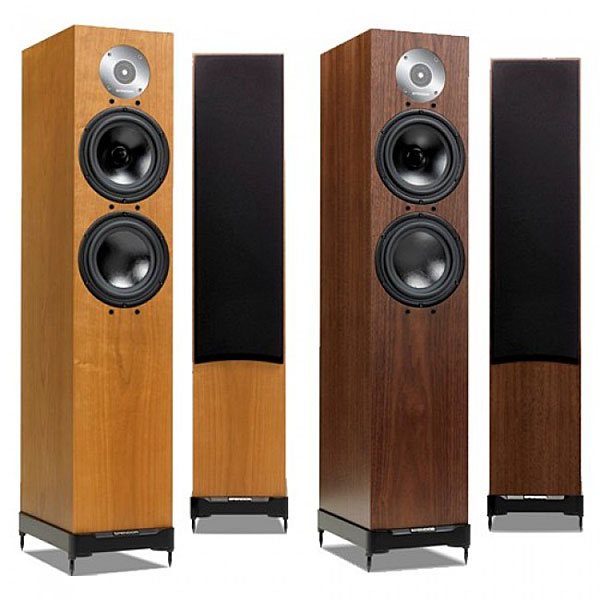
Hi-fi firms have begun in garages. The English Spendor company was started in a bathtub. Or was it a kitchen sink?
By days in the late 1960s and early 1970s, Spencer Hughes worked as part of the BBC's loudspeaker research team. Among other accomplishments, he helped develop the 5" midrange/woofer for the fabled LS3/5A loudspeaker.
Spendor S5e loudspeaker
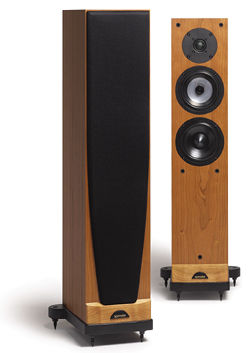
I'm never more conservative than when the subject turns to home audio. And at the end of the day, I want little more than to preserve the hobby's finest institutions: Alnico magnets. Parchment cones. Mono. Sonata form. Ballads that actually tell stories. Give me tubes. Give me vinyl. Give me thin-walled hardwood cabinets, obsolete tweeters, and handmade polypropylene woofers. Give me the Spendor BC1.