

Rockport Technologies Avior II loudspeaker
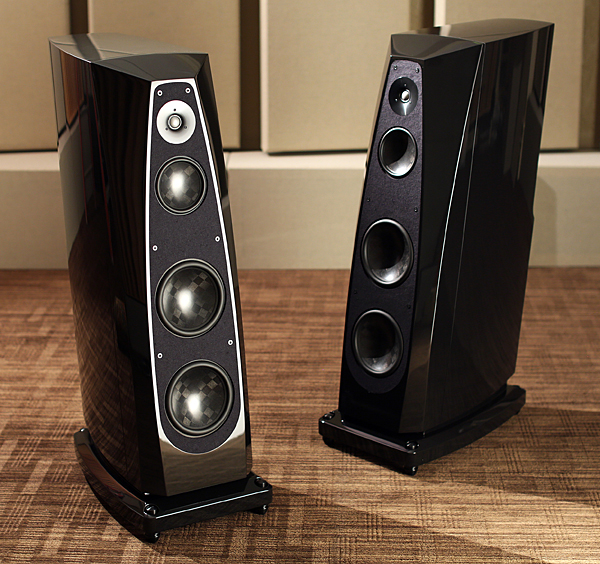
Following my review of the floorstanding Magico S5 Mk.II last February, I spent some time with two-way stand-mounted speakers from Aerial Acoustics, Bowers & Wilkins, and Dynaudio. As much as I appreciated the small speakers' virtues, I found myself missing the big Magico's bass extension and ability to play loud; my next loudspeaker review, therefore, would be of another floorstander.
It's been a while since we published a review of a Rockport Technologies loudspeaker.
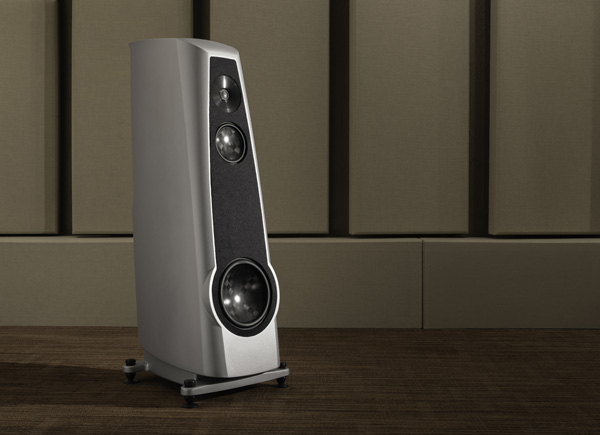
Rockport Technologies Lynx loudspeaker
Music often brings me joy, awe, and, if I'm lucky, something close to transcendence, but it's not my only route there. A few years ago, on a sunny January day in Madrid's Prado museum, I went looking for Hieronymus Bosch's The Garden of Earthly Delights.
Rockport Technologies Merak II loudspeaker & Sheritan II subwoofer
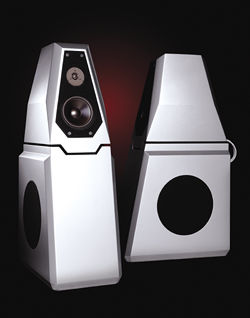
No one has ever accused Rockport Technologies' Andy Payor of under-engineering a product, and this set of gleaming black beauties is no exception. The system is available in two configurations: as the two-way Merak II for $19,500/pair, including sturdy custom cradle-stands with integrated crossover; and as the Merak II/Sheritan II, a three-way, two-box floorstander that, to afford them at $29,500, will reduce some to living in the speakers' shipping crates. You could do worse for housing than checking into the Sheritan Rockport: The wooden crates are almost exquisitely finished.
RSL Speedscreen II loudspeaker
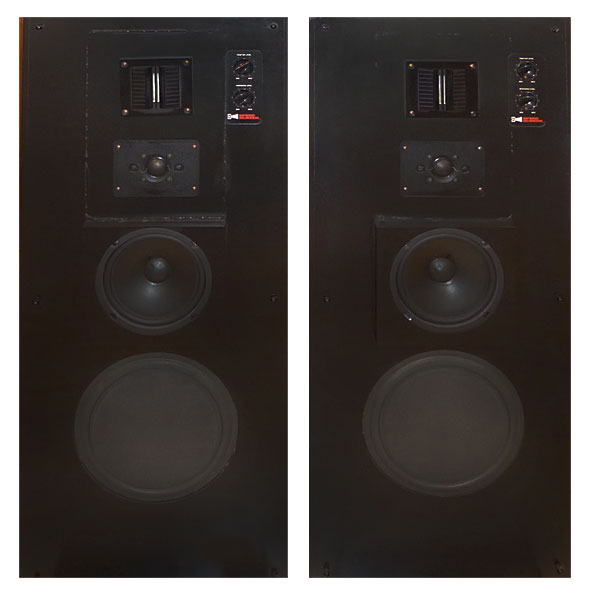
RSL is the house brand of a California chain of retail stores, Rogersound Labs, that is part-owned by the leader of the RSL loudspeaker-design team, one Howard Rodgers. (Rogersound Labs also owns the Upscale Audio high-end store in north Los Angeles.) The range offered by RSL is unbelievably wide, with models addressing just about every market niche and price category. The Speedscreen II, however, is Howard's attempt to produce a true high-end loudspeaker at an affordable price. To the casual observer, the Speedscreen ($898/pair) appears to be a planar design; however, its shallow, braced enclosure houses moving-coil drive-units, and is a result of Howard's attempts to minimize the effect of cabinet resonances. "I always thought deep, narrow enclosures sound 'boxy'," said Howard when he visited Santa Fe last September, "and the wide but shallow cabinet seemed to be the best way to get a large internal volume without 'boxiness'."
Ruark Templar loudspeaker
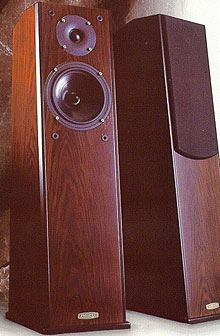
As I trundled the WATT/Puppyshttp://www.stereophile.com/standloudspeakers/477">WATT/Puppys; off to the Stereophile laboratory complex for our test procedures (see my review in the last issue), I idly wondered to myself, "Gee, what am I going to do for an encore?" Visions of exotic butterfly-like horns danced in my head (nope, J-10 Scull gets those babies). I was tantalized by the call of ambitiously designed behemoths (Major Tom gets those, he's got the room for 'em). Maybe some jewel-like, state-of-the-art minimonitors? (JA glommed 'em—editor's prerogative, y'know.) So what does that leave me?
Scientific Fidelity Tesla loudspeaker
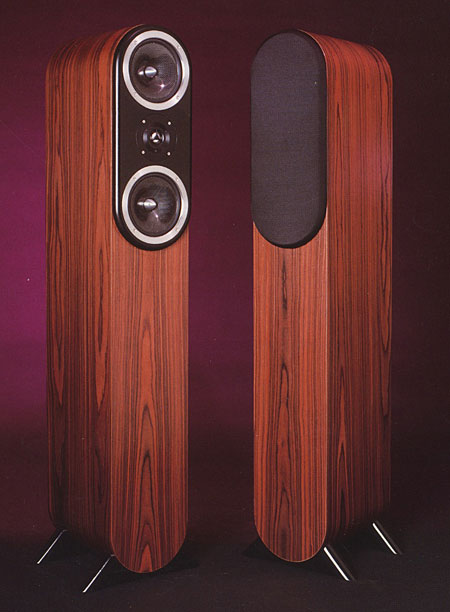
Foreword by Sam Tellig: I wanted to like the Sci Fi Teslas. I originally heard these speakers at Dave Wolf's store in New Canaan, Connecticut—no longer in business, alas.
Shahinian Diapason loudspeaker system
Richard Shahinian has been offering loudspeakers to music lovers for more than 15 years. I use the word "offering" here in its strictest sense, because Dick has never "sold" his products—by pushing them. Indeed, he is probably one of the worst self-promoters in the business. If we think of "soft sell" in the usual context of laid-back and low-pressure, then Shahinian's approach would have to be called "mushy sell."
Silent Pound Bloom loudspeaker
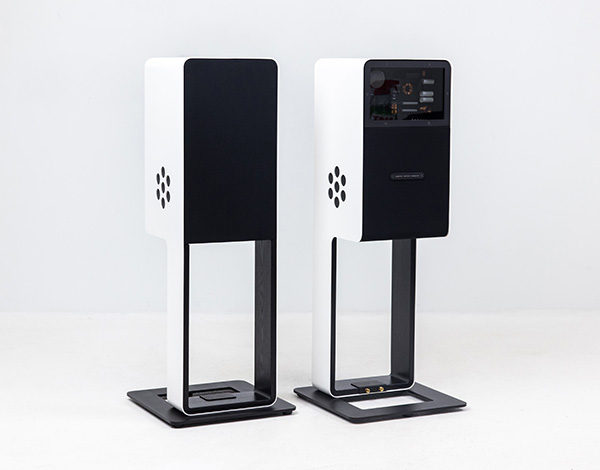
Imagine being a Michelin-star–level chef, but your food is delivered via carrier pigeon in the middle of winter. The inherent compromise must be infuriating, exacerbated by complaints from customers displeased with the food's presentation, temperature, and guano topping. Now consider speaker designers . . .
Silverline Audio Technology Prelude loudspeaker
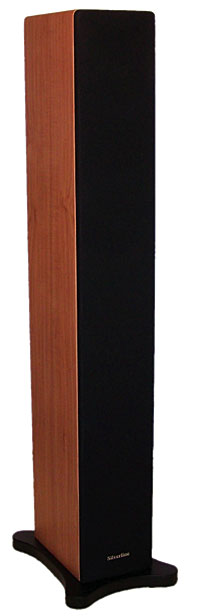
It must be difficult for makers of audio equipment to decide how to best exhibit their products at events such as the annual Consumer Electronics Show. If you're doing a demo, you want it to impress audio journalists and potential dealers, and sometimes just playing music is not enough: you need something extra. A few years ago, Joseph Audio put on a demo, supposedly of their top-of-the-line floorstanding speaker, during which Jeff Joseph removed a cloth that had been draped over what was assumed to be hotel-room furniture. Under that cloth were the speakers that were actually playing: Joseph's new in-wall model, mounted on flat baffles. Wilson Audio Specialties demonstrated their speakers with purportedly ultra-high-end electronics and digital source, then revealed that they were actually using a modestly priced preamp and power amp, and that the source was an Apple iPod.
Snell Acoustics Type A Reference loudspeaker
The Type A has served as Snell Acoustics' flagship loudspeaker since 1974. The Type A Reference System reviewed here is the sixth update of the late Peter">http://www.stereophile.com/floorloudspeakers/378snell/index4.html">Peter Snell's original three-way floorstanding design, and is the most radical departure from Snell's">http://www.stereophile.com/floorloudspeakers/378snell">Snell's original. Gone is the pair of "upright bricks of polished wood and stretched cloth" (footnote 1) that delighted decorators because they functioned best against a wall. Today's Type A Reference $18,999 price tag (footnote 2) purchases two tall midrange-tweeter towers, two huge subwoofers, two short but heavy enclosures housing the outboard passive crossover networks, and a small electronic crossover.