

Snell Acoustics XA Reference Tower loudspeaker
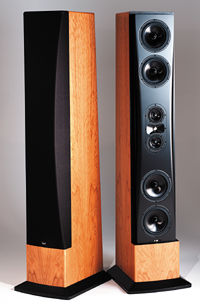
Say "Type A" to a group of psychologists and they immediately think "hard-driving, workaholic executive." Speak the same phrase among audiophiles, and the late Peter Snell's (1946-1984) flagship loudspeaker comes to mind. The model reviewed here is the seventh iteration of Snell Acoustics' Type A, and this is the 12th published review of the product in American audio magazines. (The last one published in Stereophile was in March 1996, Vol.19 No.3, of the Type A Reference.)
Snell B minor loudspeaker
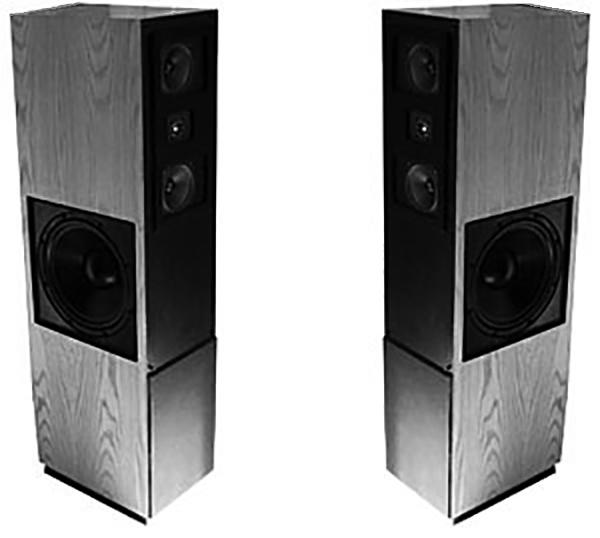
Few products elicited as much excitement, disappointment, and debate among the Stereophile staff as did the Snell Type B dynamic loudspeaker (footnote 1). Both Peter Mitchell and I praised the Type B for its low-frequency extension, smooth treble, high power handling, and excellent dynamics. Corey Greenberg and Robert Harley faulted the speaker's sluggish and fat bass response, which they felt precluded a recommendation in Stereophile's "Recommended Components." Kickdrum recordings in pop and rock excited the Type B's bass character, a characteristic which was not so noticeable if one only listens to classical music. This bass peak was so prominent in RH's listening room that it colored the rest of the loudspeaker's range. As a result, he found that this otherwise fine loudspeaker was not as transparent as other high-quality dynamic systems in the same price range.
Help was on the way. Within six months of RH's review, Snell Acoustics introduced a smaller version, the B minor, at the 1992 Summer CES.
Snell Illusion loudspeaker
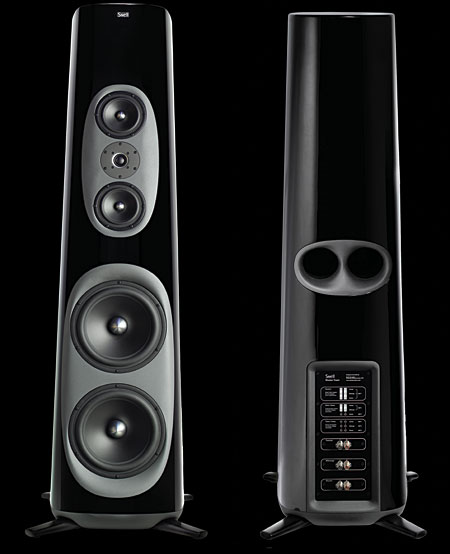
"How do you make an object common as a box iconic?" asked Bob Graffy, Snell's vice president/brand manager. He and Joseph D'Appolito, Snell's chief design engineer, were sitting in my listening room, discussing cabinet designs. Graffy noted that KEF had sought the same in their distinctive, silvery, cylindrical Muon loudspeaker ($150,000/pair). For the flagship model in their Illusion series, Snell commissioned Gerd Schmieta, former designer for Ideo, to integrate D'Appolito's wish list for an ideal enclosure: a narrow, rounded upper baffle for the midrange and tweeter, wider at the base for the woofers, holding a constant cross-sectional area while maximizing cabinet volume, and compliance with a 15° tip test.
Snell Music & Cinema Home THX reference system
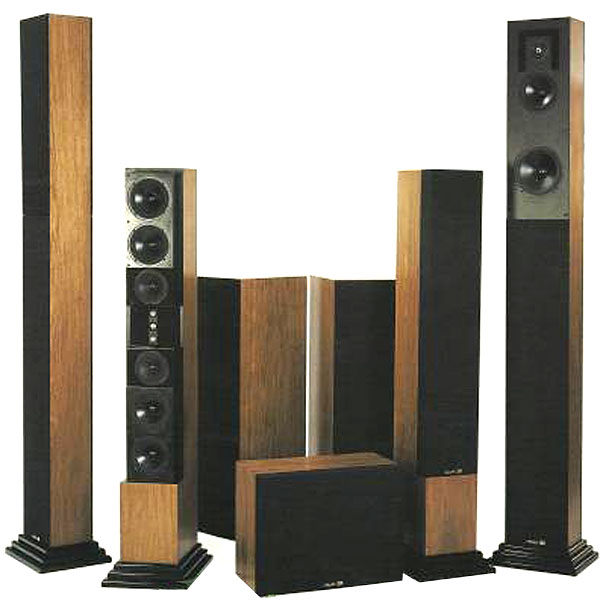
When I requested the Snell Music and Cinema Reference System for review, plus the new Snell Type A Music Reference System for evaluation, little did I know what I was letting myself in for. I lost count of the number of large shipping cartons delivered to my garagethough I'm sure the delivery man didn't. Except for the subwoofers, all the individual pieces are relatively small. But together they form a system that definitely demands both attention and a large room to sound its best and to keep it from visually overpowering the space.
Snell Type A loudspeaker
One of the less-glamorous speaker systems around today, these have more to offer the critical listener in terms of satisfaction than do most of the more-exotic designs.
Snell Type B loudspeaker
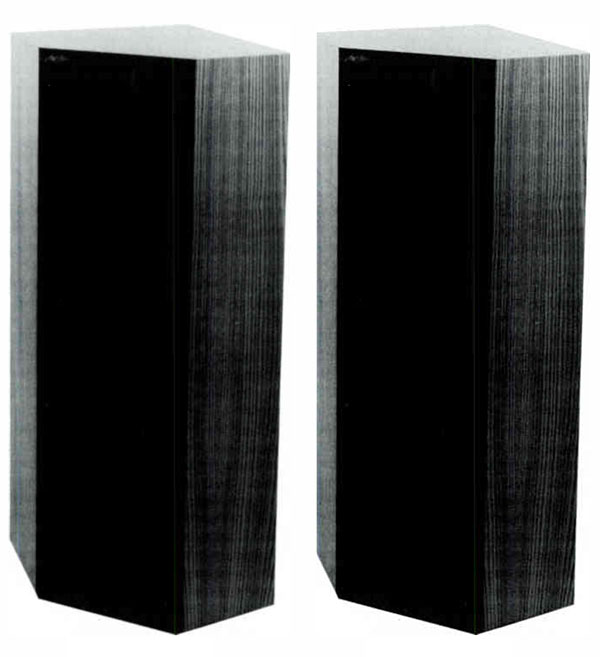
The Snell Type B is the culmination of three years' research and development effort by designer Kevin Voecks. Along the way, various iterations of the B have been shown at Consumer Electronics Shows. Like other Snell models, the facilities of Canada's National Research Council were used extensively during the B's development, both their anechoic chamber and their double-blind listening techniques.
Snell Type C/IV loudspeaker
 The Snell Type C/IV's design has been highly influenced by both the testing methods and philosophy of Canada's National Research Council in Ottawa. Other well-known loudspeakers to have benefited from the NRC's testing facilities include the Mirage M-1 and M-3, PSB Stratus Gold, the Waveform, and Camber 3.5. The NRC provides a variety of services to loudspeaker designers, notably use of their testing facilities which include a full-sized anechoic chamber. In addition, the NRC is heavily involved in carefully controlled blind listening comparisons between loudspeakers, used to aid the loudspeaker designer while the product is under development. The NRC doesn't provide design services, but rather the means of testing and evaluating work in progress and finished products.
Despite not offering design aid, many loudspeakers created with the NRC's testing and listening laboratories share some common philosophies. Chief among these is the belief that flat amplitude response is far and away the most significant factor in listener preferences and thus should be the paramount design goal. Many NRC-influenced loudspeakers share steep crossover slopes, wide dispersion, smooth off-axis response, and pay considerable attention to the way the loudspeaker interacts with the listening room.
The Snell Type C/IV's design has been highly influenced by both the testing methods and philosophy of Canada's National Research Council in Ottawa. Other well-known loudspeakers to have benefited from the NRC's testing facilities include the Mirage M-1 and M-3, PSB Stratus Gold, the Waveform, and Camber 3.5. The NRC provides a variety of services to loudspeaker designers, notably use of their testing facilities which include a full-sized anechoic chamber. In addition, the NRC is heavily involved in carefully controlled blind listening comparisons between loudspeakers, used to aid the loudspeaker designer while the product is under development. The NRC doesn't provide design services, but rather the means of testing and evaluating work in progress and finished products.
Despite not offering design aid, many loudspeakers created with the NRC's testing and listening laboratories share some common philosophies. Chief among these is the belief that flat amplitude response is far and away the most significant factor in listener preferences and thus should be the paramount design goal. Many NRC-influenced loudspeakers share steep crossover slopes, wide dispersion, smooth off-axis response, and pay considerable attention to the way the loudspeaker interacts with the listening room.
Snell Type C/V loudspeaker
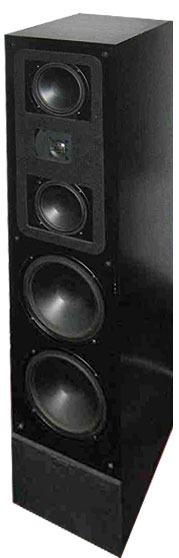
When I say that this past—and last—Summer CES in Chicago was dead daddy dead, I'm not talking about fewer high-end exhibits and attendees than ever before. I'm talking I walked in the front door of the Chicago Hilton and almost puked from that smell of dead, mealy meat that hits you in the face and kicks-in the gag reflex. The smell of death you can taste even if you're breathing with your mouth. In most religions, it's a sin to let something that dead just sit there without at least spreading some lye on it to kill the stink. I once cut a man for misadjusting the VTA on my cartridge, and that man lying on my listening-room floor with an Allen wrench still clenched in his hand wasn't as dead as this last SCES.
Snell Type E/III loudspeaker
One question posed by John Atkinson at the July 1991 Stereophile Writers">http://www.stereophile.com/features/109">Writers Conference had to do with the ease of reviewing: Is it harder to write a bad review of an expensive product than a good review? I find it hardest to write a good review of an inexpensive product. If I admire a less expensive loudspeaker, for example, it may become a recommended component, and can displace a more expensive speaker (that received mixed comments) from our twice-yearly rankings. This can be a big responsibility; even a conditional rave of a low-cost product means that JA may assign another Stereophile reviewer to do an immediate follow-up report. The Snell Type E/III loudspeaker may be a good case in point.
Snell XA90ps loudspeaker
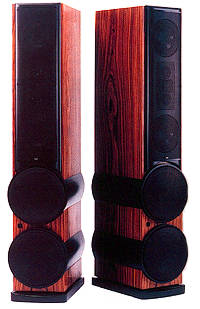
The patter of the snare drum began softly and I leaned forward in my seat. Avery Fisher Hall fell silent as Riccardo Muti led the New York Philharmonic in Ravel's Boléro. Ravel once described this masterpiece as "lasting 17 minutes and consisting wholly of orchestral texture without music—of one long, very gradual crescendo." Though the hall was silent and expectant, the stage was packed with musicians waiting for...what? To gradually join in, one by one and layer by layer, to drive that gentle but relentlessly mounting crescendo. Ravel accomplished this by "having solo instruments play the melody...[then progressing] to groups" and finally "arranging the scoring so that the dynamics are self-regulating" (footnote 1). When the final, thunderous E-major chord stopped the piece by locking "all its harmonic gears," the hall erupted in ecstatic applause, and we all leapt to our feet.