

NHT 3.3 loudspeaker
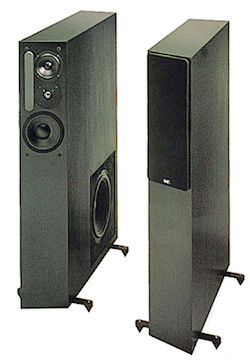
When Ken">http://www.stereophile.com/interviews/232">Ken Kantor helped to found Now Hear This, Inc. (most commonly referred to by its initials, NHT) in 1986, he brought with him a wealth of design and production experience learned from stints with NAD and Acoustic Research. He also brought a desire to build and market products that a wide range of people could afford. NHT began by producing small, two-way designs distinguished by the angled front baffle which remains the company's trademark. The latter is no gimmick, but was designed to optimize the loudspeakers' radiation pattern, a matter of keen interest to Kantor ever since his undergraduate thesis work at MIT. This interest continued at AR, where he was responsible for the MGC-1 loudspeaker—probably his best known pre-NHT loudspeaker design.
NHT Classic Absolute Tower loudspeaker
 I've always enjoyed the time I've spent with NHT loudspeakers. The two bookshelf models I've reviewedthe SB-3 (Stereophile, November 2002) and its successor, the Classic Three (November 2006)shared NHT's "house sound": liquid, balanced, and dynamic, with little coloration, and a slightly forward and lively midrange. The newer Classic Three, still in production, sounded more refined, natural, and detailed than the SB-3. I like to see speaker designers whose work improves over time.
So when NHT approached me about reviewing a new floorstanding model with a small footprint, the Classic Absolute Towertheir first new speaker design of the next decade, they sayI jumped at the chance. Not only had I not reviewed an NHT in a while, but I'm increasingly intrigued withand applaudthe trend of manufacturers to add small-footprint tower speakers to their lines of affordable speakers. As most speakers costing under $1000/pair tend to be bookshelf models, shoppers need to worry about buying good-quality stands of the appropriate height, and about optimizing the speaker positions with respect to the front and side walls.
I've always enjoyed the time I've spent with NHT loudspeakers. The two bookshelf models I've reviewedthe SB-3 (Stereophile, November 2002) and its successor, the Classic Three (November 2006)shared NHT's "house sound": liquid, balanced, and dynamic, with little coloration, and a slightly forward and lively midrange. The newer Classic Three, still in production, sounded more refined, natural, and detailed than the SB-3. I like to see speaker designers whose work improves over time.
So when NHT approached me about reviewing a new floorstanding model with a small footprint, the Classic Absolute Towertheir first new speaker design of the next decade, they sayI jumped at the chance. Not only had I not reviewed an NHT in a while, but I'm increasingly intrigued withand applaudthe trend of manufacturers to add small-footprint tower speakers to their lines of affordable speakers. As most speakers costing under $1000/pair tend to be bookshelf models, shoppers need to worry about buying good-quality stands of the appropriate height, and about optimizing the speaker positions with respect to the front and side walls. NHT Evolution T6 loudspeaker system
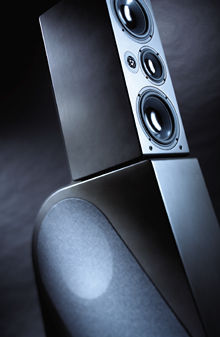
Twelve years ago, loudspeaker manufacturer NHT launched its model 3.3, a floorstanding, full-range design that Corey Greenberg summed up in the March">http://www.stereophile.com/loudspeakerreviews/1293nht/index2.html">March 1994 Stereophile as doing "everything I want a He-Man reference loudspeaker to do...I find myself without a single area of performance I've heard bettered by any other speaker." The NHT">http://www.stereophile.com/loudspeakerreviews/1293nht">NHT 3.3 basically combined a high-performance monitor with a sideways-firing subwoofer in the same enclosure, and when I first saw NHT's Evolution T6 system at the 2002 CEDIA convention, I was reminded of the classic 3.3, but a 3.3 updated for the needs of home theater as well as music. And despite inflation and the incorporation of a line-level crossover and a pair of monoblock amplifiers to drive the subwoofers, a two-channel T6 system costs the same as a pair of 3.3s: $4000.
NHT SuperTwo loudspeaker
June is a always a perplexing time for me. The weather is lovely, the mountain wildflowers are blooming, things are pretty calm at work.....but it's Bonnie's birthday.
Nola Contender loudspeaker
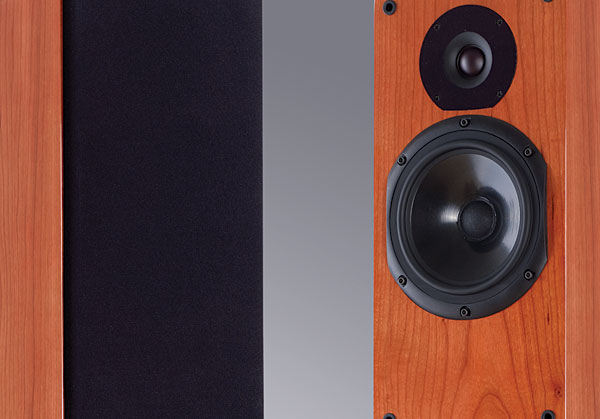
I've long been fascinated by Carl Marchisotto's speaker designs, first for Alón by Acarian Systems and currently for Accent Speaker Technology's Nola family of models. The Alón Circe has been my reference loudspeaker for over a decade, and it replaced my previous reference, the Alón V Mk.III. During my tenure at Stereophile I've also reviewed the Alón PW-1 woofer system (February 1997, Vol.20 No.2) and the Nola Mini speaker (January 2006, Vol.29 No.1), both now discontinued. In recent years, however, I hadn't paid much attention to Marchisotto's newer speakers, as he's focused on expensive designs featuring the Raven ribbon tweetercurrently, four models ranging from $15,200 to $238,000/pair. Although I've been impressed with all of the Raven-tweeter models I've heard at shows, dealers, and audiophiles' homes, my taste over the years has leaned toward Marchisotto's simpler two- and three-way, all-dynamic designs.
Nola Metro Grand Reference Gold loudspeaker
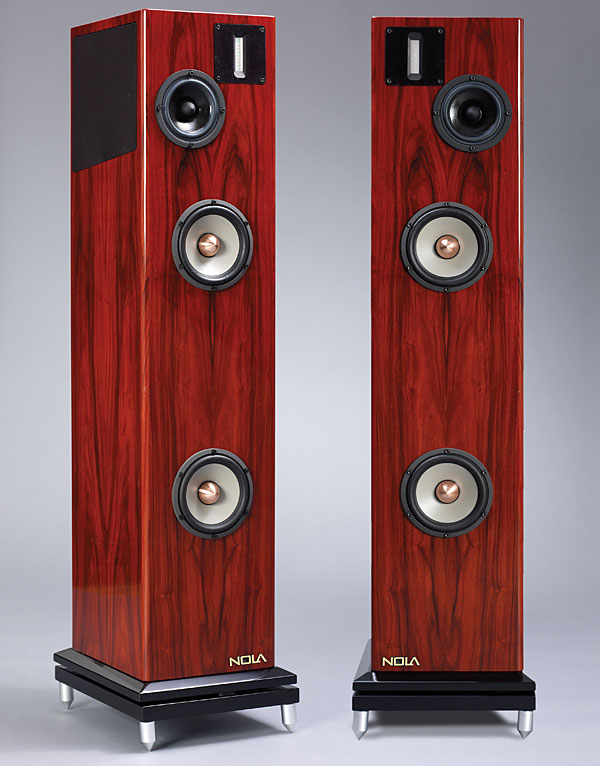
For a reviewer, deciding which products to write about is a tricky business. You want to do a professional job of evaluation, but you also want to be able to wrest maximum enjoyment from your music while you do so. Attending audio shows is where reviewers perform sonic triage, weeding out the products that aren't ready for prime time, and making a note of those they wish to invite home after the show.
Odeon La Traviata loudspeaker
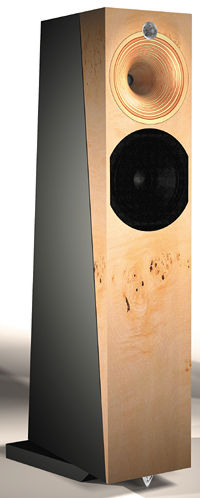
Interest in super-efficient, horn-loaded, compression-driver loudspeakers has grown in the past few years, fueled in part by a renewed fascination among many hobbyists with low-powered, single-ended triode tube amplifiers. But staring down the maws of two Tubby the Tubas is not every audiophile's idea of a good time—even when the resulting sound is spectacularly fast, coherent, and extended.
Ohm Acoustics F loudspeaker
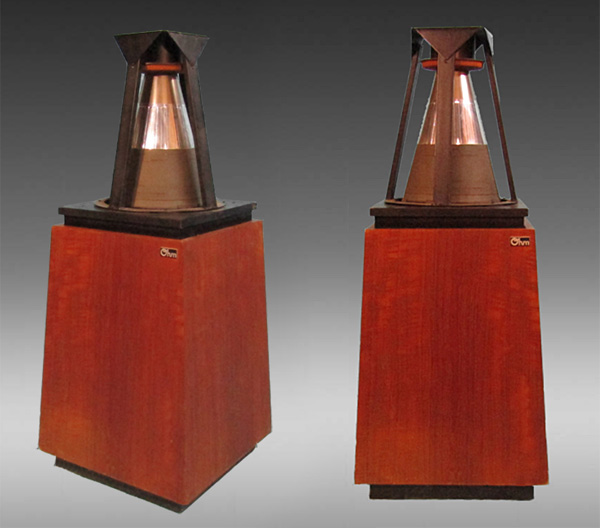
We have still not received a pair of these for formal testing, which may be a good thing in view of our feelings these days about "updatings." (Our feelings about such are clarified in this issue's "As We See It.")
Ohm Walsh 5 loudspeaker
The Ohm Walsh 5 displaces the Ohm F at the top of the Ohm line, and the current Walsh 5 production run represents a "limited edition" of 500 pairs worldwide. There's even a certificate of authenticity—hand-signed by Ohm Acoustics President John Strohbeen—packed with the speakers that makes it all official. I think that this is more than a clever marketing gesture and clearly demonstrates Ohm Acoustics' pride in their new flagship loudspeaker.
Orpheus 808 loudspeaker
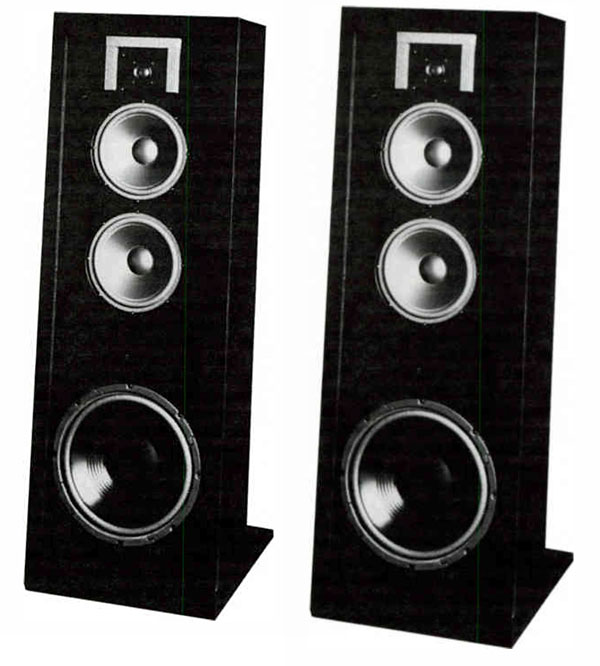
So far, as part of my quest to find good affordable box loudspeakers, I have reviewed 20 models, in the August, October, and November 1987, and January and February 1988 issues of Stereophile (Vol.10 Nos.5, 7, & 8, Vol.11 Nos.1 & 2). Nearly all affordable loudspeakers have to be used with a pair of stands: as these have an important influence on the integrity of the sound and tend to cost upward of $100 a pair for good models, this makes such speakers less of a bargain. This month, therefore, I review loudspeakers designed from the outset to be floor-standing: three from the USADCM's Time Frame TF1000, the planar-magnetic Magnepan MG2.5/R, and the Orpheus 808and one from Sweden, the Rauna Balder. The prices are pretty closely grouped, with the DCM being the least expensive, at a hair under $1100/pair.