

Kharma Ceramique CE-2.0 loudspeaker
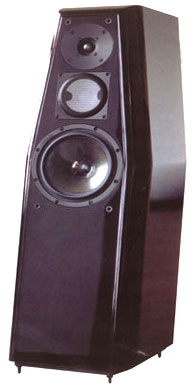
Oh boy! This was one of my most eagerly anticipated auditions. At my first demonstration of an OLS loudspeaker system several years ago, I was bowled over not only by the demo, but also by the idea that OLS's Kharma line was topped by the $1,000,000 Grand Enigma system!
Kharma Midi-Grand Ceramique 1.0 loudspeaker
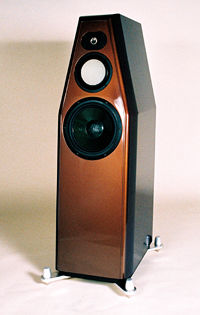
Not for nothing did I name the Kharma-Lamm room at Home Entertainment 2002 the "Best Sound in Show." Show attendees slotted it 17th best [see September 2002, p.59—Ed.], behind other rooms to which I also gave high marks—mostly larger rooms featuring far bigger loudspeakers—but to me, the sound emanating from the Kharma Ceramique 3.2 ($19,000/pair), driven by Lamm electronics, possessed a sublime balance of sonic qualities heard in few other rooms.
KLH Model Nine loudspeaker
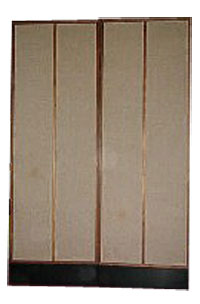
Editor's Note: Although this product has been available for several years, it is being reviewed in considerable detail because it is a strong contender for the title of "Best Available Loudspeaker System, Regardless of Cost," and because we plan to review some of the other contenders for the same title within the next few issues. We feel that since all of these systems represent a considerable outlay of money, prospective buyers should have a thorough understanding of the merits and demerits of each system, so they will know what to expect from them in the way of performyince capabilities and operational requirements.
KLH Model Twelve loudspeaker
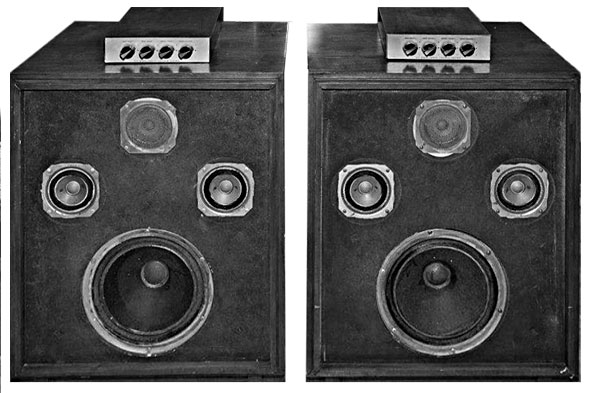
The idea of a loudspeaker system whose frequency response could be tailored to suit room acoustics and/or personal taste is one that has always appealed to the high-fidelity perfectionist. Ideally, such a loudspeaker would allow you to raise or lower the level of any part of the audio spectrum to correct for, say, a sharp 370Hz room resonance or a mild absorptive condition that weakens, say, the 800Hz3kHz range. Obviously, though, this kind of flexibility would require an infinite number of bandpass networks, each with its own volume controlwhich is an obvious impracticality.
Klipsch Forte III loudspeaker
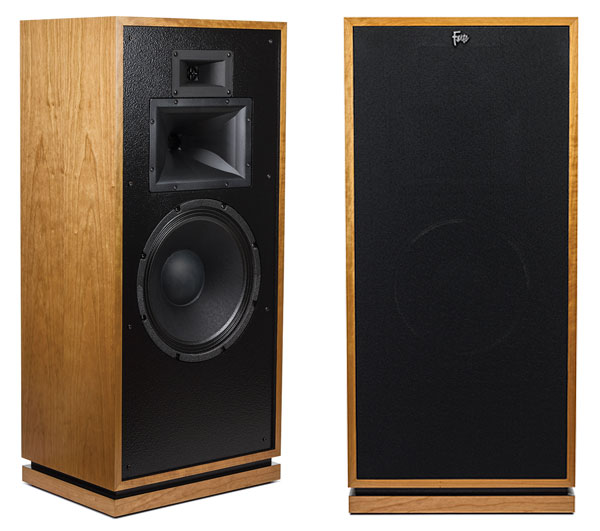
I'm fortunate to have reviewed in recent years not one but three different pairs of horn-loaded loudspeakers. My jaw dropped when I reviewed what would prove the finest loudspeaker to ever grace my home, the Volti Audio Rival. Second came a pricey but pleasing pair from handlebar-mustache king Gordon Burwell, the Burwell & Sons Homage. Then, at the urging of occasional Stereophile contributor Steve Guttenberg, I took on the fat-boy Klipsch Heresy III. As the Beatles used to say, I was dead-chuffed.
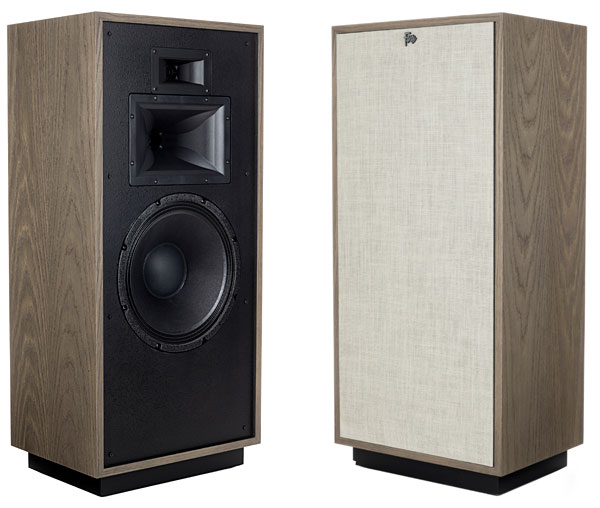
Klipsch Forte IV loudspeaker
No one taught me more about the heralded tone of Ortofon SPU cartridges, the magical pacing of idler-drive turntables, or the dynamics and speed of horn-loaded speakers than Art Dudley, Stereophile's late deputy editor. His equipment reviews and monthly Listening columns weren't merely tutorials on how to review audio equipment with insight and an individual voice; they were also an entertaining, informative immersion into the kind of hi-fi he loved. We also shared many conversations, though too few.
Klipsch Klipschorn AK6 loudspeaker
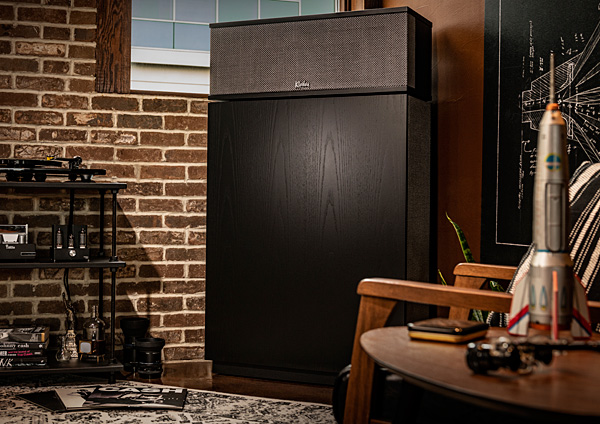
This almost happened 13 years ago. Thinking the time was right for a Klipschorn review2006 was the 60th anniversary of its designI got in touch with a Klipsch representative, who requested photos of my room and details of its size and construction style. My reply was followed by a three-day lag in correspondence, after which came the disappointing news: "We're sorry: It won't work." The problem: There were baseboard radiators too near the corners of the room where the speakers would be installed; consequently, the Klipschorns couldn't be snugged all the way against those corner wallsan iron-clad requirement for their use.
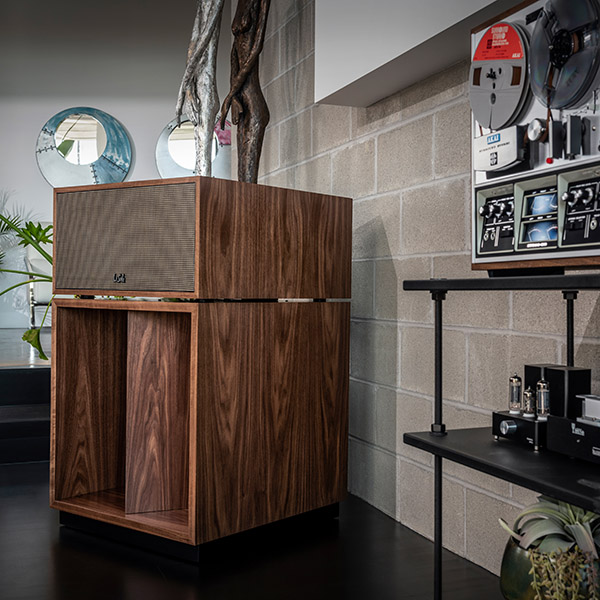
Klipsch La Scala AL5 loudspeaker
There's a good case to be made that the world's greatestand strangestaudiophile culture resides in Japan. Probably the most important notion the Japanese have introduced to our hobby is that home audio isn't merely a way of heightening the musical art of others but can be an art in itself. This idea's most flamboyant embodiment was the poet, journalist, chef, and amplifier builder Susumu Sakuma, better known as Sakuma-san.
In the articles on hi-fi that he contributed to the Japanese magazine MJ, Sakuma-san also wrote about film, fishing, karaoke, and pachinko machines, and he usually began and ended his contributions with a poem. He considered himself an evangelist for emotional sound and demonstrated his audio systems in homes, at conferences, and on concert stages around the world. Though he passed in 2018, his fan club, called Direct Heating, remains a happening concern. Sakuma-san was fond of coining mottosone was "farewell to theory"but what has stuck with me most is his description of an ideal sound: "endless energy with sorrow."
This phrase came to mind often during the months I spent living with the Klipsch La Scala speakers, which imbued my musical life with unprecedented amounts of sound and emotion, and which I believe Sakuma-san would have enjoyed.
Klipsch Palladium P-39F loudspeaker
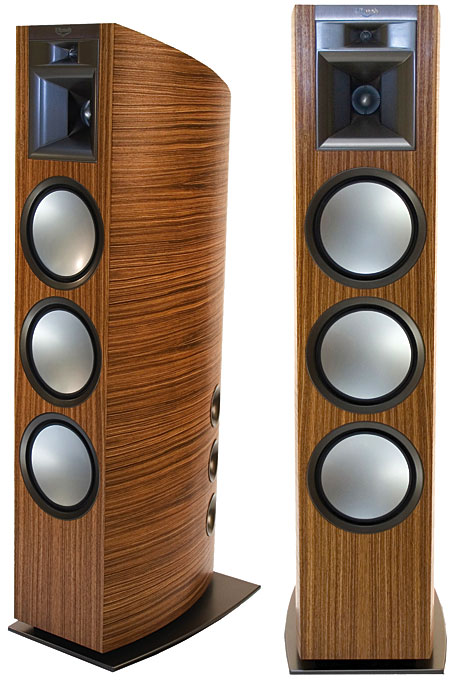
It ain't the stuff you don't know that trips you up, it's the stuff you know that ain't so. When, at the 2007 CEDIA Expo, I encountered Klipsch's startlingly new Palladium P-39F loudspeaker ($20,000/pair), I was impressed by its looks. Tall (56"), as beautifully contoured as the prow of a canoe, and clad in striking zebra-stripe plywood, the P-39F is possibly the best-looking speaker Klipsch has ever made.
Krell LAT-1 loudspeaker
I'll never forget my first encounter with the Krell LAT-1 loudspeaker. Late one Friday night last fall, on City Island in the Bronx, it was time for the monthly meeting of the Westchester Audiophile Society and I was late. I rushed through the door past a group of audiophiles and headed straight for the two new black loudspeakers already set up and ready to play. Music writer and society member Sid Marks made a sound. I turned to him and he pointed across the room: "Go tap on that enclosure." I walked over to one of the black speakers and did so. There was no sound—no give, no nothing. It was as if I'd knocked on a granite boulder. "See what I mean?" said Sid. I nodded. There was nothing to add.