

KEF iQ9 loudspeaker
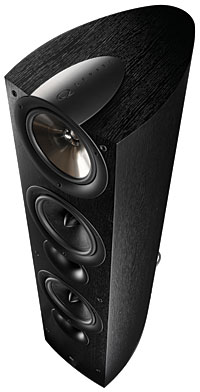
The penultimate stop on Bob Reina's British Invasion Tour of Affordable Loudspeakers (footnote 1) brings us to the doors of KEF. Although KEF is a large and well-established British firm, I've noticed that their product lines have not been as visible in the US as those of, say, B&W, Wharfedale, or Mission. In fact, the last time I heard a KEF speaker, it was the company's then-flagship design, at a Consumer Electronics Show nearly 20 years ago! Before that, when I lived in London, KEFs were ubiquitous, down to the older, entry-level designs tacked to the walls of the ethnic restaurants I frequented. My strongest KEF memory is a cumulative one: Every KEF speaker I've ever heard, regardless of price, venue, or setup, has always produced good, convincing sound.
KEF LS60 Wireless loudspeaker
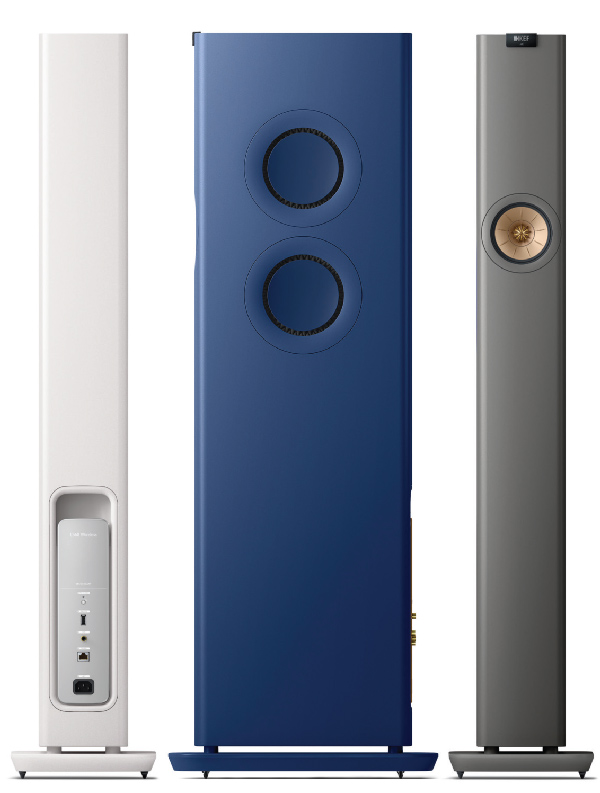
Planned for KEF's 60th anniversary, much as the LS50 was planned for the company's 50th, the LS60 Wireless is a statement product that encompasses the premise of company founder Raymond Cooke that loudspeaker performance could be improved through the application of new materials and new technologies. Improvements in recent KEF designs include the refinement of the Uni-Q coaxial driver, Metamaterial Absorption Technology (MAT), force-canceling Uni-Core woofers with P-Flex surrounds, cabinets shaped to reduce diffraction, and the configuration and arrangement of drivers to create what KEF calls a Single Apparent Source.
KEF Q900 loudspeaker
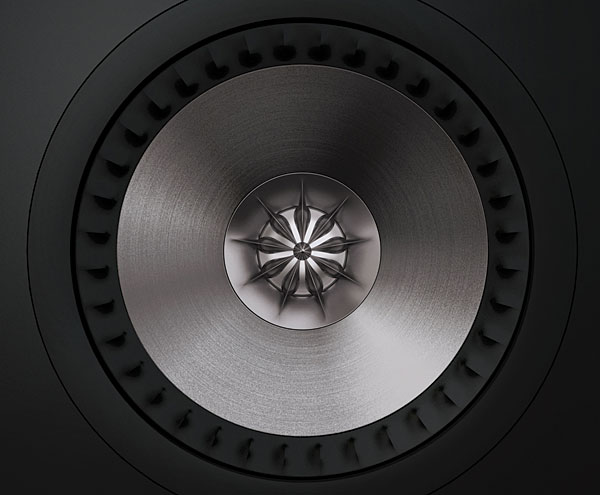
KEF and I go way back. As a very young man in the 1960s, I was obsessed with building speakers, and that was just about the time that KEF founder Raymond Cooke was revolutionizing driver design by using new synthetic materials for cones and surrounds, and experimenting with such innovations as transmission-lineloaded midrange drivers. I found it all very heady and, by direct import from the UK, obtained versions of the oval, flat-diaphragm B139 woofer, the Bextrene-coned B110 and B200 woofers, and the T-15 and T-22 dome tweeters. Fifty years ago, this was all cutting-edge speaker technology.
KEF R107 loudspeaker
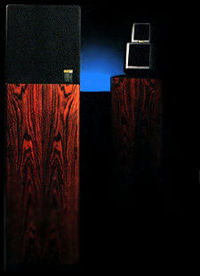
The Model R107 represents the flagship of KEF's Reference Series, and is second only to the Professional Series KM-1 in KEF's product line. Anatomically, the 107 resembles a person. Beneath a decorative "hat," there's a special head assembly akin to the head on the old Model R105. This head assembly contains the brains of the 107, namely a T33 ferrofluid-cooled tweeter and an improved version of the classic B110 midrange driver, featuring a better voice-coil and a new polypropylene cone. The nerve center is also here, in the form of two passive dividing networks and load-impedance equalizing network. Level equalization of the drivers is performed actively within the KUBE, the second brain of the 107—about which you'll hear more shortly.
KEF R700 loudspeaker
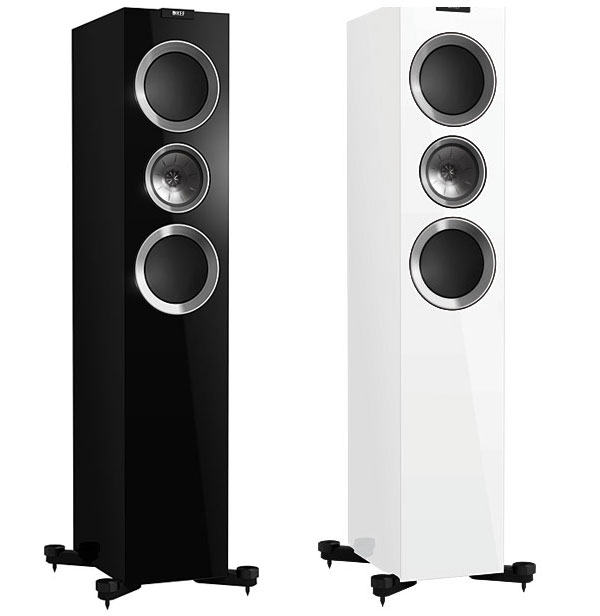
In the late 1980s, KEF, then as now a leader in bringing new technology to loudspeaker design, developed a unique coincident driver that positioned the tweeter in the throat of the midrange/woofer cone. In a flash of inspiration, they dubbed it the Uni-Q, and the driver immediately not only found its way into the company's more upscale speaker designs, but also became a key element in a major European research project on room acoustics. That study's results appear to have been inconclusive, but the Uni-Q lives on as the defining element of KEF loudspeakers.
KEF Reference 207 loudspeaker
The very last review I wrote for Hi-Fi News & Record Review (these days just plain Hi-Fi News)—before crossing">http://www.stereophile.com//asweseeit/352/">crossing the Atlantic to take up the reins at Stereophile in May 1986—was of KEF's then-new flagship speaker, the Reference 107. That rave review appeared in the English magazine's July 1986 issue, and was followed by equally">http://www.stereophile.com//loudspeakerreviews/550/">equally positive reports from Stereophile's writers.
KEF Reference 207/2 loudspeaker
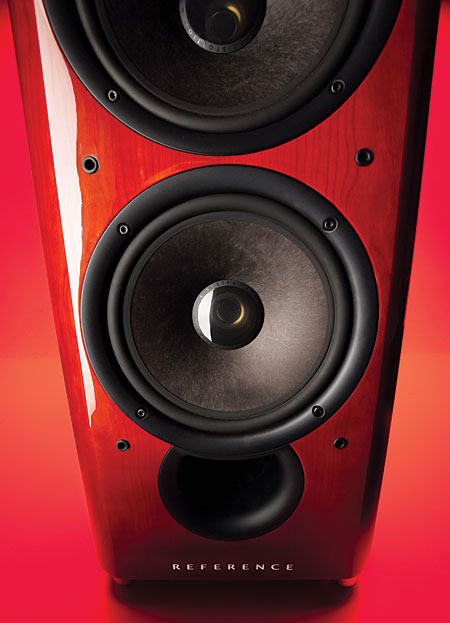
After reviewing a long series of minimonitors, I am now working on what may well be an equally varied selection of large floorstanding loudspeakers. This trend began with my">http://www.stereophile.com/floorloudspeakers/1207sonus">my review of the Sonus Faber Cremona Elipsa in the December 2007 issue, and continues this month with the Series 2 version of the KEF Reference 207, until recently the flagship model from this English manufacturer (footnote 1). I reviewedhttp://www.stereophile.com/floorloudspeakers/775">reviewed; the original Reference 207 in February 2003, and was very impressed by what I heard.
KEF Reference 5 loudspeaker
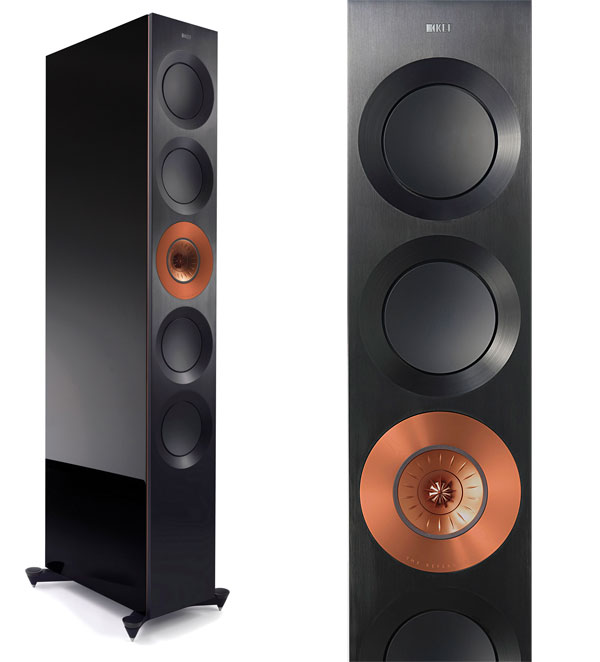
Of all the speakers I have most enjoyed in recent years, two were from British manufacturer KEF: the LS50 Anniversary Model ($1500/pair), which I reviewed in December 2012; and the Blade Two ($25,000/pair), which I reviewed in June 2015. Though these two speakers lie at opposite ends of the price scale, they have in common KEF's unique Uni-Q drive-unit, in which the tweeter is mounted on the front of the midrange unit's pole piece, so that the lower-frequency cone acts as a waveguide for the higher-frequency output.
KEF Reference Series 103/4 loudspeaker
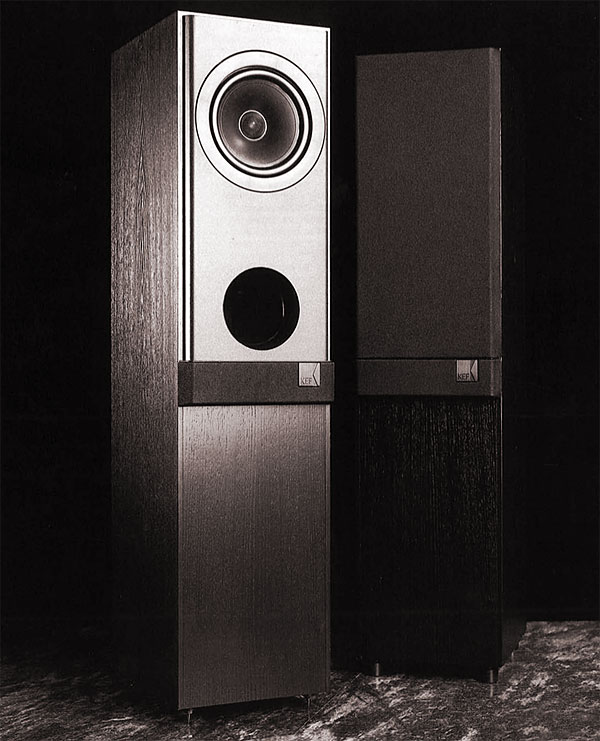
By now most readers will be familiar with the relatively new tuned-cavity method of low-frequency loading. Such designs have popped up all over the place of late, especially in those little satellite/woofer systems, but KEF can rightly lay claim to generating the design's theoretical basis, as JA described in his review of the KEF R107/2 loudspeaker in Vol.14 No.5 (May 1991). Essentially, the technique consists of loading the rear of a woofer in a conventional fashionusually a sealed boxbut also loading the front of the driver into another enclosure, ducted to the outside. Basically, the design acts as a bandpass filter with its response centered on the port-tuning frequency. The rolloff is smooth and rapid on either side of this frequency, providing a natural low-pass characteristic but thereby virtually mandating a three-way system. If properly designed, this configuration offers a number of theoretical advantages. The radiating element is actually the air in the port, which is low in mass. Low distortion is possible, as is relatively high sensitivity.
KEF Reference Series Model Four loudspeaker
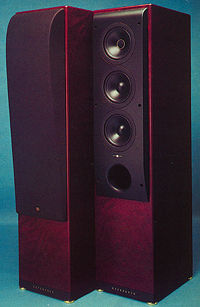
The Model Four is the largest model in KEF's current Reference series of loudspeakers, discounting the R107/2 Raymond Cooke Special-Edition (reviewed in a follow-up in October '95). It's also the largest KEF model that uses their Uni-Q® loudspeaker configuration. When I visited the KEF factory last October with a group of audio journalists from the US, KEF emphasized the importance of Uni-Q technology to their future plans. They consider it proprietary, and intend to enforce the worldwide patents they hold on the design. One look at KEF's current line will be enough to tell you why they're so serious. Uni-Q drivers may be found not only in most of the Reference series, but in most of their other models as well. The most significant exceptions: the Raymond Cooke series, a few inexpensive models, and their THX-certified loudspeaker system.