

ADAM Audio Classic Column MK3 loudspeaker
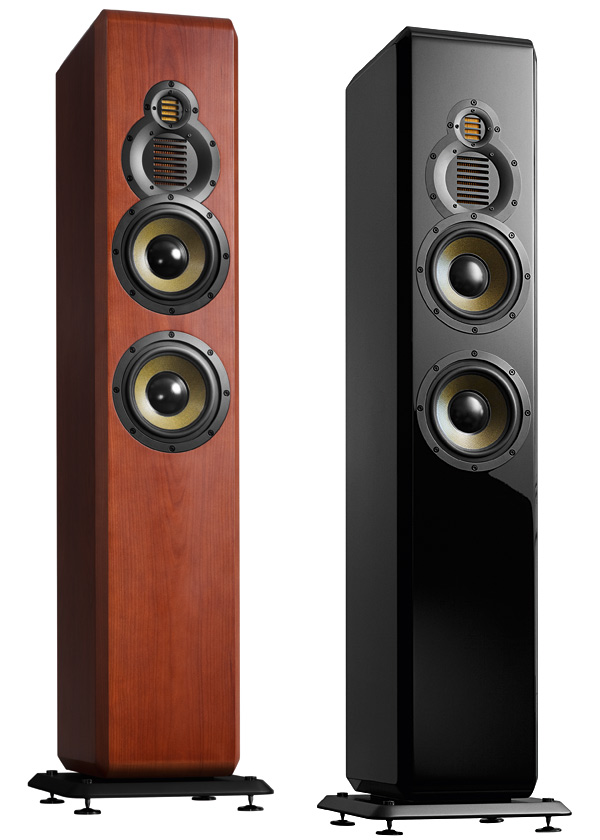
It was three or four years ago, at a CEDIA Expo, that I first happened upon Advanced Dynamic Audio Monitors, aka ADAM Audio. What grabbed me was the array of imposingly high-tech speakers comprising their elite Tensor line. Sitting out in the middle of the floor of the Atlanta Convention Center, they not only looked more advanced than anything else around, they had the audacity to sound superb in a totally inappropriate acoustic situation. Despite the surrounding busyness of the Expo, I was able to sit down and actually enjoy the Beatles' Love on DVD-Audio. Clearly, these guys knew what they were doing. I vowed to follow up on it.
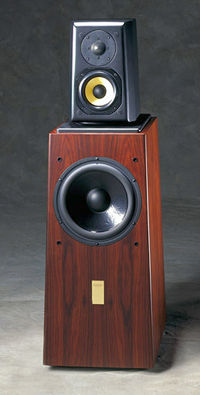
Aerial Acoustics 10T loudspeaker
KA-SLAM!!!!
thump thump thump
thump thump thump
Aerial Acoustics 20T V2 loudspeaker
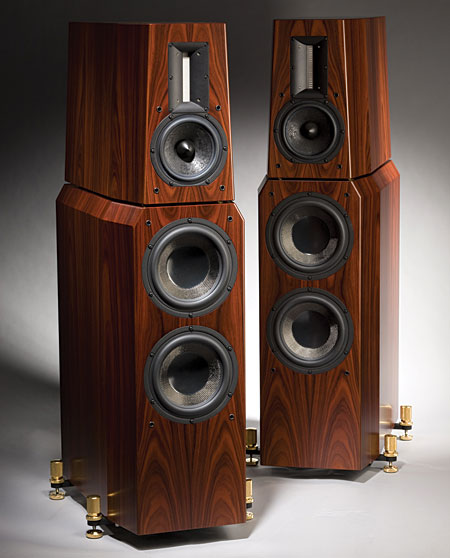
It was an audacious demonstration. For the launch of Aerial's 20T loudspeaker at the end of 2002, Aerial's head honcho and designer, Michael">http://www.stereophile.com/interviews/467">Michael Kelly, had arranged to compare the speakers reproducing the recorded sound of virtuoso violinist Arturo Delmoni with the real">http://forum.stereophile.com/photopost/showphoto.php/photo/467">real thing. The setting was the ornate dining room of one of Newport, Rhode Island's many mansions, and, given the inevitable differences—due to the facts that a violin has a very different radiation pattern from a loudspeaker and thus excites the room differently, and that the recording inevitably gives the listener a double dose of the room's acoustic—the demo was successful. There was much subsequent argy-bargying between Stereophile's reviewers about who would review the Aerial 20T, but it was Michael Fremer who eventually wrote">http://www.stereophile.com/floorloudspeakers/404aerial">wrote about it in April 2004.
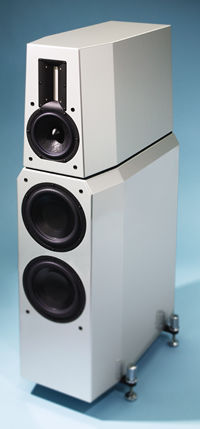
Aerial Acoustics Model 20T loudspeaker
Loudspeaker design is an art and a science. Anyone who tells you it's only one or the other is probably building or listening to some awful-sounding speakers. Design a speaker in an anechoic chamber for the "theoretical" world, and there's no guarantee it will sound good in the real one. Even building a speaker that excels at "real-room" measurements doesn't guarantee that it will sound all that convincing when reproducing music. We can't measure everything, and what we can measure can't be reliably ranked in terms of what's important to most listeners.
Aerial Acoustics Model 7B loudspeaker
Although the component that actually produces the sound is obviously the loudspeaker, audiophiles know that everything in the system—digital or analog source, preamplifier, amplifier, cables, room acoustics—has an influence on sound quality. No matter how good the speaker, its performance depends on the quality of the signal, the speaker's acoustical environment, and how the speaker is set up in that environment. I've heard speakers that I knew to be topnotch performers sound dreadful at audio shows and in dealers' listening rooms.
Aerial Acoustics Model 7T loudspeaker

It's hard to believe that it's been 20 years since Michael Kelly formed Aerial Acoustics, introduced the Model 10T loudspeaker, and I wandered into his demo room at a New York audio show and was smitten. That speaker did everything right and seemed to do nothing wrong. Disc after disc was played as I imposed my impression on the listening chair (I recall there being only one). At the time, the 10T was only a bit out of my price range, so for many years it was what I aspired to have. Kelly and I repeated this little play over the years as his speaker line grew, and he always was patient as he explained what he intended for each model and how he had gone about meeting his goals.
Aerial Acoustics Model 8 loudspeaker
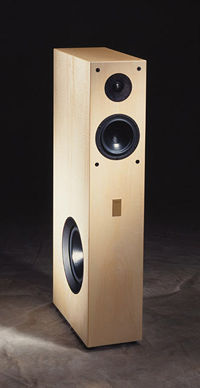
Got a garage, a router, and a band saw? Poof! You're a speaker designer. How many audiophiles dream of buying some raw drivers, some MDF and veneer, building a baffle, soldering up a computer-designed crossover, and assembling the Shmendrick Audio 2001? Plenty.
Almarro M0A loudspeaker
One of my favorite parts of attending Stereophile's Home Entertainment shows—aside from seeking out the sexy new gear and pressing the flesh of readers—is the "Ask the Editors" panel discussions. What begins as a Q&A session usually turns into a free-for-all, as the outspoken and opinionated likes of Sam Tellig, Michael Fremer, Ken Kessler, and John Marks barely give room for wallflowers such as Art Dudley and yours truly to express our opinions—except when editor John Atkinson asks each of us, in turn, to cast our votes for the "most interesting rooms to visit." At both the HE2004 and HE2005 "Ask the Editors" panels, one company was recommended by a number of Stereophile writers, me included: Almarro Products.
Alta Audio Adam loudspeaker
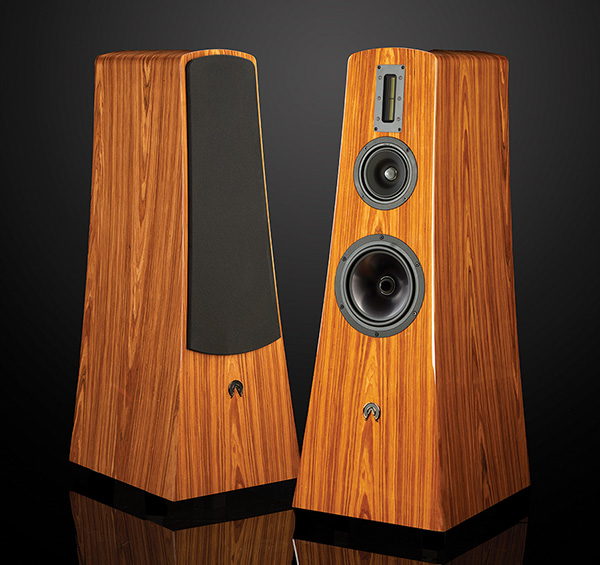
Last year, on the hunt for high-quality espresso beans, I visited some specialty coffee websites. On one forum, I came across this description of a particular roast: "I tasted mild acidity and bitters with hazelnut, bourbon, and a hint of dark cherry. As it began to cool, there was a hint of black raspberry syrup or cordial. Then a dominant note emerged of nuts with mild distillates, walnut bitters, cacao nib and something between 82% dark chocolate and baker's chocolate. ... Further cooling offered the surprise of dark piecrust and a bitter cherry liqueur. The piecrust then rounded to a slightly sweet dark rye. There was a lingering aftertaste of single malt scotch that eventually faded to baker's chocolate with a hint of ashiness."
I had enough self-awareness to realize that in the hi-fi world we sometimes prattle on about hi-fi in ways that, to outsiders at least, must seem just as fustian and florid.
Alta Audio Hestia Titanium loudspeaker
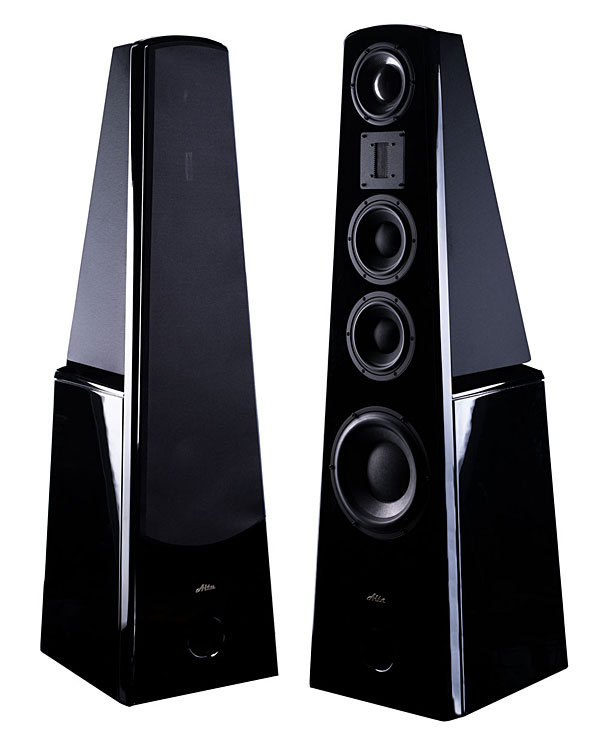
Phrases like high fidelity and perfectionist audio suggest a central norm to which all things audio should aspire. Not a bad idea, in some ways, but if you look at the wide variety of loudspeakers out there that people love, from the old-school Auditorium 23s to the high-tech KEFs and Vivids, it can be hard to figure out what they all have in common.