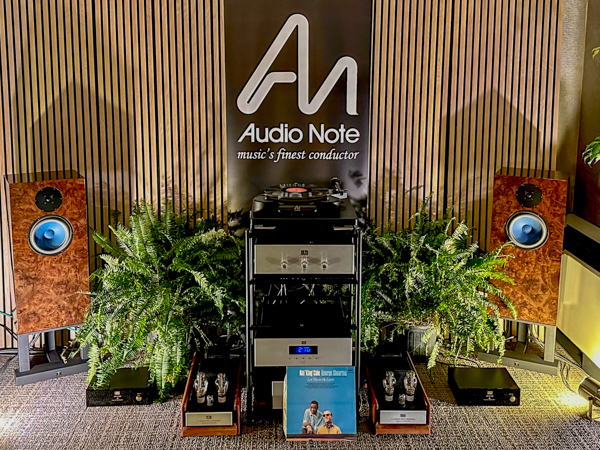
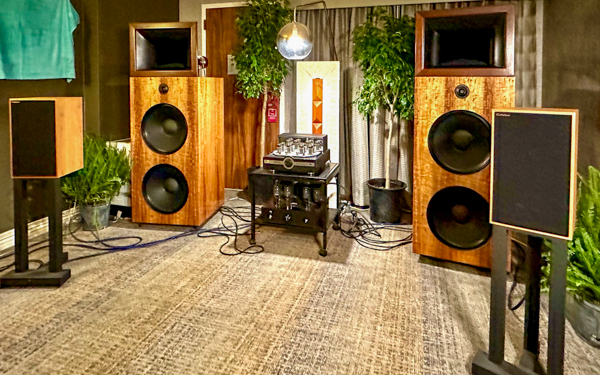
Audio Note’s Adrian Ford-Crush maintains a sweet vinyl stash. So whenever time allows, I hide out in his room and check out the sounds. For this show, all the way from London, Ford-Crush brought Count Basie's fantastic Roulette recording Chairmen of the Board, a Blue Note Classics edition of Hank Mobley’s hard bop treatise No Room for Squares, Cannonball Adderley’s Quintet Plus, and Mad Professor’s 40 Years of Dub.
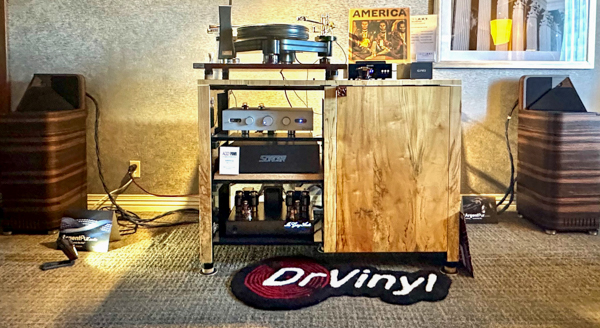
I ran into Audio Skies' Michael Vamos at the Hilton bar while schmoozing with old friend Michael Lavorgna, editor and owner of the excellent Twittering Machines audio site. (He's also my fashion guru.) Vamos convinced me to check out his room, presented with Baltimore dealer Dr Vinyl, and I was glad I did.
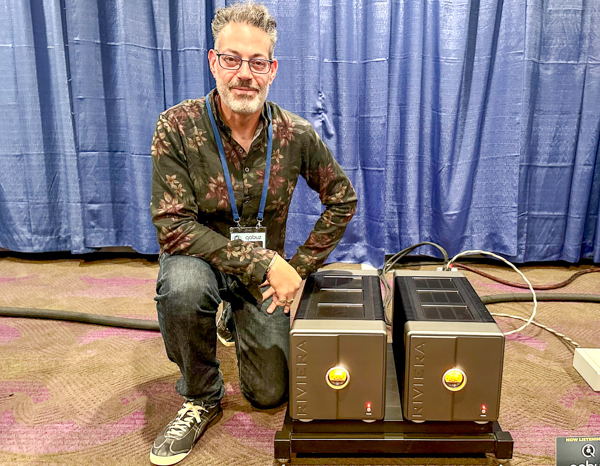
All man hands were on deck for the US debut of the Italian-made Riviera Labs AFM 100 monoblock power amplifiers, brought to the show by Riviera Labs President of Sales and Marketing Silvio Delfino and Tone Imports' Jonathan Halpern. Also in attendance was Wadax SA's Brandon Lauer and Bending Wave/Göbel Loudspeakers distributor Elliot Goldman.
Hanging at the bar at the Hilton Twinbrook, one hears stories of audio deals gone bad, an actor absconding with a $500,000 system to an unknown Mexican destination, or sordid tales of a peeved player spiting bile at an unknowing colleague. Then there's show organizer Gary Gill, whose upbeat, generous persona is a prime contributor to the success of the Capital Audiofest.
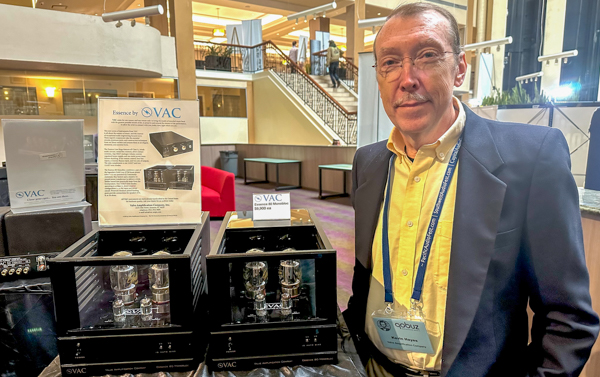
Another valued player, who possesses a sense of inner calm I wish I could generate, is Valve Amplification Company President Kevin Hayes, one of our industry's good guys since his company's founding in 1990.
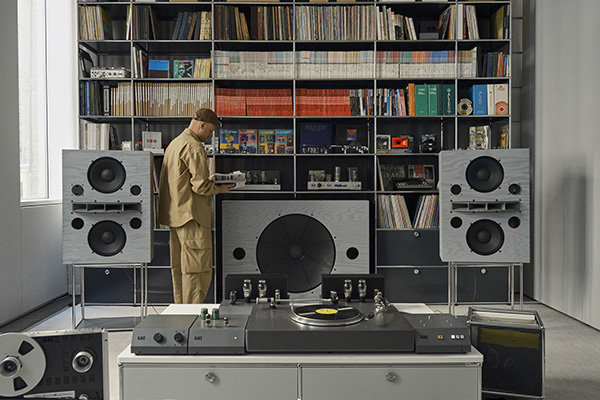
New York City continues to have a rich hi-fi culture, but many of its fabled hi-fi shops have shutteredthink of Lyric Hi-Fi, which played a major role in the development of audio's high end before it closed in 2021. But recently NYC's hi-fi scene has experienced a bit of a renewal, with undertakings aimed at a wider, younger audience. One example is a new, niche audio showroom in SoHo, which opened in September, by former deejay and fashion designer, artist, and current audio craftsman Devon Turnbull.
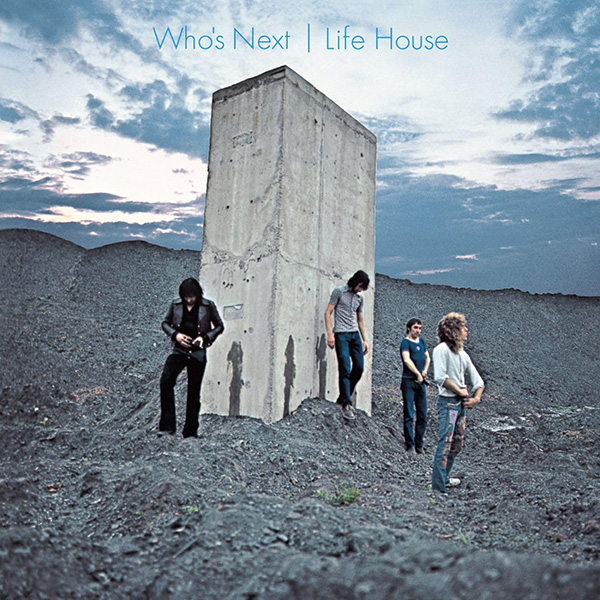
Recording of December 2023: Who's Next/Life House Super Deluxe Edition
Nov 14, 2023
The Who: Who's Next/Life House Super Deluxe Edition
Polydor/UME (10 CD, Blu-ray). 1971/2023. The Who, orig. prod.; Glyn Johns, associate prod.; Bill Curbishley, Robert Rosenberg, exec. prods. reissue; Bob Pridden, Richard Whittaker, Andy McPherson, Jaime Howarth, Pete Townshend, engs.; Jon Astley, Layla Astley, remastering engs.
Performance *****
Sonics *****
Impossibly ambitious? Too many demands on the audience? Tommy done better? A final collapse before a glorious resurrection? 1971's Who's Next, which began life as a more-advanced-than-Tommy sci-fi rock opera called Life House (also called Lifehouse), is all that and more. All the elements of this oft-reissued opus have been remastered and reissued in several new configurations, the most complete being the Who's Next/Life House Super Deluxe Edition, which includes 10 CDs with 155 tracks sourced from the original tapes, 89 of them previously unreleased.
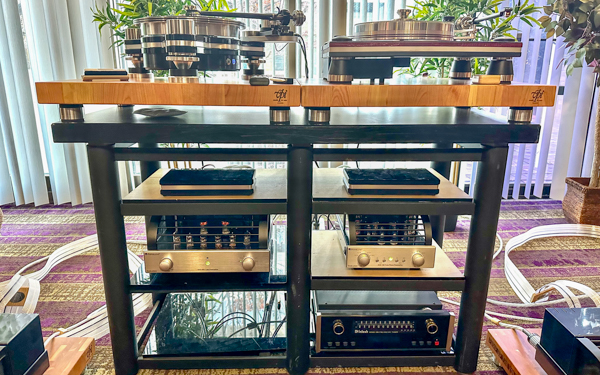
Not content to consistently produce some of the best sounding rooms at CAF year after year, Harry and Mat Weisfield changed up almost all their ancillary gear from 2022, but the sound remained fantastic.
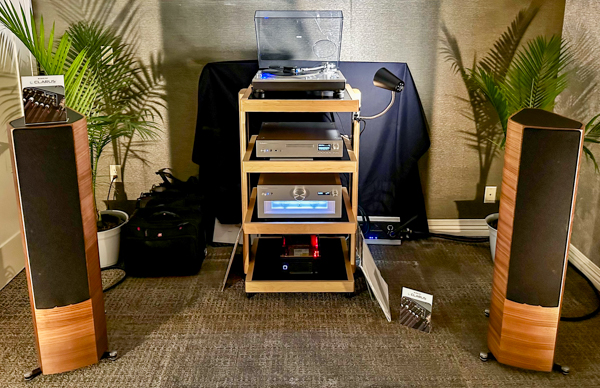
Always a friendly face, yay, a calming presence as I crawl through show halls, Technics' Bill Voss was on hand to play music and talk shop in a space hosted by Overture Ultimate Home Theater Electronics of Wilmington, Delaware.
On A Higher Note’s Philip O’Hanlon is typically seen at shows playing unusual records while entertaining attendees with his charming storytelling and Irish brogue. This was something different.
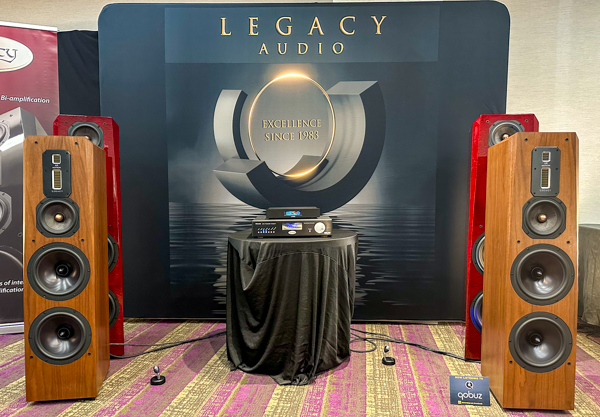
If you're a fan of my Stereophile scribble, you know I don't consider myself a fan of stuff like DSP processing, digital amplification, spatial reconstruction, or active room correction—all of which play an important role with Bill Dudleston’s Legacy Audio loudspeakers.