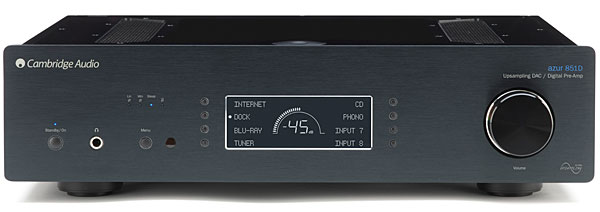
Cambridge Audio Azur 851D D/A processor

Cambridge Audio Azur 851D D/A processor

I've enjoyed having one of Cambridge's integrated amps in my office system for years, and the company boasts that the 851 series, designed in the UK and manufactured in China (like the rest of their line), is the best they've produced so far. After spending the last year listening to domestically manufactured DAC-preamps costing $6000 and up, I was curious to hear how a product costing only a quarter of the bottom of that range might stack up.

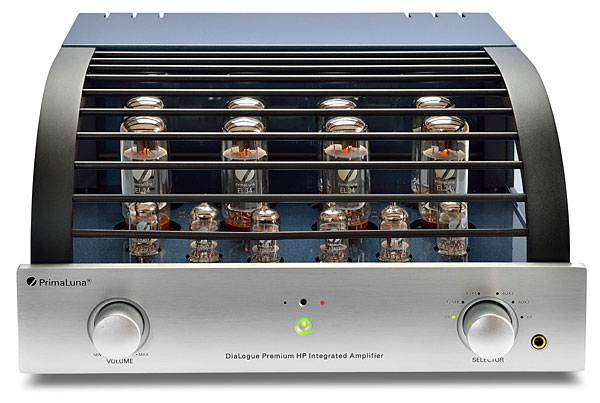
PrimaLuna DiaLogue Premium HP integrated amplifier

PrimaLuna DiaLogue Premium HP integrated amplifier

Ever since I reviewed PrimaLuna's ProLogue Premium, for the June 2012 issue, it has been the model I would turn to when I wanted a moderately priced integrated amplifier to try with a new speaker. It never disappointed me, and never seemed outclassed, even when the speaker was the MartinLogan Montis ($10,000/pair). At $2399, the ProLogue Premium to me represents the "sweet spot" for systems in the range of $4000–$10,000 or higher. Although its 35Wpc may not be enough for some speakers (depending on the room and personal preference), I never had any such problem, regardless of whether the speaker had a built-in powered subwoofer (eg, the Montis or the GoldenEar Technology Triton Two) or was a passive design (Wharfedale's Jade 7 or Focal's Aria 936). With differences noted depending on whether EL34 or KT88 output tubes were used, the ProLogue Premium delivered sound that was always smooth and musically involving.

Gramophone Dreams #2

Gramophone Dreams #2

• 1947: General Electric introduces a variable-reluctance phono cartridge with a 0.3mil sapphire stylus and 11mV output.

• 1948: Brook Electronics Inc. (Elizabeth, New Jersey) introduces the 12A audio amplifier and 12A3 preamplifier, beginning the era of high-fidelity audio separates.

Since hi-fi's postwar beginnings, hundreds of high-quality audio inventions for the home have thrilled and satisfied music lovers worldwide. But inevitably, no more than a few score companies, and maybe a dozen or so engineer-designers, have defined audio's most creative and enduring achievements.

Advertisement
Advertisement
Advertisement