 How does it sound?
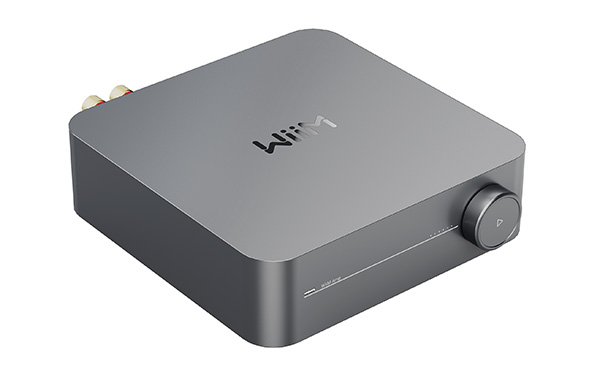
The design is neat and tidy; the app is well done; the build feels solid. Yet I had serious doubts that the WiiM Amp would sound good enough to deserve a mention in Stereophile. How could they pack all that functionality and good sound into something this cheap in price yet not in look and feel? You're reading this in the pages of Stereophile, so you know my doubts were unfounded. It sounds pretty darn good! It's peppy but not thin, not the fastest amp ever made but plenty dynamic. And those DSP tone-shaping controls allow you to pair it with speakers in a way that accents any system's strengths. For a few days, I used the WiiM Amp driving those Behringer passive monitors as my TV sound system. I connected my ancient Sony Wega digital CRT TV's analog outputs to the WiiM Amp's RCA inputs. Via cable from a TiVo box and streaming from a Roku, the sound was as expected. Some channels and services sound better than others. This system was far more revealing than TV speakers. I'm finding that with television, the better the audio system, the more I dislike the sound quality of many programs.
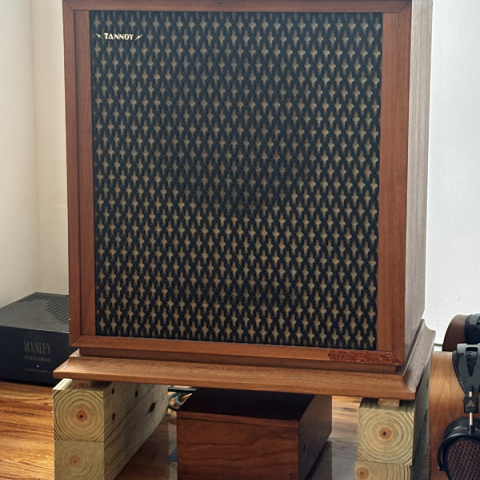
 During the time it was hooked up to the Behringer speakers, I tested the various streaming and file-playing options. Everything worked. The WiiM-Behringer combo sounded fine with any kind of music. I also spent some time listening on a pair of vintage Klipsch Heresys, which have nice, wide imaging but are notoriously light in the low end. I added a KRK subwoofer, and after some adjusting of the subwoofer level and crossover points, I very much liked that setup. The efficient Klipsch speakers posed no challenge to the WiiM Amp, and the subwoofer passthrough worked as expected. I enjoyed streaming some recent LP needle drops from my NAS library, especially of the new Rhino High Fidelity AAA remaster of the Cars' second album, Candy-O (Rhino Records RHF1 507). Its dry, popping, 1980s sound came through in spades, as did the tight low end and vocals, more confident and better-recorded here than on the group's first album. Another listening "trip" I enjoyed was Pink Floyd's Piper at the Gates of Dawn (24/192, Pink Floyd Records/Qobuz). The WiiM-Klipsch-KRK system sounded appropriately psychedelic-trippy, not harsh, not mellow. I closed my eyes and let the odd mind of Syd Barrett pull me into a musical dreamstate.
Back to the present. I moved the WiiM Amp into my office and connected it to a pair of Amphion One18's, which are relatively easy to drive and can produce quite a bit of bass from their small boxes. They are quite revealing in the midrange and treble, especially nearfield, which is how I have them set up. I listened carefully for realistic sound of midrange instruments and whether, eg, loud female voices crackled or fuzzed or otherwise distorted. I heard no such things. Playing with the BBC feeds in the WiiM Amp Home app, I selected Radio Manchester and stumbled into a great hour of 1970s and '80s dance music. I reflexively cranked up the volume and heard crisp beats and pumping bass. The speakers didn't overtax the WiiM Amp; the WiiM Amp met the challenge. The sound was what I'll call modern—punchy and somewhat sharp-edged—more so than the sound produced with the speakers' usual driver, a circa-2000 McIntosh MA6500 integrated. With certain kinds of music, the McIntosh's warmer, deeper sound is preferable. On any music, it's an unfair comparison.
During the time it was hooked up to the Behringer speakers, I tested the various streaming and file-playing options. Everything worked. The WiiM-Behringer combo sounded fine with any kind of music. I also spent some time listening on a pair of vintage Klipsch Heresys, which have nice, wide imaging but are notoriously light in the low end. I added a KRK subwoofer, and after some adjusting of the subwoofer level and crossover points, I very much liked that setup. The efficient Klipsch speakers posed no challenge to the WiiM Amp, and the subwoofer passthrough worked as expected. I enjoyed streaming some recent LP needle drops from my NAS library, especially of the new Rhino High Fidelity AAA remaster of the Cars' second album, Candy-O (Rhino Records RHF1 507). Its dry, popping, 1980s sound came through in spades, as did the tight low end and vocals, more confident and better-recorded here than on the group's first album. Another listening "trip" I enjoyed was Pink Floyd's Piper at the Gates of Dawn (24/192, Pink Floyd Records/Qobuz). The WiiM-Klipsch-KRK system sounded appropriately psychedelic-trippy, not harsh, not mellow. I closed my eyes and let the odd mind of Syd Barrett pull me into a musical dreamstate.
Back to the present. I moved the WiiM Amp into my office and connected it to a pair of Amphion One18's, which are relatively easy to drive and can produce quite a bit of bass from their small boxes. They are quite revealing in the midrange and treble, especially nearfield, which is how I have them set up. I listened carefully for realistic sound of midrange instruments and whether, eg, loud female voices crackled or fuzzed or otherwise distorted. I heard no such things. Playing with the BBC feeds in the WiiM Amp Home app, I selected Radio Manchester and stumbled into a great hour of 1970s and '80s dance music. I reflexively cranked up the volume and heard crisp beats and pumping bass. The speakers didn't overtax the WiiM Amp; the WiiM Amp met the challenge. The sound was what I'll call modern—punchy and somewhat sharp-edged—more so than the sound produced with the speakers' usual driver, a circa-2000 McIntosh MA6500 integrated. With certain kinds of music, the McIntosh's warmer, deeper sound is preferable. On any music, it's an unfair comparison.
 Compared to what?
For an even more unfair comparison, I took the WiiM Amp up to the living room and plugged it into my B&W 808 full-range speakers. The bass was noticeably flabby, to the point that it sounded exaggerated. The strong bass-instrument tonality I'm accustomed to went missing in the 50th Anniversary remaster of "Concrete Jungle" on Bob Marley's Catch A Fire (24/96 FLAC, Universal/Qobuz). Plenty of floor shaking, but not enough note-shaping. The same was true of Phil Lesh's bass in the live version of Merle Haggard's "Mama Tried" on Grateful Dead (aka Skull and Roses) (24/96 FLAC, Warner/Qobuz). With the best power amps, the front edge of each note is clearly defined; the sounds of both the bass instrument and the amplifier color the satisfying tonality. With the WiiM amp, it could have been a bass keyboard, with plenty of oomph but not a sharp representation of the whole sound. With the big speakers, I also noticed that the stereo image was flatter and more confined than I'm used to. The location and directionality cues were there, but the image didn't extend behind, in front of, or above the speakers as much as I am used to. And there was a slight "class-D glaze" to the upper midrange, not enough to ruin my listening pleasure—probably not even noticeable if you haven't listened to a lot of class-D and class-AB amplifiers playing the same music at the same SPLs through the same speakers. When I reconnected the B&Ws to my reference streaming system—dCS Bartók, Benchmark LA-4 line preamp, and AHB2 power amplifier—things sounded right again. Comparing this system to the WiiM Amp is beyond unfair, but checking in with the reference system from time to time is essential in any review. No one will be surprised to learn that I preferred my reference system's sound for careful listening. In summary, the sound differences between the WiiM Amp and my favorite amps, driving my B&W 808's, weren't so great that I wanted to ban the WiiM from my living room. Still, they were quite audible, to my ears.
 What's an audiophile to do?
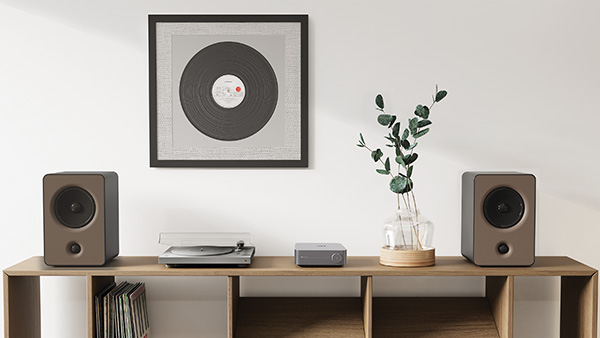
A note to makers of high-end streamers and streamer-DACs: Please study the WiiM app. It has a better user interface and an app-wide search function, combining streaming services with local NAS libraries. An excellent app for phones or tablets is part of the price-value proposition with a streaming device, even for a company whose main focus is on sound. By that measure, WiiM scores high. For someone used to a highly detailed and resolving system, the WiiM Amp probably isn't the best choice as a reference. Presumably, it's not intended to be. Where then? In my view, it belongs in a simple entry-level system. It's a great way to start out with inexpensive or hand-me-down speakers before moving up the food chain. Or maybe it's for TV sound or a system in a room where you want casual music but don't expect to listen closely—although it's better than it needs to be for that application. Roon Readiness and Wi-Fi mean it will work well in a multiroom system. Consider it akin to the 1970s silver-faced 45Wpc receiver but consider that the price of one of those—about $300 in 1977 dollars—is equivalent to more than $1500 today. For a young audiophile or someone on a limited budget who decides the "smart speaker" or TV soundbar isn't getting it done, the WiiM Amp is almost a no-brainer. I say "almost" because there are also speaker-gadgets out there that do most of the same functions and have everything built into loudspeakers that sound good. For some, that may be the best solution, especially if living space is tight. If you already own speakers, or if you think you might want to upgrade from a soundbar or "smart" speakers, the WiiM Amp would be a good choice.