 Listening
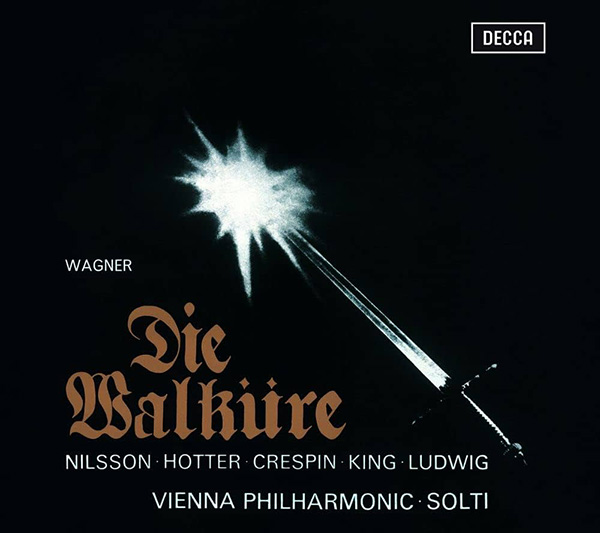
When I audition a new DAC, the main things I listen for are the liveliness of musical forms (flow, action, jump, vibrancy) and materiality. I used to think these important-to-me audio-sonic traits went out with wringer washers, flushed away in limp digital streams, or buried under layers of signal processing, but exceptional flow, presence, and vibrancy (!) were the first traits I noticed streaming Qobuz via Wattson's control app. I was hoping to get a quick read on the Wattson's streaming app. Was it as transparent as dCS's Mosaic? I played the remastered 1965 Georg Solti–conducted Wagner: Die Walküre (24/192 FLAC, Decca/Qobuz). Normally, I'd hate to see a great classic recording like this venerable Decca "enhanced" by plug-in trickeries. I've known and loved this recording on Decca vinyl, so I was prepared to cringe at this punched-up-for-streaming remake. Instead, halfway into the second act, I froze. Somehow this recording's mastering engineer and the Wattson Madison LE's engineering team conspired to make this newfangled Solti-Wagner into an attention-gripping audio-IMAX experience. Images of the performers were almost luridly vivid, right in front of me, very distinctly outlined. The Madison LE displayed a clarity I associate with today's most elite DACs. The sound was so vivid and compelling, I was forced to enjoy what I thought I would hate.
 Vibrancy is that rare quality of audio system sound that grabs listeners' attention, prickles their need for excitement, and steers them deeper into the music's content. It is the main trait that music streaming struggles to deliver. Here, via the Madison LE and Qobuz, it was boiling off these courtly processionals. The Madison's vitality made this music livelier and more accessible than it was with Denafrips's Terminator Plus DAC and Roon's Nucleus+ streamer.
Madison's streaming sonics were more transparent and microdetailed than those emerging from that Denafrips-Roon combo. Transients were more naturally preserved. Leading and trailing edges of notes felt complete. Rhythms bounced, percussion hit just hard enough, and vivo ruled.
Vibrancy is that rare quality of audio system sound that grabs listeners' attention, prickles their need for excitement, and steers them deeper into the music's content. It is the main trait that music streaming struggles to deliver. Here, via the Madison LE and Qobuz, it was boiling off these courtly processionals. The Madison's vitality made this music livelier and more accessible than it was with Denafrips's Terminator Plus DAC and Roon's Nucleus+ streamer.
Madison's streaming sonics were more transparent and microdetailed than those emerging from that Denafrips-Roon combo. Transients were more naturally preserved. Leading and trailing edges of notes felt complete. Rhythms bounced, percussion hit just hard enough, and vivo ruled.
 Via S/PDIF from a transport
I assumed that the vibrancies described above were a result of the Madison LE's streaming mechanism. I was curious what would change when I took that part out of the chain and played CDs with TEAC's VRDS 701T transport, connected by coaxial S/PDIF.
 With Beyerdynamic DT 1770 Pro MKII headphones
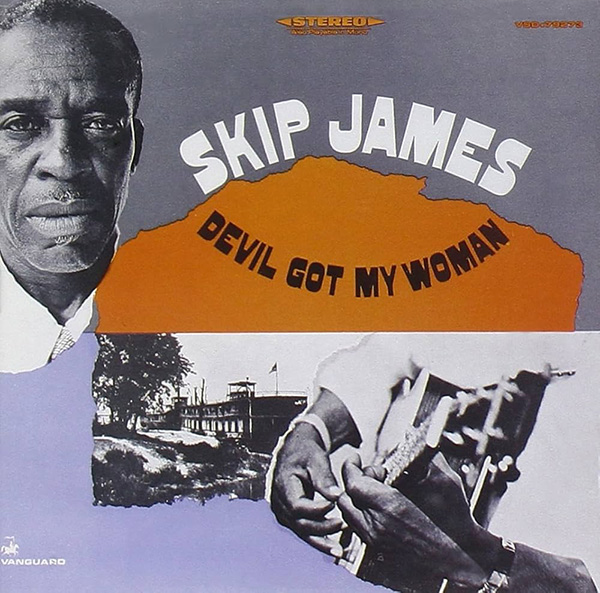
On top of the tallest blues mountain, you'll find three preternaturally talented creatures: Lead Belly, Robert Johnson, and Skip James. All three proffer dark supernatural tales backed by guitar (or piano) pyrotechnics. All three artists are worth a lifetime of study. For the millionth time, I am marveling at Skip James's amazing, cannot-be-equaled piano playing. It's 10° outside, and I'm lying on my back in the dark, listening with Beyerdynamic's 32 ohm DT 1770 Pro headphones to "Little Cow, Little Calf Blues," the second track on Mr. James's 1968 album Devil Got My Woman (16/44.1 FLAC, Vanguard/Qobuz). The Qobuz-streamed version of this song is sounding almost as good, maybe as good, or possibly better (in its own way) than the LP version. This album never sounded this clean, clear, and inner-detailed when streamed by the Roon Nucleus+. This streamed Skip James sounded different than analog, but not inferior. It came through with the same emotional intensity as the LP. I felt like I just woke up, and while I was asleep, digital reinvented itself. The Madison's server-DAC-headphone amp made Beyerdynamic's easy-to-drive closed backs sound like the last headphones I, or any mastering engineer, would ever need. Next, I played the Devil Got My Woman LP (Vanguard VSD 79273). I was amused by how the streamed version had shown me all these fantastic details of Skip's piano work and now there I was, looking for those details on the LP. I was grateful to see they were there, but they were presented less obviously, under a different light. The Madison's headphone amp made Beyerdynamic's $599 DT 1770 Pro MKII closed backs sound more liquid clear and pro-level resolving than they had any right to at their three-figure price. You'd have to be a snooty elitist audiophile to require anything better with your Madison.
 In sum
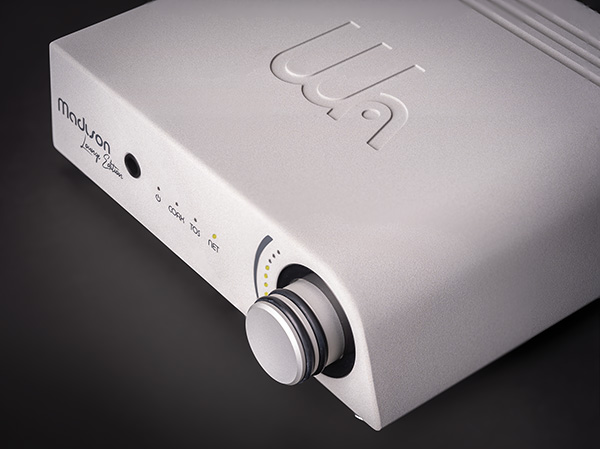
I believe that the only way forward for music streaming is to start punching harder and sounding more movie star glamorous than its disc-based alternatives. Based on my experiences with the Madison LE, it seems Wattson's engineering team are hip to this plan and have created the Madison as a distillation of their leading-edge technologies to showcase the next level of in-home streaming sonics—in a small package, at an affordable price. In my system, the Madison LE streamer-DAC delivered a level of vibrance and vital clarity I had not previously encountered for under five figures. My highest recommendation