 Beyerdynamic's DT 1990 PRO MKII and DT 1770 PRO MKII
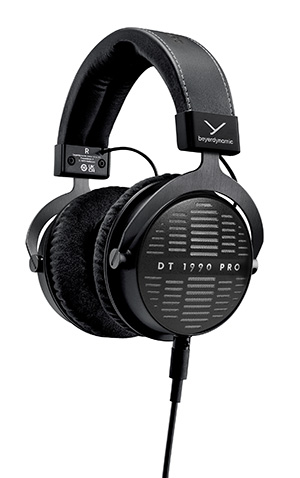
Beyerdynamic is one of those pro-audio brands, like AKG in Austria or Shure Inc. in Chicago, that specializes in microphones and headphones for recording studio use. Beyerdynamic has been family owned since its founding in Berlin in 1924. It moved to Heilbronn, Germany, in 1948, and that is where all the company's products are manufactured (footnote 3). I decided to audition the new, second-generation (MKII) versions of Beyerdynamic's DT 1770 PRO closed-back and DT 1990 PRO open-back headphones because they look artist-cool and sport new polymer "Tesla.45" diaphragms. Both are easy loads, with a 30 ohm impedance and a 95dBmW sensitivity at 500Hz. The MKIIs' looks and build quality are the opposite of boutique: They look sturdy, black, and serious, but also delicately drawn. And they each cost only $599. As befits a pro headphone, two cables are included with both MKIIs: a 3m straight cable and a 5m coiled cable. Both terminate in a lockable three-pin mini-XLR plug. Both are supplied with two types of ear pads: On the 1990, "Producing Velours" (which have a touch of bass boost) are fitted standard; the "Mixing & Mastering Velours," which offer "a more analytical sound," come in the box. The 1770, too, comes with both leatherette and velour earpads.
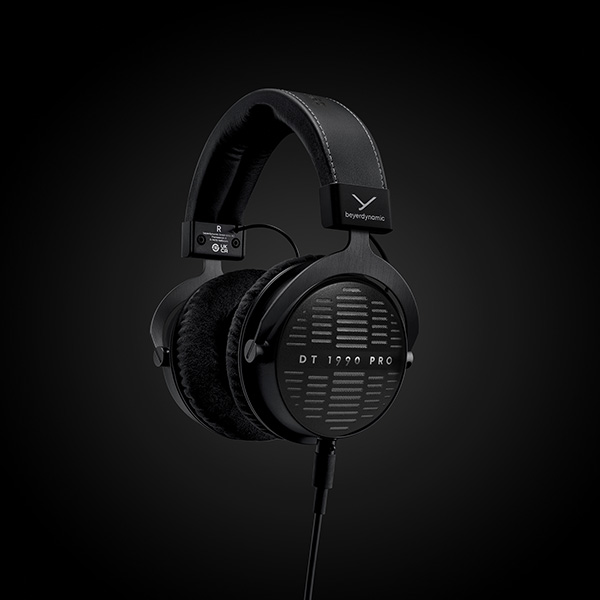 DT 1990 PRO MKII
I laugh every time it happens. I never notice how fuzzy my room speakers sound until I listen to the same recording with a pair of studio-quality headphones. This time, the "same" recording was Warming by the Devil's Fire and the headphone was the Beyerdynamic 1990 PRO MKII. I was only halfway through Otha Turner & The Rising Star Fife & Drum Band's performance of Willie Dixon's "My Babe," recorded live at St. Ann's Warehouse in 2001, when my brain stopped admiring the ethereal sound of a fife and the layering of percussion instruments behind Otha Turner's vocals and I wondered, what change of sonics would I notice with the supposedly less bassy "Mixing & Mastering" earpads?
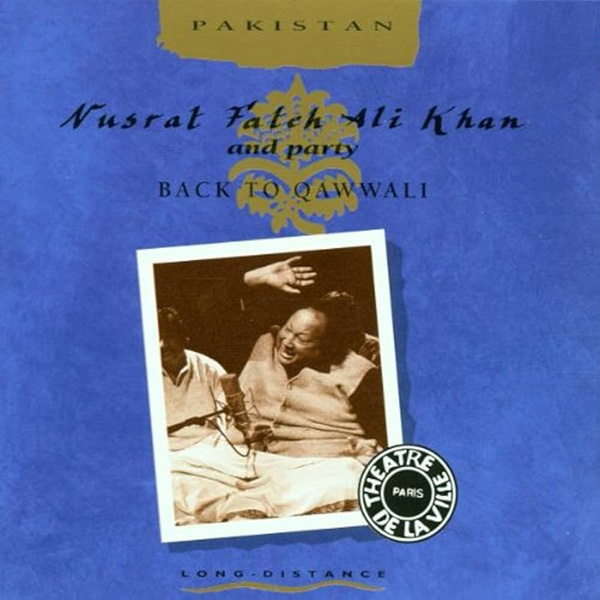 Qawwali percussion moves these ancient songs forward with a calculated mesmerism intended to hold listeners' minds like ravers on a Techno groove. But what struck me most while studying these Back to Qawwali tracks was the accuracy of their spatial mapping and how closely matched the DT 1990's channels appeared to be. I did not expect this level of precision at this price. Close channel matching puts that last turn of focus on complex stereo proceedings, and here, with the Qawwali, that extra sharpness exposed the layering of voices in the near and far planes.
Veils are lifted: I regard the sound quality of the $4000, 32 ohm, 101dB/mW, Meze Elite open-back headphone as unassailable. I believe anyone using it would immediately appreciate its depth of space, transparency, nanodetailing, and sheer luxuriousness.
The first thing I noticed when I switched to the planar-magnetic Elite after a week listening exclusively with the 1990 MKIIs was how quiet the Elite was—how so much deep, silent, black space surrounded the Qawwali performers. I had not noticed any of the space-graying haze I was obviously—but unknowingly—experiencing with the Beyerdynamic. Besides their black, grainless silence, the most obvious difference sonics-wise was how much more nuanced and open the Elites were.
Qawwali percussion moves these ancient songs forward with a calculated mesmerism intended to hold listeners' minds like ravers on a Techno groove. But what struck me most while studying these Back to Qawwali tracks was the accuracy of their spatial mapping and how closely matched the DT 1990's channels appeared to be. I did not expect this level of precision at this price. Close channel matching puts that last turn of focus on complex stereo proceedings, and here, with the Qawwali, that extra sharpness exposed the layering of voices in the near and far planes.
Veils are lifted: I regard the sound quality of the $4000, 32 ohm, 101dB/mW, Meze Elite open-back headphone as unassailable. I believe anyone using it would immediately appreciate its depth of space, transparency, nanodetailing, and sheer luxuriousness.
The first thing I noticed when I switched to the planar-magnetic Elite after a week listening exclusively with the 1990 MKIIs was how quiet the Elite was—how so much deep, silent, black space surrounded the Qawwali performers. I had not noticed any of the space-graying haze I was obviously—but unknowingly—experiencing with the Beyerdynamic. Besides their black, grainless silence, the most obvious difference sonics-wise was how much more nuanced and open the Elites were.
 On a geezer hunch, I wondered, how will the Meze play reggae? So, for fun, I played This Is Crucial Reggae – Jimmy Cliff (Sanctuary CD 06076-80460-2), first through the Meze Elites, then through the DT 1990 MKIIs. Poor remastering and infantile EQ-ing highlight the rolled-off, distorted sound on this Sanctuary compilation, but the Meze Elite tried its best to put lipstick on the pig. The sound with the Meze was smooth and listenable, but the Rasta 'tude was buried under Meze's smoothness. To my surprise, the greater simplicity of the 1990's presentation conveyed more Rasta 'tude. As a result, the Beyers allowed me to listen past this recording's defects and enjoy one of my lifelong favorite songs: "Many Rivers to Cross."
880 days: Presence, depth, and well-drawn detail are traits that please every time I use my 250 ohm Beyerdynamic DT 880s, a gift from a headphone collector who was thinning their herd.
On a geezer hunch, I wondered, how will the Meze play reggae? So, for fun, I played This Is Crucial Reggae – Jimmy Cliff (Sanctuary CD 06076-80460-2), first through the Meze Elites, then through the DT 1990 MKIIs. Poor remastering and infantile EQ-ing highlight the rolled-off, distorted sound on this Sanctuary compilation, but the Meze Elite tried its best to put lipstick on the pig. The sound with the Meze was smooth and listenable, but the Rasta 'tude was buried under Meze's smoothness. To my surprise, the greater simplicity of the 1990's presentation conveyed more Rasta 'tude. As a result, the Beyers allowed me to listen past this recording's defects and enjoy one of my lifelong favorite songs: "Many Rivers to Cross."
880 days: Presence, depth, and well-drawn detail are traits that please every time I use my 250 ohm Beyerdynamic DT 880s, a gift from a headphone collector who was thinning their herd.
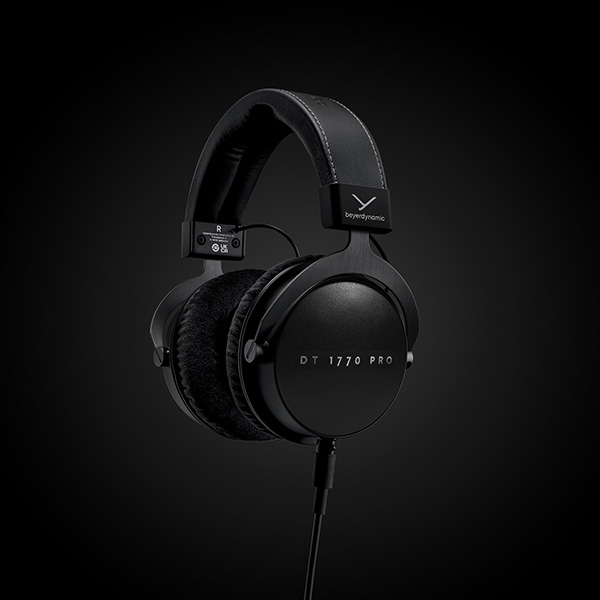 DT 1770 PRO MKII
Beyerdynamic's DT 1770 PRO MKII is the "closed back" version of the open-back DT 1990s. Almost comically, Beyerdynamic's concept of "open" is more closed than mine. With the DT 1990s, I covered the earcups with my hands and observed no change in sound. Not surprisingly then, these two models sounded more alike than different. But the differences seemed worth describing. I tend to like closed-back headphones, and I took to the 1770 right away. It presented recordings in a slightly brighter, purer, larger manner than the DT 1990. The DT 1770 sounded more neutral and transparent than the DT 1990 and more open than HiFiMan's HE-R10D dynamic closed back (Amazon price, $239), which, in comparison, sounded rough and clouded. My religious sensibility identifies with the Middle Ages in Europe. I find it easy to imagine being in those feudal villages, in their stone churches, trancing out on chant. During cold, overcast November days, monophonic Grégorien chant is comfort music, and 1000 ans de chant Grégorien (Harmonia Mundi France CD 2908165) is one of my favorite "comfort" listens as well as a perfect recording for observing reverb tails.
Beyerdynamic's DT 1990 PRO MKII and DT 1770 PRO MKII headphones are supreme bargains that should be welcomed equally by studio pros and audiophile aficionados. They sound as honest, professional, and modern as they look. Earnestly recommended.
Footnote 3: Beyerdynamic GmbH & Co. KG, Theresienstr. 8, D-74072 Heilbronn, Germany. Email: info@beyerdynamic.de. Web: beyerdynamic.com. US distributor: Beyerdynamic North America, Tel: (631) 293-3200. Email: info@beyerdynamic-usa.com. Web: north-america.beyerdynamic.com.