Follow-Up
Following Kalman Rubinson's review and John Atkinson's testing, which were published in the April 2025 issue, the Charcoal Black Technics SC-CX700 streaming amplified speaker system was shipped to me (footnote 1). I checked out some of the features Kal described, dug into the underlying tech with Technics's Bill Voss, and spent a few dozen hours listening, especially to the system's phono circuit.
In the room where I did most of my listening, I set the speakers up on generic 24"-high metal stands. The centers of their coaxial drivers were a bit below my ears; they might have benefited from higher stands but I didn't feel cheated in the resulting tonal balance or the size of the stereo image. Room logistics required a wide-triangle setup: the speakers ended up about 70" apart, my head about 55" from the center point between them. I toed them in so that they aimed just past my head. This position seemed to yield the most even frequency response and wide-screen stereo image.
My first hour with the CX700 was spent streaming familiar music from Qobuz, getting an idea of their baseline sound. I used the Technics Audio Center app on my iPhone 15 to set the Space Tune to "Free"; Voss confirmed that Free is the flat-response option of the built-in digital signal processing (DSP) "crossover," which assigns frequency bands to each of the two separate all-digital amplification systems (more on that later). I checked the other preset EQ curves ("Space Tune" options), designed for against-wall, in-bookshelf, and in-corner setups. None of those sounded as good as Free in the midroom location I placed the speakers. Still, with this setup, the sound wasn't exciting and images weren't sharp-focus defined. It was okay but not compelling.
So I set up and tried the two room-correction modes. Using a track from my Bass Test playlist on Qobuz (footnote 2), Hans Zimmer's title music for Bladerunner 2049, I listened in both modes. With the calibration resulting from the "Measured" setting, which uses an iPhone microphone at the listening position, the lowest-frequency sounds caused the speakers to audibly break up and crackle. To my surprise, the filter derived with the "Auto" setting, which uses a microphone located on the primary speaker (in my setup, the left) to calibrate the EQ curve, brought the music suddenly to life. The woofers held their own, moving, I thought at the time, about as much air as they are capable of moving. Zimmer's point was made, though the room was not fully energized with bass energy. If I owned these speakers, I would use a subwoofer with music that is heavily reliant on bass. For music that doesn't depend as much on the bottom octaves, the SC-CX700 system may be better with no augmentation.
Spinning records in tight quarters
One nice feature of the CX700 system is a built-in phono preamp. However, the preamp is built into the main primary speaker, so the turntable must be located close by. The preamp is moving magnet only—there's no need to send tiny MC output over long cables—even with an MM cartridge (or high-output MC), a long phono cable isn't ideal; it invites pickup of extraneous electromagnetic interference floating around a space, waiting to prey on low-level signal cables. Though it depends on the cable and its shielding—and also the output of the cartridge—a rule of thumb for the maximum length of a phono cable with an MM cartridge is about a meter. One of the Technics marketing photos (footnote 3) shows a Technics SL-1200 series turntable sitting right between a pair of CX700s on top of a console cabinet. Unless that cabinet provides excellent vibration damping, such a setup could well provide nasty acoustic feedback if the music had much bass content and was played at volume levels likely to induce careful listening; then again, many speaker-ad photos are made without speaker cables—hardly the approach needed to get the best possible sound.
I put my Technics SL-1200MK7 turntable, which was sporting an Ortofon 2M Blue cartridge, on a squat wooden table about 2' to the left and in front of the primary speaker. The floor is a cement slab, that little table is made of heavy oak, and the speaker stands had carpet spikes. In that arrangement, I heard no audible feedback at loud but comfortable listening levels. Before spinning LPs, I cranked the volume all the way up to hear the phono input noisefloor. With ear to speaker, I heard a little bit of innocuous hiss, but it was inaudible at the listening seat. Even with my ear close to the speaker, I heard no hum or RFI hash. Impressive!
For a few evenings, after dinner I poured some decent bourbon over ice, sat in a comfortable chair, and played records through the CX700, focusing on enjoyment of music I love rather than sonic nitpicking. The system passed the test for engagement, presenting a sound quality focused on the music in the grooves rather than surface noise or the mechanical process of playing the records. Part of the credit goes to the 2M Blue, which is forgiving of records that aren't pristine. I was surprised how large the sound seemed coming out of those little coaxial drivers. The stereo images were focused and detailed.
Voss told me that the phono preamp is an analog circuit, located on the same board as the 1/8" line-level analog input. After amplification and RIAA de-emphasis, the signal is converted to 24/48 digital for processing with the CX700's DSP/amplification engine.
 To ascertain the tonality of the phono preamp, I focused on two records: Fillmore Street/Little Woodstar (Albany Records TROY1985) by my Stereophile colleague, composer Sasha Matson, and the Hazelrigg Brothers' Synchronicity: An interpretation of the album by The Police (Outer Marker Records OM01-100V; footnote 4). Why these two albums? First, they are both recorded and transferred to vinyl really well. Second, the artists were kind enough to provide copies of the digital master files, which I loaded onto my network-attached music server and used for comparison. I was curious how much and how what I call the "vinyl black box"—cutting to lacquer, manufacturing, and playback—changed the sound.
With my colleague Sasha's album, I focused on the second track on the first side, "Sonora Pass." A vintage Moog synthesizer is featured, in tandem with a woodwind and brass ensemble, with a violin solo. Aside from being a pleasing piece of music, it is rich with sonic textures and covers wide frequency and dynamic ranges.
The Hazelrigg brothers, George on piano and Geoff on acoustic bass, play jazz interpretations of rock and pop tunes, with drummer John O'Reilly Jr. Their recreation of the Police's final album, an early 1980s megahit, goes against the cheesy stereotype of jazz covers of rock tunes. There's no soprano sax awkwardly mimicking the vocals. Instead, they strip the music down and focus on the essence of these surprisingly complex compositions. My friend Doug Fearn recorded the album, live to DSD, using tubed microphone preamps, compressors, and equalizers that he designed and built. I concentrated on the Hazelriggs' cover of "King of Pain," with its percussive bassline: The bass takes the melody line at first, with piano providing chords; then they switch. The beat is from the drums and mixed percussion.
To ascertain the tonality of the phono preamp, I focused on two records: Fillmore Street/Little Woodstar (Albany Records TROY1985) by my Stereophile colleague, composer Sasha Matson, and the Hazelrigg Brothers' Synchronicity: An interpretation of the album by The Police (Outer Marker Records OM01-100V; footnote 4). Why these two albums? First, they are both recorded and transferred to vinyl really well. Second, the artists were kind enough to provide copies of the digital master files, which I loaded onto my network-attached music server and used for comparison. I was curious how much and how what I call the "vinyl black box"—cutting to lacquer, manufacturing, and playback—changed the sound.
With my colleague Sasha's album, I focused on the second track on the first side, "Sonora Pass." A vintage Moog synthesizer is featured, in tandem with a woodwind and brass ensemble, with a violin solo. Aside from being a pleasing piece of music, it is rich with sonic textures and covers wide frequency and dynamic ranges.
The Hazelrigg brothers, George on piano and Geoff on acoustic bass, play jazz interpretations of rock and pop tunes, with drummer John O'Reilly Jr. Their recreation of the Police's final album, an early 1980s megahit, goes against the cheesy stereotype of jazz covers of rock tunes. There's no soprano sax awkwardly mimicking the vocals. Instead, they strip the music down and focus on the essence of these surprisingly complex compositions. My friend Doug Fearn recorded the album, live to DSD, using tubed microphone preamps, compressors, and equalizers that he designed and built. I concentrated on the Hazelriggs' cover of "King of Pain," with its percussive bassline: The bass takes the melody line at first, with piano providing chords; then they switch. The beat is from the drums and mixed percussion.
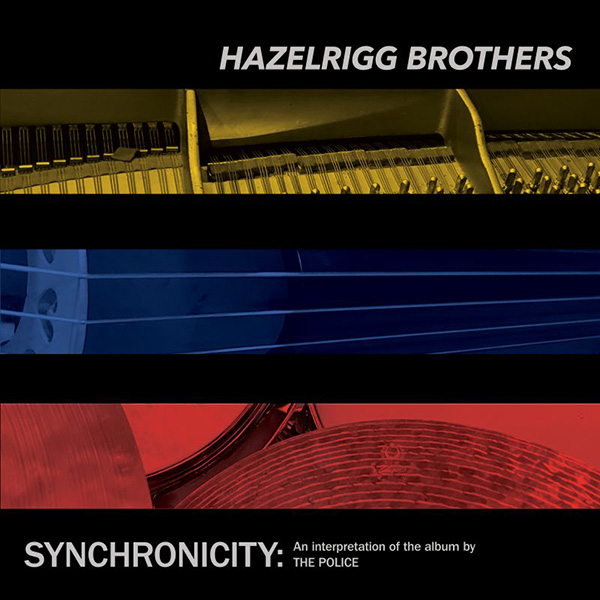 Through the CX700, the tonality and placement of the instruments within the stereo soundstage were very similar, digital master files vs vinyl. I thought the images were more stable in the digital files, but both vinyl version's presentations sometimes sounded more lifelike. Whatever the "vinyl black box" was doing, it wasn't messing up the sound, and at times it brought out a greater feeling of living musicians playing music together. I wish JA had been able to measure the phono circuit's frequency response and adherence to the RIAA curve; I suspect it's quite accurate and flat. Through the analog-to-digital conversion, DSP, and conversion back to analog, the music survived unmolested.
Tech talk
Through the CX700, the tonality and placement of the instruments within the stereo soundstage were very similar, digital master files vs vinyl. I thought the images were more stable in the digital files, but both vinyl version's presentations sometimes sounded more lifelike. Whatever the "vinyl black box" was doing, it wasn't messing up the sound, and at times it brought out a greater feeling of living musicians playing music together. I wish JA had been able to measure the phono circuit's frequency response and adherence to the RIAA curve; I suspect it's quite accurate and flat. Through the analog-to-digital conversion, DSP, and conversion back to analog, the music survived unmolested.
Tech talk
Technics's Voss provided me a document detailing the technology in the CX700 system. The electronics are derivative of the company's top-line SU-R1000 integrated amplifier, which Ken Micallef reviewed in 2021; both the SU-R1000 and the CX700 use the JENO digital amplifier. In the CX700, the JENO amplifiers are the digital-to-analog converters, which is to say, the movement of the speakers is the analog expression of the digital signal. There is no separate DAC chip. There are four JENO amplifiers in total, one for each driver in each speaker. Ahead of the amplifiers are the streaming and internet connectivity circuitry, digital input receivers, analog-to-digital converters, and DSP processing. The last bit of DSP is the digital crossover, splitting the signal into woofer and tweeter frequency bands then sending pulse-width modulation datastreams—think DSD—to each JENO module.
The technical document also emphasized that the "digital control section" and the "amplification section" have separate power supplies. Bottom line, a lot of Technics's most modern thinking is in this little speaker system (footnote 5).
That got me thinking: Could I put them in a position to sound better, bigger, faster?
More space, more bass
After completing my phono preamp evaluation, I moved the system upstairs to my living room, which has a vaulted ceiling. I placed the speakers about 58" from the back wall, 6' from the nearest sidewall, and about 64" apart. My listening seat was about 80" from the center point between the speakers.
Using the Technics app, I returned to my Qobuz playlists, plus the digital master files of the tunes I concentrated on during my vinyl listening, streamed from my NAS. I recalibrated the two room-correction modes, and switched back and forth between "Free," "Auto," and "Calibrated" EQ curves.
In all three modes, the bass was now deeper and felt more natural, as if I could feel the long-wavelength energy moving about and exciting the room. It was surprising how much bigger the little speakers sounded when given room to breathe. In this setting, I preferred the "Free" (flat) EQ curve; the sound was most natural and fully dynamic in that mode. In the larger space—is this irony?—there seemed to be less need for a subwoofer. All this led me to conclude that these speakers might thrive in a larger listening space—to a point.
In both spaces, they sounded best when pushed to comfortable SPLs for serious listening (in other words, not background music levels). They seemed to need to get the little woofers moving to generate full-frequency soundwaves.
But I was happiest with the CX700 system in my larger space, with no room-compensation DSP. I spent several enjoyable evenings streaming favorite albums and checking out new music that dropped on Qobuz. I also streamed a bit from Spotify, confirming that good speakers and lossy streaming aren't a good mix at serious listening volumes. Where oh where is the long-promised premium tier?
If you're in the market for a compact, complete streaming system with the ability to add a moving magnet–based vinyl-playing system—and you can put your turntable near a speaker—check out the Technics SC-CX700. You could also use this system to greatly improve the sound of your TV via HDMI-ARC or optical digital. You can connect a CD player if you have one. The company has packed a lot of cutting-edge tech into these little amplified speaker boxes, which can make a big sound and can be adjusted to sound good in most spaces.—Tom Fine
Footnote 1: The SC-CX700 costs $2999.99/pair. Manufacturer: Panasonic Corporation of North America, Two Riverfront Plaza, Newark, NJ 07102-5490. Web: us.technics.com.
Footnote 2: See open.qobuz.com/playlist/21395182.
Footnote 3: See tinyurl.com/9ym7eeac.
Footnote 4: See tinyurl.com/2cyy7knp.
Footnote 5: A synopsis of the system's tech and innards may be found at tinyurl.com/49khtc46.
One nice feature of the CX700 system is a built-in phono preamp. However, the preamp is built into the main primary speaker, so the turntable must be located close by. The preamp is moving magnet only—there's no need to send tiny MC output over long cables—even with an MM cartridge (or high-output MC), a long phono cable isn't ideal; it invites pickup of extraneous electromagnetic interference floating around a space, waiting to prey on low-level signal cables. Though it depends on the cable and its shielding—and also the output of the cartridge—a rule of thumb for the maximum length of a phono cable with an MM cartridge is about a meter. One of the Technics marketing photos (footnote 3) shows a Technics SL-1200 series turntable sitting right between a pair of CX700s on top of a console cabinet. Unless that cabinet provides excellent vibration damping, such a setup could well provide nasty acoustic feedback if the music had much bass content and was played at volume levels likely to induce careful listening; then again, many speaker-ad photos are made without speaker cables—hardly the approach needed to get the best possible sound.
To ascertain the tonality of the phono preamp, I focused on two records: Fillmore Street/Little Woodstar (Albany Records TROY1985) by my Stereophile colleague, composer Sasha Matson, and the Hazelrigg Brothers' Synchronicity: An interpretation of the album by The Police (Outer Marker Records OM01-100V; footnote 4). Why these two albums? First, they are both recorded and transferred to vinyl really well. Second, the artists were kind enough to provide copies of the digital master files, which I loaded onto my network-attached music server and used for comparison. I was curious how much and how what I call the "vinyl black box"—cutting to lacquer, manufacturing, and playback—changed the sound.
With my colleague Sasha's album, I focused on the second track on the first side, "Sonora Pass." A vintage Moog synthesizer is featured, in tandem with a woodwind and brass ensemble, with a violin solo. Aside from being a pleasing piece of music, it is rich with sonic textures and covers wide frequency and dynamic ranges.
The Hazelrigg brothers, George on piano and Geoff on acoustic bass, play jazz interpretations of rock and pop tunes, with drummer John O'Reilly Jr. Their recreation of the Police's final album, an early 1980s megahit, goes against the cheesy stereotype of jazz covers of rock tunes. There's no soprano sax awkwardly mimicking the vocals. Instead, they strip the music down and focus on the essence of these surprisingly complex compositions. My friend Doug Fearn recorded the album, live to DSD, using tubed microphone preamps, compressors, and equalizers that he designed and built. I concentrated on the Hazelriggs' cover of "King of Pain," with its percussive bassline: The bass takes the melody line at first, with piano providing chords; then they switch. The beat is from the drums and mixed percussion.
Through the CX700, the tonality and placement of the instruments within the stereo soundstage were very similar, digital master files vs vinyl. I thought the images were more stable in the digital files, but both vinyl version's presentations sometimes sounded more lifelike. Whatever the "vinyl black box" was doing, it wasn't messing up the sound, and at times it brought out a greater feeling of living musicians playing music together. I wish JA had been able to measure the phono circuit's frequency response and adherence to the RIAA curve; I suspect it's quite accurate and flat. Through the analog-to-digital conversion, DSP, and conversion back to analog, the music survived unmolested.
Tech talkTechnics's Voss provided me a document detailing the technology in the CX700 system. The electronics are derivative of the company's top-line SU-R1000 integrated amplifier, which Ken Micallef reviewed in 2021; both the SU-R1000 and the CX700 use the JENO digital amplifier. In the CX700, the JENO amplifiers are the digital-to-analog converters, which is to say, the movement of the speakers is the analog expression of the digital signal. There is no separate DAC chip. There are four JENO amplifiers in total, one for each driver in each speaker. Ahead of the amplifiers are the streaming and internet connectivity circuitry, digital input receivers, analog-to-digital converters, and DSP processing. The last bit of DSP is the digital crossover, splitting the signal into woofer and tweeter frequency bands then sending pulse-width modulation datastreams—think DSD—to each JENO module.
After completing my phono preamp evaluation, I moved the system upstairs to my living room, which has a vaulted ceiling. I placed the speakers about 58" from the back wall, 6' from the nearest sidewall, and about 64" apart. My listening seat was about 80" from the center point between the speakers.
Footnote 1: The SC-CX700 costs $2999.99/pair. Manufacturer: Panasonic Corporation of North America, Two Riverfront Plaza, Newark, NJ 07102-5490. Web: us.technics.com.