"What a great-sounding recording," I thought, which is also what I thought five minutes later when I listened to the 24 Karat Gold CD, which is said on the cover to be mastered "from the original master tapes" of the Bill Evans Quintet's Interplay (CD, DCC GZS-1102). Compared to "Utopic Cities," the Evans recording was airier and more resonant. Note outlines appeared starker in space.
I was never a big fan of the sound of this Gold CD, finding it a bit dry and sterile. But now its tonal balance seemed to have inched into more verdant territory. It wasn't warm per se—in comparison, the midband of my Focal K2 936s is warm—but it wasn't cold either; it was just right. Instruments sounded crisp and clear, not brittle or overexposed—just there, in the flesh, uncolored, emanating an oxygen-breathing life force. Transients were laser-fast, giving percussive notes snap and the music a rhythmic brio the Brits refer to as PRaT (footnote 3). On the album's opener, "You and the Night and the Music," the atmosphere is palpably festive and bubbling—this was a champagne-serving, Happy Hour, lap-tapping occasion. And I realized: The Gold CD was never the problem; the problem was the playback equipment I was using at the time.
What I heard from these two selections—what they shared—was variety in tonal color. Anti-homogeneity. Each sound had its own, uniquely shaded tonal palette. Nothing smeared. At the same time, they delivered mesmerizing note-to-note flow, as if the melodic rails were greased.
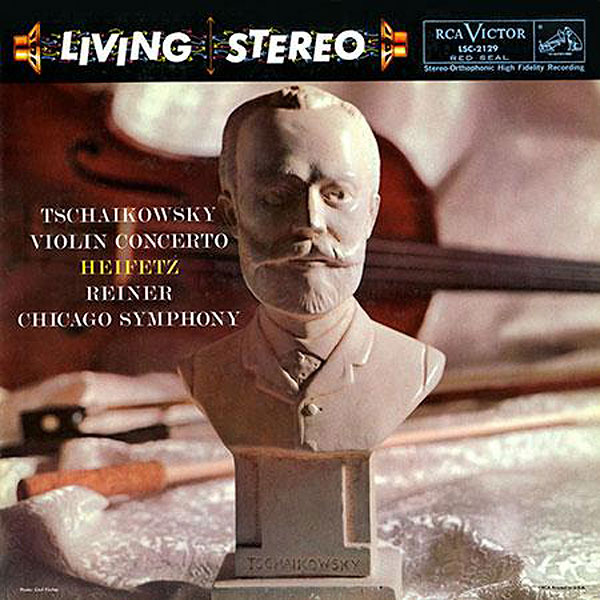 The performance of the Gold CD inspired me to try another audiophile CD: Tchaikovsky's Violin Concerto by the Fritz Reiner–led Chicago Symphony Orchestra, with violinist Jascha Heifetz (CD, JVC JMCXR-0009). Heifetz's playing techniques were drop-your-towel explicit. I could see everything he was doing and feel everything he was doing—emotionally, yes, but also in a hypertexturized, corporeal way. And when the full orchestra rises at the 2-minute mark, with its cascades of violins and trumpets, I was taken aback by its stature and the mosaic of shifting musical parts. And its composure. At high volume, nothing sounded twisted out of shape or shrieked by the pressure. When things got big and busy, the different parts just went about their business, autonomous and unfazed.
With my phono stage plugged into the Shinai amp's RCA inputs—the Shinai lacks balanced connections—I played Alice Coltrane's Journey to Satchidananda (LP, Impulse! IMP-228), an album whose nearly every note, melody, studio effect, playing technique, and tape warble I know as if I'd written and played every part. Listening to the title track through the Silver 500s, I wondered: Were Charlie Haden's bass lines springier, but also less fulsome, than I'm used to hearing? Were Coltrane's string plucks more explosive but also brighter? Was the soundstage more upfront? Were the instruments squeezed closer together?
I then put on Zappa's apostrophe (') (LP, Zappa Records ZR 3851) and wondered: Did the tempos sound quicker, but maybe too quick, almost fast-forwarded? Was the air thinner? Was the sound of the guitar wirier, the cymbals and female voices splashier?
The performance of the Gold CD inspired me to try another audiophile CD: Tchaikovsky's Violin Concerto by the Fritz Reiner–led Chicago Symphony Orchestra, with violinist Jascha Heifetz (CD, JVC JMCXR-0009). Heifetz's playing techniques were drop-your-towel explicit. I could see everything he was doing and feel everything he was doing—emotionally, yes, but also in a hypertexturized, corporeal way. And when the full orchestra rises at the 2-minute mark, with its cascades of violins and trumpets, I was taken aback by its stature and the mosaic of shifting musical parts. And its composure. At high volume, nothing sounded twisted out of shape or shrieked by the pressure. When things got big and busy, the different parts just went about their business, autonomous and unfazed.
With my phono stage plugged into the Shinai amp's RCA inputs—the Shinai lacks balanced connections—I played Alice Coltrane's Journey to Satchidananda (LP, Impulse! IMP-228), an album whose nearly every note, melody, studio effect, playing technique, and tape warble I know as if I'd written and played every part. Listening to the title track through the Silver 500s, I wondered: Were Charlie Haden's bass lines springier, but also less fulsome, than I'm used to hearing? Were Coltrane's string plucks more explosive but also brighter? Was the soundstage more upfront? Were the instruments squeezed closer together?
I then put on Zappa's apostrophe (') (LP, Zappa Records ZR 3851) and wondered: Did the tempos sound quicker, but maybe too quick, almost fast-forwarded? Was the air thinner? Was the sound of the guitar wirier, the cymbals and female voices splashier?
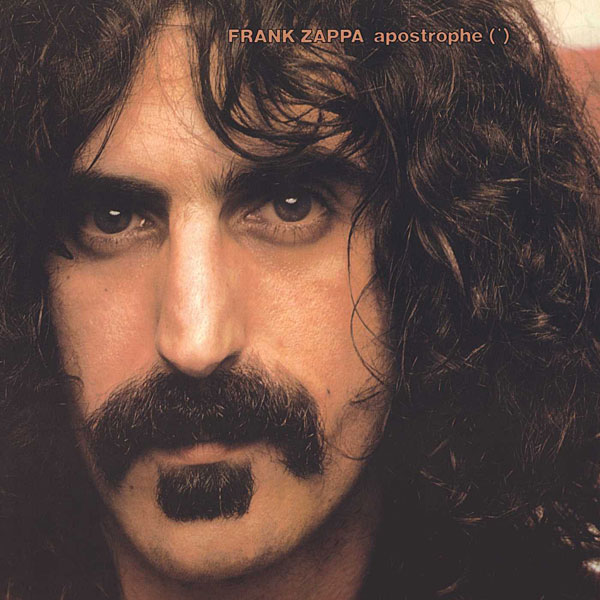 I got to work, substituting the Cambridge for my phono setup. Via the Roon app on my cellphone, I searched for the best-sounding file of apostrophe (') to stream. Of the four versions I found, the best-sounding—better than the 24/192 MQA version—was the 24/96 MQA. The 96kHz version seemed to have preserved more tangible atmosphere and harmonic cohesiveness. The music didn't sound as fast as it did on the LP; does warmer sound slow the perception of speed? It didn't sound sluggish, either. Tone and flesh had been reinstated: The guitar's twang, the drive-by panning effects, the women's voices, the cymbal's shimmer, everything sounded like itself—their individual selves—again.
I had recently replaced my pair of 6DJ8 tubes in my Sonic Frontiers phono preamp, one of which had gone bad, with a pair of used, spare tubes from my iffy emergency stash. I ordered a set of my favorite 6DJ8 replacements—Russian-made, NOS 6N23P-EB. A week later—fully aware that my "new" tubes hadn't broken in yet—I inserted them in their corresponding mounts. Immediately, the picture sounded fuller, more colorful, with most of the soundstage depth and instrumental separation I'd heard through the Focal Aria K2 936s before my tube incident.
I got to work, substituting the Cambridge for my phono setup. Via the Roon app on my cellphone, I searched for the best-sounding file of apostrophe (') to stream. Of the four versions I found, the best-sounding—better than the 24/192 MQA version—was the 24/96 MQA. The 96kHz version seemed to have preserved more tangible atmosphere and harmonic cohesiveness. The music didn't sound as fast as it did on the LP; does warmer sound slow the perception of speed? It didn't sound sluggish, either. Tone and flesh had been reinstated: The guitar's twang, the drive-by panning effects, the women's voices, the cymbal's shimmer, everything sounded like itself—their individual selves—again.
I had recently replaced my pair of 6DJ8 tubes in my Sonic Frontiers phono preamp, one of which had gone bad, with a pair of used, spare tubes from my iffy emergency stash. I ordered a set of my favorite 6DJ8 replacements—Russian-made, NOS 6N23P-EB. A week later—fully aware that my "new" tubes hadn't broken in yet—I inserted them in their corresponding mounts. Immediately, the picture sounded fuller, more colorful, with most of the soundstage depth and instrumental separation I'd heard through the Focal Aria K2 936s before my tube incident.
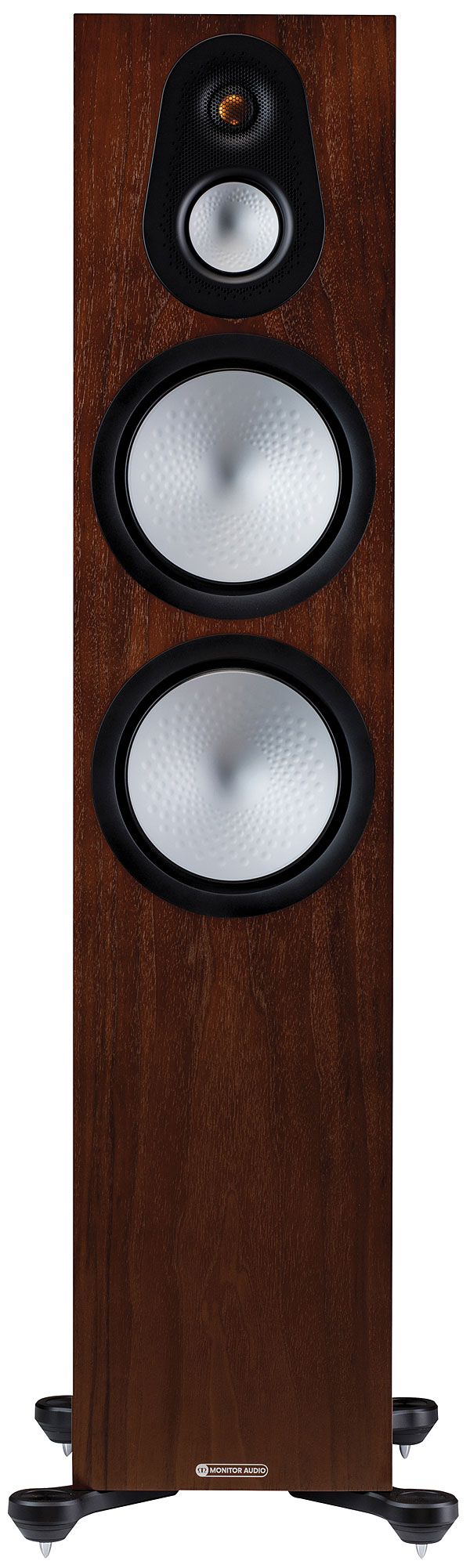 Switching back to CD via the Cambridge's digital inputs, I laid down some funky, beat-heavy music—El Oso by Soul Coughing (CD, Slash/Warner Bros. CDW 46800)—and pranced like an adolescent faun on my dance-floor rug. Bass response from the four woofers had drive, punch, and depth, but didn't project quite as much in-room energy as the much-more-expensive Focals do (although at the time I made this observation, I didn't realize that they were much more expensive).
I decided to play with the ports, which use the company's HiVe II (High Velocity II) reflex port technology, described as "a straight rifled design to accelerate air flow and reduce turbulence, allowing it to move air in and out much quicker than a conventional port." Each speaker has two ports and comes with two bungs.
I asked Michael why two ports per speaker, and if there was a recommended approach to using the bungs: "The aim of a port is to be able to tune it so the speaker extends to the mid 30Hz region to cover the full bass range," he said. "You can do this with a large diameter single port, or you can split the ports and place them at the best places, something we can determine with our simulator. Another benefit with two ports is that it offers the user more tuning options than a one-port speaker. I would normally try using the bung on the top port first and then switch, listening to both, and go from there. Whatever sounds best tends to be determined by the room."
I did as Michael said, using a bung first on top, then on the bottom, then on top again, then on both ports, then on none. Each time, with every configuration, the bungs added a bit more low-end warmth but also some wooliness that detracted from the 500s' pointlike tonal balance. Without bungs, the picture was in focus, linear from top to bottom.
Switching back to CD via the Cambridge's digital inputs, I laid down some funky, beat-heavy music—El Oso by Soul Coughing (CD, Slash/Warner Bros. CDW 46800)—and pranced like an adolescent faun on my dance-floor rug. Bass response from the four woofers had drive, punch, and depth, but didn't project quite as much in-room energy as the much-more-expensive Focals do (although at the time I made this observation, I didn't realize that they were much more expensive).
I decided to play with the ports, which use the company's HiVe II (High Velocity II) reflex port technology, described as "a straight rifled design to accelerate air flow and reduce turbulence, allowing it to move air in and out much quicker than a conventional port." Each speaker has two ports and comes with two bungs.
I asked Michael why two ports per speaker, and if there was a recommended approach to using the bungs: "The aim of a port is to be able to tune it so the speaker extends to the mid 30Hz region to cover the full bass range," he said. "You can do this with a large diameter single port, or you can split the ports and place them at the best places, something we can determine with our simulator. Another benefit with two ports is that it offers the user more tuning options than a one-port speaker. I would normally try using the bung on the top port first and then switch, listening to both, and go from there. Whatever sounds best tends to be determined by the room."
I did as Michael said, using a bung first on top, then on the bottom, then on top again, then on both ports, then on none. Each time, with every configuration, the bungs added a bit more low-end warmth but also some wooliness that detracted from the 500s' pointlike tonal balance. Without bungs, the picture was in focus, linear from top to bottom.
 Against my better judgment, I ended my review with the Singles movie soundtrack (CD, Sony 30104621), one of the worst examples of good music crushed to near-soullessness by excessive compression. While no set of gear, no matter how good, could ever make this recording entirely enjoyable, through the 500s, I found I could listen to whole tunes. It reminded me of something Michael had said during our interview: that Monitor Audio speakers are designed, most importantly, to sound good with every type of music. To that I'll add that the 500s, like all hi-fi equipment worth its salt, reveal not only what sounds better but by how much.
Coda
Against my better judgment, I ended my review with the Singles movie soundtrack (CD, Sony 30104621), one of the worst examples of good music crushed to near-soullessness by excessive compression. While no set of gear, no matter how good, could ever make this recording entirely enjoyable, through the 500s, I found I could listen to whole tunes. It reminded me of something Michael had said during our interview: that Monitor Audio speakers are designed, most importantly, to sound good with every type of music. To that I'll add that the 500s, like all hi-fi equipment worth its salt, reveal not only what sounds better but by how much.
Coda
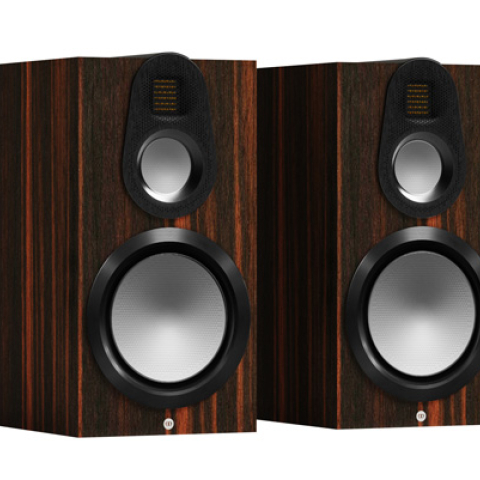
The Monitor Audio Silver 500 embodies a spirit of purity, which I'm inclined to believe is primarily due to the speaker's crossover. The whole wide frequency range of music sounds well-behaved, smooth, and of a piece. Notes seem to emanate from air, not from wooden boxes. The notes slide and shoot like stars.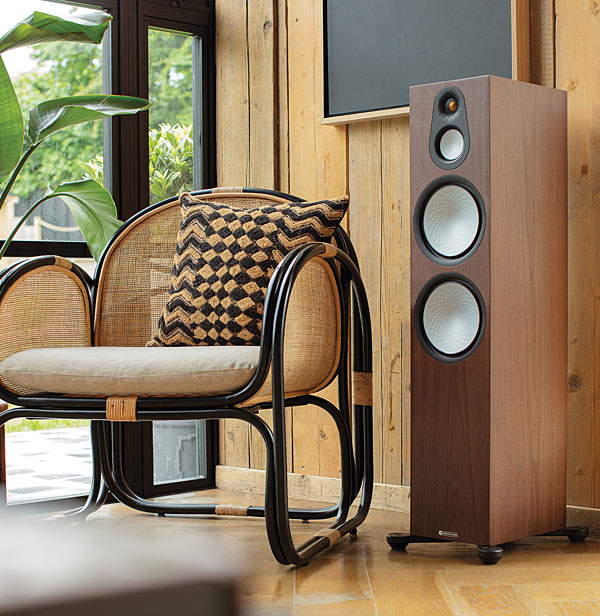 What about the Made-in-China thing? I told Charles and Michael that a number of Stereophile readers have expressed concern about products built in China—that the choice appeared to those readers as cost-cutting to the detriment of build quality and after-sales service. They said they understood, but they disagreed, saying they wouldn't have their speakers built in China if it resulted in less-well-made products than they could produce in the UK. Should repairs be needed, service would be provided via the distributor (Kevro in North America), which keeps a large inventory of spare parts, even for discontinued models. If additional assistance is needed, Monitor Audio has a dedicated service and after-sales support team in the UK.
"A product that is very well designed is easy to build," Charles said. "It really makes no difference where it's made, as long as there are proper quality-control measures in place. One of the key benefits of having our products assembled in China is that it allows the consumer to own a premium product at a price that more people can afford."
When I first received these speakers, the price was described as "TBD." Until about a third of the way through this review, I didn't know how much they cost. When I finally saw their price, I thought: This is for just one speaker, right? Wrong. At $3200 for the pair, the Monitor Audio Silver 500 is one of the great audio deals of the pandemic era.
What about the Made-in-China thing? I told Charles and Michael that a number of Stereophile readers have expressed concern about products built in China—that the choice appeared to those readers as cost-cutting to the detriment of build quality and after-sales service. They said they understood, but they disagreed, saying they wouldn't have their speakers built in China if it resulted in less-well-made products than they could produce in the UK. Should repairs be needed, service would be provided via the distributor (Kevro in North America), which keeps a large inventory of spare parts, even for discontinued models. If additional assistance is needed, Monitor Audio has a dedicated service and after-sales support team in the UK.
"A product that is very well designed is easy to build," Charles said. "It really makes no difference where it's made, as long as there are proper quality-control measures in place. One of the key benefits of having our products assembled in China is that it allows the consumer to own a premium product at a price that more people can afford."
When I first received these speakers, the price was described as "TBD." Until about a third of the way through this review, I didn't know how much they cost. When I finally saw their price, I thought: This is for just one speaker, right? Wrong. At $3200 for the pair, the Monitor Audio Silver 500 is one of the great audio deals of the pandemic era.
Footnote 3: I doubt many of our readers need this explanation, but here it is: PRaT stands for "pace, rhythm, and timing."—Jim Austin
The performance of the Gold CD inspired me to try another audiophile CD: Tchaikovsky's Violin Concerto by the Fritz Reiner–led Chicago Symphony Orchestra, with violinist Jascha Heifetz (CD, JVC JMCXR-0009). Heifetz's playing techniques were drop-your-towel explicit. I could see everything he was doing and feel everything he was doing—emotionally, yes, but also in a hypertexturized, corporeal way. And when the full orchestra rises at the 2-minute mark, with its cascades of violins and trumpets, I was taken aback by its stature and the mosaic of shifting musical parts. And its composure. At high volume, nothing sounded twisted out of shape or shrieked by the pressure. When things got big and busy, the different parts just went about their business, autonomous and unfazed.
With my phono stage plugged into the Shinai amp's RCA inputs—the Shinai lacks balanced connections—I played Alice Coltrane's Journey to Satchidananda (LP, Impulse! IMP-228), an album whose nearly every note, melody, studio effect, playing technique, and tape warble I know as if I'd written and played every part. Listening to the title track through the Silver 500s, I wondered: Were Charlie Haden's bass lines springier, but also less fulsome, than I'm used to hearing? Were Coltrane's string plucks more explosive but also brighter? Was the soundstage more upfront? Were the instruments squeezed closer together?
I then put on Zappa's apostrophe (') (LP, Zappa Records ZR 3851) and wondered: Did the tempos sound quicker, but maybe too quick, almost fast-forwarded? Was the air thinner? Was the sound of the guitar wirier, the cymbals and female voices splashier?
I got to work, substituting the Cambridge for my phono setup. Via the Roon app on my cellphone, I searched for the best-sounding file of apostrophe (') to stream. Of the four versions I found, the best-sounding—better than the 24/192 MQA version—was the 24/96 MQA. The 96kHz version seemed to have preserved more tangible atmosphere and harmonic cohesiveness. The music didn't sound as fast as it did on the LP; does warmer sound slow the perception of speed? It didn't sound sluggish, either. Tone and flesh had been reinstated: The guitar's twang, the drive-by panning effects, the women's voices, the cymbal's shimmer, everything sounded like itself—their individual selves—again.
I had recently replaced my pair of 6DJ8 tubes in my Sonic Frontiers phono preamp, one of which had gone bad, with a pair of used, spare tubes from my iffy emergency stash. I ordered a set of my favorite 6DJ8 replacements—Russian-made, NOS 6N23P-EB. A week later—fully aware that my "new" tubes hadn't broken in yet—I inserted them in their corresponding mounts. Immediately, the picture sounded fuller, more colorful, with most of the soundstage depth and instrumental separation I'd heard through the Focal Aria K2 936s before my tube incident.
Switching back to CD via the Cambridge's digital inputs, I laid down some funky, beat-heavy music—El Oso by Soul Coughing (CD, Slash/Warner Bros. CDW 46800)—and pranced like an adolescent faun on my dance-floor rug. Bass response from the four woofers had drive, punch, and depth, but didn't project quite as much in-room energy as the much-more-expensive Focals do (although at the time I made this observation, I didn't realize that they were much more expensive).
Against my better judgment, I ended my review with the Singles movie soundtrack (CD, Sony 30104621), one of the worst examples of good music crushed to near-soullessness by excessive compression. While no set of gear, no matter how good, could ever make this recording entirely enjoyable, through the 500s, I found I could listen to whole tunes. It reminded me of something Michael had said during our interview: that Monitor Audio speakers are designed, most importantly, to sound good with every type of music. To that I'll add that the 500s, like all hi-fi equipment worth its salt, reveal not only what sounds better but by how much.
CodaThe Monitor Audio Silver 500 embodies a spirit of purity, which I'm inclined to believe is primarily due to the speaker's crossover. The whole wide frequency range of music sounds well-behaved, smooth, and of a piece. Notes seem to emanate from air, not from wooden boxes. The notes slide and shoot like stars.
What about the Made-in-China thing? I told Charles and Michael that a number of Stereophile readers have expressed concern about products built in China—that the choice appeared to those readers as cost-cutting to the detriment of build quality and after-sales service. They said they understood, but they disagreed, saying they wouldn't have their speakers built in China if it resulted in less-well-made products than they could produce in the UK. Should repairs be needed, service would be provided via the distributor (Kevro in North America), which keeps a large inventory of spare parts, even for discontinued models. If additional assistance is needed, Monitor Audio has a dedicated service and after-sales support team in the UK.
Footnote 3: I doubt many of our readers need this explanation, but here it is: PRaT stands for "pace, rhythm, and timing."—Jim Austin