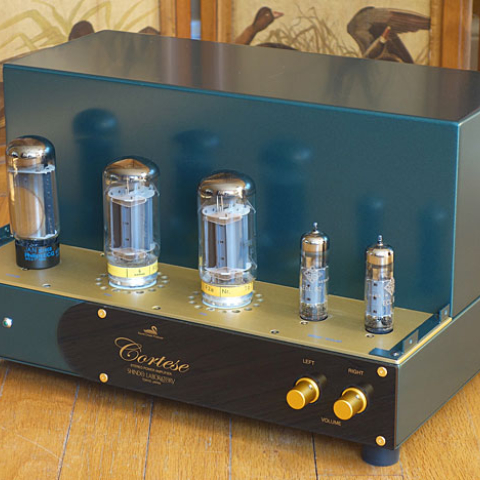
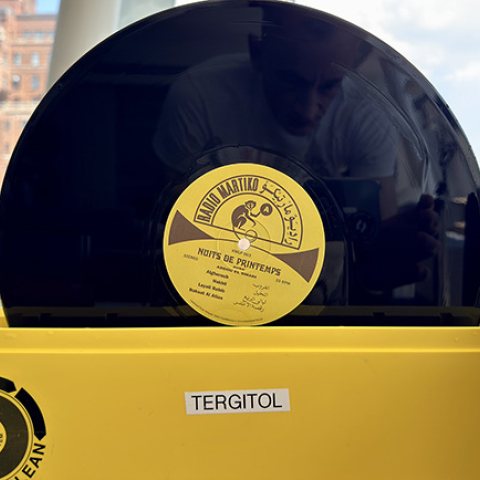
Take, for example, the opening measures of the 1961 recording of Strauss's Death and Transfiguration by Otto Klemperer and the Philharmonia Orchestra (LP, UK Columbia SAX 2437). When I play this exceptional record through my reference Shindo amp, the "heartbeat" gently played on the kettledrum (footnote 5) is taut, the contrabassoon ominous but not outsize, and the solo flute nothing less than amazing: big, meaty, and convincingly present, its sound coming from a space physically higher than the other woodwinds (the result of a spot mike, perhaps?). Later in the piece, the agitato section was portrayed with appropriate intensity but without harshness. Most important, my feeling that Klemperer was using his will to shape every line and note was palpable throughout: With the Shindo, it was apparent that this was not just a first-class orchestra handing in its standard Death and Transfiguration performance, but a group playing as one, making a recording in accordance with one person's presumably well-informed vision.
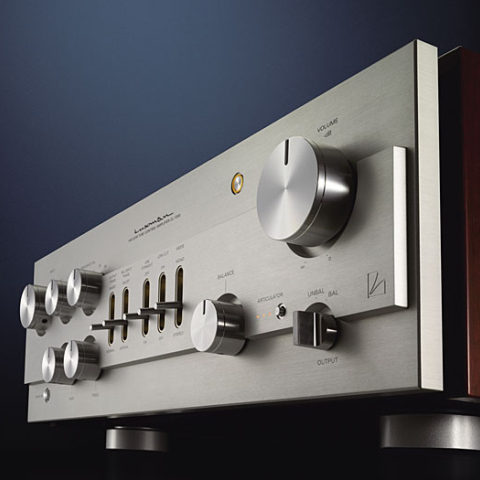
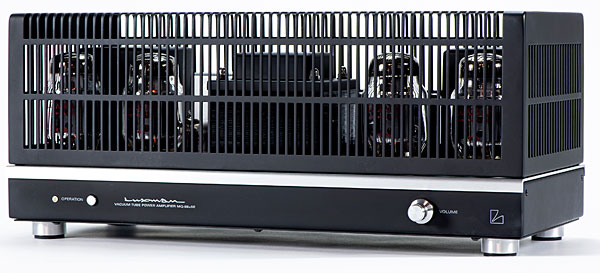
Listening to the same music with the Luxman MQ-88uSE driving my speakers produced a different but ultimately no less effective result. I wasn't as struck by the whole hypnotic-control thing as I was with the Shindo—in this instance I listened to the Shindo first and the Luxman second, which may have affected my reactions—but the Luxman offered a better sense of the rhythmic pattern of the kettledrum, and the notes played by the harpist stood out in much clearer relief. Once again, the flute sounded remarkably good—on the basis of only that, I'm sure I could not tell these amps apart—while notes in the lower strings had a better sense of fullness and tonal and textural thickness, but without bloat or temporal slowing. Indeed, with the Luxman, the players sounded as if they were leaning into some lines in a way I hadn't heard the first time around: a faster, pacier sound, with better overall momentum.
Near the end of the work, as Strauss's music builds toward the theme that John Williams borrowed for his score for Superman (1978)—the irony burns—the sounds of the strings just got prettier and prettier, without the slightest hint of strain, and without losing one iota of momentum or rhythmic nuance.
Most important overall: Like the Shindo, the Luxman didn't merely produce a bunch of notes—it allowed them their meanings. It was musical. On the basis of this selection alone, I considered the MQ-88uSE an absolutely marvelous amp.
 After that, I moved on to a piece of music that's new to me, in an amazing-sounding recording engineered by Kenneth Wilkinson that I picked up for $1 at a lawn sale just five blocks from my house: Raymond Leppard's mid-1970s premiere recording, with Janet Baker, the London Philharmonic, and the chorus of the Glyndebourne Festival Opera, of Cavalli's La Calisto (LP, Argo ZNF 11-12). This time I tried the Luxman first, and was knocked out by the lushly textured beauty of the string tone in the Prelude. The sense of scale was, for me, perfect—just a little bit big, which is how I like it. The three distantly miked (for dramatic purposes) women's voices that begin the narrative were well differentiated, spatially and in terms of timbre and phrasing, and the hall sound—especially when coaxed into existence by the transitions between orchestral accompaniment and that by the Glyndebourne's pipe organ—were clearly portrayed. In a similar vein, a die-away during an orchestral rest, just before the entrance of baritone Ugo Trama, was to die-away for.
Once again, I finished a selection thinking: What a great amp!
With this recording, the slightly less powerful Shindo had similarly gorgeous if differently balanced tone, and allowed the music a bigger sense of scale, although it smeared the room sound. The Shindo was also better at following dynamic and spatial nuances—at sounding bigger and smaller, louder and softer, as needed. But the sound of the brilliant, uncredited harpist, whose every arpeggio was a tactile delight that nearly stole the (instrumental) show, wasn't nearly as stirring as through the Luxman, which sounded faster and more incisive. Indeed, it was in the sharper turns in the recording—the transitions between orchestra and organ, between the room reverberations each left in its wake, the leading-edge impulses of the harp notes, and so forth—that the Luxman excelled: It was tonally rich and musically tight.
A very different recording—Coleman Hawkins's The Hawk Flies High (LP, Riverside RLP-233/OJC-027)—brought to the comparisons a different mix of strengths and weaknesses. With the Shindo Haut-Brion in my system, I noted that "Chant" sounded "Brilliant: Oscar Pettiford's bass was rich but also had lots of drive. The sounds of Hawkins's tenor and, especially, J.J. Johnson's trombone were alive. And when drummer Jo Jones started giving it to his ride cymbal during Hawkins's solo, there was no doubt about the considerable size of that cymbal or the strength and relentlessness of the player. I was in heaven—I haven't listened to this record in so long, and it sounded eight kinds of great!" But when I switched to the Luxman, I heard "even more drive" from a double bass that sounded no less rich, and the ride cymbal was easier to hear—"but less big." My notes also remind me that, through the Luxman, "horn and reed tone were real good, but not quite as special and spooky as through the Shindo."
And with "Just Squeeze Me," from Charlie Byrd's At the Village Vanguard (mono LP, Riverside RM 452), the Luxman did a better job with Keter Betts's bass, with better pitch definition of his notes. Yet, from its first notes, Byrd's acoustic guitar had more nuance and pure swing through the Shindo, through which Byrd's bass also sounded bigger. Yet in sounding bigger, the Shindo also made LP-surface ticks and pops themselves sound bigger; the Luxman was less perturbed by such incidentals.
Negatively biased
After that, I moved on to a piece of music that's new to me, in an amazing-sounding recording engineered by Kenneth Wilkinson that I picked up for $1 at a lawn sale just five blocks from my house: Raymond Leppard's mid-1970s premiere recording, with Janet Baker, the London Philharmonic, and the chorus of the Glyndebourne Festival Opera, of Cavalli's La Calisto (LP, Argo ZNF 11-12). This time I tried the Luxman first, and was knocked out by the lushly textured beauty of the string tone in the Prelude. The sense of scale was, for me, perfect—just a little bit big, which is how I like it. The three distantly miked (for dramatic purposes) women's voices that begin the narrative were well differentiated, spatially and in terms of timbre and phrasing, and the hall sound—especially when coaxed into existence by the transitions between orchestral accompaniment and that by the Glyndebourne's pipe organ—were clearly portrayed. In a similar vein, a die-away during an orchestral rest, just before the entrance of baritone Ugo Trama, was to die-away for.
Once again, I finished a selection thinking: What a great amp!
With this recording, the slightly less powerful Shindo had similarly gorgeous if differently balanced tone, and allowed the music a bigger sense of scale, although it smeared the room sound. The Shindo was also better at following dynamic and spatial nuances—at sounding bigger and smaller, louder and softer, as needed. But the sound of the brilliant, uncredited harpist, whose every arpeggio was a tactile delight that nearly stole the (instrumental) show, wasn't nearly as stirring as through the Luxman, which sounded faster and more incisive. Indeed, it was in the sharper turns in the recording—the transitions between orchestra and organ, between the room reverberations each left in its wake, the leading-edge impulses of the harp notes, and so forth—that the Luxman excelled: It was tonally rich and musically tight.
A very different recording—Coleman Hawkins's The Hawk Flies High (LP, Riverside RLP-233/OJC-027)—brought to the comparisons a different mix of strengths and weaknesses. With the Shindo Haut-Brion in my system, I noted that "Chant" sounded "Brilliant: Oscar Pettiford's bass was rich but also had lots of drive. The sounds of Hawkins's tenor and, especially, J.J. Johnson's trombone were alive. And when drummer Jo Jones started giving it to his ride cymbal during Hawkins's solo, there was no doubt about the considerable size of that cymbal or the strength and relentlessness of the player. I was in heaven—I haven't listened to this record in so long, and it sounded eight kinds of great!" But when I switched to the Luxman, I heard "even more drive" from a double bass that sounded no less rich, and the ride cymbal was easier to hear—"but less big." My notes also remind me that, through the Luxman, "horn and reed tone were real good, but not quite as special and spooky as through the Shindo."
And with "Just Squeeze Me," from Charlie Byrd's At the Village Vanguard (mono LP, Riverside RM 452), the Luxman did a better job with Keter Betts's bass, with better pitch definition of his notes. Yet, from its first notes, Byrd's acoustic guitar had more nuance and pure swing through the Shindo, through which Byrd's bass also sounded bigger. Yet in sounding bigger, the Shindo also made LP-surface ticks and pops themselves sound bigger; the Luxman was less perturbed by such incidentals.
Negatively biased
In other words, what we have here are two very good amps, both adept at playback qualities prized by aficionados of vintage audio—tone, touch, drive—but with different tonal presentations and balances of strengths. It's also safe to say that neither would do well at driving loudspeakers of less than high efficiency or at filling very large rooms. But being disappointed in a Luxman MQ-88uSE or Shindo Haut-Brion for not having much output power is like being disappointed in The Seventh Seal for not including a car chase. They just aren't that kind of product.
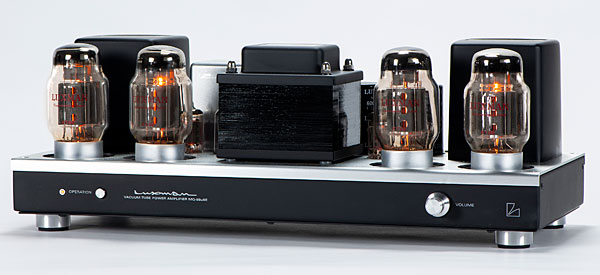
The two amps also sell for very different prices, although the lower cost of the Luxman MQ-88uSE is complicated by its limited availability. But later this year Luxman will add to their regular product line a very similar amp, the MQ-88uC. A price has yet to be set. I believe the new one will keep the vintage look, and I'm glad, partly because I like it and partly because the probable alternative—a big, heavy aluminum box with a thick aluminum faceplate—is likely to add a lot more to the price and degrade the amp's sound. I do know that the MQ-88uC will have separate output terminals for 4-, 8-, and 16-ohm speakers, will replace the oil capacitors between the driver and output stages with film caps, and will be supplied with tubes that are less precisely selected and matched. The first of those differences sounds like a plus to me; the second and third can be addressed in the field.
 Both amps sounded great, both were musical, and the Luxman is cheaper by half. Is the Shindo's extra nuance and scale worth twice the price? To me, yes; to others, maybe not so much—but I'll bet more than a few of those others may flat-out prefer the Luxman for its better timing.
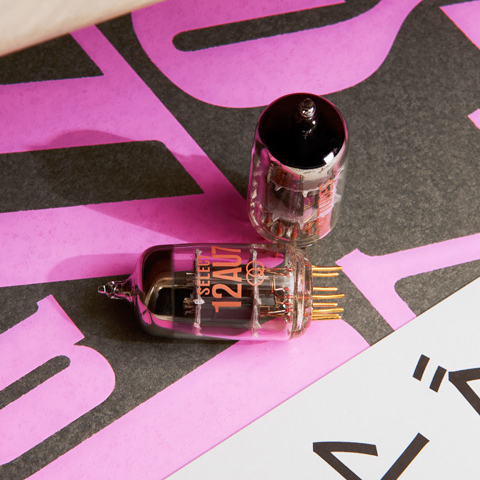
That last quality came as a surprise—but only after I learned that the Luxman MQ-88uSE runs its output tubes as triodes, not pentodes. These tubes must be stupid: They don't know they're supposed to be slow and temporally imprecise when used as triodes.
That joke is aimed at least as much at myself as anyone else—but the fact is, while prejudices born of experience are valid in some contexts, they're still prejudices, and thus of limited use. I remain convinced that, all else being equal, pentode tubes operated as pentodes have more muscle and speed than the same tubes operated as triodes, but an audio-frequency amplifier is a neighborhood in which all kinds of things are happening at the same time, all of them interrelated. Does the Luxman amp's abundant gain give it more giddy-up than a lower-gain triode amp would exhibit? Precisely how does its global feedback—or the local feedback used in the Shindo—affect the sound of music? And so forth.
At least one of my long-held biases (sorry) emerged unscathed: In my experience, an amplifier with global feedback never sounds as big as an identical or similar amp without global feedback. Score one for well-worn biases.
As for the usefulness of keeping my eyes wide shut and my ears wide open, although I endure in seeing no point in so-called blind testing and its quickly switched snatches of sound—a construct that has no more bearing on the way people enjoy music than a series of abruptly interrupted 50' test drives would have on the way people enjoy motoring—I think I'll try to do more of this in the future. As for the brilliantly musical and unmistakably high-value Luxman MQ-88uSE, you might want to grab one while you can.
Both amps sounded great, both were musical, and the Luxman is cheaper by half. Is the Shindo's extra nuance and scale worth twice the price? To me, yes; to others, maybe not so much—but I'll bet more than a few of those others may flat-out prefer the Luxman for its better timing.
That last quality came as a surprise—but only after I learned that the Luxman MQ-88uSE runs its output tubes as triodes, not pentodes. These tubes must be stupid: They don't know they're supposed to be slow and temporally imprecise when used as triodes.
That joke is aimed at least as much at myself as anyone else—but the fact is, while prejudices born of experience are valid in some contexts, they're still prejudices, and thus of limited use. I remain convinced that, all else being equal, pentode tubes operated as pentodes have more muscle and speed than the same tubes operated as triodes, but an audio-frequency amplifier is a neighborhood in which all kinds of things are happening at the same time, all of them interrelated. Does the Luxman amp's abundant gain give it more giddy-up than a lower-gain triode amp would exhibit? Precisely how does its global feedback—or the local feedback used in the Shindo—affect the sound of music? And so forth.
At least one of my long-held biases (sorry) emerged unscathed: In my experience, an amplifier with global feedback never sounds as big as an identical or similar amp without global feedback. Score one for well-worn biases.
As for the usefulness of keeping my eyes wide shut and my ears wide open, although I endure in seeing no point in so-called blind testing and its quickly switched snatches of sound—a construct that has no more bearing on the way people enjoy music than a series of abruptly interrupted 50' test drives would have on the way people enjoy motoring—I think I'll try to do more of this in the future. As for the brilliantly musical and unmistakably high-value Luxman MQ-88uSE, you might want to grab one while you can.
Footnote 5: I can't hear this without thinking of Franz Waxman's brilliant score for the film The Bride of Frankenstein (1935).
After that, I moved on to a piece of music that's new to me, in an amazing-sounding recording engineered by Kenneth Wilkinson that I picked up for $1 at a lawn sale just five blocks from my house: Raymond Leppard's mid-1970s premiere recording, with Janet Baker, the London Philharmonic, and the chorus of the Glyndebourne Festival Opera, of Cavalli's La Calisto (LP, Argo ZNF 11-12). This time I tried the Luxman first, and was knocked out by the lushly textured beauty of the string tone in the Prelude. The sense of scale was, for me, perfect—just a little bit big, which is how I like it. The three distantly miked (for dramatic purposes) women's voices that begin the narrative were well differentiated, spatially and in terms of timbre and phrasing, and the hall sound—especially when coaxed into existence by the transitions between orchestral accompaniment and that by the Glyndebourne's pipe organ—were clearly portrayed. In a similar vein, a die-away during an orchestral rest, just before the entrance of baritone Ugo Trama, was to die-away for.
Once again, I finished a selection thinking: What a great amp!
With this recording, the slightly less powerful Shindo had similarly gorgeous if differently balanced tone, and allowed the music a bigger sense of scale, although it smeared the room sound. The Shindo was also better at following dynamic and spatial nuances—at sounding bigger and smaller, louder and softer, as needed. But the sound of the brilliant, uncredited harpist, whose every arpeggio was a tactile delight that nearly stole the (instrumental) show, wasn't nearly as stirring as through the Luxman, which sounded faster and more incisive. Indeed, it was in the sharper turns in the recording—the transitions between orchestra and organ, between the room reverberations each left in its wake, the leading-edge impulses of the harp notes, and so forth—that the Luxman excelled: It was tonally rich and musically tight.
In other words, what we have here are two very good amps, both adept at playback qualities prized by aficionados of vintage audio—tone, touch, drive—but with different tonal presentations and balances of strengths. It's also safe to say that neither would do well at driving loudspeakers of less than high efficiency or at filling very large rooms. But being disappointed in a Luxman MQ-88uSE or Shindo Haut-Brion for not having much output power is like being disappointed in The Seventh Seal for not including a car chase. They just aren't that kind of product.
Both amps sounded great, both were musical, and the Luxman is cheaper by half. Is the Shindo's extra nuance and scale worth twice the price? To me, yes; to others, maybe not so much—but I'll bet more than a few of those others may flat-out prefer the Luxman for its better timing.
That last quality came as a surprise—but only after I learned that the Luxman MQ-88uSE runs its output tubes as triodes, not pentodes. These tubes must be stupid: They don't know they're supposed to be slow and temporally imprecise when used as triodes.
Footnote 5: I can't hear this without thinking of Franz Waxman's brilliant score for the film The Bride of Frankenstein (1935).