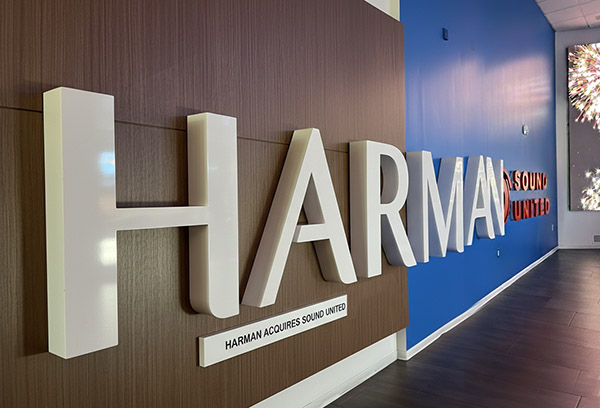
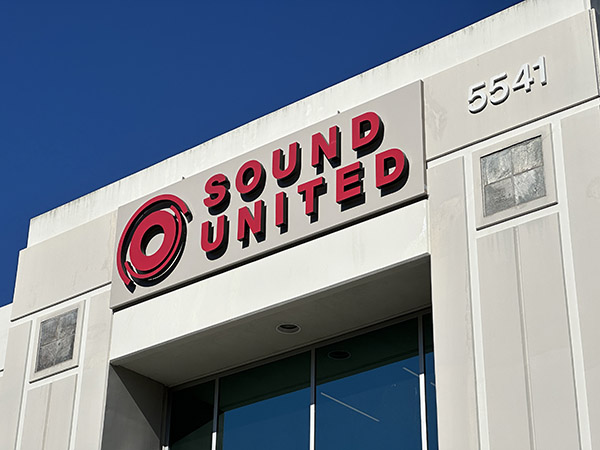
Today, Harman said that it has completed its acquisition of Sound United, adding Bowers & Wilkins, Denon, Marantz, Classé, Definitive Technology, Polk Audio, and Boston Acoustics to its portfolio.
Sound United will operate as a standalone Strategic Business Unit within Harman’s Lifestyle division. The intent is to preserve each brand’s identity—heritage, engineering approach, and customer base—while giving the group access to Harman’s global scale for manufacturing, distribution, and platform support. The promise: broader reach and added capabilities without collapsing brands into a single template.
The day‑one message for owners and dealers is continuity. “For the foreseeable future, say six months to a year, there’s going to be very little change,” Rogers told me. “Distribution, customer service, supply chain, [and] sales teams are going to remain separate, truly run as an independent business under the Lifestyle umbrella.”
What about the future? “I don’t foresee … one, two, three years down the road, … a mass consolidation. We’d look to continue a diversified distribution strategy.” The first move, he said, is to listen: “We’re in this for the long haul. We want to understand from the Sound United team what we can do to amplify their business, and go to dealers and distributors and find out what they need.”
Engineering will cross‑pollinate, especially around high‑end electronics. “One of the early ideas is we’d put our engineers together and learn from the great team in Japan (Shirakawa Audio Works)” Rogers said. “Same thing in Worthing with the [Bowers & Wilkins] team in the UK and the team in Northridge in the luxury space. The closest proximity to the Sound United business is what we call our Luxury business, which is JBL Synthesis, Arcam, Revel, and Mark Levinson.”
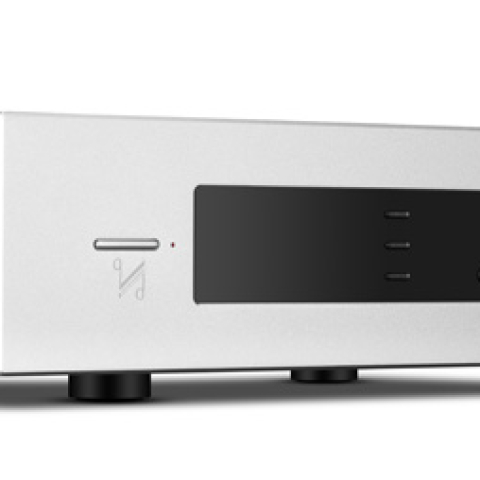
 Asked about Classé, the answer is straight two‑channel. “It would stay as they’ve been operating,” Rogers said. “In the high‑end two‑channel space is primarily where you’ll see that sit.” As for overlap: “There’s a different design from Mark Levinson, which would be the most proximal brand to Classé. ... They won’t be offered on the same price sheet through the same sales team. It’ll be different. We think there’s a place for Classé in our portfolio.”
The Sound United deal places Roon and HEOS–two streaming-music platforms–under the same roof. What's the strategy there? “Initially, we’re going to continue to support HEOS in a big way,” Rogers said. “We’re going to continue to support the [Harman] platform on the Harman side in a big way … [but] it’s something you’ve got to look at when you’re looking at all these brands.” He acknowledged HEOS’s role in custom installation and multiroom while leaving the door open to broader interoperability.
Roon remains independent and premium‑focused. “The three founders are still running the business,” Rogers said. “It operates independently within Harman … and there is a focus on the high end.” He highlighted RAAT–the Roon Advanced Audio Transport–as its multiroom core: “it works very, very well, and they have a loyal following.” Roon’s certification lab, he noted, “moved…to our office in Richardson, Texas.” The team is also “doing really cool potential new product designs … [and] could launch a new product … in the spring of next year."
Headphones and automotive will remain brand‑led. “Denon and Bowers have headphones,” he said. “We’d look to share … technologies, … [but] we really let them drive their product roadmap, … keep each premium and individual.” Dave sees “a big” Denon opportunity in Japan, and said Bowers “already has a business relationship with our automotive.” Post‑close, “I would not be surprised” to see conversations with other Sound United brands for cars."
Bottom line for two‑channel hi-fi: short‑term continuity, medium‑term learning and integration where it helps without flattening brand identities. Or, as Rogers put it: "We want to listen... we really want to lean into that process. I don't want to preconceive that we're gonna do X and Y."
Asked about Classé, the answer is straight two‑channel. “It would stay as they’ve been operating,” Rogers said. “In the high‑end two‑channel space is primarily where you’ll see that sit.” As for overlap: “There’s a different design from Mark Levinson, which would be the most proximal brand to Classé. ... They won’t be offered on the same price sheet through the same sales team. It’ll be different. We think there’s a place for Classé in our portfolio.”
The Sound United deal places Roon and HEOS–two streaming-music platforms–under the same roof. What's the strategy there? “Initially, we’re going to continue to support HEOS in a big way,” Rogers said. “We’re going to continue to support the [Harman] platform on the Harman side in a big way … [but] it’s something you’ve got to look at when you’re looking at all these brands.” He acknowledged HEOS’s role in custom installation and multiroom while leaving the door open to broader interoperability.
Roon remains independent and premium‑focused. “The three founders are still running the business,” Rogers said. “It operates independently within Harman … and there is a focus on the high end.” He highlighted RAAT–the Roon Advanced Audio Transport–as its multiroom core: “it works very, very well, and they have a loyal following.” Roon’s certification lab, he noted, “moved…to our office in Richardson, Texas.” The team is also “doing really cool potential new product designs … [and] could launch a new product … in the spring of next year."
Headphones and automotive will remain brand‑led. “Denon and Bowers have headphones,” he said. “We’d look to share … technologies, … [but] we really let them drive their product roadmap, … keep each premium and individual.” Dave sees “a big” Denon opportunity in Japan, and said Bowers “already has a business relationship with our automotive.” Post‑close, “I would not be surprised” to see conversations with other Sound United brands for cars."
Bottom line for two‑channel hi-fi: short‑term continuity, medium‑term learning and integration where it helps without flattening brand identities. Or, as Rogers put it: "We want to listen... we really want to lean into that process. I don't want to preconceive that we're gonna do X and Y."
Asked about Classé, the answer is straight two‑channel. “It would stay as they’ve been operating,” Rogers said. “In the high‑end two‑channel space is primarily where you’ll see that sit.” As for overlap: “There’s a different design from Mark Levinson, which would be the most proximal brand to Classé. ... They won’t be offered on the same price sheet through the same sales team. It’ll be different. We think there’s a place for Classé in our portfolio.”