Skov called the 350kHz bandwidth of Gryphon's amplifiers both "enormous" and unusual for amplification with a lot of transistors in parallel. He also said, in passing: "We prefer low-capacitance speaker cables and don't like coaxial speaker cables with or without active shielding. Those cables can be very good for digital amplifiers, reducing glitches and high-frequency noise, but for an analog amplifier with a huge bandwidth, their very high capacitance acts as a filter that limits bandwidth." Happy to say, my Nordost Odin 2 cabling is low capacitance.
Feets, Don't Fail Me Now
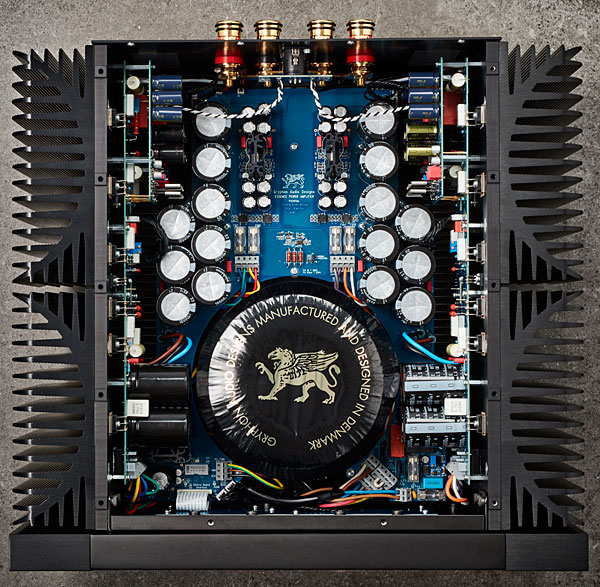
Truth be told, I've been accused of harboring a clinical-level foot fetish. No, I was not the guy who stalked the upper floors of Yale library, ca 1968, taking stealth whiffs of coeds' shoeless feet or stealing their shoes. I have, however, been known to experiment, to a degree some consider excessive, with aftermarket supports—footers—placed underneath the audio components I review. Lest I have my head handed to me once this review is published, I discussed the Essence's unusual footers with distributor Philip O'Hanlon (On a Higher Note) and then Skov before getting to work. The former told me that he removed the stock feet so that he could place the monoblocks on his Artesiana racks—which I thought gave me permission to try different footers. Then Skov told me that while the Essence was voiced with its proprietary, felt-pad– tipped, hollow Novodur P2H-AT792 ABS polymer feet, he unscrews them and attaches Essence's BlackSpikes ($350 for a set of four). Skov feels that BlackSpikes, which have a polymer body tipped with adjustable tempered steel, make the Essence sound "even more alive, especially in the lower midrange/top bass, where they seem to be quite effective." The results, though, will depend on the shelves being used, he noted: "It is not always for the better." Skov also told me that the spikes are packaged with two-sided adhesive rubber "wafers" that are meant to protect shelving.
 Armed with that knowledge, I removed the Essence's stock footers and listened, first, with the aftermarket footers I was using under my reference D'Agostino Progression monoblocks. After that, I spent 95% of my listening time with either the stock feet or the BlackSpikes and their wafers. My report only discusses these two company-approved scenarios.
The monoblocks were placed on Grand Prix Audio Monza amp stands with bamboo shelves, fed by a source-component chain of NAS drive>Roon Nucleus+>dCS Rossini DAC/Rossini Clock.
I declined O'Hanlon's offer to send Artesiana wafers to place under the spikes—I didn't want to risk adding anything that would alter the Essence's sound and skew my report—but then I figured out the motivation behind the offer: The sharp BlackSpikes pierced those thin adhesive wafers, leaving holes in the bamboo shelves. Worse, because I thought that the two-sided adhesive would stop the felt-tipped stock feet from sliding, I left the wafers on the shelves when I restored the polymer feet. When my husband and I were lifting one of the monoblocks, one foot stuck to an adhesive wafer, and before we could put the amp down, the shelf lifted up at a perilous angle and gashed my leg as it fell to the floor. Recoiling in pain, I toppled to the floor, managing to avoid knocking over an Alexia 2 or destroying the amp. Gryphon would do everyone a favor by replacing these little wafers with surface protectors with more substance. I can hear you thinking "Serinus is about to let Gryphon have it!" Not so: Serinus is about to give the Gryphon a rave review.
Cat and Bag Part II
Armed with that knowledge, I removed the Essence's stock footers and listened, first, with the aftermarket footers I was using under my reference D'Agostino Progression monoblocks. After that, I spent 95% of my listening time with either the stock feet or the BlackSpikes and their wafers. My report only discusses these two company-approved scenarios.
The monoblocks were placed on Grand Prix Audio Monza amp stands with bamboo shelves, fed by a source-component chain of NAS drive>Roon Nucleus+>dCS Rossini DAC/Rossini Clock.
I declined O'Hanlon's offer to send Artesiana wafers to place under the spikes—I didn't want to risk adding anything that would alter the Essence's sound and skew my report—but then I figured out the motivation behind the offer: The sharp BlackSpikes pierced those thin adhesive wafers, leaving holes in the bamboo shelves. Worse, because I thought that the two-sided adhesive would stop the felt-tipped stock feet from sliding, I left the wafers on the shelves when I restored the polymer feet. When my husband and I were lifting one of the monoblocks, one foot stuck to an adhesive wafer, and before we could put the amp down, the shelf lifted up at a perilous angle and gashed my leg as it fell to the floor. Recoiling in pain, I toppled to the floor, managing to avoid knocking over an Alexia 2 or destroying the amp. Gryphon would do everyone a favor by replacing these little wafers with surface protectors with more substance. I can hear you thinking "Serinus is about to let Gryphon have it!" Not so: Serinus is about to give the Gryphon a rave review.
Cat and Bag Part II
Let's get the non-rave commentary out of the way first. You're not going to buy expensive monoblocks that were optimized for class-A with the intention of spending most of your time in class-AB. With the stock feet, whether listening to the live recording of male vocal ensemble Chanticleer singing their "signature tune," Biebl's "Ave Maria," on A Chanticleer Christmas (Qobuz 16/44.1 FLAC); Cher's fabulously spirited remake of ABBA's "Dancing Queen," from Cher (Tidal 24/44.1 MQA); Susan Graham singing Hahn's Bach-inspired "Chloris" with Malcolm Martineau on Un Frisson Français (Qobuz 16/44.1 FLAC); Doug Tourtelot's superb recording of the Portland State Chamber Choir singing Eriks Eenvalds's "O salutaris hostia," from Translations (Naxos 8.574124, 24/96 WAV); Yello's bass-pounding, electronically hyped, smile-inducing "Electrified II" from Toy (Tidal. 24/48 FLAC); or soprano Carolyn Sampson singing Mozart's heavenly "Et incarnatus est" from Masaaki Suzuki's recording of the Great Mass in C Minor with the Bach Collegium Japan (24/96 FLAC, Qobuz), in class-AB, edges were bright and buzzy, images rather flat, and the midrange had a deficit of color and warmth. Soundstage depth and air were disappointing, making it hard to distinguish the all-important spatial relationships in the superbly recorded Eenvalds. When Møller said that the Essence's class-AB was appropriate for noncritical background listening, he spoke the truth. If you love music, you'll want to hear these amps in class-A. I got on a "Dancing Queen" kick after San Francisco Audiophile Society member Ian Wotherspoon recommended an uncharacteristically mellow, guitar-accompanied version from Swedish duo Erato on Erato Covers (Qobuz 16/44.1 FLAC). When I mentioned the title to my husband, he immediately exclaimed "ABBA!!!" Shortly thereafter, we headed to the music room to hear their original version, on ABBA Gold (Tidal 16/44.1 FLAC), followed by Cher's version. With the Essence's stock feet, Cher's version sounded so juicy and full that we began dancing. The only thing missing was a bit of bass.
Then we turned to Chanticleer, who sounded ideally airy and beautiful, on Biebl's unforgettable late–20th century setting of the "Ave Maria." In class-A, Susan Graham sounded so characteristically warm, so optimally cushioned by piano, that even though we'd heard this performance 100 times, we were spellbound. Part of that spell was cast by the Essence's almost mystical 3D depiction of air and space around voice and piano.
 On the Eenvalds, the engineering wonder, the sound was all-enveloping. I managed to write "This is just magical—a kiss of grace" before the entry of the male voices, whose perfectly placed foundation helped support the ethereal lift of the soprano voices that transported me to a place of wonder.
Next, I tried Gryphon's BlackSpikes. I found the sound somewhat fuller and more fleshed out in the lower midrange, with a concomitant boost in color saturation. With more there there, the perception of air and depth increased. Although the change was not huge, anyone who can afford these amps would benefit from shelling out an extra $700 for the BlackSpikes.
My entrancement was momentarily shattered when I began to explore other kinds of music. Enter Chris Bell, who is working on a video that explores the journey of Art Dudley's former Altec Flamenco loudspeakers to their new home. Because Chris was passing through Port Townsend and was eager to take a listen—and because I always benefit from hearing music I don't usually play—I invited him to cue up some of his favorite tracks. Due to COVID-19, we sat masked at opposite ends of the couch, where neither of us could fully appreciate the Essence's superb depiction of spatial relationships.
After auditioning Rosemary Standley's cover of Leonard Cohen's "Bird on the Wire" from Birds on the Wire (Qobuz 24/44.1 FLAC), Billie Eilish's "Listen Before I Go" from When We All Fall Asleep, Where Do We Go? (Tidal 24/44.1 MQA), and other selections, Chris declared that he missed his all-Naim system and ProAc K6 Signature loudspeakers' mightier bottom end. As I was celebrating the glorious sound of the flute in the Allegro Moderato from Abel's Flute Concerto No.1 in C, performed by Edward Beckett and the Academy of St. Martin in the Fields (16/44.1 FLAC), Chris was bemoaning the weak foundation.
Soon after, my bass-and-percussion-playing friend Gary Forbes visited for a height-of–COVID-19 solo listening session. Gary played bass-rich tracks from Gregory Porter, the Flaming Lips, Galactic/Macy Gray, and Troy "Trombone Shorty" Andrews while I waited outside, resisting slipping into husband-pacing-incessantly-through-hospital-as-wife-gives-birth mode.
After Gary seconded Chris's assessment, I revisited any number of reference recordings that included deep, pounding bass. As I'd thought all along, while the bass was neither as strong nor as tightly focused as through my 1000 watts into 4 ohms reference D'Agostino Progressions, it certainly was there.
The time had come to measure the Alexia 2's bass response with both the Gryphon Essence and D'Agostino Progression monoblocks. After copying Stereophile Test CD 1 to my NAS drive (footnote 1), I used John Atkinson's preferred SoundTools SPL app to measure a baseline tone at 1kHz and then staggered tones descending from 200Hz to 20Hz. If you have ever tried this yourself, you've already surmised that the bass output from the Essence and Progression monoblocks was identical, within reasonable measuring error. And yet, through speakers known to challenge lower power amplification in the bass, the bass was neither as tight nor as sharply delineated as with similarly priced amps that output almost 10 times as much power. (Like duh, big surprise.)
Since I had no intention of staging a floor-pounding dance party during the pandemic, I confined subsequent auditions to music the Gryphon Essence monoblocks reproduced superbly.
Magic
On the Eenvalds, the engineering wonder, the sound was all-enveloping. I managed to write "This is just magical—a kiss of grace" before the entry of the male voices, whose perfectly placed foundation helped support the ethereal lift of the soprano voices that transported me to a place of wonder.
Next, I tried Gryphon's BlackSpikes. I found the sound somewhat fuller and more fleshed out in the lower midrange, with a concomitant boost in color saturation. With more there there, the perception of air and depth increased. Although the change was not huge, anyone who can afford these amps would benefit from shelling out an extra $700 for the BlackSpikes.
My entrancement was momentarily shattered when I began to explore other kinds of music. Enter Chris Bell, who is working on a video that explores the journey of Art Dudley's former Altec Flamenco loudspeakers to their new home. Because Chris was passing through Port Townsend and was eager to take a listen—and because I always benefit from hearing music I don't usually play—I invited him to cue up some of his favorite tracks. Due to COVID-19, we sat masked at opposite ends of the couch, where neither of us could fully appreciate the Essence's superb depiction of spatial relationships.
After auditioning Rosemary Standley's cover of Leonard Cohen's "Bird on the Wire" from Birds on the Wire (Qobuz 24/44.1 FLAC), Billie Eilish's "Listen Before I Go" from When We All Fall Asleep, Where Do We Go? (Tidal 24/44.1 MQA), and other selections, Chris declared that he missed his all-Naim system and ProAc K6 Signature loudspeakers' mightier bottom end. As I was celebrating the glorious sound of the flute in the Allegro Moderato from Abel's Flute Concerto No.1 in C, performed by Edward Beckett and the Academy of St. Martin in the Fields (16/44.1 FLAC), Chris was bemoaning the weak foundation.
Soon after, my bass-and-percussion-playing friend Gary Forbes visited for a height-of–COVID-19 solo listening session. Gary played bass-rich tracks from Gregory Porter, the Flaming Lips, Galactic/Macy Gray, and Troy "Trombone Shorty" Andrews while I waited outside, resisting slipping into husband-pacing-incessantly-through-hospital-as-wife-gives-birth mode.
After Gary seconded Chris's assessment, I revisited any number of reference recordings that included deep, pounding bass. As I'd thought all along, while the bass was neither as strong nor as tightly focused as through my 1000 watts into 4 ohms reference D'Agostino Progressions, it certainly was there.
The time had come to measure the Alexia 2's bass response with both the Gryphon Essence and D'Agostino Progression monoblocks. After copying Stereophile Test CD 1 to my NAS drive (footnote 1), I used John Atkinson's preferred SoundTools SPL app to measure a baseline tone at 1kHz and then staggered tones descending from 200Hz to 20Hz. If you have ever tried this yourself, you've already surmised that the bass output from the Essence and Progression monoblocks was identical, within reasonable measuring error. And yet, through speakers known to challenge lower power amplification in the bass, the bass was neither as tight nor as sharply delineated as with similarly priced amps that output almost 10 times as much power. (Like duh, big surprise.)
Since I had no intention of staging a floor-pounding dance party during the pandemic, I confined subsequent auditions to music the Gryphon Essence monoblocks reproduced superbly.
Magic
That the Gryphon Essence monoblocks with BlackSpike supports are capable of magic was confirmed on another rare evening when the spouse joined me in the listening room. He asked for Mahler by mezzo-soprano Lorraine Hunt Lieberson, with whose mother he had studied voice. I turned off the lights and streamed her live performance, with pianist Roger Vignoles, of "Ich Bin Der Welt Abhanden Gekommen" ("I am lost to the world") from the Five Rückert-Lieder, as captured on Lorraine Hunt Lieberson: Mahler, Handel & Peter Lieberson (Wigmore Hall Live, Tidal 16/44.1 FLAC). "I am lost to the world with which I used to waste much time," sang Hunt Lieberson in that uniquely probing, plangent voice of hers. "It has for so long known nothing of me, it may well believe that I am dead. Nor am I at all concerned ... For truly I am dead to the world. I am dead to the world's tumult, and rest in a quiet realm! I live alone in my heaven, in my love, in my song!" Words cannot describe the alchemical transformation wrought by the Gryphon Essences on this remarkably air-filled recording. All sense of time fell away as the most intimate feelings of an artist who sang from the depths of her being filled my heart. As two souls became one, basking in the sorrowful stillness that can come with solitude and acceptance, I was transported (footnote 2).
Next came the great Spanish soprano Montserrat Caballé singing Liù's disarmingly honest "Signore, ascolta" on the famed 1972 recording of Puccini's final opera, Turandot, conducted by Zubin Mehta (24/96 FLAC, Decca 00222094/Qobuz). Again, the voice hovered magically as if floating on air. As many times as I've heard Caballé's mesmerizing pianissimos—may I be accompanied by sounds as heavenly as hers when I depart from this body—I'd never before experienced her voice quite like this. Not since I heard Beverly Sills live in Roberto Devereaux at New York City Opera in 1971, and Joan Sutherland sing Lucia's mad scene at her Metropolitan Opera debut nine years earlier, had the sound of a soprano produced such an experience.
This is not to deny that, a week later, when I returned to my reference amplification, Hunt Lieberson's voice was more fleshed out, with greater body, depth, and complexity to its viola-like midrange. Of particular import was the greater significance that the far more powerful Progressions granted to the carefully judged moment when Hunt Lieberson's voice swelled from a supremely inward piano to an emotionally potent mezzo-forte. The dynamic shift may have lasted only a few seconds, but it seemed monumental. Nonetheless, audible truth was not transformed into magic as it had been with the aptly named Essences. On very different music, René Jacobs and the B'Rock Orchestra's new rendition of Schubert Symphonies 2 & 3 (Pentatone 5186759, DSD64), the Progressions delivered a fuller sound while bringing to the fore instruments that had previously been buried in the orchestral blend. But the sheer entrancement of listening to Schubert's joy-infused melodies through the Essence monoblocks was not repeated.
How does one ...
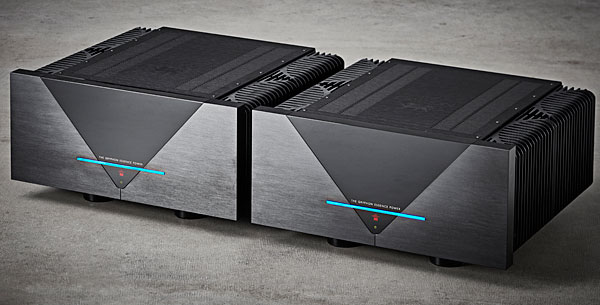
... put into words that which is beyond words? For this, we have poetry, music, and, if I may be so bold, electronics on the refined level of Gryphon Essence Mono power amplifiers. Although fully capable of conveying the entire frequency range, even through speakers that bring some modestly powered amplifiers to their knees, they cannot convey the huge dynamic swings and minute details that some more powerful beasts command. But on music that touches the heart, they can transport to a realm where few components know to go. Magic awaits those with the means to audition them at home, especially with their modest BlackSpike upgrade. "Highly recommended" is an understatement.
Footnote 1: I recommend readers use the warble tones on my later Editor's Choice CD, which have lower distortion.—John Atkinson Footnote 2: How I wish that the late Stereophile writer Wes Phillips, who loved Hunt Lieberson's Handel, could have been alive to join me.
Truth be told, I've been accused of harboring a clinical-level foot fetish. No, I was not the guy who stalked the upper floors of Yale library, ca 1968, taking stealth whiffs of coeds' shoeless feet or stealing their shoes. I have, however, been known to experiment, to a degree some consider excessive, with aftermarket supports—footers—placed underneath the audio components I review. Lest I have my head handed to me once this review is published, I discussed the Essence's unusual footers with distributor Philip O'Hanlon (On a Higher Note) and then Skov before getting to work. The former told me that he removed the stock feet so that he could place the monoblocks on his Artesiana racks—which I thought gave me permission to try different footers. Then Skov told me that while the Essence was voiced with its proprietary, felt-pad– tipped, hollow Novodur P2H-AT792 ABS polymer feet, he unscrews them and attaches Essence's BlackSpikes ($350 for a set of four). Skov feels that BlackSpikes, which have a polymer body tipped with adjustable tempered steel, make the Essence sound "even more alive, especially in the lower midrange/top bass, where they seem to be quite effective." The results, though, will depend on the shelves being used, he noted: "It is not always for the better." Skov also told me that the spikes are packaged with two-sided adhesive rubber "wafers" that are meant to protect shelving.
Armed with that knowledge, I removed the Essence's stock footers and listened, first, with the aftermarket footers I was using under my reference D'Agostino Progression monoblocks. After that, I spent 95% of my listening time with either the stock feet or the BlackSpikes and their wafers. My report only discusses these two company-approved scenarios.
The monoblocks were placed on Grand Prix Audio Monza amp stands with bamboo shelves, fed by a source-component chain of NAS drive>Roon Nucleus+>dCS Rossini DAC/Rossini Clock.
I declined O'Hanlon's offer to send Artesiana wafers to place under the spikes—I didn't want to risk adding anything that would alter the Essence's sound and skew my report—but then I figured out the motivation behind the offer: The sharp BlackSpikes pierced those thin adhesive wafers, leaving holes in the bamboo shelves. Worse, because I thought that the two-sided adhesive would stop the felt-tipped stock feet from sliding, I left the wafers on the shelves when I restored the polymer feet. When my husband and I were lifting one of the monoblocks, one foot stuck to an adhesive wafer, and before we could put the amp down, the shelf lifted up at a perilous angle and gashed my leg as it fell to the floor. Recoiling in pain, I toppled to the floor, managing to avoid knocking over an Alexia 2 or destroying the amp. Gryphon would do everyone a favor by replacing these little wafers with surface protectors with more substance. I can hear you thinking "Serinus is about to let Gryphon have it!" Not so: Serinus is about to give the Gryphon a rave review.
Let's get the non-rave commentary out of the way first. You're not going to buy expensive monoblocks that were optimized for class-A with the intention of spending most of your time in class-AB. With the stock feet, whether listening to the live recording of male vocal ensemble Chanticleer singing their "signature tune," Biebl's "Ave Maria," on A Chanticleer Christmas (Qobuz 16/44.1 FLAC); Cher's fabulously spirited remake of ABBA's "Dancing Queen," from Cher (Tidal 24/44.1 MQA); Susan Graham singing Hahn's Bach-inspired "Chloris" with Malcolm Martineau on Un Frisson Français (Qobuz 16/44.1 FLAC); Doug Tourtelot's superb recording of the Portland State Chamber Choir singing Eriks Eenvalds's "O salutaris hostia," from Translations (Naxos 8.574124, 24/96 WAV); Yello's bass-pounding, electronically hyped, smile-inducing "Electrified II" from Toy (Tidal. 24/48 FLAC); or soprano Carolyn Sampson singing Mozart's heavenly "Et incarnatus est" from Masaaki Suzuki's recording of the Great Mass in C Minor with the Bach Collegium Japan (24/96 FLAC, Qobuz), in class-AB, edges were bright and buzzy, images rather flat, and the midrange had a deficit of color and warmth. Soundstage depth and air were disappointing, making it hard to distinguish the all-important spatial relationships in the superbly recorded Eenvalds. When Møller said that the Essence's class-AB was appropriate for noncritical background listening, he spoke the truth. If you love music, you'll want to hear these amps in class-A. I got on a "Dancing Queen" kick after San Francisco Audiophile Society member Ian Wotherspoon recommended an uncharacteristically mellow, guitar-accompanied version from Swedish duo Erato on Erato Covers (Qobuz 16/44.1 FLAC). When I mentioned the title to my husband, he immediately exclaimed "ABBA!!!" Shortly thereafter, we headed to the music room to hear their original version, on ABBA Gold (Tidal 16/44.1 FLAC), followed by Cher's version. With the Essence's stock feet, Cher's version sounded so juicy and full that we began dancing. The only thing missing was a bit of bass.
On the Eenvalds, the engineering wonder, the sound was all-enveloping. I managed to write "This is just magical—a kiss of grace" before the entry of the male voices, whose perfectly placed foundation helped support the ethereal lift of the soprano voices that transported me to a place of wonder.
Next, I tried Gryphon's BlackSpikes. I found the sound somewhat fuller and more fleshed out in the lower midrange, with a concomitant boost in color saturation. With more there there, the perception of air and depth increased. Although the change was not huge, anyone who can afford these amps would benefit from shelling out an extra $700 for the BlackSpikes.
That the Gryphon Essence monoblocks with BlackSpike supports are capable of magic was confirmed on another rare evening when the spouse joined me in the listening room. He asked for Mahler by mezzo-soprano Lorraine Hunt Lieberson, with whose mother he had studied voice. I turned off the lights and streamed her live performance, with pianist Roger Vignoles, of "Ich Bin Der Welt Abhanden Gekommen" ("I am lost to the world") from the Five Rückert-Lieder, as captured on Lorraine Hunt Lieberson: Mahler, Handel & Peter Lieberson (Wigmore Hall Live, Tidal 16/44.1 FLAC). "I am lost to the world with which I used to waste much time," sang Hunt Lieberson in that uniquely probing, plangent voice of hers. "It has for so long known nothing of me, it may well believe that I am dead. Nor am I at all concerned ... For truly I am dead to the world. I am dead to the world's tumult, and rest in a quiet realm! I live alone in my heaven, in my love, in my song!" Words cannot describe the alchemical transformation wrought by the Gryphon Essences on this remarkably air-filled recording. All sense of time fell away as the most intimate feelings of an artist who sang from the depths of her being filled my heart. As two souls became one, basking in the sorrowful stillness that can come with solitude and acceptance, I was transported (footnote 2).
... put into words that which is beyond words? For this, we have poetry, music, and, if I may be so bold, electronics on the refined level of Gryphon Essence Mono power amplifiers. Although fully capable of conveying the entire frequency range, even through speakers that bring some modestly powered amplifiers to their knees, they cannot convey the huge dynamic swings and minute details that some more powerful beasts command. But on music that touches the heart, they can transport to a realm where few components know to go. Magic awaits those with the means to audition them at home, especially with their modest BlackSpike upgrade. "Highly recommended" is an understatement.
Footnote 1: I recommend readers use the warble tones on my later Editor's Choice CD, which have lower distortion.—John Atkinson Footnote 2: How I wish that the late Stereophile writer Wes Phillips, who loved Hunt Lieberson's Handel, could have been alive to join me.