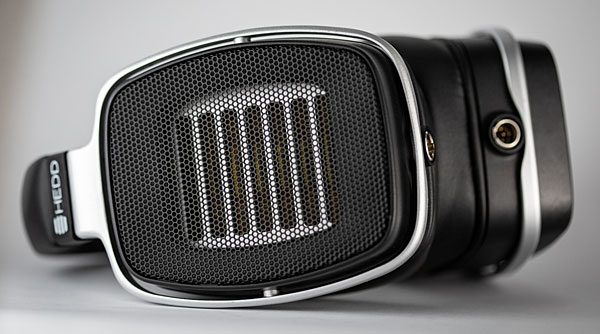
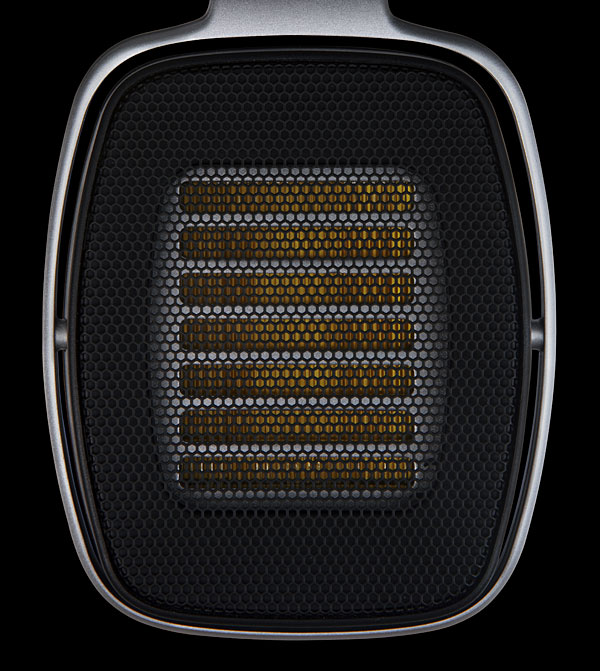
The HEDDphone's rectangular AMT drivers are installed into a conventional-looking but very solidly built (718gm!), circumaural, open-back headset with thick, tight-fitting ear cups that cupped my ears with greater bulk and pressure than I have previously experienced with headphones.
But that is okay. Form must follow function.
At 42 ohms and 87dB/mW, the HEDDphone is easier to drive than the 83.5dB/mW HiFiMan HE6se and about the same difficulty as the 47 ohm, 88dB/mW Abyss AB-1266 TCs, which means it still requires extra gain and current to sound its best.
 I started my auditions using the Jotunheim, which Schiit claims will, if necessary, put a whopping 3Wpc into the HEDDphone's 42 ohm load.
Besides my obsession with that Dylan track, "Murder Most Foul," I have fallen lately into the art of London/Manchester-based composer, performance artist, and saxophonist Angus Fairbairn, aka Alabaster dePlume. I have listened to all the dePlume albums on Qobuz and Tidal, and my current favorite is To Cy & Lee: Instrumentals, Vol.1 (24/44.1 FLAC, International Anthem Recording Company/Qobuz).
I started my auditions using the Jotunheim, which Schiit claims will, if necessary, put a whopping 3Wpc into the HEDDphone's 42 ohm load.
Besides my obsession with that Dylan track, "Murder Most Foul," I have fallen lately into the art of London/Manchester-based composer, performance artist, and saxophonist Angus Fairbairn, aka Alabaster dePlume. I have listened to all the dePlume albums on Qobuz and Tidal, and my current favorite is To Cy & Lee: Instrumentals, Vol.1 (24/44.1 FLAC, International Anthem Recording Company/Qobuz).
 Listening to one of the warmest, friendliest tracks, the strangely sunny but off-kilter "Whisky Story Time," the Jotunheim driving the HEDDphones showed me that the HEDDphone was making music sound unusually solid. The saxophone and piano on "Visit Croatia" were dense and present in a way that makes music easy to engage with. And there was this unusual transparency that reminded me of the Abyss planar-magnetics in its quality and in its feel, but not its quantity. The entire Alabaster dePlume album seemed slightly closed-in and dynamically compressed.
I thought, despite its great power, the Schiit amp was not showing the HEDDphones at their full potential.
Curiosity roused, I tried the Jotunheim with a much-easier-to-drive headphone: the $1490, 104dB/mW, 55 ohm Focal Clear open-backs. Surprisingly, the aluminum-magnesium dome drivers in the Clear played this same recording with less weight and density than the AMT HEDD but with a greater, more-expansive sense of energized space. With the Clear, subtle microdynamics that were not there at all with HEDDphone revealed the breathiness of vibrating air going into and out of Angus Fairbairn's saxophone. The Focals made full-spectrum tone color, haloed by a sunny brilliance. The Clears loved the Jot. The HEDDphones delivered a more limited palette and a darker perspective. The radiant, open sound of the Clear made the open-back HEDDs seem closed-in and gray. I was surprised.
This closed-in un-dynamicness did not correlate with my February auditions of the HEDDphone at CanJam NYC 2020.
Confused by the sound I was getting from the HEDDs, but still needing to get a better handle on the character of the Jotunheim, I switched to one of my long-term reference headphones, Audeze's LCD-X ($1699). I used to think the LCD-Xs were heavy and high-pressure on my head (they weigh 600gm), but now, after weeks using the HEDDs, they seemed light and loose. The LCD-Xs seemed light and loose sonically as well—and with the Jot, faster than the HEDDphones at reproducing the picked strings of a cimbalom (a dulcimerlike instrument) at the beginning of the traditional "We Shall Be Happy" off Ry Cooder's Jazz (24/44.1 FLAC, Rhino-Werner/Qobuz). With the LCD-Xs, the tuba and bass trombone octaves (35Hz–150Hz) seemed more present and detailed than they did with the HEDDs. Overall, the Audeze with the Jotunheim gave reproduced music more life and brilliance than the HEDD Audio HEDDphone did.
Time to change amps.
And voilà! The HEDDphones opened up and marched in better time when powered by the $3500 Pass Labs HPA-1 headphone amp. The HEDDs got lively. Transparency and spatiality improved dramatically. With the Jotunheim, the HEDDs made rather one-note bass. With the HPA-1, bass not only got tighter, it became nuanced! Now the tuba on the Jazz album was stealing the show again. Driven by the HPA-1, the HEDDphones achieved an extraordinary level of transparency.
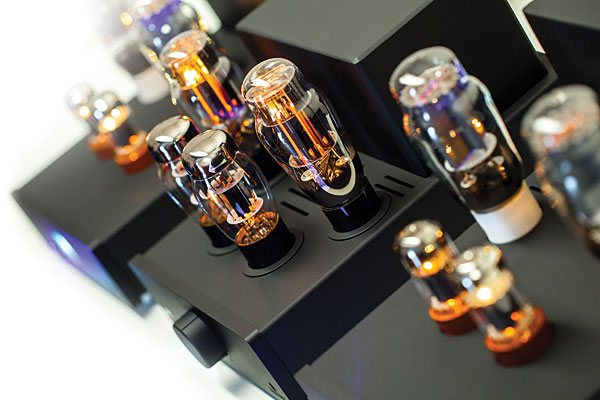
Then lo dang and behold! I have no good technical explanation for this, but the whole Ry Cooder Jazz album (and a dozen others) came alive and sparkled with fresh sunny life when I drove the made-in-Germany HEDDphones with the $2599, built-in-Poland Feliks Euforia Mk.II OTL tube headphone amplifier.
Listening to one of the warmest, friendliest tracks, the strangely sunny but off-kilter "Whisky Story Time," the Jotunheim driving the HEDDphones showed me that the HEDDphone was making music sound unusually solid. The saxophone and piano on "Visit Croatia" were dense and present in a way that makes music easy to engage with. And there was this unusual transparency that reminded me of the Abyss planar-magnetics in its quality and in its feel, but not its quantity. The entire Alabaster dePlume album seemed slightly closed-in and dynamically compressed.
I thought, despite its great power, the Schiit amp was not showing the HEDDphones at their full potential.
Curiosity roused, I tried the Jotunheim with a much-easier-to-drive headphone: the $1490, 104dB/mW, 55 ohm Focal Clear open-backs. Surprisingly, the aluminum-magnesium dome drivers in the Clear played this same recording with less weight and density than the AMT HEDD but with a greater, more-expansive sense of energized space. With the Clear, subtle microdynamics that were not there at all with HEDDphone revealed the breathiness of vibrating air going into and out of Angus Fairbairn's saxophone. The Focals made full-spectrum tone color, haloed by a sunny brilliance. The Clears loved the Jot. The HEDDphones delivered a more limited palette and a darker perspective. The radiant, open sound of the Clear made the open-back HEDDs seem closed-in and gray. I was surprised.
This closed-in un-dynamicness did not correlate with my February auditions of the HEDDphone at CanJam NYC 2020.
Confused by the sound I was getting from the HEDDs, but still needing to get a better handle on the character of the Jotunheim, I switched to one of my long-term reference headphones, Audeze's LCD-X ($1699). I used to think the LCD-Xs were heavy and high-pressure on my head (they weigh 600gm), but now, after weeks using the HEDDs, they seemed light and loose. The LCD-Xs seemed light and loose sonically as well—and with the Jot, faster than the HEDDphones at reproducing the picked strings of a cimbalom (a dulcimerlike instrument) at the beginning of the traditional "We Shall Be Happy" off Ry Cooder's Jazz (24/44.1 FLAC, Rhino-Werner/Qobuz). With the LCD-Xs, the tuba and bass trombone octaves (35Hz–150Hz) seemed more present and detailed than they did with the HEDDs. Overall, the Audeze with the Jotunheim gave reproduced music more life and brilliance than the HEDD Audio HEDDphone did.
Time to change amps.
And voilà! The HEDDphones opened up and marched in better time when powered by the $3500 Pass Labs HPA-1 headphone amp. The HEDDs got lively. Transparency and spatiality improved dramatically. With the Jotunheim, the HEDDs made rather one-note bass. With the HPA-1, bass not only got tighter, it became nuanced! Now the tuba on the Jazz album was stealing the show again. Driven by the HPA-1, the HEDDphones achieved an extraordinary level of transparency.
Then lo dang and behold! I have no good technical explanation for this, but the whole Ry Cooder Jazz album (and a dozen others) came alive and sparkled with fresh sunny life when I drove the made-in-Germany HEDDphones with the $2599, built-in-Poland Feliks Euforia Mk.II OTL tube headphone amplifier.
 So much for solid-state making better bass. Bass went lower, felt the most powerful, and showed more detail. Instrumental dynamics went from restrained (with the Jot) to very good (with the HPA-1) to joyfully unfettered (with the Euforia). But why?
One of my DIY friends told me his experiments showed that sometimes a highish amplifier output impedance can reduce speaker intermodulation distortion. I wondered.
According to Feliks Audio, the Euforia generates only 0.13 watts into 32 ohms and has a high (20 ohms) output impedance for driving the 42 ohm HEDDphones. If I didn't try this amp, I would never have known how ridiculously exciting these HEDDphones could sound. Playing Alabaster dePlume, the Euforia made the HEDDs sound effervescent, with a brightly lit transparency. With the Feliks driving the HEDDs, Dylan's "Murder Most Foul" went from low-contrast black-and-white to Technicolor and Cinemascope. The balance of vocals and instruments seemed just right in a way that illuminated and separated each instrument, making the narrative more engaging. With the Feliks, the HEDDs went from not very spacious to extremely spacious.
The beauty of this combination worked both ways: The Feliks amp brought out the excellence of the HEDDphones, which made me think even more highly of the Feliks Audio Euforia Mark II.
Jotunheim R
So much for solid-state making better bass. Bass went lower, felt the most powerful, and showed more detail. Instrumental dynamics went from restrained (with the Jot) to very good (with the HPA-1) to joyfully unfettered (with the Euforia). But why?
One of my DIY friends told me his experiments showed that sometimes a highish amplifier output impedance can reduce speaker intermodulation distortion. I wondered.
According to Feliks Audio, the Euforia generates only 0.13 watts into 32 ohms and has a high (20 ohms) output impedance for driving the 42 ohm HEDDphones. If I didn't try this amp, I would never have known how ridiculously exciting these HEDDphones could sound. Playing Alabaster dePlume, the Euforia made the HEDDs sound effervescent, with a brightly lit transparency. With the Feliks driving the HEDDs, Dylan's "Murder Most Foul" went from low-contrast black-and-white to Technicolor and Cinemascope. The balance of vocals and instruments seemed just right in a way that illuminated and separated each instrument, making the narrative more engaging. With the Feliks, the HEDDs went from not very spacious to extremely spacious.
The beauty of this combination worked both ways: The Feliks amp brought out the excellence of the HEDDphones, which made me think even more highly of the Feliks Audio Euforia Mark II.
Jotunheim R
I was big-grin happy when I heard that Schiit audio was making a dedicated "Jotunheim R" amplifier for my personal nomination as Stereophile's 2019 product of the year: the RAAL-requisite SR1a pure-ribbon headphones. It pleased me that Jason Stoddard also appreciated the quality and importance of the RAAL's invention (footnote 3).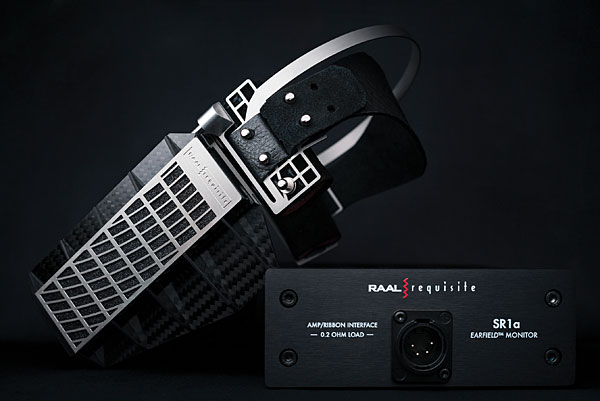 To the best of my knowledge, the $3500 RAAL-requisite SR1a headphones employ the world's first-and-only full-range, pure-ribbon drive-units. RAAL Audio founder and chief engineer Aleksandar Radisavljevic calls them "Earfield Monitors," and I believe the SR1a's extreme resolution justifies a moniker like that. When I reviewed the SR1a's in Gramophone Dreams #32, I found them to be "both revelatory and revolutionary. Class A+."
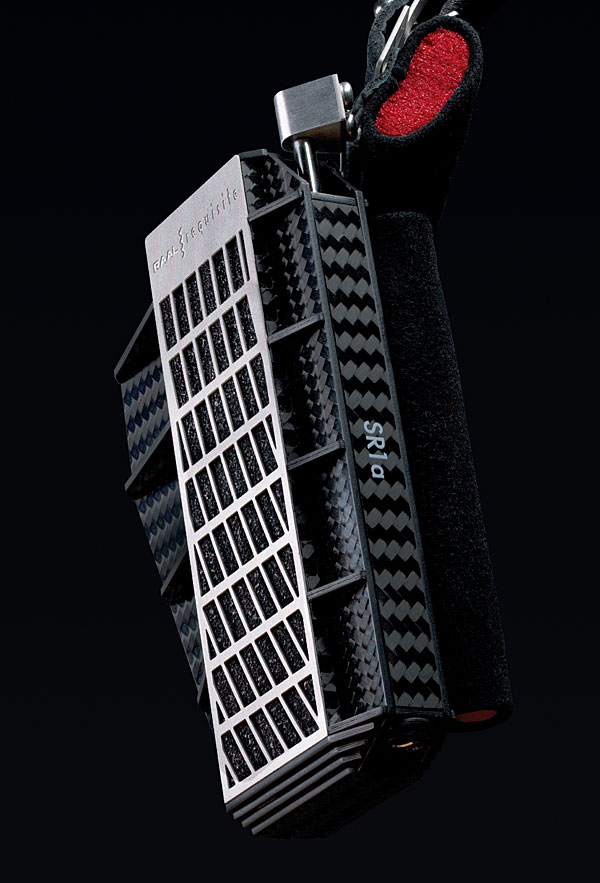 After months of daily use, my feeling about the RAAL SR1a is: They're easy to get used to and astound more over time. My only source of discontent was the bulky mass and expense of having to connect them to a $4900 Pass Labs XA25 amplifier that had to sit on the floor instead of on the pine board shelf above my desk—they need that much power. Then Jason Stoddard at Schiit Audio sent me an email announcing the introduction of a "direct drive ribbon headphone amp" especially for the RAAL ribbons. I was gobsmacked.
I asked Stoddard why he made the Jotunheim R: "Isn't that a pretty esoteric product?"
"No," he said. "We did it because there was no good option other than the interface box (that comes with the SR1a) and a speaker amp at the time. Simple as that." (The interface box is used to connect the SR1a to the speaker outputs of a power amplifier—a "speaker amp" as Stoddard put it.)
You can purchase the Jot-R directly from Schiit for $799 or from RAAL as part of a package with the SR1a that costs $3999–$4199, depending on whether you choose the Jotunheim's DAC (footnote 4). That is a lot less money than the RAAL SR1a with its standard interface box ($3500) connected to my $4900 Pass Labs XA25 stereo amplifier. The SR1a may be purchased without any interface for $3199. Or, for $7399, you can get it with RAAL's new HAS-1a headphone and speaker amplifier. Purchased alone, the impressive-looking HAS-1a costs $3900. Stay tuned for my review.
After months of daily use, my feeling about the RAAL SR1a is: They're easy to get used to and astound more over time. My only source of discontent was the bulky mass and expense of having to connect them to a $4900 Pass Labs XA25 amplifier that had to sit on the floor instead of on the pine board shelf above my desk—they need that much power. Then Jason Stoddard at Schiit Audio sent me an email announcing the introduction of a "direct drive ribbon headphone amp" especially for the RAAL ribbons. I was gobsmacked.
I asked Stoddard why he made the Jotunheim R: "Isn't that a pretty esoteric product?"
"No," he said. "We did it because there was no good option other than the interface box (that comes with the SR1a) and a speaker amp at the time. Simple as that." (The interface box is used to connect the SR1a to the speaker outputs of a power amplifier—a "speaker amp" as Stoddard put it.)
You can purchase the Jot-R directly from Schiit for $799 or from RAAL as part of a package with the SR1a that costs $3999–$4199, depending on whether you choose the Jotunheim's DAC (footnote 4). That is a lot less money than the RAAL SR1a with its standard interface box ($3500) connected to my $4900 Pass Labs XA25 stereo amplifier. The SR1a may be purchased without any interface for $3199. Or, for $7399, you can get it with RAAL's new HAS-1a headphone and speaker amplifier. Purchased alone, the impressive-looking HAS-1a costs $3900. Stay tuned for my review.
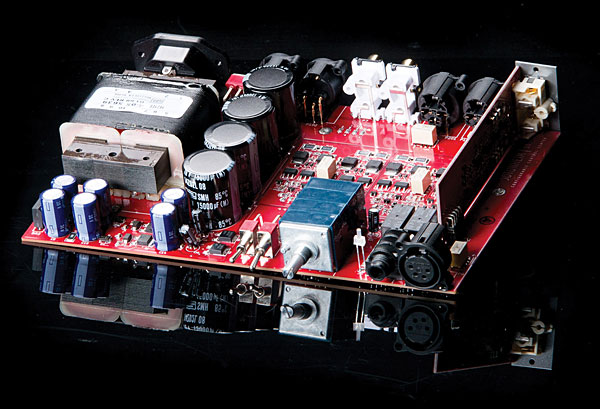 The Jotunheim R looks just like a regular Jotunheim except that it has three little toggles instead of two: one selects input (DAC, XLR, or RCA), the second engages the "baffle compensation" filter for use with the open-baffle SR1a, and a third enables or disables the Jot's passive-preamp outputs. The regular Jotunheim's ¼" SE and four-pin balanced XLR are replaced by a single four-pin male XLR that mates with the SR1a's female connector, preventing accidental connection with nonribbon balanced headphones.
The first goal of my Jotunheim R auditions was to see if Schiit's little black box could match the transparency and material presence of the RAALs driven by my Pass Labs XA25. The more I've used the SR1a, the more I've realized they reproduce recordings with unprecedented levels of musical texture and tactility. In this sonic parameter, they exceed even the Abyss TCs and the HiFiMan Susvara. With the "Jot-R" playing a live performance of Björk's Vespertine: A Pop Album as an Opera (24/48 FLAC, Oehms Classics/ Qobuz), I got chills and goosebumps, enhanced by the illusions of thunder crashing and wind howling behind the expansive three-dimensionality of The Orchestra of the National Theatre Mannheim. Forget "Pop"; Vespertine is spine-tingling high art.
With the Jot-R direct-driving the RAALs, contrasts of big/little, hard/ soft, near/far, light/dark, warm/cool, and loud/quiet were presented with a unique and delectable exactitude. This almost-calibrated precision was enhanced by an intoxicating sense of space and soundstage dimension. I can say without qualification: No headphone images anywhere near as accurately or spectacularly as the SR1a, period—and that's with the $799 Schiit amp connected to the $2199 Mytek Audio Brooklyn+ DAC. Please understand: This is a complete high-fidelity audio system that costs only $6200 (plus a little extra for the balanced AudioQuest Cinnamon interconnects), and it outresolves and outimages (!) anything I've heard at a fancy audio salon or audio show. Add a better DAC, and the sky is the limit.
As a reality check, I played the live Vespertine opera through the Schiit Yggdrasil DAC feeding the Rogue Audio RP-7 preamp, into the Pass Labs XA25 amplifier to the standard RAAL interface box. Right away, the wind on "Chaos" sounded more tangibly real. The deep, wide space of "Hidden Place" was so transparently and microscopically rendered that it was a distraction from Björk's words.
Interestingly, the Jotunheim R rendered these well-recorded live tracks with more there-ness and deeper bass than the Pass Labs amplifier did. Compared to the Jot-R, the XA25 might be considered a little too light and airy.
To my ears, the RAAL-requisite SR1a ribbon headphones, coupled to the dedicated Schiit Jotunheim R amplifier/preamp, transduce recorded music at a level of verity and resolution matched only by the best at any price. Sincerely recommended.
The Jotunheim R looks just like a regular Jotunheim except that it has three little toggles instead of two: one selects input (DAC, XLR, or RCA), the second engages the "baffle compensation" filter for use with the open-baffle SR1a, and a third enables or disables the Jot's passive-preamp outputs. The regular Jotunheim's ¼" SE and four-pin balanced XLR are replaced by a single four-pin male XLR that mates with the SR1a's female connector, preventing accidental connection with nonribbon balanced headphones.
The first goal of my Jotunheim R auditions was to see if Schiit's little black box could match the transparency and material presence of the RAALs driven by my Pass Labs XA25. The more I've used the SR1a, the more I've realized they reproduce recordings with unprecedented levels of musical texture and tactility. In this sonic parameter, they exceed even the Abyss TCs and the HiFiMan Susvara. With the "Jot-R" playing a live performance of Björk's Vespertine: A Pop Album as an Opera (24/48 FLAC, Oehms Classics/ Qobuz), I got chills and goosebumps, enhanced by the illusions of thunder crashing and wind howling behind the expansive three-dimensionality of The Orchestra of the National Theatre Mannheim. Forget "Pop"; Vespertine is spine-tingling high art.
With the Jot-R direct-driving the RAALs, contrasts of big/little, hard/ soft, near/far, light/dark, warm/cool, and loud/quiet were presented with a unique and delectable exactitude. This almost-calibrated precision was enhanced by an intoxicating sense of space and soundstage dimension. I can say without qualification: No headphone images anywhere near as accurately or spectacularly as the SR1a, period—and that's with the $799 Schiit amp connected to the $2199 Mytek Audio Brooklyn+ DAC. Please understand: This is a complete high-fidelity audio system that costs only $6200 (plus a little extra for the balanced AudioQuest Cinnamon interconnects), and it outresolves and outimages (!) anything I've heard at a fancy audio salon or audio show. Add a better DAC, and the sky is the limit.
As a reality check, I played the live Vespertine opera through the Schiit Yggdrasil DAC feeding the Rogue Audio RP-7 preamp, into the Pass Labs XA25 amplifier to the standard RAAL interface box. Right away, the wind on "Chaos" sounded more tangibly real. The deep, wide space of "Hidden Place" was so transparently and microscopically rendered that it was a distraction from Björk's words.
Interestingly, the Jotunheim R rendered these well-recorded live tracks with more there-ness and deeper bass than the Pass Labs amplifier did. Compared to the Jot-R, the XA25 might be considered a little too light and airy.
To my ears, the RAAL-requisite SR1a ribbon headphones, coupled to the dedicated Schiit Jotunheim R amplifier/preamp, transduce recorded music at a level of verity and resolution matched only by the best at any price. Sincerely recommended.
Footnote 3: RAAL advanced loudspeakers d.o.o. Djordja Simeonovica 4, 19000 Zajecar, Serbia. Tel: +381 64 144 1111. Web: raalrequisite.com. US Distributor: Requisite Audio Engineering, 2175 Goodyear Ave., Suite 110, Ventura, CA 93003-7761. Tel: (818) 437-0779.
Footnote 4; The options for the Jot-R are a bit different than those for the regular Jot: The R doesn't offer a phono stage and if you opt for the Bifrost DAC, it's external. The "True Multibit" DAC is the only internal expansion option.
I started my auditions using the Jotunheim, which Schiit claims will, if necessary, put a whopping 3Wpc into the HEDDphone's 42 ohm load.
Listening to one of the warmest, friendliest tracks, the strangely sunny but off-kilter "Whisky Story Time," the Jotunheim driving the HEDDphones showed me that the HEDDphone was making music sound unusually solid. The saxophone and piano on "Visit Croatia" were dense and present in a way that makes music easy to engage with. And there was this unusual transparency that reminded me of the Abyss planar-magnetics in its quality and in its feel, but not its quantity. The entire Alabaster dePlume album seemed slightly closed-in and dynamically compressed.
I thought, despite its great power, the Schiit amp was not showing the HEDDphones at their full potential.
So much for solid-state making better bass. Bass went lower, felt the most powerful, and showed more detail. Instrumental dynamics went from restrained (with the Jot) to very good (with the HPA-1) to joyfully unfettered (with the Euforia). But why?
I was big-grin happy when I heard that Schiit audio was making a dedicated "Jotunheim R" amplifier for my personal nomination as Stereophile's 2019 product of the year: the RAAL-requisite SR1a pure-ribbon headphones. It pleased me that Jason Stoddard also appreciated the quality and importance of the RAAL's invention (footnote 3).
To the best of my knowledge, the $3500 RAAL-requisite SR1a headphones employ the world's first-and-only full-range, pure-ribbon drive-units. RAAL Audio founder and chief engineer Aleksandar Radisavljevic calls them "Earfield Monitors," and I believe the SR1a's extreme resolution justifies a moniker like that. When I reviewed the SR1a's in Gramophone Dreams #32, I found them to be "both revelatory and revolutionary. Class A+."
After months of daily use, my feeling about the RAAL SR1a is: They're easy to get used to and astound more over time. My only source of discontent was the bulky mass and expense of having to connect them to a $4900 Pass Labs XA25 amplifier that had to sit on the floor instead of on the pine board shelf above my desk—they need that much power. Then Jason Stoddard at Schiit Audio sent me an email announcing the introduction of a "direct drive ribbon headphone amp" especially for the RAAL ribbons. I was gobsmacked.
The Jotunheim R looks just like a regular Jotunheim except that it has three little toggles instead of two: one selects input (DAC, XLR, or RCA), the second engages the "baffle compensation" filter for use with the open-baffle SR1a, and a third enables or disables the Jot's passive-preamp outputs. The regular Jotunheim's ¼" SE and four-pin balanced XLR are replaced by a single four-pin male XLR that mates with the SR1a's female connector, preventing accidental connection with nonribbon balanced headphones.
Footnote 3: RAAL advanced loudspeakers d.o.o. Djordja Simeonovica 4, 19000 Zajecar, Serbia. Tel: +381 64 144 1111. Web: raalrequisite.com. US Distributor: Requisite Audio Engineering, 2175 Goodyear Ave., Suite 110, Ventura, CA 93003-7761. Tel: (818) 437-0779.