 At the end of the review period, I encountered another issue, though this one was more easily addressed. A couple of times, at levels that were almost unreasonably loud, the Diptyques' diaphragms flexed so much that at certain frequencies in the bottom octave, they hit the magnet arrays, causing distortion and sonic distress. This so-called panel slap is a known problem with planar speakers, including Magnepans. Diptyque smartly includes magnetic bass regulators with its speakers. A bit larger than a business card, a regulator looks like a perforated refrigerator magnet. One or two of them can be—well, slapped I suppose—onto the back of the speaker, where they will subtly limit diaphragm excursion. The tradeoff is that they attenuate the offending frequencies by a small number of decibels. Elegant and effective. Another possible solution: Don't listen as loud as I did.
 The French Resolution
When musical arrangements are simple and straightforward, even affordable systems can sound like a million bucks. But as the number of instruments increases, so do the timbres, the colors that the rig has to reproduce. On lesser setups, the colors run together. You follow a trumpet part and lose it in the muck of the reproduction when it intersects with other horns playing in the same register. That never happened with the Diptyques. They acted like the biggest imaginable box of colored pencils. Portraits of Cuba (24/96 FLAC, Chesky/Qobuz), Paquito D'Rivera's phenomenal big-band outing and his biggest artistic triumph after Habanera, which is quieter and chamber music adjacent, is a whirl of colors, all the musical lines interwoven, blended but separate. On a great system, you can trace each one.
 I noted that the speakers were more easily judged rationally than emotionally. That is to say, I could find things in the Diptyques' performance that, judging with my head, fell short of perfection. But the connection between my ears and my heart was often unimpressed by such pettifogging. "The piano needs a touch more body and weight," I'd think during Keith Jarrett's "Bregenz, Pt. 1" off the Concerts Bregenz/München album (24/96 FLAC, ECM/Qobuz). But then my heart would tell my brain to shut up, and I was affected by the performance all the same, sometimes to the point of getting moist-eyed. It's hard to deny that the Diptyques know how to carry not just a tune, but the performer's emotions. Try measuring that.
 The noir deepened considerably on Nachtfahrten (24/96 FLAC, ACT/Qobuz), an ascetic but lyrical album by German pianist Michael Wollny. This is pleasurably wistful music. The compositions evoke glistening-wet streets and the half-ache, half-comfort of aloneness. I could sense the varnish and the air cavity in every note from bassist Christian Weber; his instrument was all tone and texture. Eric Schaefer's kickdrum was just there, with no strain. The transients from the cymbals arrived cleanly and vanished without smear. Meanwhile, Wollny's piano sounded as clear and free flowing as a mountain spring. (I read that note six weeks later, listened to the album again, and was unprepared for how lifelike and absorbing the music was.) The Wollny recording marked my favorite experience with the Diptyques. I credit the players as well as producer Siegfried Loch and engineer Adrian von Ripka, all working at the pinnacle of their craft.
How did not-so-perfect recordings fare with these speakers? To find out, I cued up Another Mississippi Sunday Morning by Parchman Prison Prayer (24/48 FLAC, Glitterbeat/Qobuz), 13 tracks performed by inmates of Mississippi's State Penitentiary, recorded on-site by producer and engineer Ian Brennan the same way I imagine ethnomusicologist Alan Lomax doing in the 1930s and '40s. These gospel- and blues-inspired songs are presented as a church service of sorts. Typical of field recordings, all songs are first takes, with no overdubs. The performances are rough around the edges, which is the point. The paradox is that there's more genuineness and "reality" here than you could achieve in a state-of-the-art recording studio. It's a haunting record, with the highlight being the rap "Take Me to the King," a prayer in the form of a rhythmic, eerie whisper accompanied by a single hand drum. The recording is a plea for release—not from the penal system but from earthly misery. I shuddered.
The noir deepened considerably on Nachtfahrten (24/96 FLAC, ACT/Qobuz), an ascetic but lyrical album by German pianist Michael Wollny. This is pleasurably wistful music. The compositions evoke glistening-wet streets and the half-ache, half-comfort of aloneness. I could sense the varnish and the air cavity in every note from bassist Christian Weber; his instrument was all tone and texture. Eric Schaefer's kickdrum was just there, with no strain. The transients from the cymbals arrived cleanly and vanished without smear. Meanwhile, Wollny's piano sounded as clear and free flowing as a mountain spring. (I read that note six weeks later, listened to the album again, and was unprepared for how lifelike and absorbing the music was.) The Wollny recording marked my favorite experience with the Diptyques. I credit the players as well as producer Siegfried Loch and engineer Adrian von Ripka, all working at the pinnacle of their craft.
How did not-so-perfect recordings fare with these speakers? To find out, I cued up Another Mississippi Sunday Morning by Parchman Prison Prayer (24/48 FLAC, Glitterbeat/Qobuz), 13 tracks performed by inmates of Mississippi's State Penitentiary, recorded on-site by producer and engineer Ian Brennan the same way I imagine ethnomusicologist Alan Lomax doing in the 1930s and '40s. These gospel- and blues-inspired songs are presented as a church service of sorts. Typical of field recordings, all songs are first takes, with no overdubs. The performances are rough around the edges, which is the point. The paradox is that there's more genuineness and "reality" here than you could achieve in a state-of-the-art recording studio. It's a haunting record, with the highlight being the rap "Take Me to the King," a prayer in the form of a rhythmic, eerie whisper accompanied by a single hand drum. The recording is a plea for release—not from the penal system but from earthly misery. I shuddered.
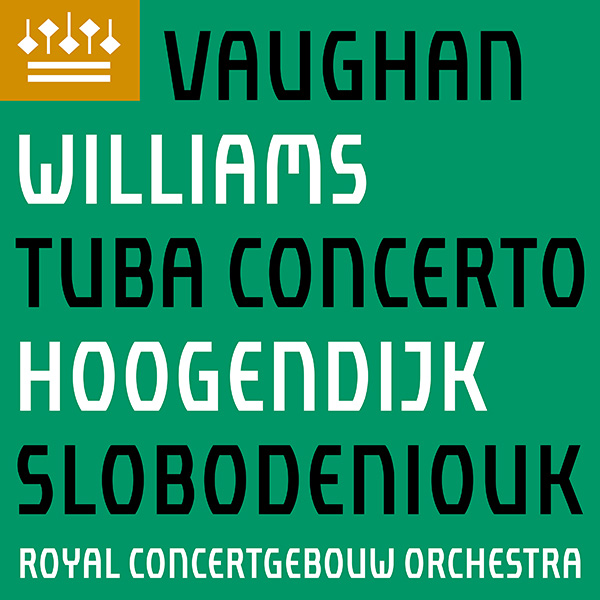 I also relished Ralph Vaughan Williams's Tuba Concerto in F Minor, performed by Perry Hoogendijk and the Concertgebouw Orchestra (24/48 FLAC, RCO/Tidal). In the third movement, starting in the final minute, Hoogendijk plays an extended solo that is notable both for its virtuosity and for the way the notes trail off the venue's wall, decaying into nothingness. The speakers gave this lovely recording room to breathe and to roar; even the big crescendos arrived with clarity and conviction.
One last listening note: The Diptyque References aren't perfect for quiet sessions. They come alive with volume and a bit of amplifier muscle. If, for the sake of housemates or neighbors, you need to hush your late-night music enjoyment, you'll want speakers that open up more readily at low levels.
I also relished Ralph Vaughan Williams's Tuba Concerto in F Minor, performed by Perry Hoogendijk and the Concertgebouw Orchestra (24/48 FLAC, RCO/Tidal). In the third movement, starting in the final minute, Hoogendijk plays an extended solo that is notable both for its virtuosity and for the way the notes trail off the venue's wall, decaying into nothingness. The speakers gave this lovely recording room to breathe and to roar; even the big crescendos arrived with clarity and conviction.
One last listening note: The Diptyque References aren't perfect for quiet sessions. They come alive with volume and a bit of amplifier muscle. If, for the sake of housemates or neighbors, you need to hush your late-night music enjoyment, you'll want speakers that open up more readily at low levels.
 C'est magnétique!
I'd wager that upon hearing the References, nine out of 10 serious listeners would instantly understand their appeal. The Diptyques often reminded me of the MartinLogan Odyssey electrostats that were my reference speakers from 1999 through 2007, but with more muscle and far better bass-midrange integration. Panel speakers achieve a kind of spatial and timbral realism that box speakers rarely manage, and the Diptyque References do it without bombast or exaggeration. Their sound is clear, unforced, and enveloping—not dramatic in the usual hi-fi sense, but quietly, convincingly human. If they show up near you, go listen.