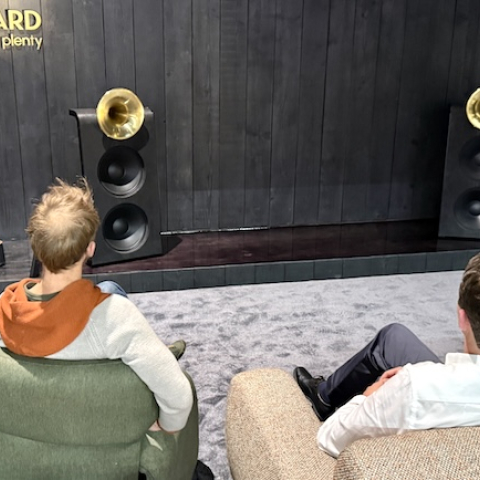
I'm a jazz-vinyl guy, but much recorded American jazz from the CD era—let's say, the last 30+ years—is unavailable on vinyl. However, it can be heard on silver discs. As I learned over the course of this review, much of the music in my 200+ collection of CDs isn't available on Qobuz, Tidal, or the other streaming apps—a very good reason to keep a disc player around. Some titles, of course, were available streaming, so I was up for a CD-vs-streaming comparison, egged on by Cyrus's contention that well-reproduced CD sounds better than streaming.
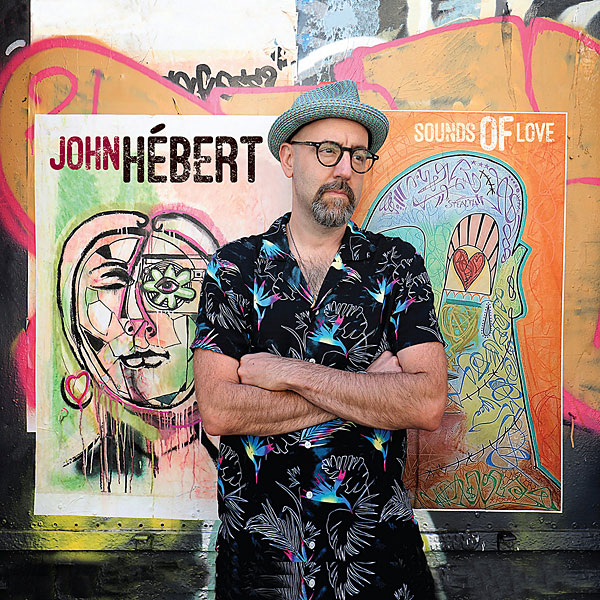 Bassist John Hébert's Sounds of Love (Sunnyside) features superb bass work. The Cyrus player reproduced it with physicality, good tone, and ample punch. Solos by drummer Ches Smith were positioned precisely on a deep soundstage. The Cyrus let go of its notes quickly; the effect was to make the music seem natural and real. Hébert's bass had good, textured luster and live, realistic string bounce and touch. The Cyrus earned kudos for rhythm and timing.
Turkish drummer Kaan Çelen's Na-Zi-Le (Lin Records LR-J042) was one of my favorite jazz finds in 2021. (It was released in December 2020.) Kaan is surrounded by an empathic trio: Tamer Temel on soprano and tenor saxophones, Tolga Bilgin on trumpet, and Volkan Topakoĝlu on bass. Together, they play wistful jazz with deep soul and somber feeling. Here, too, the Cyrus made the most of the music's bass-register instruments. The deeper drums and bass took on a warm, darkish hue that complemented the music well. From tender ballads to surging improvisations with dramatic crescendos, I found little to fault with the Cyrus's presentation of this music, and much to enjoy. I sat back and played more digital tunes.
Whit Dickey's Village Mothership (Tao Forms TAO06) is a meeting of modern-day free-jazz giants. The leader-drummer is joined by bassist William Parker and pianist Matthew Shipp. It cracks me up that people say "free jazz" is like a traffic accident, a mashup without thought or direction. Village Mothership has a matrix, a theme, a direction; the musicians perform with playfulness, enthralling energy, focused concentration, and stately interplay. Via the Cyrus, drums and bass loomed large in the mix, with deep tone. Shipp's piano sparkled across a wide expanse on a deep soundstage. This is a warm-sounding CD; the Cyrus played up that trait.
William Parker's Mayan Space Station (AUM Fidelity AUM 115-2), with guitarist Eva Mendoza and drummer Gerald Cleaver, came on like a Sonny Sharrock–meets-Hendrix shredfest; the Cyrus expressed the trio's bruising, daring, dynamic, exploratory sounds with edge-of-your-teeth ferocity.
Bassist John Hébert's Sounds of Love (Sunnyside) features superb bass work. The Cyrus player reproduced it with physicality, good tone, and ample punch. Solos by drummer Ches Smith were positioned precisely on a deep soundstage. The Cyrus let go of its notes quickly; the effect was to make the music seem natural and real. Hébert's bass had good, textured luster and live, realistic string bounce and touch. The Cyrus earned kudos for rhythm and timing.
Turkish drummer Kaan Çelen's Na-Zi-Le (Lin Records LR-J042) was one of my favorite jazz finds in 2021. (It was released in December 2020.) Kaan is surrounded by an empathic trio: Tamer Temel on soprano and tenor saxophones, Tolga Bilgin on trumpet, and Volkan Topakoĝlu on bass. Together, they play wistful jazz with deep soul and somber feeling. Here, too, the Cyrus made the most of the music's bass-register instruments. The deeper drums and bass took on a warm, darkish hue that complemented the music well. From tender ballads to surging improvisations with dramatic crescendos, I found little to fault with the Cyrus's presentation of this music, and much to enjoy. I sat back and played more digital tunes.
Whit Dickey's Village Mothership (Tao Forms TAO06) is a meeting of modern-day free-jazz giants. The leader-drummer is joined by bassist William Parker and pianist Matthew Shipp. It cracks me up that people say "free jazz" is like a traffic accident, a mashup without thought or direction. Village Mothership has a matrix, a theme, a direction; the musicians perform with playfulness, enthralling energy, focused concentration, and stately interplay. Via the Cyrus, drums and bass loomed large in the mix, with deep tone. Shipp's piano sparkled across a wide expanse on a deep soundstage. This is a warm-sounding CD; the Cyrus played up that trait.
William Parker's Mayan Space Station (AUM Fidelity AUM 115-2), with guitarist Eva Mendoza and drummer Gerald Cleaver, came on like a Sonny Sharrock–meets-Hendrix shredfest; the Cyrus expressed the trio's bruising, daring, dynamic, exploratory sounds with edge-of-your-teeth ferocity.
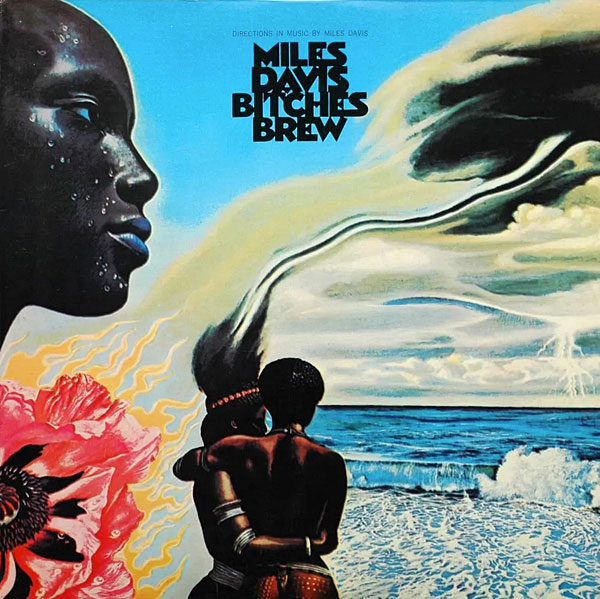 Now it was time to compare CDs played with the Cyrus with streamed versions of the same music, using the Sonore opticalRendu feeding the Denafrips Ares II DAC. Playing "Pharaoh's Dance" from Miles Davis's Bitches Brew (Columbia 88985474622), the CD version presented sharp leading edges, realistic ambient space, and an urgent, full-bodied, forceful sound. The streaming version of "Pharaoh's Dance" (24/96 FLAC, Qobuz) was airier, but it had less weight even at higher resolution, and the images were smaller.
Homeward Bound, drummer Johnathan Blake's 2021 Blue Note debut (Blue Note B003421502), features his state-of-the-art skinsmanship, fevered, hard bop–inspired arrangements within adventurous, modern-sounding compositions. The CD had depth, punch, and meat on its bones. The soundstage was broad and deep. Streaming the title track via Qobuz at 24/96, I heard more filigree, detail, upper-register air, and perhaps a more refined sound overall. Instruments had slightly more palpable, touchable surfaces when streamed compared to CD playback.
Marc Cary's Life Lessons (no catalog number) is another favorite 2021 jazz CD. The Cyrus played Cary's music with dense, saturated slabs of synthesizer color, deep bass, and dark-toned drums, like molten rock oozing from a volcano. Cary's acoustic piano had worthy depth, punch, and scale. The streaming version (16/44.1, Tidal) had less weight and bass heft, but it was more delicate and perhaps cleaner sounding.
Now it was time to compare CDs played with the Cyrus with streamed versions of the same music, using the Sonore opticalRendu feeding the Denafrips Ares II DAC. Playing "Pharaoh's Dance" from Miles Davis's Bitches Brew (Columbia 88985474622), the CD version presented sharp leading edges, realistic ambient space, and an urgent, full-bodied, forceful sound. The streaming version of "Pharaoh's Dance" (24/96 FLAC, Qobuz) was airier, but it had less weight even at higher resolution, and the images were smaller.
Homeward Bound, drummer Johnathan Blake's 2021 Blue Note debut (Blue Note B003421502), features his state-of-the-art skinsmanship, fevered, hard bop–inspired arrangements within adventurous, modern-sounding compositions. The CD had depth, punch, and meat on its bones. The soundstage was broad and deep. Streaming the title track via Qobuz at 24/96, I heard more filigree, detail, upper-register air, and perhaps a more refined sound overall. Instruments had slightly more palpable, touchable surfaces when streamed compared to CD playback.
Marc Cary's Life Lessons (no catalog number) is another favorite 2021 jazz CD. The Cyrus played Cary's music with dense, saturated slabs of synthesizer color, deep bass, and dark-toned drums, like molten rock oozing from a volcano. Cary's acoustic piano had worthy depth, punch, and scale. The streaming version (16/44.1, Tidal) had less weight and bass heft, but it was more delicate and perhaps cleaner sounding.
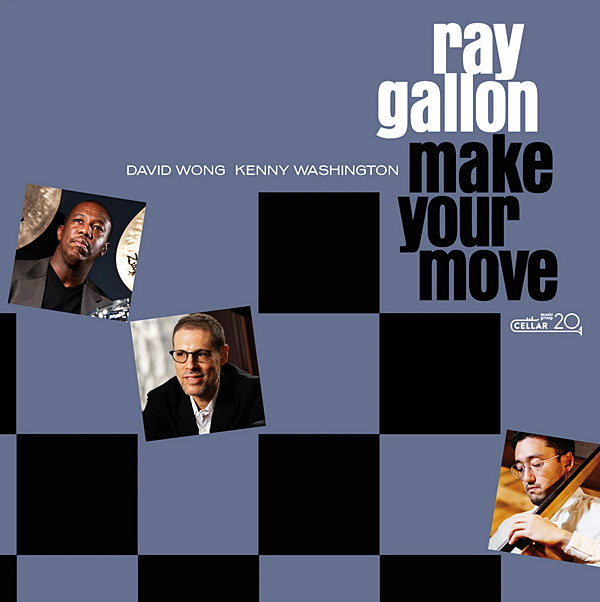 Drummer Kenny Washington is a jazz scholar, a New York University instructor, and an audiophile. His cracking rhythmic commentary drives pianist Ray Gallon's trio on Make Your Move (Cellar Live CM103120). Gallon's CD produced better drum tone, more separation between instruments, and bigger images on a bigger stage than I heard when streaming the same music (16/44.1 FLAC, Tidal). Streaming offered more detail, air, and top-end extension.
My favorite vocal CD discovery of 2021, Kristiana Roemer's House of Mirrors (Sunnyside SSC 1597, released in 2020), features the German singer's elastic, rounded, pure-toned vocals with a smart cast that includes drummer Adam Arruda, guitarists Ben Monder and Gilad Hekselman, pianist Addison Frei, and saxophonist Dayna Stephens. Roemer's songs wash over you like a bright spring Sunday morning, especially her version of Charles Mingus's "Duke Ellington's Sound of Love." The streaming version (24/96 FLAC, Qobuz) matched Roemer's vocal appeal: clean, sweet, incisive, and detailed, with tight bass and a slightly hard piano sound. The CD was thicker sounding and less transparent, with less bloom.
Drummer Kenny Washington is a jazz scholar, a New York University instructor, and an audiophile. His cracking rhythmic commentary drives pianist Ray Gallon's trio on Make Your Move (Cellar Live CM103120). Gallon's CD produced better drum tone, more separation between instruments, and bigger images on a bigger stage than I heard when streaming the same music (16/44.1 FLAC, Tidal). Streaming offered more detail, air, and top-end extension.
My favorite vocal CD discovery of 2021, Kristiana Roemer's House of Mirrors (Sunnyside SSC 1597, released in 2020), features the German singer's elastic, rounded, pure-toned vocals with a smart cast that includes drummer Adam Arruda, guitarists Ben Monder and Gilad Hekselman, pianist Addison Frei, and saxophonist Dayna Stephens. Roemer's songs wash over you like a bright spring Sunday morning, especially her version of Charles Mingus's "Duke Ellington's Sound of Love." The streaming version (24/96 FLAC, Qobuz) matched Roemer's vocal appeal: clean, sweet, incisive, and detailed, with tight bass and a slightly hard piano sound. The CD was thicker sounding and less transparent, with less bloom.
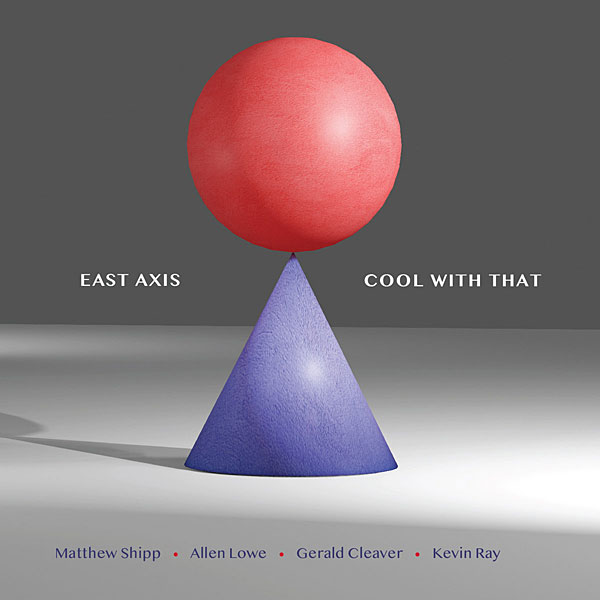 The gleeful group improvisations of East Axis's Cool With That (ESP Disk) are understandable given this supergroup's members: saxophonist Allen Lowe, bassist Kevin Ray, drummer Gerald Cleaver, and pianist Matthew Shipp. The group generates a maelstrom on "Oh Hell I Forgot About That," each instrument surging and sliding, the streaming version (16/44.1, Tidal) supplying ample detail, bust 'em up dynamics, and hellacious transient snap. The CD offered more weight and bigger images, with better separation.
If there's a theme here, it's that there is no theme. With the players and tracks I chose, neither format sounded consistently better than the other. Each offered its own pluses and minuses, which varied with the music. The Cyrus seemed to offer greater weight and punch, but on some recordings this manifested as tonal thickness and a loss of transparency. Streaming tended to excel at treble, detail, and upper register air but often gave up some presence and weight.
The gleeful group improvisations of East Axis's Cool With That (ESP Disk) are understandable given this supergroup's members: saxophonist Allen Lowe, bassist Kevin Ray, drummer Gerald Cleaver, and pianist Matthew Shipp. The group generates a maelstrom on "Oh Hell I Forgot About That," each instrument surging and sliding, the streaming version (16/44.1, Tidal) supplying ample detail, bust 'em up dynamics, and hellacious transient snap. The CD offered more weight and bigger images, with better separation.
If there's a theme here, it's that there is no theme. With the players and tracks I chose, neither format sounded consistently better than the other. Each offered its own pluses and minuses, which varied with the music. The Cyrus seemed to offer greater weight and punch, but on some recordings this manifested as tonal thickness and a loss of transparency. Streaming tended to excel at treble, detail, and upper register air but often gave up some presence and weight.
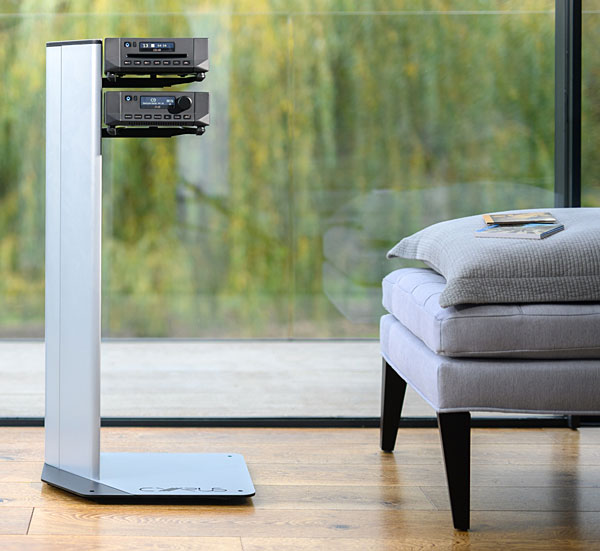 Cyrus CDi-XR Sabre meets Denafrips Ares II R2R
Using a 2m run of inexpensive Hosa DRA-502 S/PDIF cable, I bypassed the Cyrus's DAC and ran the digital signal out to the Denafrips Ares II DAC. I then returned to the Kristiana Roemer and East Axis CDs. The Cyrus/Denafrips duo playing Roemer's "Duke Ellington's Sound of Love" seemed to flatten the sound. The Cyrus alone was more transparent, with more brushes-on-snare clarity and upright bass detail. Spatial cues were clearer and everything sounded more natural. On the East Axis CD, the reverse seemed true. Go figure. Conclusion
Comparisons like this one—between a CD player and streaming—are fraught because so many variables change. It's impossible to draw conclusions. Streaming certainly has advantages over CD: more music at your fingertips, much of it in higher resolution. But some music does sound better on CD, and a big chunk of the music released during the CD era, especially in more obscure genres and on smaller labels, hasn't yet made it to the main streaming platforms. More than half the CDs I wanted to use in this review were unavailable streaming. For music-first audiophiles, especially those with obscure or eclectic tastes, a good CD player will remain necessary for years to come. The CDi-XR is a good CD player and a solid value.
Bassist John Hébert's Sounds of Love (Sunnyside) features superb bass work. The Cyrus player reproduced it with physicality, good tone, and ample punch. Solos by drummer Ches Smith were positioned precisely on a deep soundstage. The Cyrus let go of its notes quickly; the effect was to make the music seem natural and real. Hébert's bass had good, textured luster and live, realistic string bounce and touch. The Cyrus earned kudos for rhythm and timing.
Turkish drummer Kaan Çelen's Na-Zi-Le (Lin Records LR-J042) was one of my favorite jazz finds in 2021. (It was released in December 2020.) Kaan is surrounded by an empathic trio: Tamer Temel on soprano and tenor saxophones, Tolga Bilgin on trumpet, and Volkan Topakoĝlu on bass. Together, they play wistful jazz with deep soul and somber feeling. Here, too, the Cyrus made the most of the music's bass-register instruments. The deeper drums and bass took on a warm, darkish hue that complemented the music well. From tender ballads to surging improvisations with dramatic crescendos, I found little to fault with the Cyrus's presentation of this music, and much to enjoy. I sat back and played more digital tunes.
Now it was time to compare CDs played with the Cyrus with streamed versions of the same music, using the Sonore opticalRendu feeding the Denafrips Ares II DAC. Playing "Pharaoh's Dance" from Miles Davis's Bitches Brew (Columbia 88985474622), the CD version presented sharp leading edges, realistic ambient space, and an urgent, full-bodied, forceful sound. The streaming version of "Pharaoh's Dance" (24/96 FLAC, Qobuz) was airier, but it had less weight even at higher resolution, and the images were smaller.
Drummer Kenny Washington is a jazz scholar, a New York University instructor, and an audiophile. His cracking rhythmic commentary drives pianist Ray Gallon's trio on Make Your Move (Cellar Live CM103120). Gallon's CD produced better drum tone, more separation between instruments, and bigger images on a bigger stage than I heard when streaming the same music (16/44.1 FLAC, Tidal). Streaming offered more detail, air, and top-end extension.
The gleeful group improvisations of East Axis's Cool With That (ESP Disk) are understandable given this supergroup's members: saxophonist Allen Lowe, bassist Kevin Ray, drummer Gerald Cleaver, and pianist Matthew Shipp. The group generates a maelstrom on "Oh Hell I Forgot About That," each instrument surging and sliding, the streaming version (16/44.1, Tidal) supplying ample detail, bust 'em up dynamics, and hellacious transient snap. The CD offered more weight and bigger images, with better separation.
If there's a theme here, it's that there is no theme. With the players and tracks I chose, neither format sounded consistently better than the other. Each offered its own pluses and minuses, which varied with the music. The Cyrus seemed to offer greater weight and punch, but on some recordings this manifested as tonal thickness and a loss of transparency. Streaming tended to excel at treble, detail, and upper register air but often gave up some presence and weight.
Cyrus CDi-XR Sabre meets Denafrips Ares II R2RUsing a 2m run of inexpensive Hosa DRA-502 S/PDIF cable, I bypassed the Cyrus's DAC and ran the digital signal out to the Denafrips Ares II DAC. I then returned to the Kristiana Roemer and East Axis CDs. The Cyrus/Denafrips duo playing Roemer's "Duke Ellington's Sound of Love" seemed to flatten the sound. The Cyrus alone was more transparent, with more brushes-on-snare clarity and upright bass detail. Spatial cues were clearer and everything sounded more natural. On the East Axis CD, the reverse seemed true. Go figure. Conclusion
Comparisons like this one—between a CD player and streaming—are fraught because so many variables change. It's impossible to draw conclusions. Streaming certainly has advantages over CD: more music at your fingertips, much of it in higher resolution. But some music does sound better on CD, and a big chunk of the music released during the CD era, especially in more obscure genres and on smaller labels, hasn't yet made it to the main streaming platforms. More than half the CDs I wanted to use in this review were unavailable streaming. For music-first audiophiles, especially those with obscure or eclectic tastes, a good CD player will remain necessary for years to come. The CDi-XR is a good CD player and a solid value.