Wilson Audio Specialties Alexx loudspeaker
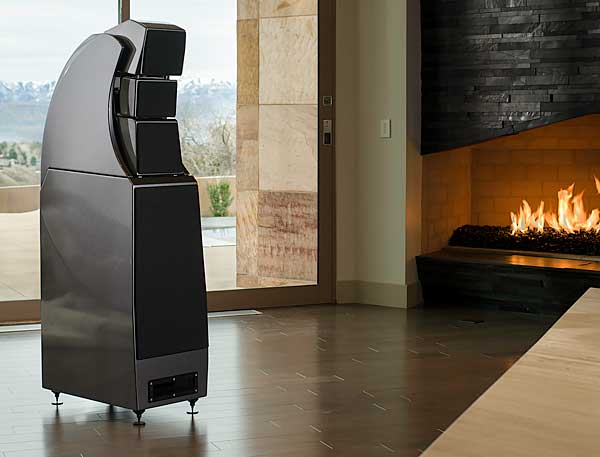
Having discontinued the MAXX3 loudspeaker ($68,000/pair in 2009, when I reviewed it), Wilson Audio needed to plug the resulting gaping hole between the Alexia ($48,500/pair) and the Alexandria XLF ($210,000/pair). Company founder Dave Wilson was busy with the limited-edition WAMM Master Chronosonic loudspeaker ($685,000/pair), so son Darryl Wilson set about creating a speaker with a retail price of about $100,000/pair. The result, the Alexx, finally came in at $109,000/pair.

 For anyone who wants to be up to date on all the audio products available in North America, Audio's Annual Equipment Directory is an indispensable source of information. (So is the publication you're reading now, of course.) The 1992 Directory (aka Audio's October issue) arrived when I was finishing up the review of the Acarian Alón IV (see
 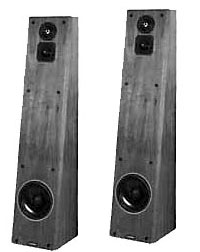 New England Audio Resource's NEAR-50M is a cyborg: metal innards in a wooden body. It represents NEAR's top statement in the firm's Metal Diaphragm Technology speaker line, which features the "NEAR-Perfect" driver cone. Metalin this case an anodized aluminum alloyis much more rigid than paper or plastic. Hence, a driver with a metal cone acts more nearly as a true piston. When it comes to loudspeaker cones, breaking up is not hard to do. When that happens, the cone flexes in a complex pattern, generating harmonic distortion. A typical plastic or paper 8" woofer may experience its first breakup mode at a frequency as low as 500Hz. The NEAR 8" metal-cone woofer's first breakup mode is said to be well above 2kHz, and their 4" metal-cone midrange does much better than that.