Digital Processor Reviews

Sort By:  Post Date TitlePublish Date

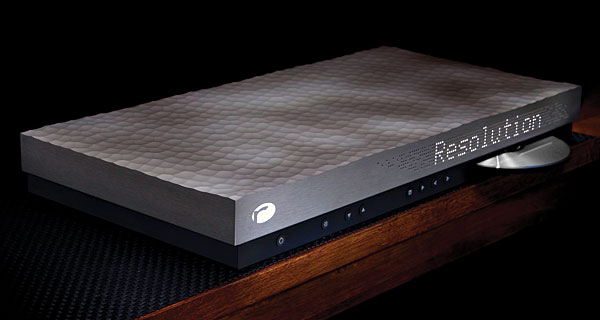
Resolution Audio Cantata Music Center

The dual subwoofers were bumping and our pant legs were flapping. Only moments before, we'd been treated to a polite viola da gamba. Not now. Resolution Audio's designer, Jeff Kalt, had brought only two discs with him to ensure that his company's Cantata Music Center was functioning properly in my system: Jordi Savall and Hespérion XXI's Altre Follie, 1500–1750 (CD, Alia Vox 9844), and Tool's 10,000 Days (CD, Tool Dissectional/Volcano 81991). After changing a few things around with the chamber music, we'd advanced to the hard rock of Tool.

Simaudio Moon Evolution 650D CD player

In the early 1980s, when CDs began trickling out of the few existing pressing plants, they were such rare and exotic objects that Aaron's Records, on Melrose Avenue in Los Angeles, kept them secured under lock and key in a tall glass cabinet. A customer forsaking vinyl would enter the store and, with great fanfare, announce the decision by dropping a load of LPs on the front counter with a disgusted thud. Then, in a ceremony resembling a rabbi removing the sacred scrolls of the Torah from the ark, the customer would approach the glass cabinet. An employee would unlock and swing open the doors, and, under that watchful gaze, the customer would choose from among a scattering of titles, carefully avoiding any disc that did not include the Strictly Kosher mark of "DDD."

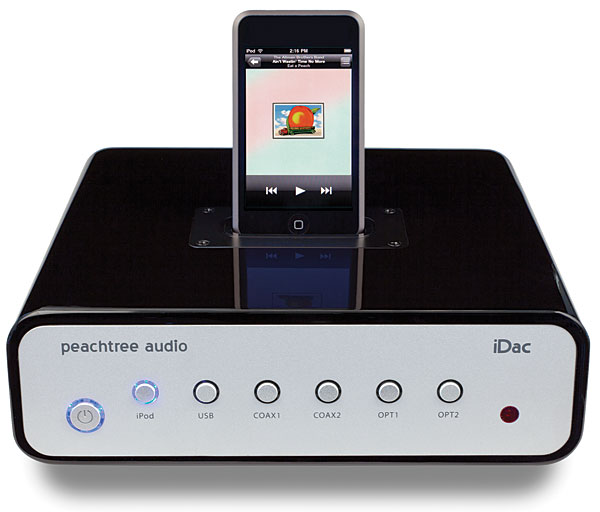
Peachtree iDac D/A converter

Oh boy, another new DAC review. Some folks think DACs, once you get past the features, all sound pretty much the same. I mean, it's just digital. Well, they're right. Pretty much. Just as two new cars of a particular make, model, color, and options package both look the same, sitting there on the lot.

But if you discover a ding in the door of one of them, where most folks still see only a new car, you now see the ding. It might have been there all along, undetected the first few times you walked around the car—maybe your buddy even had to point it out to you. It's insignificant in the scheme of all that a new car is, but once you've seen it, you always see it. Now you can easily tell the two cars apart, and we both know which one you'll drive home.

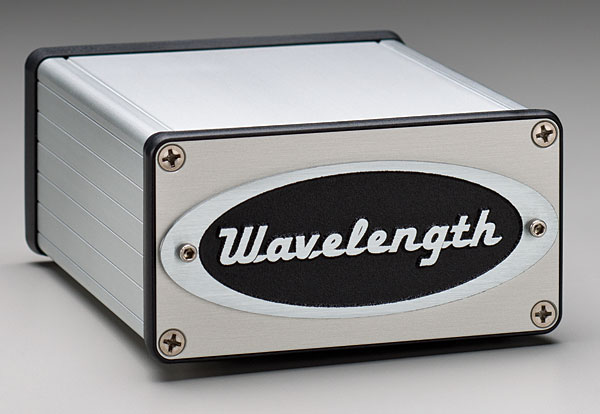
Wavelength Audio Proton USB D/A converter

I don't remember where I was when the Berlin Wall came down, and I already don't remember what I was doing when Liz Taylor died. (I suppose I was busy not thinking about Liz Taylor.) But I do remember when USB-based computer audio became a serious medium: That was when Gordon Rankin, of Wavelength Audio, introduced asynchronous data streaming, with his proprietary Streamlength software. After that, things picked up speed.

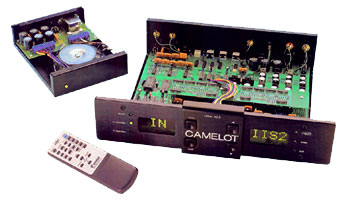
Camelot Technology Uther v2.0 D/A processor

666uher2c_2.jpgThe apparent demise of Audio Alchemy left a niche in the marketplace for a supplier of innovative, high-value digital components to provide the less-than-wealthy audiophile with state-of-the-art technology. Although Camelot Technology existed before Audio Alchemy went away, they have quickly taken over this niche with some interesting components. And I understand that some of the former AA technical personnel consulted for Camelot in the development of these products. (A recent press release indicates that Genesis Technology also played a major role in their design.)
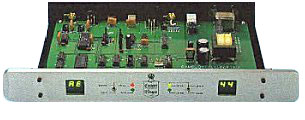
Camelot Technology Dragon Pro Jitter Reducer

666camdragon.jpgThe Dragon Pro is, I believe, the most eagerly awaited of the Camelot products. Since the disappearance of Audio Alchemy's DTI•Pro 32, no comparable anti-jitter and resolution-enhancement product has come along to replace it. (Yes, there are simpler anti-jitter boxes, and there is the Genesis Digital Lens, but these are not truly comparable in approach.) Well, the Dragon is everything that the DTI•Pro 32 was, and more!
The Dragon Pro anti-jitter box offers both jitter reduction and resolution enhancement, along with I2S in/out. Considering the number of Web newsgroup ads from folks wanting to buy AA DTI•Pro 32s, this baby has a waiting market.

Audio Research DAC1 D/A converter

The past 12 months have seen some remarkable developments in digital playback. Standards of digital musicality are far higher than they were a year ago, both on an absolute performance basis and in terms of what you get at various price levels. No other component category has seen such tremendous gains in value for money or number of new products introduced. It seems hard to believe that since Vol.13 No.6 (12 issues ago), we've reviewed such noteworthy digital processors as the Meridian 203, Proceed PDP 2, Stax DAC-X1t, Theta DSPro Basic, Wadia X-32, Esoteric D-2, PS Audio SuperLink, and VTL D/A. Each of these converters brought a new level of performance to its price point—or, in the case of the Stax and VTL, established a new benchmark of ultimate digital performance.

Just as these units provided stiff competition for previous products, so too will they come under the assault of improving technology. The art of digital processor design is so young that we can continue to expect further improvements coupled with lower prices as designers move up the learning curve.

Micromega AS-400 D/A integrated amplifier

Blind though I am to the allure of blind testing, I can appreciate some degree of review-sample anonymity: Distinctive products elicit distinctive responses, but a plain black box encourages us to leave our prejudices at the door. It asks of us a certain . . . objectivity.

So it was with the Micromega AS-400 digital source/integrated amplifier ($4495), the anonymity of which was compounded, in my case, by a generous helping of forgetfulness: I suppose I was told, ahead of time, that this was a class-D amplifier, but at some point in time before my first at-home audition I apparently killed the brain cells responsible for remembering that fact. So I was innocent of conscious prejudice when I listened to this elegant cipher of a box and wrote, in my notes: "Dynamic, dramatic, and almost relentlessly exciting with some recordings. Imbued pianos with almost too much dynamism for the room—too much being very good!—but lacked some 'purr' in the die-away. Basically fine and fun. Wish it had a little more color and spatial depth."

Musical Fidelity Digilog D/A processor

The rapidly evolving world of the late 20th century is the source of much stress. Changes in the status quo, whether wrought by social, political, or technological forces, are often accompanied by anxiety brought on by the struggle to assimilate new patterns of thought. New ideas necessitate abandoning or modifying one's old ideas, thus creating conflict (footnote 1). However, these periods of rapid change can also be exciting, allowing one to chart a course of discovery and growth.
Advertisement
Advertisement
Advertisement