Digital Processor Reviews

Sort By:  Post Date TitlePublish Date

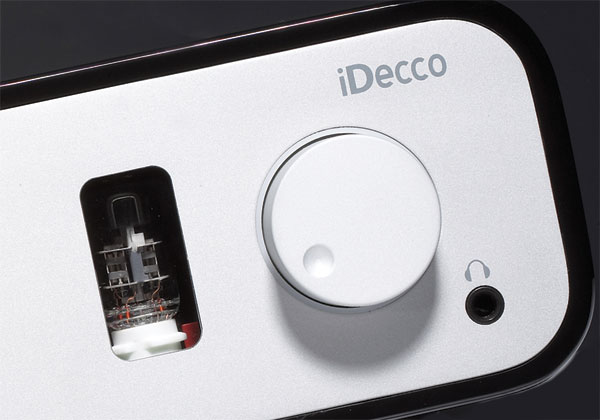
Peachtree iDecco D/A integrated amplifier

As with so many other things, from cell phones to soy milk, the idea of a portable MP3 player was something I at first disdained, only to later embrace with the fervor of any reformed sinner. But not so the idea of a high-fidelity iPod dock: Given that I now carry around several hundred high-resolution AIFF files on my own Apple iPod Touch, the usefulness of a compatible transport seemed obvious from the start. Look at it this way: In 1970, whenever I bought a music recording, I could enjoy it on any player, in any room in the house. In 2010, why shouldn't I enjoy at least that degree of convenience and flexibility—without resorting to a pair of tinny, uncomfortable earbuds?

Mark Levinson No.30.5 Reference digital processor

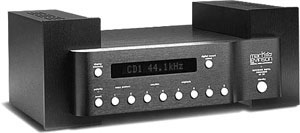
The arrival of the Mark">http://www.stereophile.com/digitalprocessors/mark_levinson_no30_referen… Levinson No.30 digital processor more than 2½ years ago marked a turning point in digital-audio reproduction. Although the No.30's $13,950 price tag put it out of reach of all but a few audiophiles, its stunning performance suggested that much more musical information was encoded on our CDs, waiting to be recovered by better digital processors. Further, it was inevitable that this level of performance would become less expensive over time. I was more excited by the No.30 than I've been over any other audio product. In fact, its musical performance was so spectacular that it alone occupied the Class A category in Stereophile's "Recommended Components."

YBA Design WD202 D/A headphone amplifier

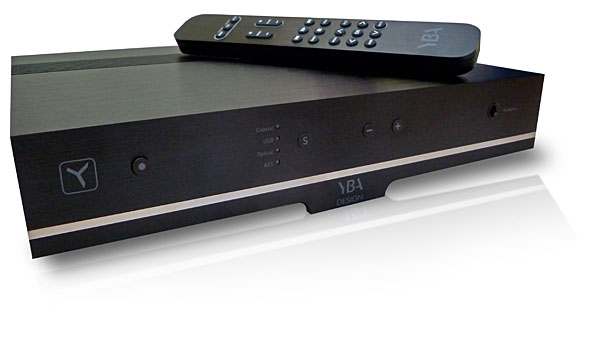
YBA Design's new WD202 D/A processor and headphone amplifier showed up while I was turning the pages of Don and Jeff Breithaupt's Precious and Few: Pop Music of the Early '70s, recommended by John Marks in his October 2009 "Fifth Element" column. Each page drips with great examples of why the 1970s often wind up on the wrong end of the culture stick (the Osmonds, anyone? Terry Jacks?).

Mark Levinson No.30 Reference Digital Processor

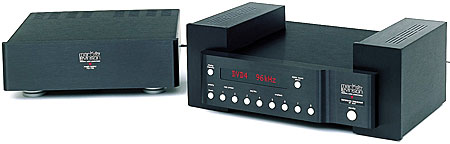
Over the past two and a half years, I've auditioned and reviewed a number of digital audio products. It has been a fascinating experience both to watch digital playback technology evolve and to listen to the results of various design philosophies. The road to more musical digital audio has been a slow and steady climb, with occasional jumps forward made possible by new techniques and technologies. Making this odyssey even more interesting (and confounding), digital processors seem to offer varying interpretations of the music rather than striving toward a common ideal of presenting what's on the disc without editorial interjection.

Lindemann & Stello USB-S/PDIF converters

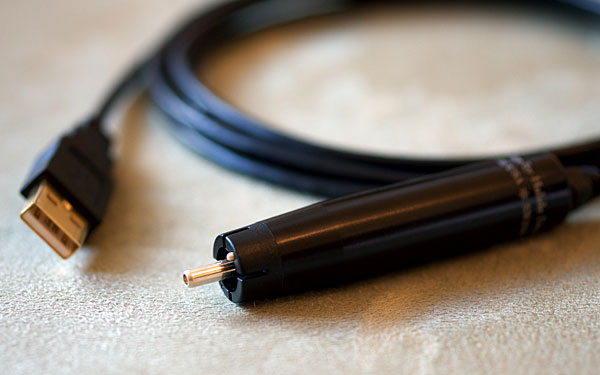
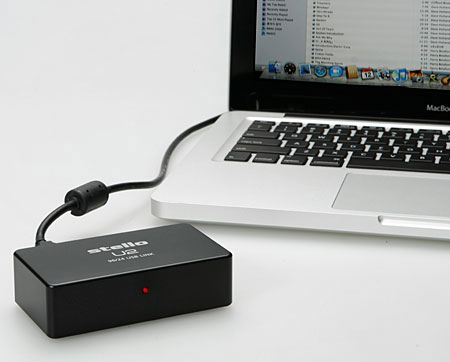
As someone who wrestled endlessly with the nine-pin serial ports and the RS-232 protocol with which early PCs came fitted (footnote 1), I welcomed the Universal Serial Bus (USB) interface when I first encountered it a decade ago, on the original Apple iMac. Plug it in. Don't worry. Be happy. The computer peripherals work as they should, which was often not the case with RS-232. It was a given, therefore, that the then-new USB port would be seen as a natural means of exporting audio data from a PC (footnote 2), but the first generation of USB-connected audio devices offered disappointing performance.

Naim Uniti CD player/receiver

In an industry whose newest products are often as discouragingly unaffordable as they are short of the sonic mark, the Naim Audio Uniti ($3795) stands out. In a single reasonably sized box, the Uniti combines the guts of Naim's Nait 5i integrated amplifier and CD5i CD player with various additional sources: an FM/DAB tuner, and interfaces for an iPod, a USB memory stick, an iRadio, and a UPnP-compatible connected computer or server—all for the price of a very good television set.

Bryston BDA-1 D/A converter

In February 2009, I reviewed Bryston Ltd.'s first CD player, the $2695 BCD-1, and was very impressed by what I heard. The BDA-1 ($1995) is the Canadian company's first standalone DAC. It's slim, only 2.75" high, with the engraved company name, model number, and infrared sensor grouped at the extreme left of a front panel of polished aluminum. Farther to the right are two columns of four LEDs each that comprise the sample-rate indicator, which identifies the selected input's signal frequency and whether the BDA-1 has locked to it. Closer to the center is the Upsample control, which governs the conversion of the incoming digital signal synchronously to 192kHz or 176.4kHz. The Upsample LED turns green for 192kHz, red for 176.4kHz. Digital sources are selected by pressing one of eight pushbuttons just right of center: two TosLink, four S/PDIF (coaxial), one AES/EBU XLR, and one USB 1.1, the last accepting only signals with sample rates at or below 48kHz. An LED above each pushbutton lights green for an incoming PCM datastreams and red for other types, including multichannel Dolby Digital streams.

Music Hall dac25.2 D/A processor

Roy Hall has been Creek Audio's US importer for more than 20 years. Did you know that all Creek gear is now made in China? Just like Cambridge Audio, Quad, and many B&W models. Just like some US speaker brands, for which virtually all parts are made in China but are assembled, it's claimed, in the US. Three cheers for brands like LFD, Rega, Sugden, and Harbeth—all still made in the UK. For French marques made in France. For Italian products produced in Italy. Etc.
Advertisement
Advertisement
Advertisement