Kalman Rubinson

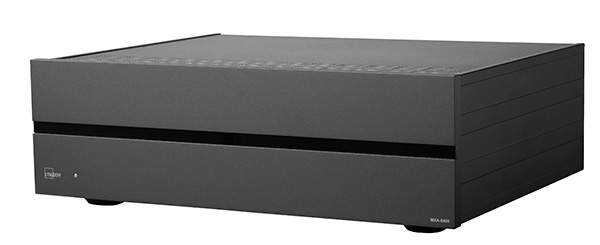
Lyngdorf Audio MXA-8400 8-channel power amplifier

Woot, woot! I was thrilled when I saw the announcement for this amplifier. I was tempted to order one sight unseen and sound unheard. Why? First off, it employs the newest (as of March 2025) class-D amplification technology. Second, it can accommodate all sorts of audio systems, from an eight-channel surround setup to a megalomaniacal two-channel stereo system. Third, the specs, even in the context of its technology, are impressive. And fourth, I can lift it by myself—easily! How can I pass this amplifier up?
Continue Reading »

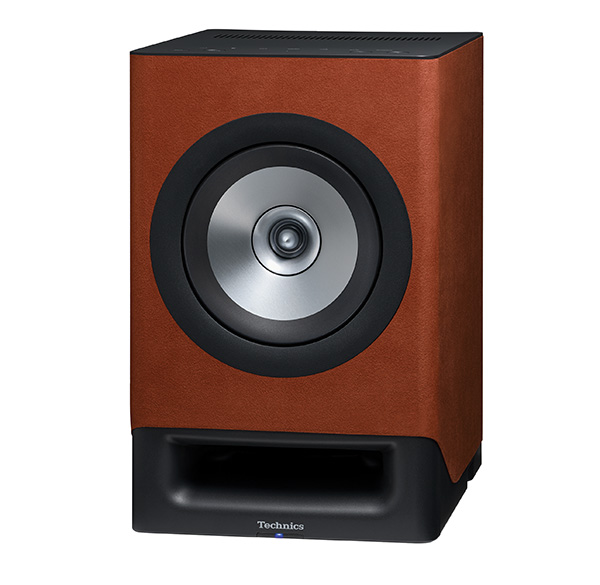
Technics SC-CX700 active loudspeaker system

The usual Specifications sidebar in this review is a nuts-and-bolts listing of the electrical and physical properties of the Technics SC-CX700 loudspeaker ($2999.99/pair), who made it and where, and a widely varying amount of information about its electrical and acoustical performance. The information comes from the included literature, available downloads, and whatever I could find on the manufacturer's website.

Note the complete absence of the usual technical information about the design or construction of the coaxial driver or about the crossover frequency and slope. Missing, too, are performance specifications for frequency response, sound-pressure level, and distortion. That disappoints me because I like numbers, but all the really interesting stuff about these speakers—though expressed without as many numbers as I'd wish—can be found on the Technics website. These include: what Technics calls "Acoustic Solitude Construction," which isolates the electronics from the loudspeakers structurally and spatially; "Model Based Diaphragm Control," which adjusts diaphragm movement in real time; and "Space Tune," which includes four acoustical presets and two levels of measurement-based room correction.

Continue Reading »

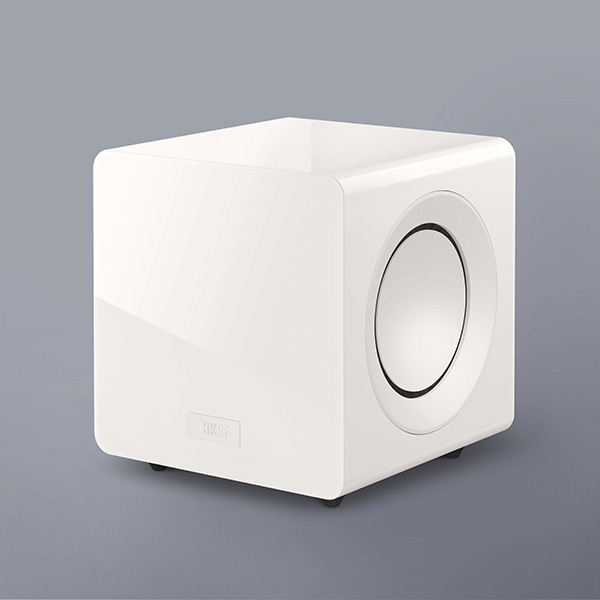
KEF KC92 powered subwoofer

I was fascinated by Herb Reichert's adventures with the KEF KC62 subwoofer, so I borrowed one. Beautifully engineered, contoured, and finished and chock-full of cutting-edge technology, it would be welcome in any room and easily integrated into any system. However, it struck me as not just small but miniaturized, like the meticulously functional samples made for the traveling salesmen of a century past. Since its two force-canceling 6.5" radiators were the same size as or smaller than the midrange drivers in my main speakers at the time, I had low expectations and returned it without comment. That was in 2021.

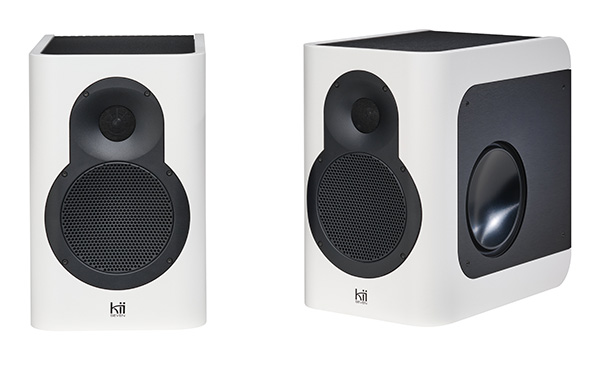
I asked for a pair of KEF KC92s in early 2024 in the hope that these two relatively small subs would improve my system. Like the KC62, the gloss white cube with radiused edges and white diaphragms is an aesthetic match to our redesigned room, and the KC92 ($1999.99) is chock-full of the same cutting-edge technology.

Continue Reading »

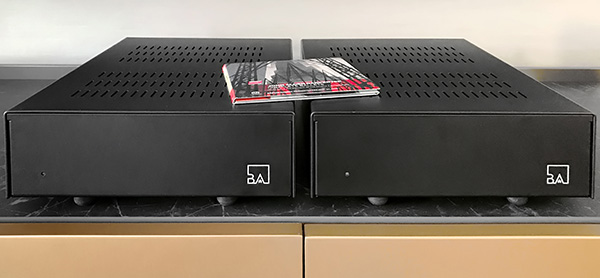
Buckeye Purifi Eigentakt 1ET9040BA monoblock power amplifier

Back in 2016, I documented the rise of class-D amps using the early TriPath technology. Used in the Bel Canto eVo 200.2, TriPath cracked open the door to the High End but was never admitted due to a dim and opaque treble. The second wave was based on B&O's ICEpower technology, again via a Bel Canto amplifier, the Ref1000M monoblock. ICEpower had more credibility and was accepted by many but, often, only with, ahem, due consideration for size and efficiency. There was an explosion of new class-D amps in 2016 when Stereophile featured glowing reviews of Bel Canto's e.One Ref600M monoblock, Theta's Prometheus monoblock, and NAD's Masters Series M22 stereo amp, all based on Bruno Putzeys's Hypex NCore technology modules. Finally, it seemed that class-D was "in the room," though, even to this day, there remain critics and quibblers who continue to deny them as true high-fidelity products.

Well, time does not stand still and neither did Bruno Putzeys. He, along with Lars Risbo and Peter Lyngdorf, had founded Purifi in 2015, and in 2019 he unveiled the Purifi Eigentakt power amplifier modules.

Continue Reading »

PS Audio Aspen FR5 loudspeaker

I remember the first PS Audio product: a simple phono stage. It was so simple—a passive RIAA EQ filter flanked by a pair of primitive op-amps—that when the schematic was made public, I built one myself; I was in the midst of my DIY years. I thought it was, to use a word from that time, nifty. Paul McGowan went on to other things and other companies, eventually reviving PS Audio and building it into its present form with a wide range of interesting and substantive products. Most recently, PS Audio added a line of loudspeakers inspired by Paul's erstwhile partner in other ventures, the late Arnie Nudell.

The PS Audio Aspen speaker line has four models, three 3-way floorstanders (FR30, FR20, FR10) and a single two-way standmount (the FR5, $3499/pair).

Continue Reading »

NAD M66 streaming preamplifier

In my early years in audio, I witnessed the rise and fall of the AM-FM receiver, first in vacuum tube mono and later in solid state stereo. Some of them grew to be behemoths, supporting multiple inputs, equalizers, dual speaker zones, and powerful amplifiers. When radio sources receded in popularity and with the rise of CDs, cable TV, and DVD, radio receivers were replaced by A/V receivers in the mainstream market.

Today, the ascension of streaming as the conduit for both audio and video content has nudged these, too, from the center stage. One can stream content from the bewildering variety of products with internet access including cell phones, smart TVs, almost any computer, and of course, dedicated streaming devices from the cheap-and-cheerful to seriously audiophile. If your music is on the web or on a NAS, many of these will let you browse for it, find it, and play it.

Continue Reading »
Advertisement
Advertisement
Advertisement