Phono Cartridge Reviews

Sort By:  Post Date TitlePublish Date

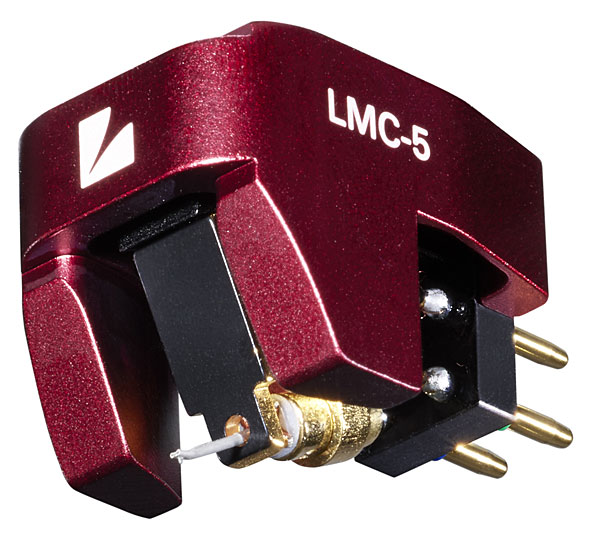
Luxman LMC-5 moving coil phono cartridge

Since 1925, Japan-based Luxman Corporation has manufactured high-quality integrated amplifiers, preamplifiers, power amplifiers, phono stages, turntables, and, more recently, DACs and CD players. But it has been 40 years since Luxman introduced a new phono cartridge; the last one was the LMC-2 in 1982, released just after 1981's LMC-1. That dry period ended with the introduction of the Luxman LMC-5 ($2695).

Ortofon MC Century phono cartridge

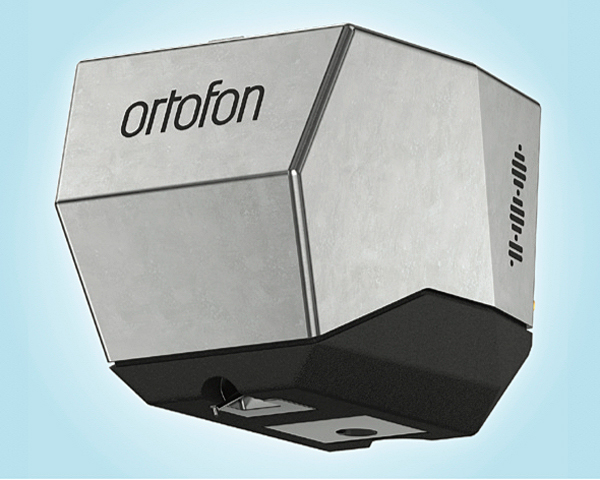
A few years ago, Leif Johannsen, Ortofon's chief officer of acoustics and technology, was tasked with designing new products to commemorate the company's 100th anniversary, in 2018 (footnote 1). Ten years ago, to celebrate Ortofon's 90th, he came up with the radical A90 moving-coil cartridge, which used Selective Laser Melt (SLM) technology to laser-weld together microparticles of stainless steel, layer by layer, to produce a 3D-printed metal body whose shape would have been impossible to machine.

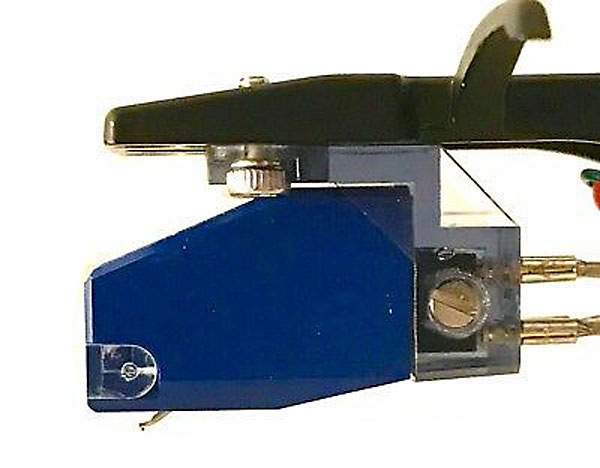
Sumiko Blue Point & Blue Point Special phono cartridges

In these waning days of Analog's Last Stand, it might seem absurd to review midpriced phono cartridges when this space could be given instead to the gear Stereophile usually covers—like $3000 OTL tube amps built by guys like that "Rainbow Man" lone nut who used to dance in the stands at Super Bowls before he took hostages in a hotel room with a .45 screaming, "MIT CAPACITORS!!! MIT CAPACITORS!!!"

Talisman S MC phono cartridge

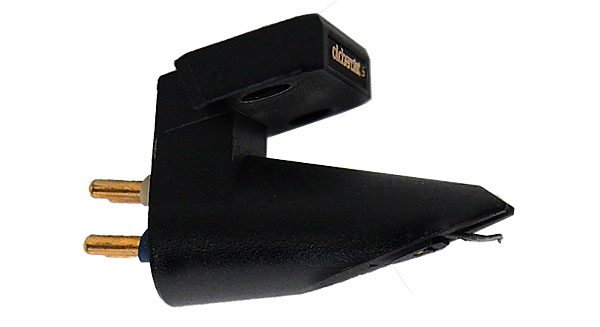
The Talisman S represented, ca 1983, the top of Sumiko's moving-coil cartridge line and shared its design philosophy and external appearance with the Talisman A and B, the remaining two cartridges in the Talisman family before the introduction of the Virtuoso line. The three differed only in cantilever material and stylus shape. The A, the least expensive, had an aluminum alloy cantilever and an elliptical diamond stylus.

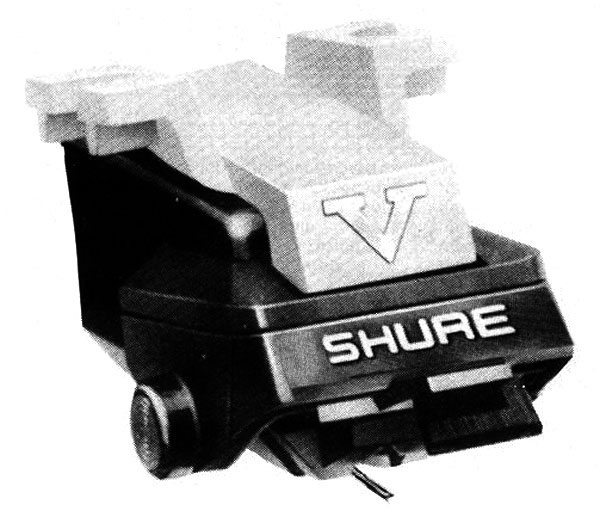
Shure V15 V-MR phono cartridge

I was all set to give up on moving magnets until the new Shure VI5-VMR (MR stands for Micro-Ridge stylus) arrived. In a word, it's terrific. I was slightly disappointed with the original V15-V: I just didn't think it was a significant improvement over the Type IV. What I missed was fine detail—especially in the high frequencies and during heavily modulated passages. The original V was not quite up to the sound of certain moving coils. Which is not to say the original V was a bad buy: moving coils cost twice the price and you need a stepup. I could recommend the original V without hesitation.
Advertisement
Advertisement
Advertisement