Phono Cartridge Reviews

Sort By: Post DateTitle Publish Date

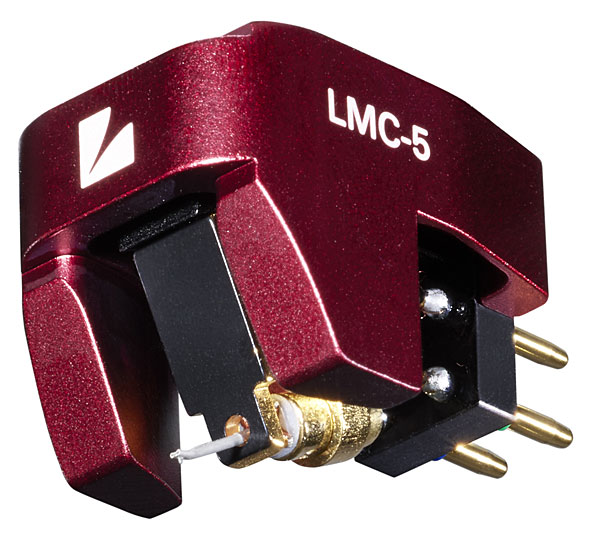
Luxman LMC-5 moving coil phono cartridge

Since 1925, Japan-based Luxman Corporation has manufactured high-quality integrated amplifiers, preamplifiers, power amplifiers, phono stages, turntables, and, more recently, DACs and CD players. But it has been 40 years since Luxman introduced a new phono cartridge; the last one was the LMC-2 in 1982, released just after 1981's LMC-1. That dry period ended with the introduction of the Luxman LMC-5 ($2695).

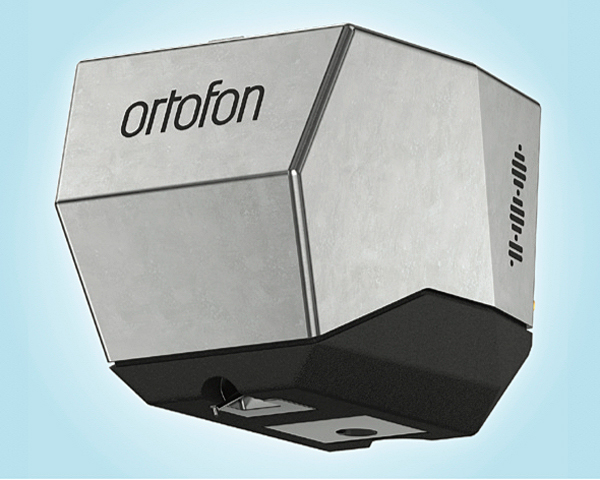
Ortofon MC Century phono cartridge

A few years ago, Leif Johannsen, Ortofon's chief officer of acoustics and technology, was tasked with designing new products to commemorate the company's 100th anniversary, in 2018 (footnote 1). Ten years ago, to celebrate Ortofon's 90th, he came up with the radical A90 moving-coil cartridge, which used Selective Laser Melt (SLM) technology to laser-weld together microparticles of stainless steel, layer by layer, to produce a 3D-printed metal body whose shape would have been impossible to machine.

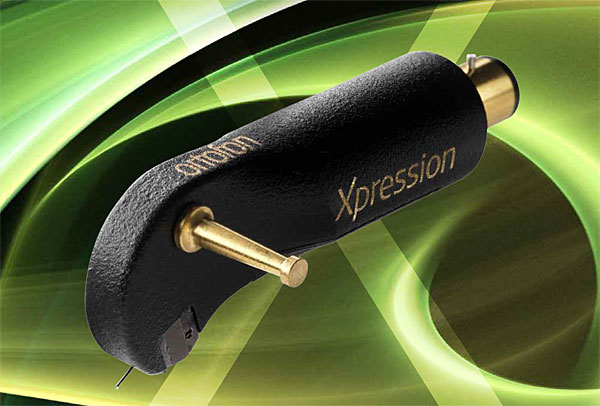
Ortofon Xpression pickup head

I listen to music in all formats, but my most ecstatic home listening experiences have always involved vinyl. It's probably something to do with the fact that, like most people my age and older, I grew up listening to LPs—in my case, played on a Technics SL-210 turntable, and through an Aiwa receiver with beautiful green tuner lights and a pair of early Polk Audio studio monitors. I'm drawn, surely, to an improved version of the sound I heard back then. It's a powerful sentimental connection.

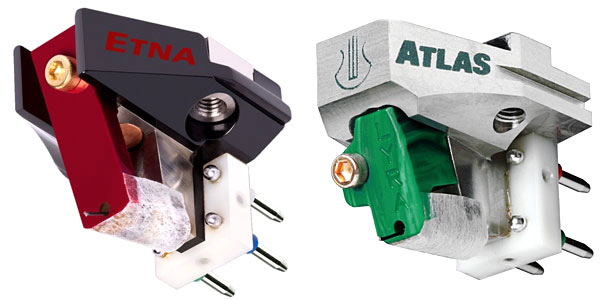
Lyra Atlas SL and Etna SL phono cartridges

My 0.56mV-output Lyra Atlas moving-coil cartridge ($11,995) has put in four years of heavy-duty use. But not long ago I began to hear some problems with sibilants from records that previously hadn't given me trouble in that department. Lyra's Jonathan Carr and Stig Bjorge suggested I bring my Atlas to the 2016 Consumer Electronics Show, held last January in Las Vegas, where they would exchange it for a new one.

Robert Deutsch Upgrades His Record Player

For some time now, I've been thinking that my record player was due for an upgrade. My Linn LP12 turntable and Ittok LVII tonearm are about 25 years old, and my AudioQuest AQ7000nsx cartridge is going on 15. During that time, my listening has become increasingly dominated by CDs, but I am not yet ready to give up on LPs. Updating my LP12—for which I have Linn's Lingo power supply but no other upgrades—would involve installing the Keel subchassis, for $3250—for which price I could get another maker's new, current-design turntable and still have the LP12 to sell. The Linn Ittok can't be upgraded, and its replacement, the Ekos SE, costs $4950—out of my range. AudioQuest no longer makes cartridges. Examining my AQ7000nsx's stylus under a microscope showed no visible wear, and there was no obvious audible problem that could be traced to the cartridge's suspension, but age must be having some sort of effect. Taking all these factors into account, I decided to replace my entire phono front end.

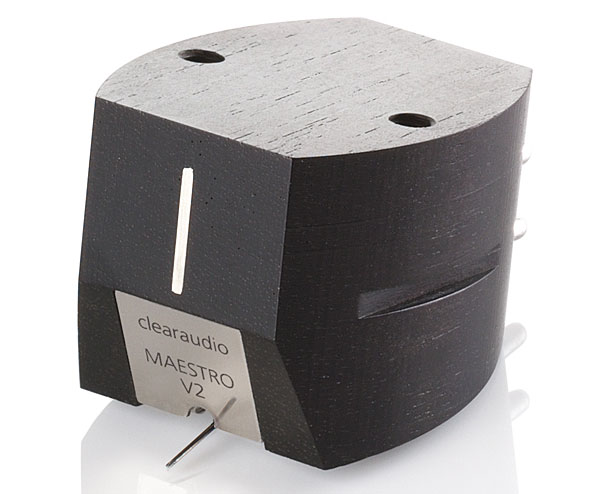
Analog Corner #236: Clearaudio Maestro V2 phono cartridge

Clearaudio began making moving-coil cartridges in the 1970s, and only later got into the moving-magnet business. Moving-magnet cartridge designers must now be mindful that most of today's tonearms are of medium to high mass and that therefore, to be compatible, their MMs must be of low to medium compliance and of higher mass than those of the 1960s and '70s.

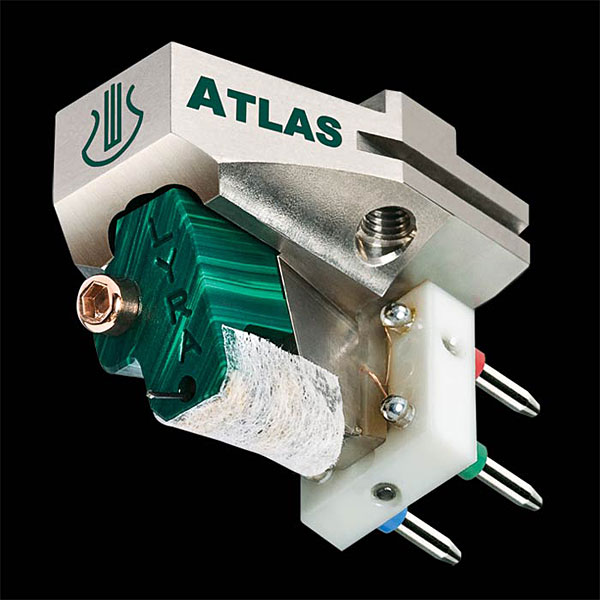
Lyra Atlas MC phono cartridge

At the 2012 Consumer Electronics Show, I spoke with Lyra's Jonathan Carr about the Atlas. He told me that, rather than having started as a blank sheet of paper, the Atlas is an outgrowth of the Kleos ($2995), which I reviewed in January 2011, when I thought it Carr's best balanced design yet, even if it didn't have quite the resolution of the Titan i. Like the lower-priced Delos ($1650, reviewed in August 2010), the Kleos included Carr's New Angle technology, which mechanically aligns the coils to be perfectly positioned relative to the front and rear magnets when the stylus is in the groove.

Brinkmann Pi phono cartridge

The Brinkmann Pi cartridge's Benz-Micro heritage was obvious from the get-go. The motor is built to Brinkmann's specifications by Benz-Micro and includes a Micro-Ridge stylus. The cantilever material is not specified. The Pi's output is approximately 0.25mV, and its compliance is moderate at 15µm/mN. Recommended are a tracking force of 1.8–2gm, a VTA of 23°, and a resistive load of 600 ohms.
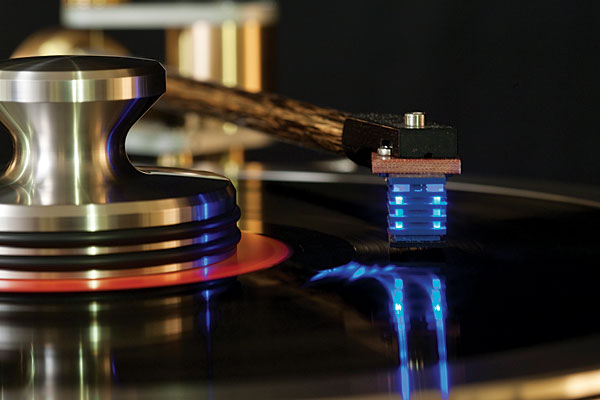
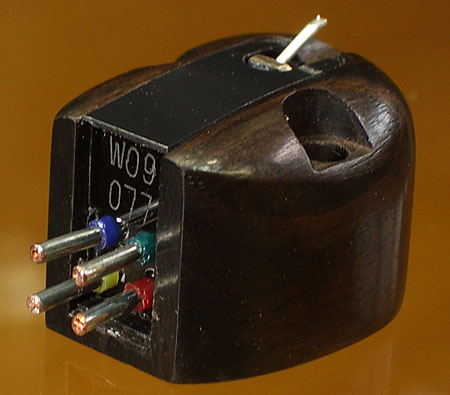

Helmut Brinkmann says he tweaked the Pi's design for a year and a half before he achieved the results he desired, including making the tiny set screws out of various materials. The Pi, with a body of machined aluminum designed to control the dissipation of resonant energy, weighs a hefty 14gm. Brinkmann supplies aluminum screws and titanium washers, which, he claims, in combination with special damping between the cartridge body and headshell, have been "sonically tuned to create a unique musical instrument."

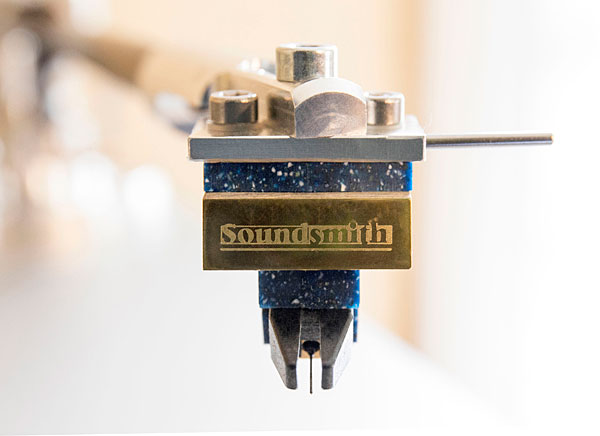
Soundsmith Strain Gauge SG-200 phono cartridge system

Strain-gauge phono cartridges are rarely made and seldom heard; for most vinyl fans, they are more myth than fact. Panasonic once made one, as did Sao Win, but those were decades ago. I've heard about those two models for years but have never seen, much less heard one.


As if he's not got enough to do building his extensive lines of moving-iron cartridges, preamplifiers, amplifiers, and speakers, Soundsmith's Peter Ledermann also makes a full line of strain-gauge cartridge systems available with a choice of six user-replaceable stylus profiles. I believe the Soundsmith is the only strain-gauge cartridge currently made anywhere in the world. Ledermann says it takes him a full day to build one.

Advertisement
Advertisement
Advertisement