Computer Audio Reviews

Sort By: Post DateTitle Publish Date

Musical Fidelity M1 DAC
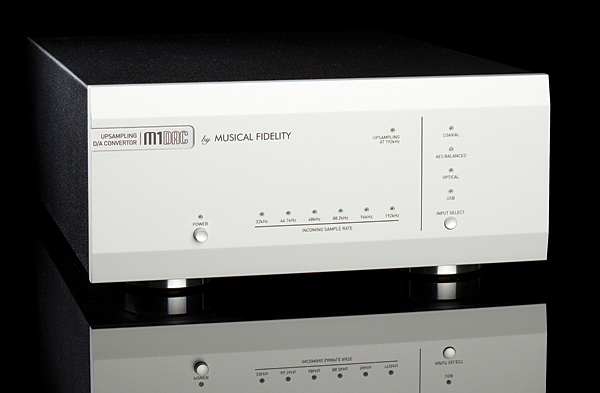
The M1 DAC is by Musical Fidelity. At $699, it's a stunning bargain. Comparing it to $995 for the Digilog in 1989. Meanwhile, the M1 is far more versatile, way better built, and, if memory serves me right, sounds vastly better.


It appears that the way to sell a DAC in 2011 is to almost give it away, in real-dollar terms. Some people pay far more than this for a set of speaker cables, a pair of interconnects, even a power cord. The M1 DAC is a piece of kit that can transform your system. I kid you not.

HRT Music Streamer Pro USB D/A converter

Art Dudley and others have covered the first products released by HRT, and now the company has added to its product line a Pro version of its Music Streamer, which sports balanced circuit design from tip to tail.


Housed in the same simple, functional, six-sided case of extruded aluminum as HRT's other products, the Pro is painted a bright blue to distinguish it from the Music Streamer II (red) and Music Streamer II+ (gray). At 5.6" it is also a tad longer than the others, and includes a single B-type USB 1.1 jack centered on one end, and two small, fully balanced TiniQ output jacks on the other. More about these special mini sockets later.

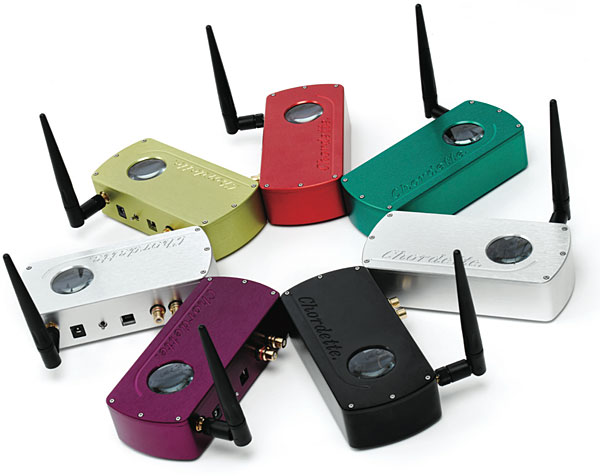
Chord Chordette Gem D/A processor

There's home cooking on one side of the hedge and fast food on the other, and the world moves farther from the former and nearer to the latter with each passing day. So it goes in domestic audio, where virtually every new milestone of the past quarter-century has pointed far more toward convenience than toward quality.


Depressed? Don't be. Those of us in the perfectionist community have a history of dealing with such things, howsoever slowly and inefficiently. (footnote 1). We're getting better at it, too, year by year. An example: Chord Electronics, of sunny southern England, has now brought to market their Chordette Gem D/A converter ($799) which they offer as an affordable means of getting perfectionist-quality sound from computer-music files.

dCS Debussy D/A processor

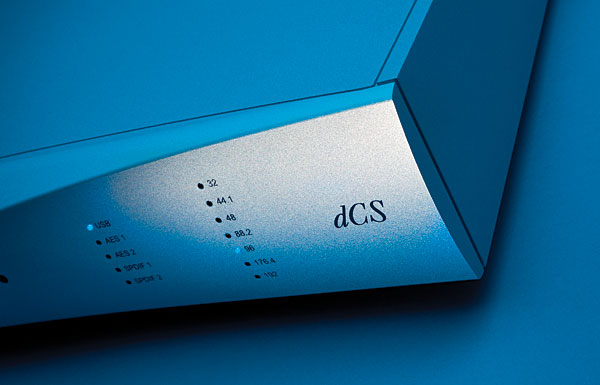
Don't have $80,000 to drop on dCS's four-component Scarlatti SACD stack that I reviewed in August 2009, or $17,999 for their Puccini SACD/CD player that John Atkinson raved about in December 2009? Even if you do, the new Debussy D/A processor ($10,999) might be a better fit for your 21st-century audio system. Sure, you don't get an SACD transport—or any kind of disc play, for that matter—but the odds today are that you already have a player you like that's got an S/PDIF output that can feed the Debussy.

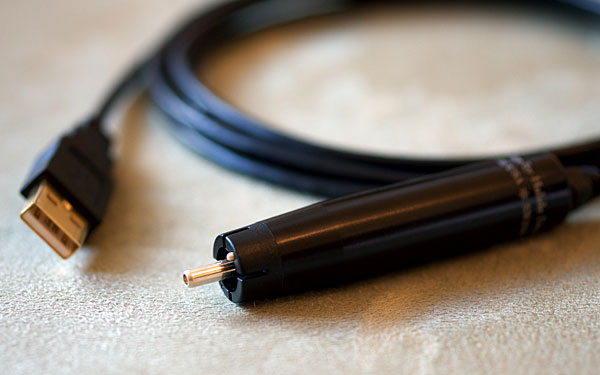
Halide Design S/PDIF Bridge USB-S/PDIF converter

The weekly Vote! Page is one of the most popular features of the Stereophile website, and the August 22 question, "Should Stereophile review more or fewer computer-audio products?", generated a record number of responses. No less than 88% of those responding asked for more coverage of products that allow a computer to be a legitimate source of music in a high-end context. Just 7% of readers wanted less coverage.

Peachtree iDecco D/A integrated amplifier

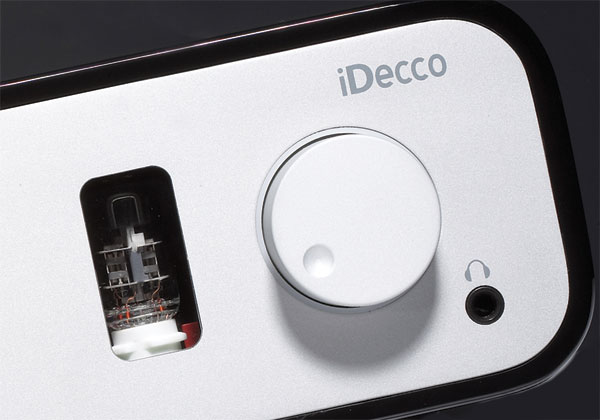
As with so many other things, from cell phones to soy milk, the idea of a portable MP3 player was something I at first disdained, only to later embrace with the fervor of any reformed sinner. But not so the idea of a high-fidelity iPod dock: Given that I now carry around several hundred high-resolution AIFF files on my own Apple iPod Touch, the usefulness of a compatible transport seemed obvious from the start. Look at it this way: In 1970, whenever I bought a music recording, I could enjoy it on any player, in any room in the house. In 2010, why shouldn't I enjoy at least that degree of convenience and flexibility—without resorting to a pair of tinny, uncomfortable earbuds?

NAD PP 3 digital phono preamplifier

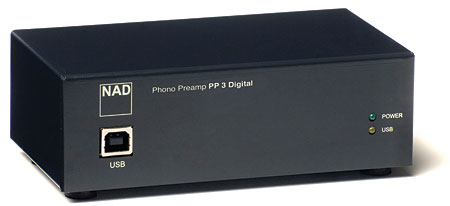
Even Mikey Fremer is surprised at vinyl's current popularity. Some pundits postulate that eventually CDs will die out, and we'll be faced with the choice of LPs or downloads. (I hope not. I'm just getting used to CDs.) With abundant sources of new pop releases and a wide range of reissues on vinyl, and a variety of used LPs, every audiophile should own a turntable. And with the availability of affordable turntables such as the Pro-Ject Debut III, which I reviewedhttp://www.stereophile.com/turntables/pro-ject_debut_iii_record_player"…; in the February 2010 Stereophile, the cost of entry to VinylLand is not very dear. The problem is that so few entry-level integrated amplifiers and receivers available today include phono stages. (The Marantz PM5003, which I reviewedhttp://www.stereophile.com/integratedamps/marantz_pm5003_integrated_amp…; in the January 2010 issue, is a notable exception.)


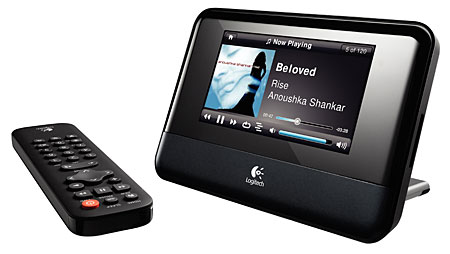
Logitech Squeezebox Touch network music player


When it comes to ripping CDs and downloading music, I've been sitting on the sidelines feeling more than a bit of envy. Stereophile's reviews of various media servers have whetted my appetite, but not so much as to overcome my timidity about getting into a new realm of technology in which I would be a beginner all over again. Still, I've sneaked a few peeks.

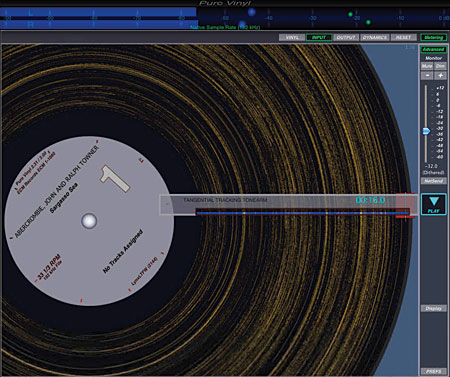
Pure Vinyl LP recording & editing software

As long as you're spinning an LP for your listening pleasure, and if digitizing it at a resolution of 24-bit/192kHz is transparent to the analog source, why not record and store the LP on your computer at that high sampling rate for future convenient playback via iTunes or for iPod use, or for burning to CD-R? And, while you're at it, why not record the LP unequalized and apply the RIAA curve in the digital domain, where you're not dependent on capacitors and resistors that are imprecise to begin with, and can drift over time? With no drift of phase or value, the virtual filter's results should be better than with any analog filter. And in the digital domain, you can program in any curve known, and select it at the click of a mouse. Aside from the sweat equity invested in programming it in the first place, it wouldn't add a penny to the program's cost.


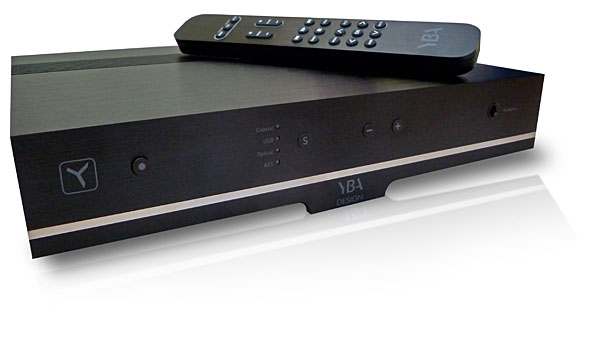
YBA Design WD202 D/A headphone amplifier

YBA Design's new WD202 D/A processor and headphone amplifier showed up while I was turning the pages of Don and Jeff Breithaupt's Precious and Few: Pop Music of the Early '70s, recommended by John Marks in his October 2009 "Fifth Element" column. Each page drips with great examples of why the 1970s often wind up on the wrong end of the culture stick (the Osmonds, anyone? Terry Jacks?).
Advertisement
Advertisement
Advertisement