Computer Audio Reviews

Sort By: Post DateTitle Publish Date

Mytek Digital Brooklyn Bridge II Roon Core preamplifier
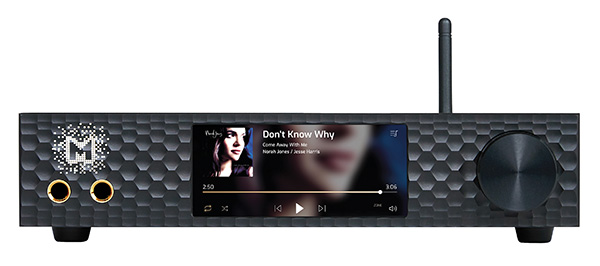
The concept of streaming digital music files over distances great (as with internet-streaming services like Spotify, Qobuz, Tidal, etc.) and small (from a home-PC hard drive, NAS, or networked music server) became mainstream only recently. But it was already brewing during the late 20th century, with people illegally downloading low-bitrate MP3 files made from CD rips and coming close to killing the recorded-music industry.


That wasn't streaming exactly, or not in the current sense, because the files needed to be downloaded, stored locally, then either played out of a computer or loaded onto a portable player, but from that point forward it was a steady march to the streaming-dominated present.


Never mind Napster—the first subscription audio "streaming" service was one you probably wouldn't think of: Audible, the audio book service now owned by Amazon, which started up in 1995. I did beta testing and editing work for early-days Audible, and around that time, I started loading up home-ripped MP3 files on a pocket-sized Rio MP3 player (which by then had replaced Audible's proprietary player), using it in place of a portable CD player. This led to experiments with a PC music library/player running Linux, controlled by a Handspring PalmOS device connected to the stereo system via a Sound Blaster 16 card.
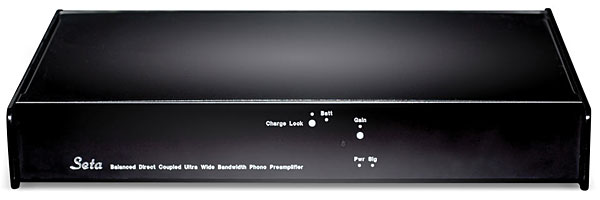
Channel D Pure Vinyl 5 & Seta L phono preamplifier

Ever since I stopped using my Audio Research SP10 preamplifier in the early 1990s—its eight phono-stage tubes used to get too noisy too quickly—I tried a variety of standalone phono preamplifiers. Seeing the most service through the 1990s and 2000s were, first, a Mod Squad Phono Drive EPS, then a Linn Linto, both of which I purchased. But when I measured Channel D's Seta Model L, which Michael Fremer reviewed in the August 2010 issue, the Linto was pushed to one side. The battery-powered Seta L (footnote 1) had the lowest noise and distortion I had encountered in a phono preamplifier, and I eventually bought the sample I had been sent for a follow-up review in 2013.

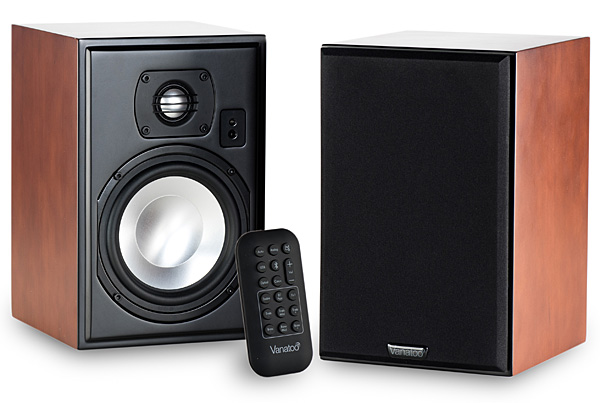
Vanatoo Transparent One Encore powered loudspeaker system

Has Serinus been demoted? You might well ask. This month, instead of reviewing a $58,000 stereo amplifier, I'm tackling a $599 powered loudspeaker system.


Truth be told, I'm always on the lookout for products that deliver outstanding sound at bargain prices. And since I maintain in my living room a modestly priced system built around powered speakers—this in addition to the far costlier system in my dedicated listening room—it's an easy fit for me to evaluate low-priced products in a real-world context.

Music in the Round #85: Nimitra, exaSound, Baetis, Roon

It's been going on for a while now: Despite support for multichannel in audio/video receivers and A/V processors priced from as little as $200 to $30,000, there are still very few offerings that cater to the music listener. They may offer stereo-only streaming features through their USB or Ethernet inputs, but these inputs don't see your multichannel files. To handle such files, they would require you to add a music server with HDMI output. However, I know of no turnkey music servers that will output multichannel audio via HDMI.

Inside MQA

Jim Austin briefly discusses MQA in his review of the Explorer2 in this issue, but a more complete description of MQA can be found in an article posted on Stereophile's website at the end of 2014.


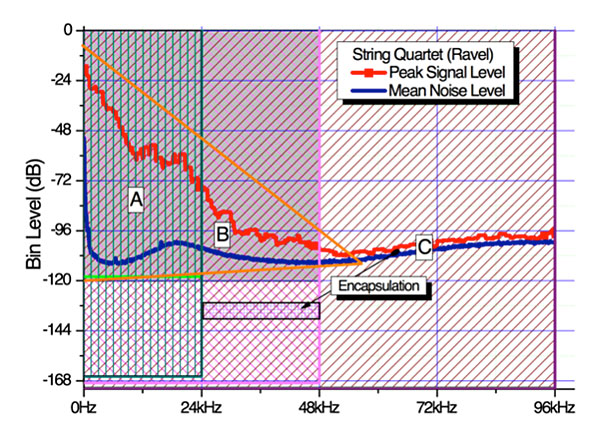
MQA involves two fundamental concepts, discussed in a paper presented to the Audio Engineering Society in October 2014, the first responsible for a potential improvement in sound quality, the second responsible for a large reduction in the bandwidth required for storage and streaming of high-resolution files...

Music in the Round #76

In my last column, in the November 2015 issue, I talked about Marantz's AV8802A preamplifier-processor and two accessories: UpTone Audio's USB Regen, and a DIY battery supply for my DAC. This month's column is all about accessories, and for me that's unusual. Some items, like interconnects and speaker cables, are usually considered accessories because they're not fundamental components (eg, source, amplifier, speaker), even though they're essential to getting any sound at all.

Questyle Audio QP1R hi-rez portable player

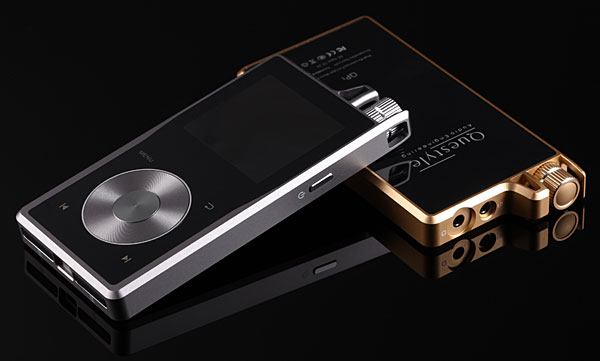
The 2015 T.H.E. Show in Southern California clashed with my having to be in the office to ship our August issue to the printer, so I wasn't able to attend. But in devouring the online coverage on www.stereophile.com and its sister sites, on InnerFidelity.com I found a report by Tyll Hertsens about two new hi-rez portable players that made their debuts at T.H.E. Show: Questyle Audio Technology's QP1 ($599) and QP1R ($899).

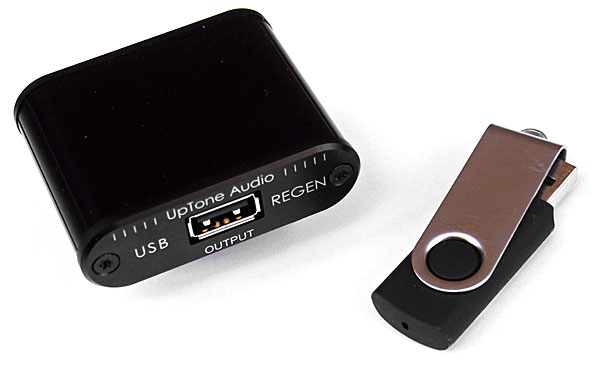
UpTone Audio USB Regen

UpTone Audio's USB Regen is a powered, single-port USB 2.0 hub that takes the USB signal from your computer, regenerates (ie, reclocks) the data, provides cleaned-up 5V power from a built-in, ultra–low-noise regulator, and sends an impedance-matched signal to your DAC. The Regen is designed to sit as close to your DAC as possible; UpTone supplies a male/male USB A/B adapter—a solid, double-ended plug, which they recommend over the 6"-long male/male USB A/B cable they also provide.

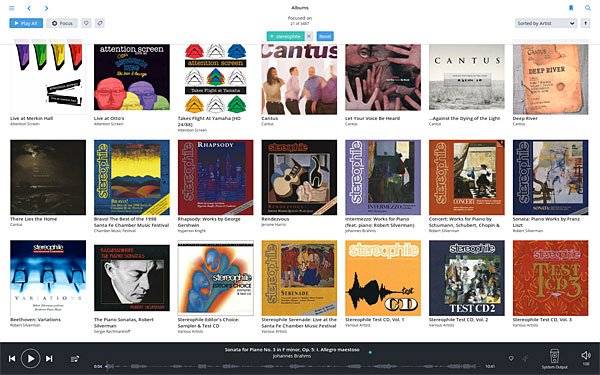
Roon Labs Roon v.1.0 music-playback app

There are dozens of music-playback programs for computers, touchpads, and smartphones, ranging from Amarra, Audirvana, JRiver, Pure Music, and VLC, which manage libraries or work with library software, to programs that are integrated with a specific distribution service: Pandora, Spotify, Tidal, and, of course, iTunes. Still others, such as Sonos, are integrated with a dedicated hardware product.

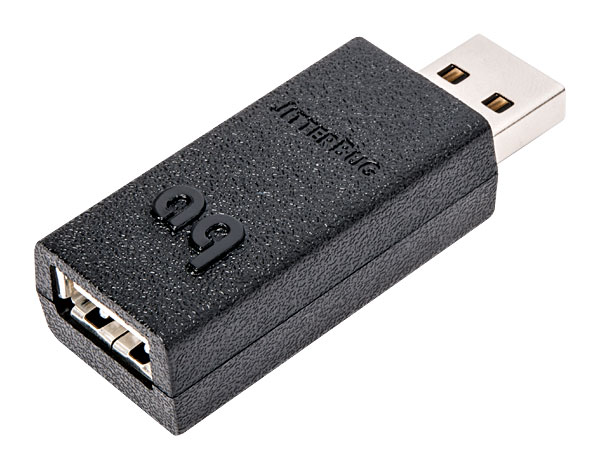
AudioQuest JitterBug USB noise filter

I got an early start on computer audio. At the end of the last century I was using WinAmp with first a CardDeluxe PCI soundcard, then a similar card from RME, to play files on a Windows PC. After I became a MacPerson, I used FireWire audio interfaces from pro-audio company Metric Halo and an inexpensive USB-connected ADC/DAC from M-Audio. But it was with the USB version of Benchmark's DAC 1 that the computer began taking over from physical discs for my music listening. At first I used iTunes au naturel, but as I acquired more high-resolution files, I began using Pure Music to handle all the tedious audio housekeeping, assigning as a dedicated music server a G4 Mac mini I'd bought in 2006.
Advertisement
Advertisement
Advertisement