Computer Audio Reviews

Sort By: Post DateTitle Publish Date

Wavelength Cosecant v3 USB digital/analog converter
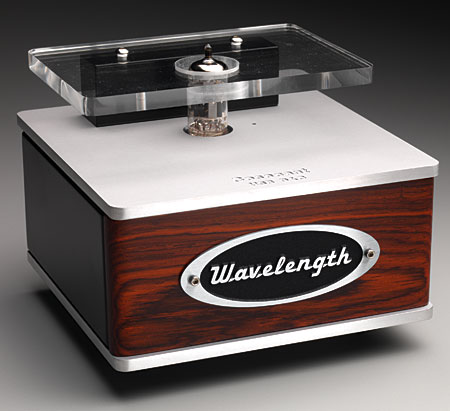
While my enthusiasm for the long-discontinued Sony">http://www.stereophile.com/cdplayers/708play">Sony PlayStation 1 remains high (see the July 2008 Stereophile), I freely acknowledge that not every high-end audio enthusiast wants a CD player with an injection-molded chassis, a Robot Commando handset, and a remarkable lack of long-term reliability: Yes, the Sony sounds wonderful, but sound isn't everything.
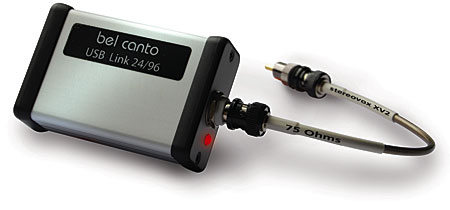
Bel Canto USB Link 24/96 USB-S/PDIF converter

The speed with which audiophiles have adopted a computer of some sort as their primary source of recorded music might be thought breathtaking. But with the ubiquitous Apple iPod painlessly persuading people to get used to the idea of storing their music libraries on computer hard drives, the next logical step was to access those libraries in listening rooms as well as on the move. A few months back, I wrote a basic guide to the various strategies for getting the best sound from a computer: "Music Served: Extracting Music from your PC." Since then, Minnesota manufacturer Bel Canto Design has released a product that aims to simplify matters even further.

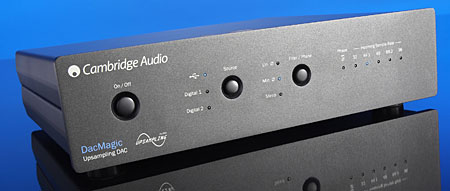
Cambridge Audio Azur DacMagic D/A converter

In 1989, Cambridge Audio, then run by Stan Curtis—who is still active in hi-fi— introduced their DAC 1. At about the same time, within a few weeks of each other, Arcam introduced their Delta Black Box and Musical Fidelity their Digilog. I forget who was first among the three. Arcam, I think. But the DAC race was on, led by the British. (There was even a DAC called the Dacula.) US companies got into the DAC race, too—at higher prices, of course.

Music Served: Extracting Music from your PC

"Physical discs seem so 20th century!" That's how I ended my eNewsletter">http://www.stereophile.com/images/newsletter/406Bstph.html">eNewsletter review of the Logitech (then Slim Devices) Squeezebox WiFi music server in April 2006, and it seems that increasing numbers of Stereophile readers agree with me. In our website">http://cgi.stereophile.com/cgi-bin/showvote.cgi?551">website poll of January 5, 2008, we asked, "Are you ready for an audiophile music server?" The response to that question was the highest we have experienced: 32% of respondents already listen to music via their computer networks, many using home-brewed solutions, and 44% intend to. We've published a lot of material on this subject in the last five years, and it seemed a good idea to sum it up in this article.


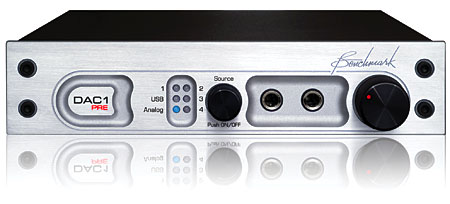
Benchmark DAC1 Pre USB D/A headphone amplifier

Most of this column is dedicated to two hi-fi products for the masses—not from Lvov, via Vladimir Lamm, of Lamm Industries; or from Leningrad, via Victor Khomenko, of Balanced Audio Technologies; nor from any other Soviet-born audio hero. (Neither Vladimir nor Victor is on the list of "Name of Russia" contenders for greatest Russian of all time.) Nor from any consumer audio company, but from the world of professional audio. An Iron Curtain almost separates the two.

MP3 vs AAC vs FLAC vs CD

As Wes Phillips recently reported on this website, CD sales are down and legal downloads of audio files are up. Stereophile has been criticized more than once for not paying enough attention to the subjects of MP3 and other compressed file formats, such as AAC, and for offering no guidance at all to readers about how to get the best sound quality from compressed downloads.

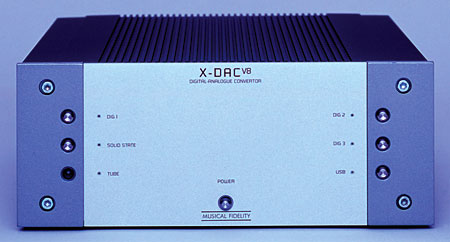
Musical Fidelity X-DACV8 Digital/Analog Processor

How do I get myself into these things? Knowing that I use a Musical Fidelity X-DACV3 D/A processor in my office system and had just auditioned the Bel Canto e.One DAC3 that he'd reviewed in November, John Atkinson asked me to give Musical Fidelity's X-DACV8 a try. I say "asked," but the man does authorize my paychecks, so I acceded, knowing I was painting a giant bull's-eye on my back.

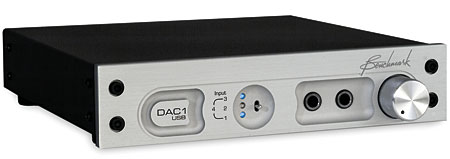
Benchmark DAC1 USB D/A processor & headphone amplifier

In his July 2003 "The Fifth Element" column, John Marks enthusiastically wrote about the Benchmark Media Systems DAC1 D/A processor and headphone amplifier. Comparing its sound playing CDs with that of a three-times-more-expensive Marantz SA-14 SACD player, he concluded that the DAC 1's "Red Book" performance was at least as good as that of the Marantz, being "slightly more articulate in the musical line, and slightly more detailed in spatial nuances, particularly the localization of individual images in space, and in soundstage depth."
Advertisement
Advertisement
Advertisement