Digital Processor Reviews

Sort By: Post DateTitle Publish Date

iFi Audio Pro iDSD D/A processor/headphone amplifier
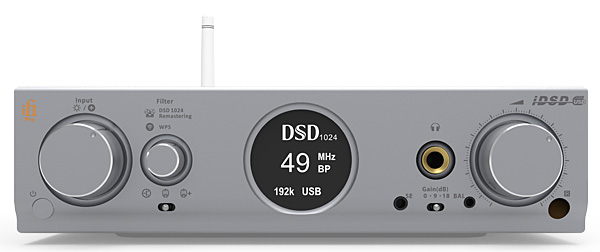
On the first page of the owner's manual for iFi Audio's Pro iDSD tubed/solid-state multibit DAC and headphone amplifier, the British company unabashedly describes it as "a 'state of the art' reference digital to analog converter" and "a wireless hi-res network player or the central DAC in an expensive high-end home system." As if in an afterthought, it continues: "The on-board balanced headphone section means high-end headphones can also be directly connected to it." The manual doesn't describe the headphone "section" as "state of the art," so I'm deducing that the Pro iDSD is really more a fancy-pants DAC than a high-tone headphone amp.
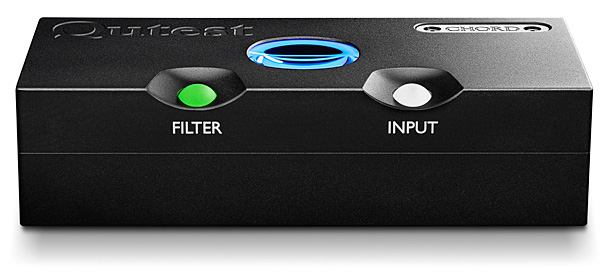
Chord Electronics Qutest D/A processor

Back in the mid-1990s, I believed that the design of D/A processors was fundamentally a solved problem. The resistor-ladder, multi-bit DAC chips of the 1980s, with their linearity errors, had been replaced by sigma-delta types that had minimal linearity error down to the lowest signal levels. All that remained for the designers of PCM D/A chips was to increase resolution and dynamic range to the theoretical limits, and to improve the mathematical precision of oversampling digital filters to match the performance of the 20- and 24-bit recordings that had just begun to be released.

Mytek Liberty D/A processor

I've never aspired to owning a BMW 7-series, or a Martin D-45, or a Rolex Submariner: BMW's far less expensive 3-series models capture my imagination by bordering on the affordable, likewise Martin's D-18—and as long as I live, I'll never understand the appeal of expensive wristwatches. Bling's not my thing.


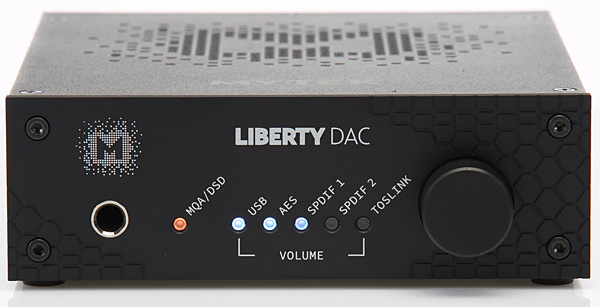
True to form, when I visited the Mytek display at High End 2018, in Munich, my attention was drawn to the brand-new Mytek Liberty DAC and its three-figure price: for $995, one could now own the equivalent of the original Mytek Brooklyn D/A processor, without that model's phono preamp—this according to the company's Adam Bielewicz, who served as my product-line guide on that sunny May day.

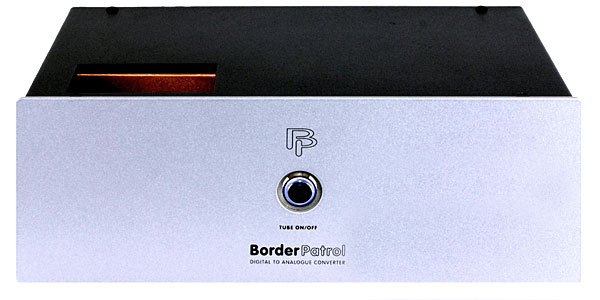
BorderPatrol Digital to Analogue Converter SE


The trouble with a classicist he looks at the sky

He doesn't ask why, he just paints a sky
—John Cale and Lou Reed, "Trouble with Classicists," from Songs for Drella


Left brain/right brain, yin/yang, male/female, Apollonian/Dionysian, classical/romantic, painterly/linear, dark/light, hard/soft, warm/cool...I use these contrasting adjectives in my reviews because I feel some confidence in their ability to convey the nature of what I experience while listening to recordings with whatever new audio box sits before me in the listening studio.


I also use: accurate (I hate that word), neutral (what's that?), colored, clean, transparent, open, musical. Sadly, I have little confidence in their ability to describe my experiences.

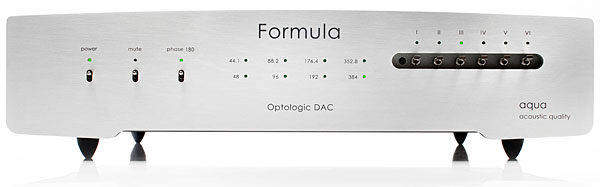
Aqua Acoustic Quality Aqua Formula xHD D/A processor

At the 2018 Consumer Electronics Show, when John Atkinson and I entered the room shared by Lamm Industries, Aqua Acoustic Quality, and Kharma room, we were looking for two things: good sound, and digital products for me to review. When we spied AAQ's Formula xHD digital-to-analog converter, the possibility of evaluating a potentially excellent DAC made by someone other than the usual suspects felt like a golden opportunity.

HoloAudio Spring "Kitsuné Tuned Edition" Level 3 D/A processor


While covering CanMania at the 2017 Capital Audiofest, I was sitting at the table of HeadAmp Audio Electronics, listening first to John McEuen singing Warren Zevon's "Excitable Boy," from McEuen's Made in Brooklyn (24-bit/192kHz AIFF, Chesky JD388/HDtracks), then to Macy Gray's Stripped (24/96 AIFF, Chesky JD389/HDtracks). I was listening through HeadAmp's extraordinary GS-X Mk.2 headphone amplifier ($2999–$3199), but midway through Gray's "I Try," I stopped, pulled the Audeze LCD-4 headphones off my head, and asked HeadAmp's head of sales and marketing, Peter James, what DAC he was using.


"Do you know the HoloAudio Spring DAC?"

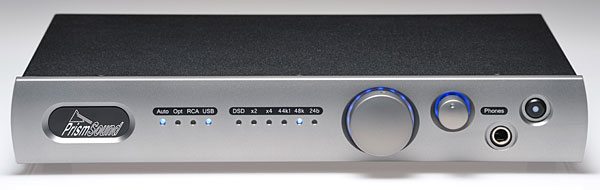
Prism Sound Callia D/A headphone amplifier

I have long been aware of English audio company Prism Sound, both from my use at the turn of the century of their excellent PCI card–based DScope2 measurement system (footnote 1), and from some of my friends' enthusiasm for Prism's SADiE digital audio workstation. Prism Sound was founded in 1987 by two DSP engineers, Graham Boswell and Ian Dennis, who had first met when working at mixing-console manufacturer Rupert Neve, in Cambridge, England. From the beginning, Prism Sound operated exclusively in the world of professional audio, but a year or so ago I began seeing their first domestic audio product, the Callia, at audio shows.

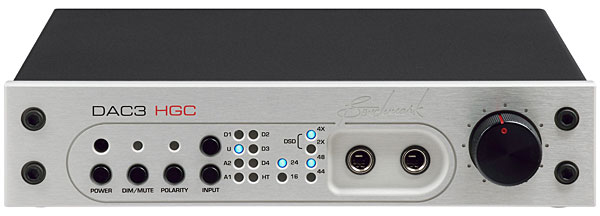
Benchmark DAC3 HGC D/A preamplifier-headphone amplifier

Much has been written about the divide in high-end audio between subjectivists, who trust their ears, and objectivists, who believe that anything not scientifically proven is fake news. I respect both sides and am skeptical of both extremes, and I like to think that's how most audiophiles feel. High-end audio is about experiencing music—that's the whole point—but scientific and technological rigor lie behind every real advance, past and future. I regret the cynical snake-oil salesmanship, bad thinking, and clumsy engineering that pervade certain parts of our hobby.

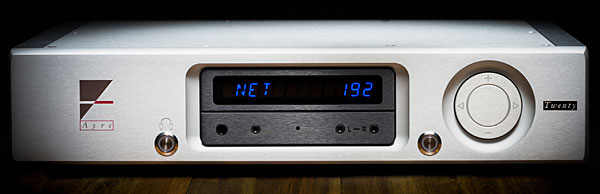
Ayre Acoustics QX-5 Twenty D/A processor

Throughout the summer and fall of 2016, I worked on a project with Stereophile contributor Sasha Matson, recording, editing, mixing, and mastering—for release on 180gm LP, CD, and high-resolution download—an album of works that Sasha had composed for various chamber ensembles: Tight Lines. As you can read in the article we published about this project, for the vinyl release we decided not to master the discs directly from the hi-rez files, but to create an intermediate analog tape master. Feeling that audiophiles would want an LP that at some stage was "analog," we therefore needed to choose a D/A processor to drive the Studer open-reel tape recorder we were going to use.

Mytek HiFi Manhattan II D/A preamplifier-headphone amplifier

In equipment reports, I use the phrase forward momentum to refer to something a little deeper and more encompassing than what's meant by that well-worn Brit-fi expression pace, rhythm, and timing (PRaT). Pace refers to the speed at which a piece of music is being played, and the accurate reproduction of that speed requires audio sources with good dynamic pitch stability. (Digital folk always lord it over LP clingers for digital's superior pitch stability.)
Advertisement
Advertisement
Advertisement