Solid State Preamp Reviews

Sort By: Post DateTitle Publish Date

Quad 33 preamplifier & Quad 303 power amplifier
Launched in 1967, Quad's highly original, elegantly styled 33 preamplifier and 303 power amplifier were Quad's first all–solid state designs and among the first solid state separates. The 303 may have been one of the first "vertical" amplifiers. Together with the 405 stereo amplifier, which came out in 1975, and the FM2 and FM3 tuners, these products proved to be enduring, widely feted successes from their launch until they were discontinued, the 33 in 1982, the 303 in 1985. Meanwhile, they enjoyed massive production runs, were marketed worldwide, and were much admired for their modern industrial design. It's said that Quad sold 120,000 33 preamps and 100,000 303 amplifiers. Across two versions, the 405 sold even more.


Quad introduced new versions of the 33 and 303 (each component $1599) in 2024, apparently moved to do so by the continuing hot market for originals.
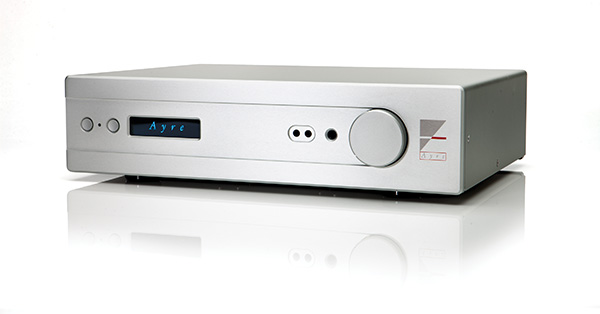
Ayre Acoustics KX-8 preamplifier

For the past decade or so, I haven't been using a preamplifier. The D/A processors I have been using all have volume controls, so I have been feeding their outputs directly to the power amplifiers. It would seem logical that having nothing in the signal path would have less of a degrading effect than a preamp's input and output sockets, switches, volume control, printed circuit-board traces, and active and passive parts, not to mention an additional pair of interconnects. However, with some of the preamplifiers I have auditioned in my system, there was no doubt that the sound quality improved compared with the direct connection from the digital processor.


The most recent of these preamps was the MBL N11 that Jason Victor Serinus reviewed in July 2021, which was preceded by the Pass Labs XP-32 I reviewed in March 2021, the Benchmark LA4 Kalman Rubinson reviewed in January 2020, and going back even further, the Ayre Acoustics KX-R Twenty I reviewed in December 2014, which was one of the products Ayre released to celebrate its 20th year of operation.


I am now reviewing the KX-8 line preamplifier, which costs $6500 in basic form.

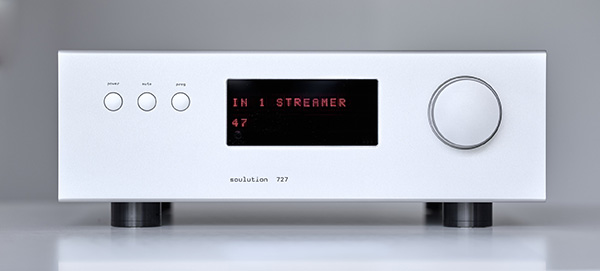
Soulution 727 preamplifier

Almost 14 years have passed since a review of a Soulution product appeared in the pages of Stereophile. Given the Swiss company's steady ascent in the high-end pantheon, it is high time that we again reached into the German-speaking region of Switzerland north of the Swiss Alps to evaluate another of the reference products from a company equally renowned for its sonic achievements and refined and elegant design aesthetic.


Enter the full-function Soulution 727 preamplifier ($74,975), whose optional MC/MM phono section ($11,975) will be evaluated in a future issue. Because Soulution claims that the 727 "sets benchmarks in terms of noise, phase errors, common mode rejection and distortion," one would hope that there's far more than 62lb of classy casework and an easy-to-handle lightweight remote to account for its price.

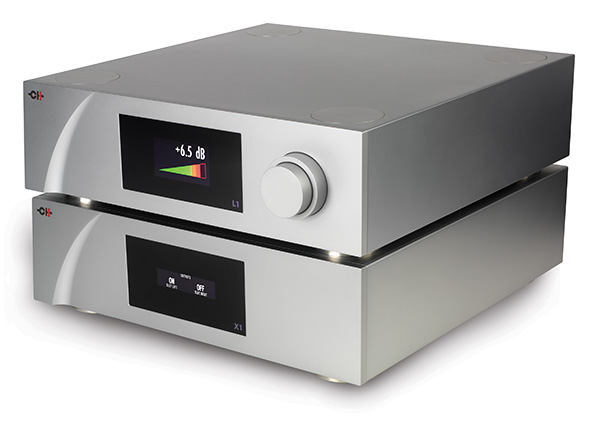
CH Precision L1 line preamplifier

As editor, I love it when Stereophile reviews new equipment. "New" attracts readers. But there are good reasons to review stuff that's not totally new (though usually it is still shiny). The best reason is experience, first-hand: You hear a component at a show or in your own system. You're impressed and decide it deserves a closer look.


That's why I'm reviewing the CH Precision L1 line preamplifier ($34,500 in silver), which has been on the market for several years.

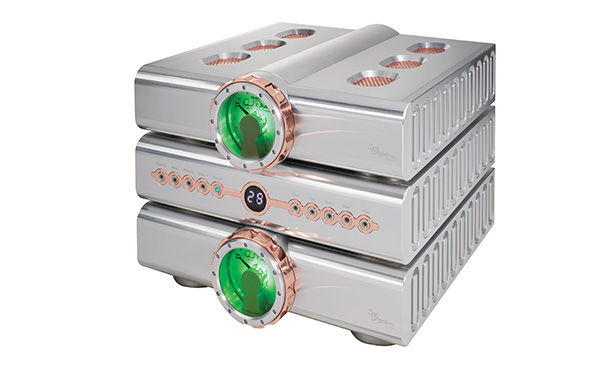
Dan D'Agostino Master Audio Systems Relentless line preamplifier

D'Agostino President Bill McKiegan asked if I might be interested in writing the first US review of the top-line, three-piece, fully balanced D'Agostino Relentless preamplifier ($149,500, plus $19,500 for the optional digital streaming module), which since its 2021 introduction had only received a single review, in Europe.


Me, review a $150,000 preamp? This was not a kid in a candy store–scale event. This was a kid let loose in a big-assed candy factory–scale event.


My glucose levels spiked. Questions whirled. What new virtues might a cost-no-object, presumably state-of-the-art preamplifier bring to my reference system? Would images be more corporeal? Would the soundstage be wider and deeper, tonal colors more intense? Would bass—already fabulous—be even more solid? Would the Relentless preamp move me closer to a premium-seat-in-a-live-concert experience?

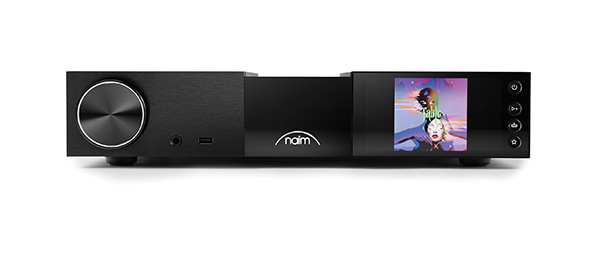
Naim NSC 222 streaming preamplifier & NPX 300 power supply

Naim has comprehensively reimagined its Classic Series, which has been around for some 20 years with improvements along the way. Included in the new range of products is the 200 series, comprised of two products: the NAP 250 power amplifier, which I reviewed in the November 2023 issue of Stereophile, and the NSC 222 streaming preamplifier ($8999), which is reviewed here. A third component in the New Classic series, the NPX 300 power supply (also $8999), which is intended to be paired with the NSC 222 and other Naim components, is also considered in this review.

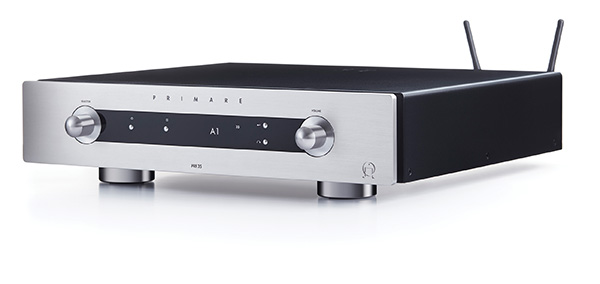
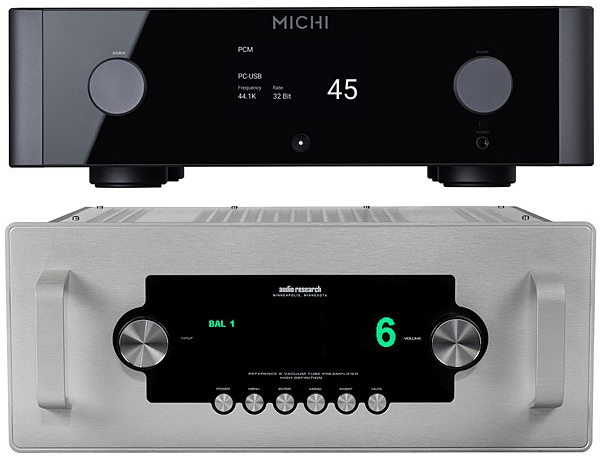
Primare PRE35 Prisma streaming preamplifier

Hygge might not be the first word that comes to mind when contemplating the Primare PRE35 Prisma preamplifier, but in Limhamn, Sweden, that is how Primare likes to describe their products. It means "cozy," and it's a very important concept in the Nordic countries, almost a way of life. Another term that appears in Primare's product descriptions is lagom, which loosely translates as "not too little, not too much—just right."

Gryphon Commander line preamplifier


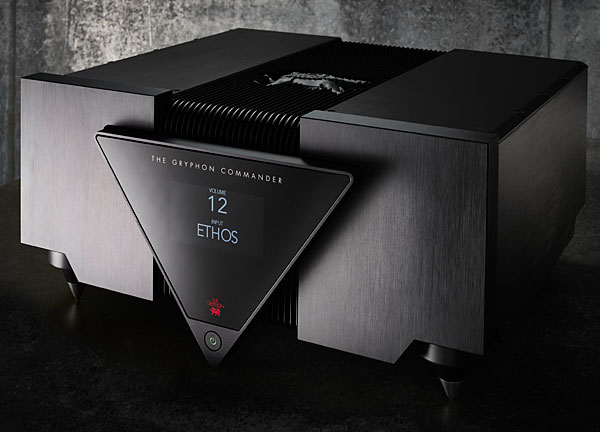
Are well-heeled audiophiles ready for a knob-free future? Gryphon Audio Designs thinks so. In contrast to Gryphon's volume knob–dominated Pandora preamplifier, the Danish company's new Commander offers nothing on its bold front panel to grab or turn.


Instead, there's a large, extra-thick, triangular glass protuberance that extends dramatically below the chassis's vertical dimension. That's where you'll find an "on/off" button, the main unit's only physical switch.

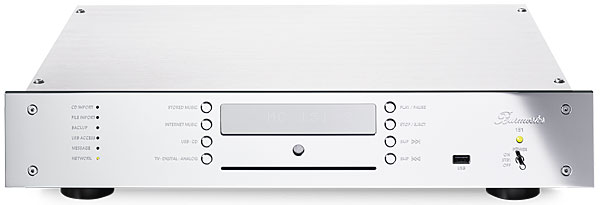
Burmester 151 MK2 MusicCenter streaming D/A preamplifier

Ah, domesticity. Just when I had the reference system sounding better than ever, the husband decided to relocate his electric keyboard and music stand, which had been positioned along the right wall of the detached music room, to the dining room in the main house. His reason was rational: While I did the reviewer thing in one space, he'd be free to practice keyboard and sing in another. But what was rational to him screwed with my reference sound and drove me to the brink of irrationality.
Advertisement
Advertisement
Advertisement