Solid State Power Amp Reviews

Sort By: Post DateTitle Publish Date

darTZeel NHB-108 model two power amplifier
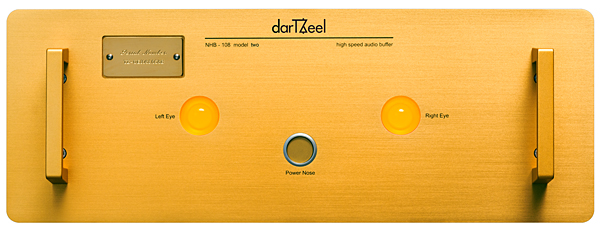

Like the proverbial pot of gold, darTZeel's golden equipment beckons. That, at least, is how it felt in January 2010, when John Atkinson and I ended our coverage of T.H.E. Show Las Vegas in the room shared by darTZeel, Evolution Acoustics, and Playback Designs. Listening to darTZeel's discontinued NHB-458 monoblocks (footnote 1) and NHB-18NS reference preamplifier (now updated), I was transfixed by the fullness of the system's midrange and overall beauty of the sound. "It was as though the system was opening its heart and welcoming us in," I wrote. "That's how warm and nurturing the sound was."
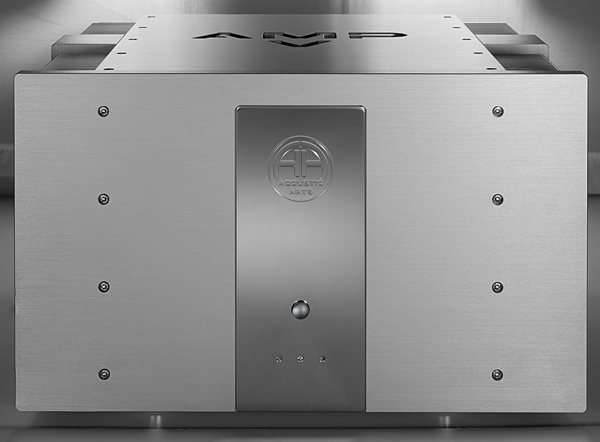
Accustic Arts AMP V power amplifier


The $50,000, 176lb Accustic Arts AMP V (pronounced Amp Five) is the heaviest, tallest, most powerful, most expensive stereo amplifier to enter my audio system. With rated power of 900Wpc into 8 ohms, 1360Wpc into 4 ohms, and 1500Wpc into 2 ohms, the AMP V, which stands proud at the top of the Accustic Arts amplifier line, surpasses my reference D'Agostino Progression M550's rated power into 4 ohms by 260Wpc.

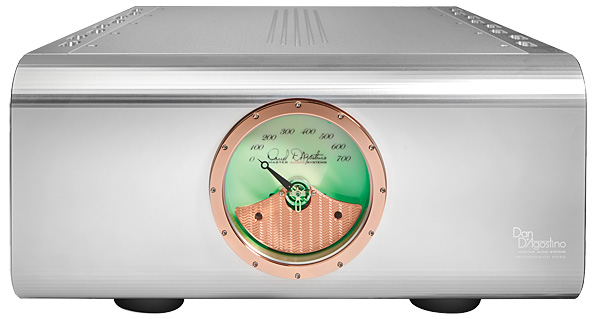
Dan D'Agostino Master Audio Systems Progression M550 monoblock power amplifier

We audiophiles so frequently get caught up in the pursuit of perfection that some have attempted to rebrand high-end audio as "perfectionist audio." But is it even possible for a single piece of audio gear, let alone an entire audio system, to attain perfection when there's no common agreement as to what "perfection" means? It's easier to cue up a Nirvana track than to find the way to audio nirvana.

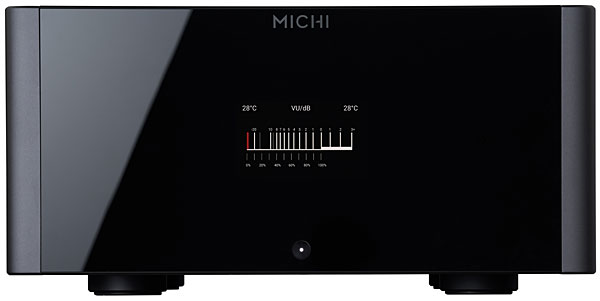
Rotel Michi M8 monoblock power amplifier

In an April 2020 press release, the McIntosh Group announced that its subsidiary brand Sumiko, which was cofounded by the late Dave Fletcher and distributes Sonus Faber and Pro-Ject among other high-performance brands, had secured distribution rights for Rotel Electronics in the US and Latin America. That press release prompted memories of a Rotel RP-3000 direct drive turntable I once owned, fitted with a Lustre GST arm.

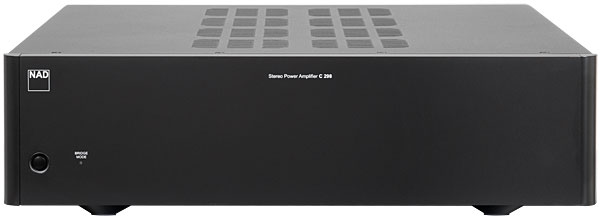
NAD C 298 power amplifier

Power amplifiers should be boring. They have a single, well-defined function: Make the input signal large enough to run a loudspeaker so that it makes sound at levels suitable for listening to music. Generally, controls and features are few or none. Peter Walker of Quad famously defined the ideal amplifier as a "straight wire with gain." That's just one feature: gain.

ELAC Alchemy Series DPA-2 power amplifier

Once upon a time, in the early days of class-D amplification, the very notion that the ELAC (ELectroACoustic) Alchemy DPA-2 Stereo/Mono Power Amplifier ($1495 each) uses a class-D output stage would cause some readers to turn the page (footnote 1). But as class-D amplifiers established their pedigree as bona fide hi-fi components, audiophiles have begun to embrace the notion of a lightweight, cool-running amplifier that will not dramatically increase the electric bill and that, when properly executed, can be quite musical.

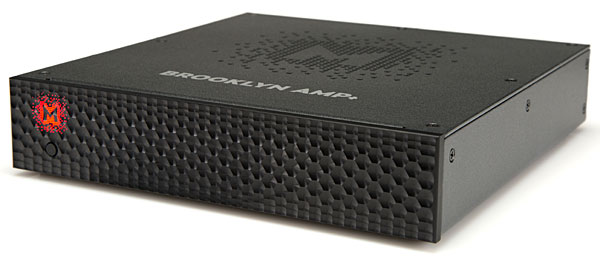
Mytek HiFi Brooklyn AMP+ power amplifier

Big changes are afoot at Mytek. First up: The Mytek Brooklyn AMP+, the newest version of the compact, class-D Brooklyn AMP. The AMP+ is already in production.


In my 2018 review of the original Brooklyn AMP, I wrote that the class-D amplifier exuded "a consistent sense of truthfulness, striking resolution that was never analytical, spacious soundstages, superb dynamics, and some of the 'blackest' backgrounds I've ever heard...with the right recordings." I continued, "The AMP let me revel in its reproduction of the low end, with zero overhang or bloat, and profoundly impressive retrieval of micro- and macrodetail—but in doing all this, its touch was always light and never surgical."

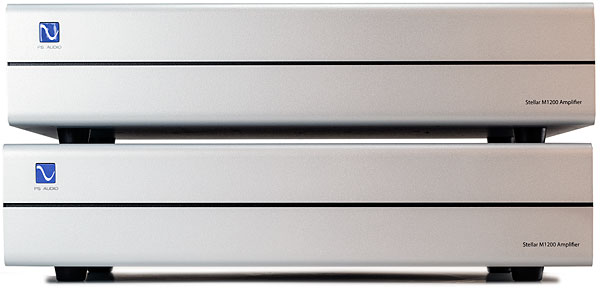
PS Audio Stellar M1200 monoblock power amplifier

Talk about a Scarlet Letter. The term class-D amplification, which describes PS Audio's new M1200 monoblocks, exists only because another amplifier innovation had already parked in the "C" space. Soon after appearing in high-performance audio gear, class-D became synonymous with "digital amplification" in part because, like early CDs, many listeners found the sound glary, hard, and unpleasant. Besides, class-D is related to "pulse width modulation" and requires a low-pass filter to block high-frequency pulses—that sure sounds digital. But they're not (see Bruno Putzeys sidebar).

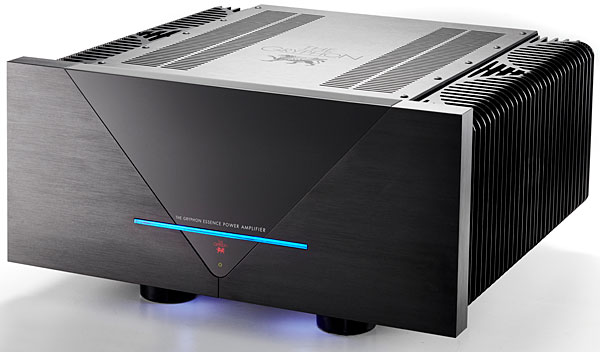
Gryphon Essence Mono power amplifier

"Oh goody!" thought self, to self: "Another Gryphon component to review." As eloquent and revelatory as that statement may be, there's an even more illuminating backstory.


I had been aware of Denmark-based Gryphon Audio since the advent of the Gryphon Exorcist, a now-discontinued demagnetizer that cost far more than your average break-in CD, but I only began to encounter Gryphon electronics at audio shows a few years ago. While at first they seemed available for review only as a complete package, Jim Austin was able to arrange for me to review the Gryphon Ethos CD player–D/A processor ($39,000).

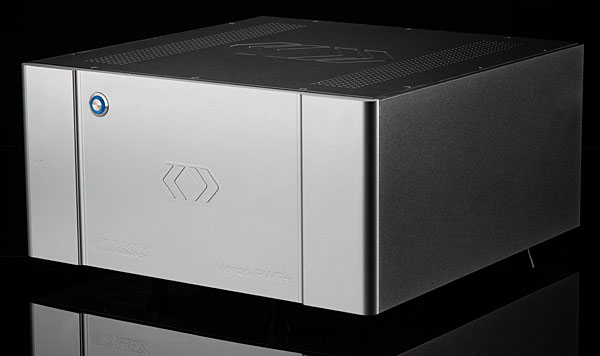
LKV Veros PWR+ power amplifier

As much as I admire Belgian amplifier designer Bruno Putzeys's accomplishments, I have harbored some misgivings about class-D amplifier sound. I do not believe it represents the future of perfectionist audio. Despite the fact that today's active loudspeakers depend entirely on class-D's free horsepower, light weight, and low-temperature operation, I think it sounds vacant compared to class-A.
Advertisement
Advertisement
Advertisement