Stand Loudspeaker Reviews

Sort By: Post DateTitle Publish Date

TAD CE1TX loudspeaker
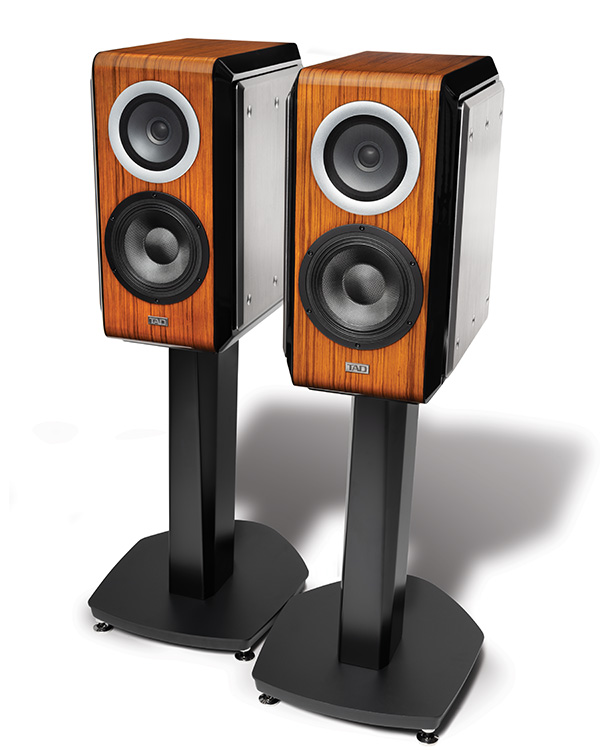
The most money I've ever spent on a pair of loudspeakers was back in the early 1990s, when I bought a pair of used TAD TH-4001 wooden horns and their associated TD-4001 compression drivers. The TAD horn's smooth, micro-resolved response was a refinement upgrade from my multicell Altec horns; plus, the TADs' French-polished wood looked radically less industrial than the soldered-tin, tar-filled 1005/288C horns they replaced. None of my horn-fanatic friends had anything sonically or aesthetically comparable, and all of them were envious. I didn't keep the TADs long, because the friend who admired them most made me a very "friendly" offer.


That was my first experience with Japanese loudspeaker design, and it exposed me to a level of engineering precision and fine craftmanship I had not yet encountered in American-made speakers.
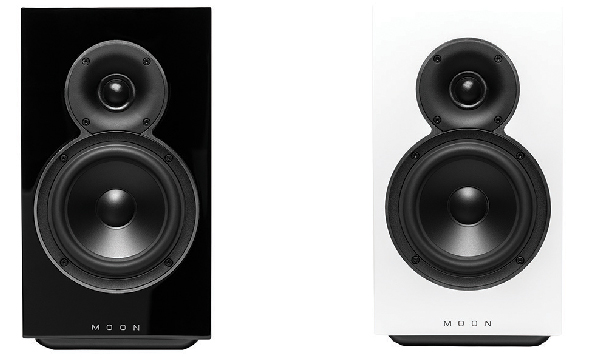
Moon by Simaudio Voice 22 loudspeaker

I'm picturing a gaggle of cigar-chomping Simaudio execs in an office discussing what to do about the fact that their high-end amplification lines have become so successful that their names have become synonymous with the company. "In the '90s, people thought our company was called Celeste," one floor-pacing exec says, speaking for everyone in the room. "Now they think we're called Moon! How do we fix this?" After much debate, a member shouts: "We add 'by Simaudio' at the end!" The execs hoot, holler, and slap the conference-room table—and thus is born Moon by Simaudio.


A fictional account? Sure, but, as they say in the movies, it's based on a true story.

Dynaudio Focus 10 active loudspeaker

Almost five years after I submitted my review of Dynaudio's Focus 200 XD class-D active bookshelf loudspeaker—my first product review for Stereophile—word of its imminent successor, the digital Focus 10 class-D active bookshelf loudspeaker ($5500/pair), and its two larger siblings arrived via Mike Manousselis, Dynaudio North America's president, Americas. Then came the near-ubiquitous parts shortages and COVID-related slowdowns that have plagued high-end manufacturers worldwide.

MoFi Electronics SourcePoint 10 loudspeaker

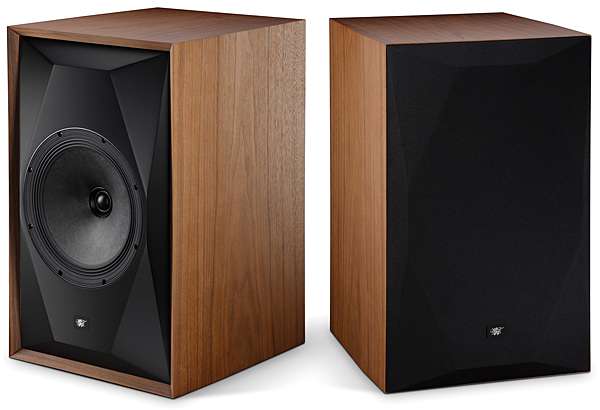
"A 10" two-way?!?!" I couldn't help gasping in surprise when I unboxed the MoFi Electronics SourcePoint 10 standmounted loudspeakers, which cost $3699/pair.


Some background is in order. Using a large-diameter woofer endows a conventional two-way speaker with potentially high sensitivity and extended low frequencies. However, the large woofer's radiation pattern narrows at the top of its passband, whereas that of a tweeter mounted on a flat baffle is at its widest at the bottom of its passband. Even if the drive units' outputs are well-matched in the speaker's on-axis response, this discontinuity in the speaker's off-axis behavior results in an in-room balance that will sound bright. This is why favorably reviewed two-way designs tend to use a woofer with a 6.5" or even smaller diameter.

SVS Prime Pro wireless active loudspeaker

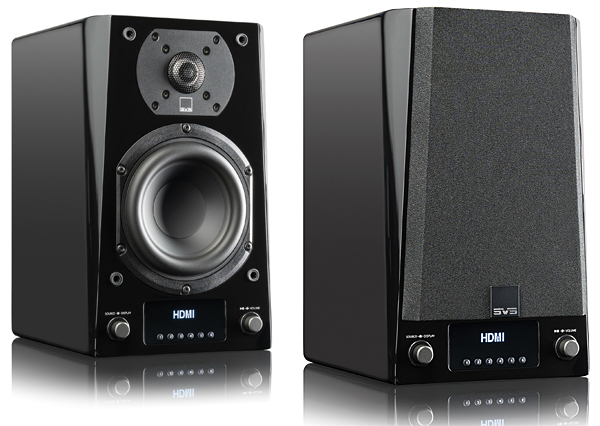
Patches was the first to exit the car, sporting a nose like an overripe tomato. Amid the sawdust-and–tiger-dung smell that wafted through the bigtop, he nimbly extracted himself from the multicolored Mini Cooper, face beaming with vows of slapstick and mischief. Patches gestured behind him, to Chuckles, who emerged with floppy shoes the length of baguettes. Next to squeeze out of the Mini were Bozo, Klutzy, Wiggle, Dinky, Cletus, Peewee, Pinhead, Joey, Sparkles, and Poppy—all wearing baggy pants in shouty hues and huge smiles applied with grease paint. I shuddered with delight. I was 8.

KLH Model Three loudspeaker

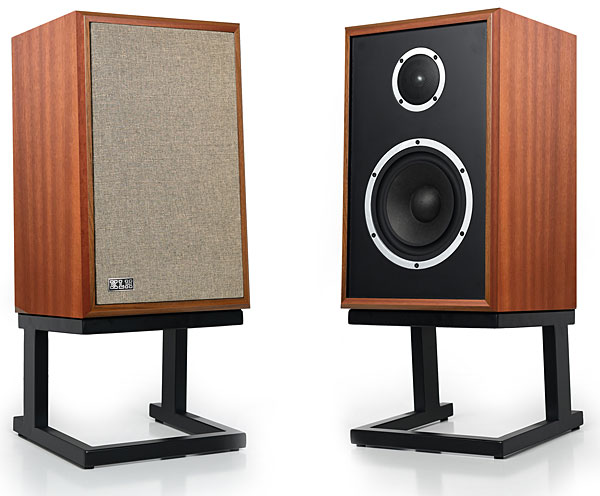
"Dear audio enthusiast." Those were the user manual's introductory words, not "Dear audiophile." I stared at them for a few seconds, letting the implication of that greeting sink in. I don't know if it was meant this way—perhaps not—but for me, this was a whistle call announcing that the KLH Model Three ($1799.98/pair) was not intended for those obsessed with having the best at all costs; it was meant for people who dig quality sound, period. It was also meant for people who dig that vintage-American-speaker look.

Mission 770 loudspeaker


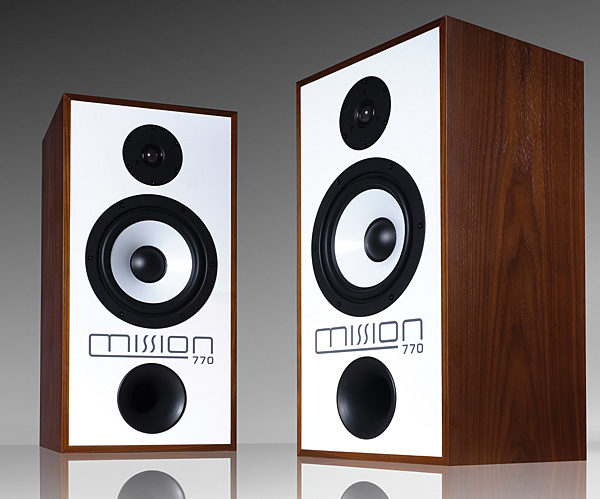
Some audio experiences stick in your memory. For me, one such was in 1978, which I reminisced about in a 1987 review for Stereophile of the Mission PCM 7000 CD player, Mission 780 Argonaut loudspeaker, and Cyrus Two integrated amplifier. Mission founder Farad Azima (footnote 1) was a driving force in the UK audio scene in the late 1970s, when I was deputy editor of the English magazine Hi-Fi News & Record Review.

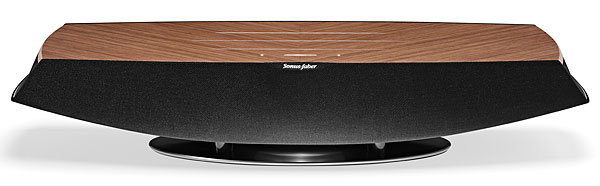
Sonus faber Omnia wireless loudspeaker


Pop quiz. What does the following verbiage describe? And what does it mean?


"It's about what we love the most. It's about what we hate the most. It's about what we wait for but never happens. Relationships turn on, interrupt, and resume. Or sometimes they just stay still. Floating and suspended. So breathe in. Let go. Let's begin from nothing."


Huh. Any luck yet?

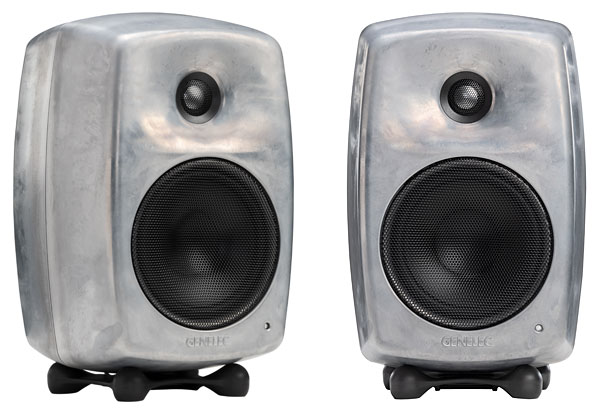
Genelec G Three active loudspeaker


My review samples of Genelec's G Three powered loudspeaker came with a little hand-sized green and tan cardboard card featuring a poem in bold black letters dated 1898:


At the cottage window a little bird sang.

And the light of the window did flicker.

And look. The roof up it sprang and the cottage became a house bigger.

Look. Into a world the cottage grew and the vast and wide too and filled with song was the air and like new was the sun's flare.

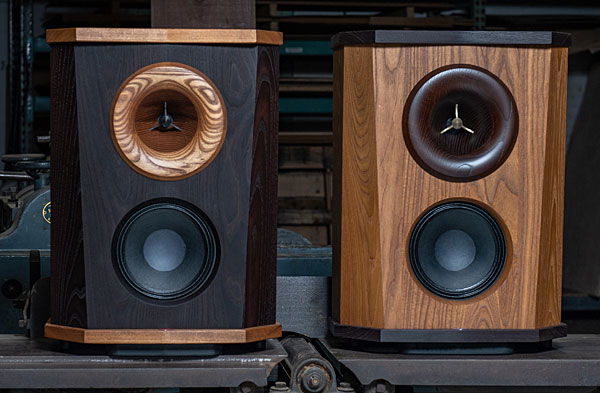
Fleetwood Sound Company DeVille SQ loudspeaker

Oswalds Mill Audio's products espouse a sort of steam-punk-meets-modern visual style, but the company's philosophies are straight from hi-fi's '50s and '60s glory days, an era when idler-drive turntables, low-power tube amps, and horn-loaded loudspeakers were the norm. That history and hi-fi's future fascinate and inspire Jonathan Weiss, OMA's proprietor.
Advertisement
Advertisement
Advertisement