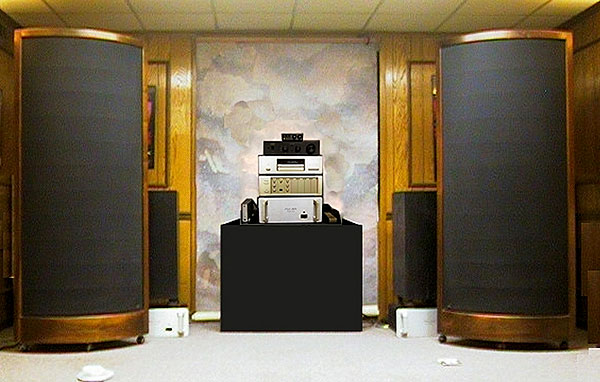
Museatex Hybrid 6 loudspeaker
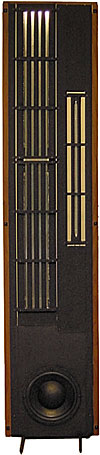
I find quite appealing the image invoked by Museatex to describe its Real Time Ripple Effect (RTRE) loudspeaker line: a stone rippling the surface of a "still pond on a warm summer afternoon." Replace the stone with a voice-coil attached to the center of a stretched Mylar diaphragm and you begin to get a glimpse of the RTRE technology's conceptual beauty and promise. The idea of cohesively covering at least the midrange and treble with a single driver, without crossover filters, quickens my audio pulse.
 For anyone who wants to be up to date on all the audio products available in North America, Audio's Annual Equipment Directory is an indispensable source of information. (So is the publication you're reading now, of course.) The 1992 Directory (aka Audio's October issue) arrived when I was finishing up the review of the Acarian Alón IV (see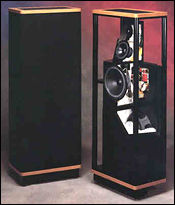
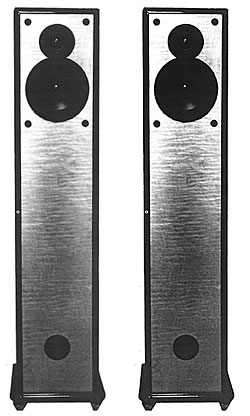
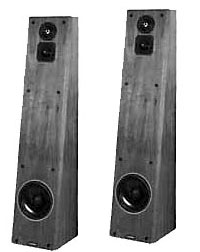 New England Audio Resource's NEAR-50M is a cyborg: metal innards in a wooden body. It represents NEAR's top statement in the firm's Metal Diaphragm Technology speaker line, which features the "NEAR-Perfect" driver cone. Metalin this case an anodized aluminum alloyis much more rigid than paper or plastic. Hence, a driver with a metal cone acts more nearly as a true piston. When it comes to loudspeaker cones, breaking up is not hard to do. When that happens, the cone flexes in a complex pattern, generating harmonic distortion. A typical plastic or paper 8" woofer may experience its first breakup mode at a frequency as low as 500Hz. The NEAR 8" metal-cone woofer's first breakup mode is said to be well above 2kHz, and their 4" metal-cone midrange does much better than that.