Floor Loudspeaker Reviews

Sort By: Post DateTitle Publish Date

YG Acoustics Carmel 2 loudspeaker

For me, one of the highlights of 2013 was being able to live with the Sonja 1.3, the flagship loudspeaker model from Colorado-based YG Acoustics. I reviewed this tall, massive, three-enclosure tour de force of a design, which costs $106,800/pair, in July 2013, and was not surprised when, for the December 2013 issue, Stereophile's writers voted it one of the magazine's two Loudspeakers of the Year. So when I was asked last spring if I wanted to review the new version of the smallest and least-expensive model in YGA's lineup, the request fell on receptive ears.

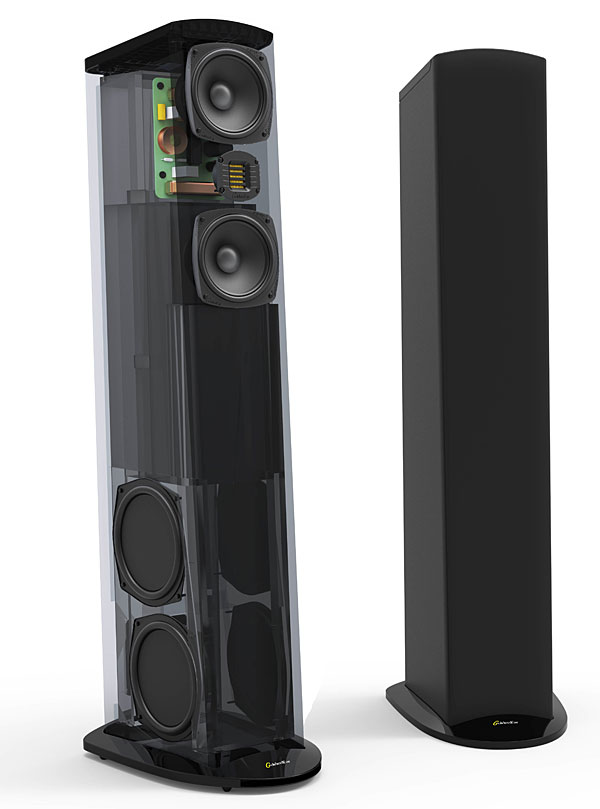
GoldenEar Triton Five loudspeaker

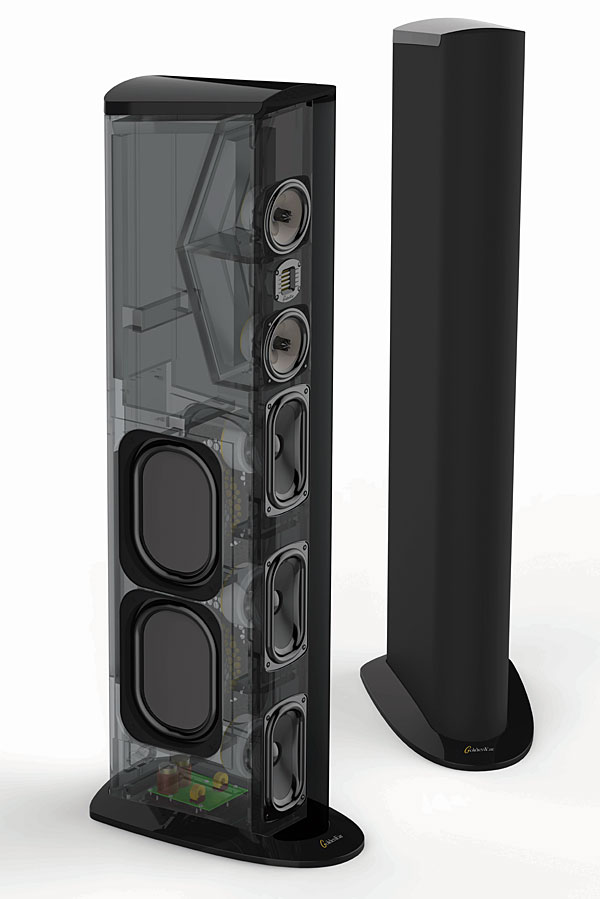
With each review I've written for Stereophile, I've redoubled my efforts to choose my adjectives prudently—to curb my penchant for overstatement. I've been feeling a need to speak more concisely and maturely about what my ears, mind, and heart experience while listening to music through a component that's new to me. So today, at the start of this review, I ask myself: What adjectives must I use to describe the character of GoldenEar Technology's new Triton Five tower loudspeaker ($1999.98/pair)? Which words will best use our shared audiophile lexicon to give you a working vision of what I experienced?

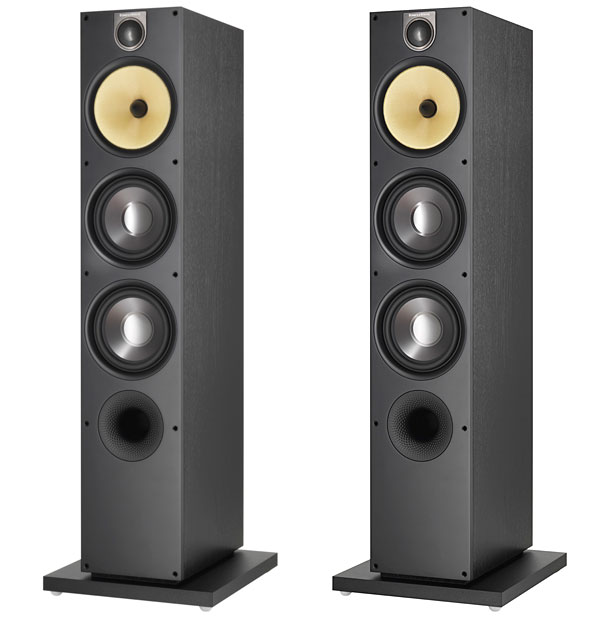
Bowers & Wilkins 683 S2 loudspeaker


For some time now I've wanted to upgrade my weekend system in Connecticut, and have been surveying three-way floorstanding speakers priced below about $2500/pair. I've focused on the stereo performance of each pair with music because, despite my interest in surround sound, the great majority of recordings are available only in two-channel stereo. Not wanting to look like a Bowers & Wilkins fanboy—my main system has long included their 800-series speakers—I put off auditioning B&W's 683 S2. But my goal was to get the best bang for my buck and with the 683 S2 costing $1650/pair, it would foolish to be influenced by such extraneous considerations. Besides, the 683 S2's three-way design and physical proportions were precisely what I was looking for.

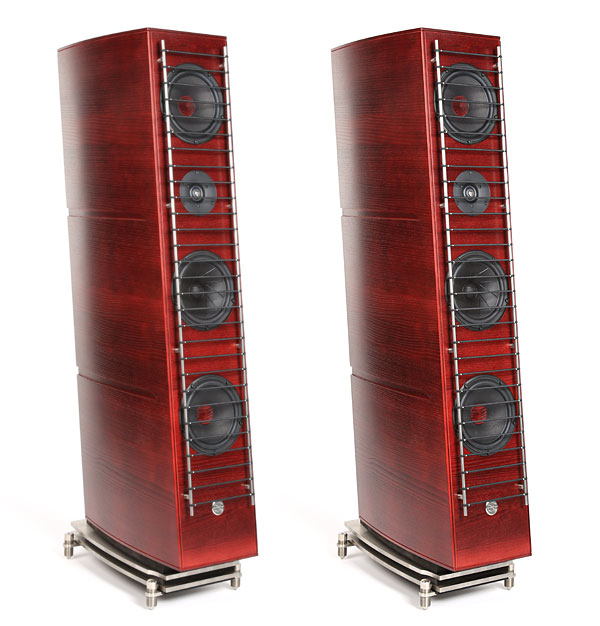
GamuT RS7 loudspeaker

Danish manufacturer GamuT Audio's patchy history in the US includes a succession of distributors that failed to establish the brand here. But in 2014 GamuT tapped Michael Vamos to spearhead their own US-based distribution company, which is now energetically promoting the company's products. That change coincided with my auditioning, at the 2014 Rocky Mountain Audio Fest, of GamuT's two-and-a-half-way RS5 tower loudspeaker ($31,900/pair). I was sufficiently impressed that I asked to review it—but then, at the 2015 Consumer Electronics Show, I experienced the RS7. This was the GamuT speaker I wanted to spend some time with, and at the end of March, GamuT's R&D manager, Benno Meldgaard, joined Michael Vamos in setting up a pair of RS7s in my listening room.

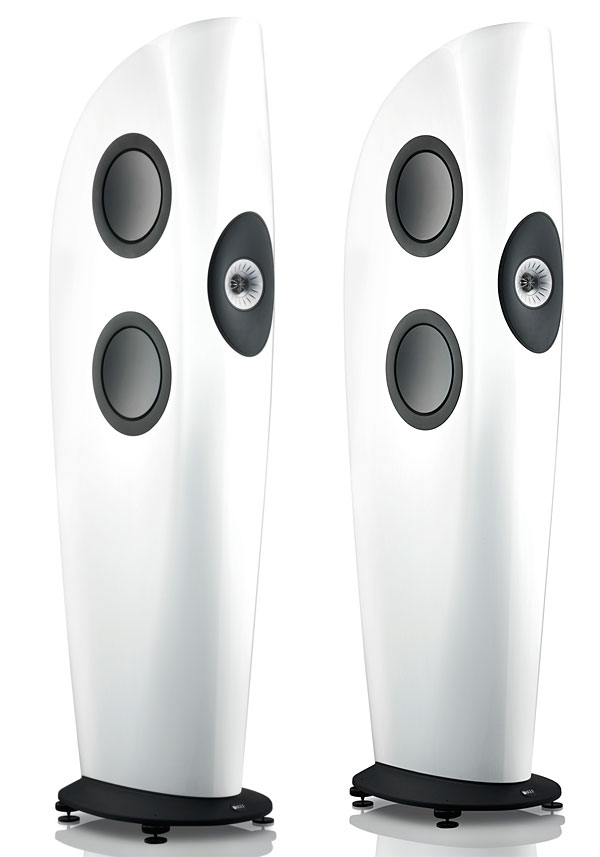
KEF Blade Two loudspeaker

The story's been often told: 30 years ago, British speaker manufacturer KEF was asked to design a small, spherical loudspeaker that could be used in a European project to research room acoustics. The speaker had to have wide, even dispersion, so KEF's solution was to mount the tweeter coaxially, on what would have been the woofer's dustcap. That "point source" drive-unit, called the Uni-Q, began appearing in KEF's commercial speaker models in 1989, starting with the Reference 105/3—but it wasn't until the appearance of KEF's 50th-anniversary loudspeaker, the LS50, which I reviewed in December 2012, that I felt that the Uni-Q drive-unit had fully fulfilled its promise, at least in a speaker I had auditioned in my own room.

Tekton Design Enzo XL loudspeaker

The CD era was well underway. Rudy Giuliani was about to sweep the crack hoes and squeegee humans off New York's garbage-filled streets. Disney was conquering Times Square. It seemed the perfect time for artists and audio weirdos like myself to go underground. Seeking economic sustainability, I hunkered down in my Seaport bunker and started a little business called Eddie Electric. I found a 23-year-old Japanese business partner named Ryochi who was dealing in big-E Levi's, bubble-back Rolexes, and antique Abarth cars. He was my Seaport, New York–Akihabara, Tokyo connection.

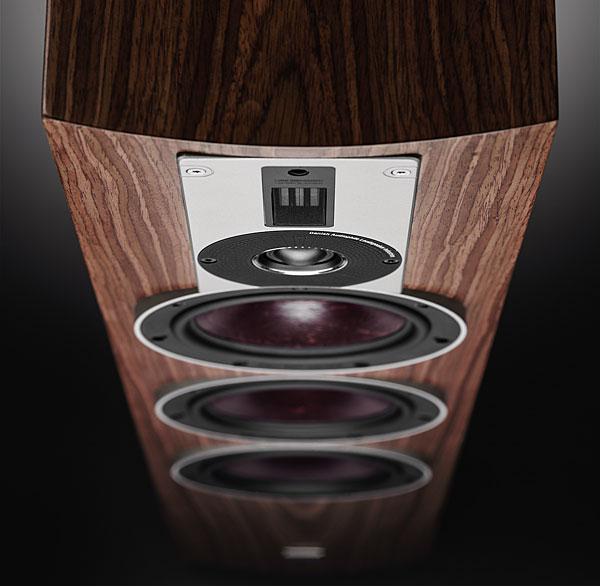
DALI Rubicon 8 loudspeaker

Looking back at our September 2014 issue, I think my review of the Triangle Signature Delta loudspeaker marked something of a watershed in the evolution of my taste in loudspeaker sound quality. For decades I have been a devotee of what might be called "British" sound: low coloration and, overall, a rather polite presentation, coupled with low sensitivity. The Triangle speaker opened my ears to what could be achieved with a very different approach: still-low coloration but high sensitivity, impressive clarity, and a hefty dose of what the late J. Gordon Holt called "jump factor," in which the leading edges of transients are neither smeared nor tamed. So when, last September, on a visit to Dallas and The Sound Organisation, the US distributor of Danish Audiophile Loudspeaker Industries (DALI), I encountered DALI's Rubicon 8 speaker (footnote 1), which had benefited from a low-loss design philosophy similar to the Triangle's, I asked for a pair for review.

GoldenEar Technology Triton One loudspeaker

I reviewed GoldenEar Technology's first speaker, the Triton Two ($2999.98; all prices per pair), in February 2012. It was and is an outstandingly good speaker, but I thought then that if GoldenEar would apply the same expertise to the design of a speaker with fewer cost constraints, the results could be better still. Sandy Gross, president and CEO of GoldenEar, must have been thinking along similar lines when he named the speaker Triton Two, leaving One for a more ambitious future product.

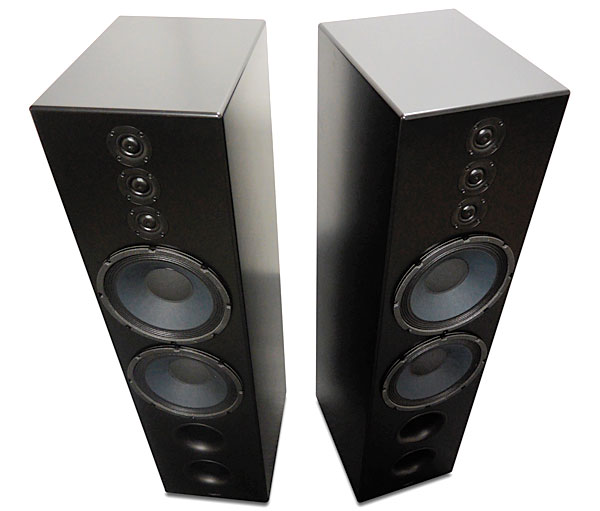
Bryston Middle T loudspeaker

Readers of Stereophile need no introduction to Bryston, a venerable Canadian electronics manufacturer known for the quality and reliability of its amplifiers and preamplifiers, and for its unique 20-year warranty. In the past few years, Bryston has ventured into digital audio with notable success, producing D/A converters, multichannel preamplifier-processors, and music-file players. While an evolution from analog into digital audio would seem logical, their most recent expansion, into loudspeakers, is more surprising. Apparently, James Tanner, Bryston's vice president, designed a speaker for his own use, and it turned out well enough that the company decided to put it into production.
Advertisement
Advertisement
Advertisement