

Brilliant Corners #37: A Lejonklou System
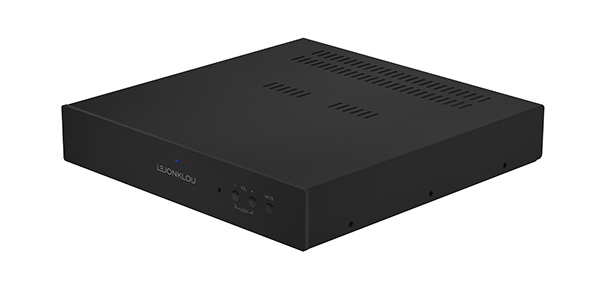
The more I listen—to gear I'm reviewing as well as other people's hi-fis—the more I believe in intangibles. One of these intangibles is the art of system building.
Brilliant Corners #38: Listening to the Aidas Violet Phono Cartridge
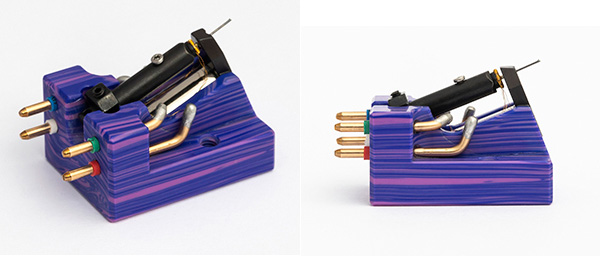
Aidas Svazas is an artisan residing in Lithuania's second largest city, Kaunas. Svazas started out as a cartridge repairman, and our first encounter took place when, on a friend's recommendation, I sent him a Fairchild 225-A, a mono cartridge from the 1950s, to be restored.
Brilliant Corners #39: Koetsu Reborn
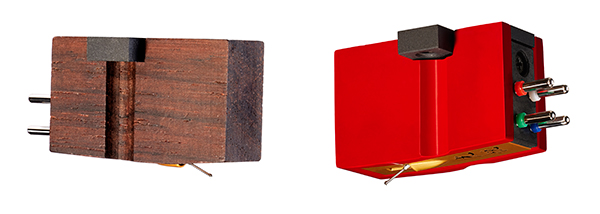
I find myself appreciating more and more the way perfectionist audio—a peculiar mix of art, craft, and engineering—tends to attract idealists. Temperamentally, hi-fi people tend to be unlike people involved in the manufacture of ring-joint gaskets or digital kitchen timers—activities that, without a doubt, have their own scales of excellence.
Brilliant Corners #4: Something Old, Something New, Something Borrowed, Something Blue
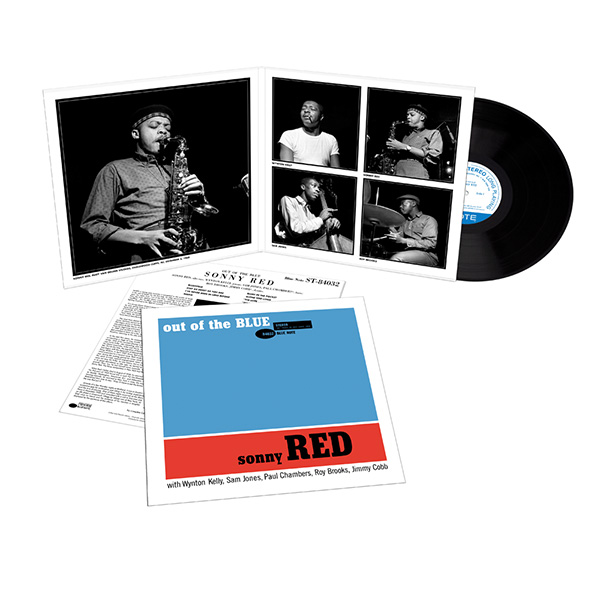
It turns out that PVC, or polyvinyl chloridethe stuff used to make Starbucks gift cards, imitation leather wallets, inflatable pool unicorns, the pipes under your sink, and Billy Idol's pantsis also the main ingredient in phonograph records. And today we're living in the silver age of PVC. Not the golden age, since records are no longer the dominant medium for recorded music, but these days we're lucky to again have access to a remarkable amount of music stamped on top-quality hot plastic.
Better still, as listeners have become more knowledgeable and demanding, vinyl releases have become more scrupulously sourced, pressed, annotated, and packaged. Many of today's records show an unprecedented level of care and transparency about their productionand sound terrific to boot.
Brilliant Corners #40: Sound Practices, Setting Hi-Fi Back Decades, One Listener at a Time
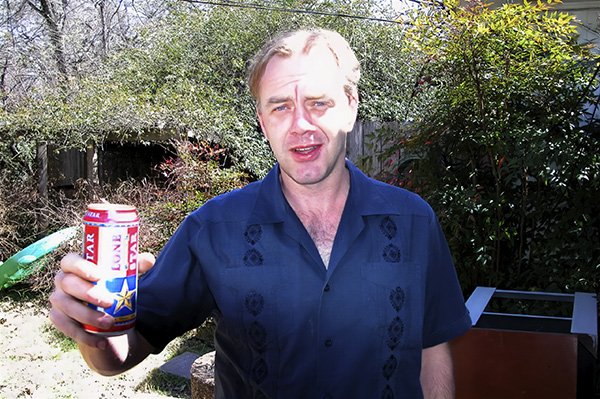
Joe Roberts, the one-man band behind Sound Practices. Photo by Christian Rintelen
In audio as in life, there are moments when you find your people and, if you're lucky, discover something about yourself. For me, one of these happy junctures took place in the mid-1990s when I came across an issue of Sound Practices.Brilliant Corners #41: Allnic H-7000 phono stage, Grimm MU2 streamer, Campfire Audio Andromeda 10 Earphones
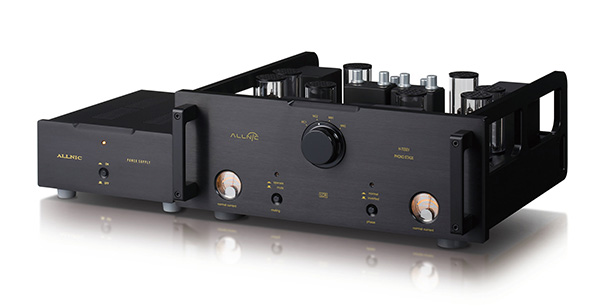
Most of us, most of the time, live in the world of good enough. On a Saturday, we might drive our Ford Fiesta to pick up a polo shirt at Banana Republic, then dine at Outback Steakhouse, and later get ready for bed with a mug of Celestial Seasonings Caramel Apple Dream tea while watching an episode of Hoarder House Flippers.
Brilliant Corners #42: the First Viennese High End Show
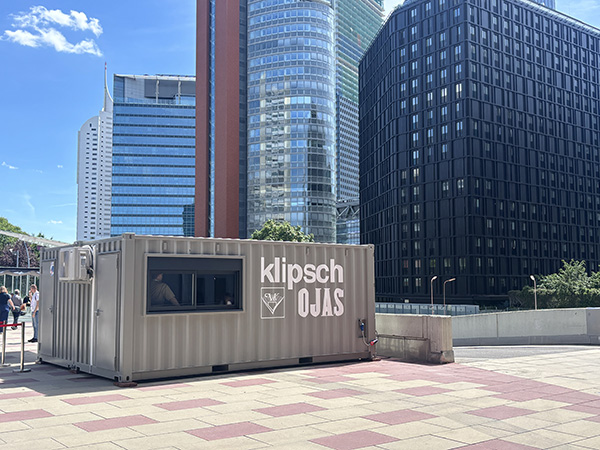
The Klipsch-OJAS storage container outside the High End Vienna venue.
Whenever I spend time in Vienna, I never think I'm going to eat schnitzel every day, but somehow it happens anyway. The truth is that when done right, schnitzel is a scientifically perfect dish: unexpectedly light, texturally complete, and oddly comforting.Brilliant Corners #43: the Analogtechnik DST15 Ice Age phono cartridge
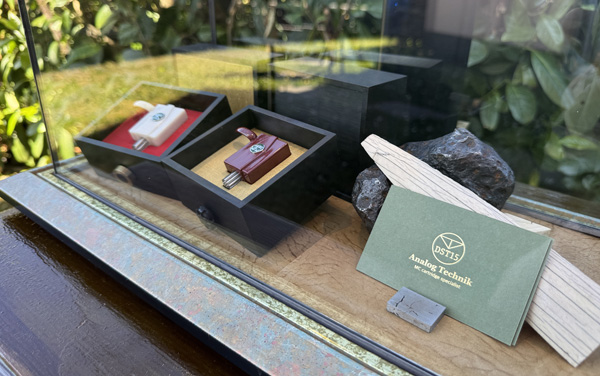
About a decade ago, The Wall Street Journal posted a short video about Itsushi Hamasaki, a diffident and rather nondescript man living in Tokyo. To free up money for his loudspeakers—a pair of hulking horns costing north of $100,000—Hamasaki lives in a 250 ft2 apartment and hasn't bought a stitch of clothing in 15 years.
Brilliant Corners #5: High Water Sound; TW-Acustic Raven GT2 turntable; Dynavector Te Kaitora Rua & Miyajima Shilabe phono cartridges
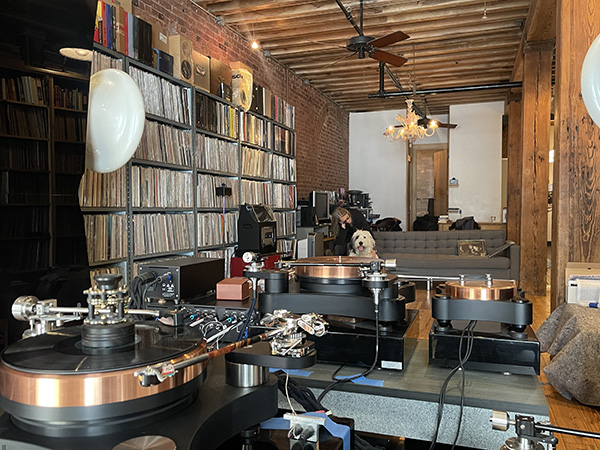
"New York is an ugly city, a dirty city," John Steinbeck wrote in 1953. "But there is one thing about itonce you have lived in New York and it has become your home, no place else is good enough." Decades later, the novelist's insight about this appalling, incomparable city still feels true. New Yorkers love to complain about the summers, with their wafting miasma of hot garbage and urine; about the superannuated subway system, which only sometimes resembles a psilocybin trip gone really wrong; about the purgatorial agony of finding an apartment; about the affronts of existing shoulder-to-shoulder with the stupendously rich. . .
What I'm getting around to saying is that easily the best part of living here is the people. One of them is Jeffrey Catalano, who has been a drummer, painter, DJ, and construction worker and today runs a hi-fi business, High Water Sound, from a loft in a former sail-making factory on Water Street in Manhattan's financial district.
Brilliant Corners #6: Munich from the Back of the Bus
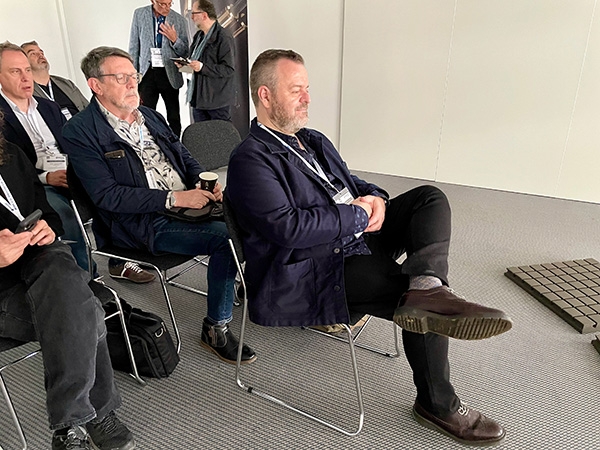
Alex Halberstadt (front) listens to the BAACH-SP Adio system at High End Munich. (Photo: Jason Victor Serinus)
If you're going to Germany to immerse yourself in big-city excitementchurning dance clubs, matterful contemporary art, visitors and food from around the world, and street life that goes on all nightyou'll probably find it in Berlin. Though rents have been climbing and there's no shortage of dirty sidewalks and petty crime, the German capital remains one of the most youthful and vibrant cities in Europe, an art and culture center with large expatriate communities and endless things to do. For urban thrills on a smaller scale, you can make a case for Cologne and even Leipzig.
Just maybe don't go to Munich. As soon as you leave the airport, you know you've reached the epicenter of German burgherdoma place where manicured lawns, public safety, tidy storefronts, and respectful revelers in Tyrolean costumes are the norm.