Brilliant Corners

Sort By: Post DateTitle Publish Date

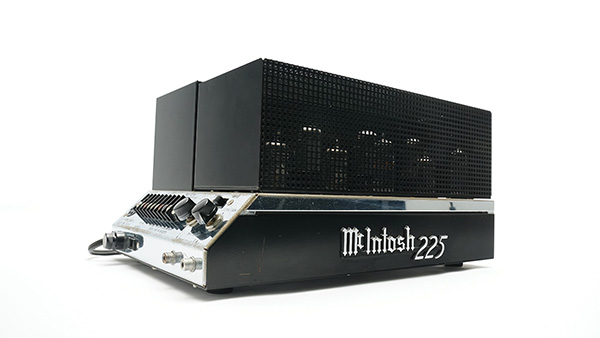
Brilliant Corners #28: The McIntosh MC225 and Jerome Sabbagh's Analog Tone Factory
There are things that make me feel so unpleasantly lightheaded that some days I worry my cranium might float away like a helium balloon. Like baby animals generated by AI that I can no longer distinguish from real ones. Skin care for tweens. Headlines about American politics that read like headlines about Turkmenistan. The music of Charli XCX.


And being middle aged. Even the term is a con. At 54, I'm not in the middle of anything, and given the way my back feels in the mornings, the thought of living to 108 fills me with terror. There are things about this stage of life that arrive imperceptibly, and not just the physical frailties. Chief among them is the way one's time on earth begins to feel unsettling and sometimes poignant in its suddenly tangible brevity. Now, when I speak to people in their early 20s, I find myself amazed by their belief that life is brimming with endless possibility and lasts nearly forever. I suppose I might envy them, but I remember being their age and wouldn't relish being that person again.


Fortunately, there's more to middle age than bewilderment at cottagecore and one's worsening nocturia.
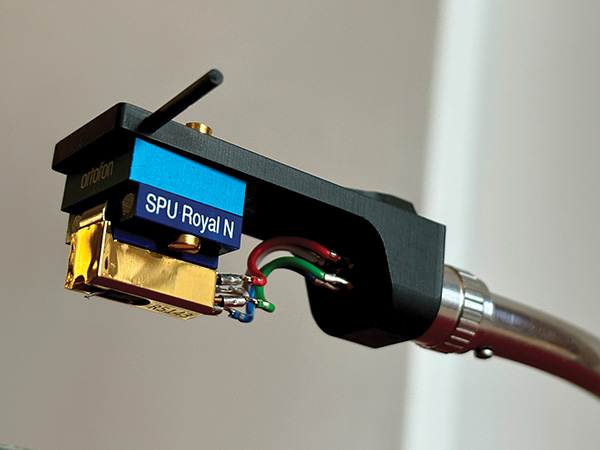
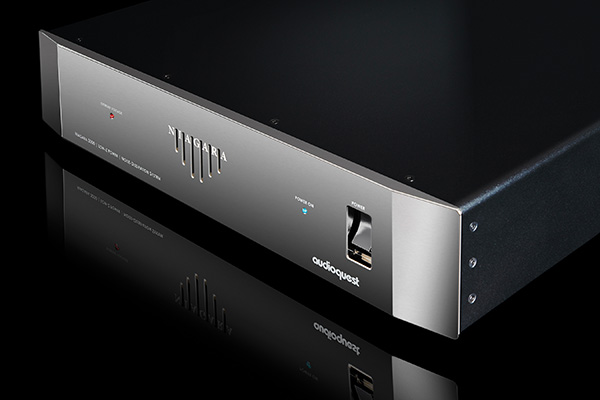
Brilliant Corners #27: Ortofon SPU Royal N phono cartridge (and Patsy Cline)

Back in the '90s, when I was young and marginally employed, one of the things I looked forward to most was going downstairs to my mailbox and finding a copy of Audiomart. The booklet arrived every two weeks, sometimes monthly, and was filled with classified ads for audio gear typeset in tiny, difficult-to-read print. In those pre-internet days, you needed a reference from a subscriber to sign up for Audiomart, which fostered a sense of community and safety, and if you wanted to respond to an ad, you had to call someone. Mostly I just enjoyed perusing the ads, but the prices for some of the vintage gear, particularly the less legendary stuff, were low enough that from time to time I could afford them.

Brilliant Corners #26: Racks, Cleaners, Cables, Resonators

Some years ago, I visited the home of a well-known American author who happened to be an audiophile. His cramped, dimly lit listening room contained a tube amp, a DAC, and a pair of inexpensive floorstanding speakers surrounded by what looked like a museum of audio tweaks. I recall a scarecrow-like contraption with swiveling wood-and-metal arms that rearranged magnetic fields, assorted boxes and panels that promoted "quantum proton alignment," mysterious dots covering the walls like a rash, and nearly a dozen things dangling from the speakers' binding posts that were supposed to do something I can't remember. The author had an almost mystical belief in the power of these objects to bend the laws of physics and told me that he'd spent more on them than on the rest of the system, because in his opinion they were more important to the overall sound.


The thing that surprised me most is that despite the tweaks—or maybe because of them—his hi-fi sounded pretty terrific.

Brilliant Corners #25: Devon Turnbull and the Klipsch-Ojas kO-R1 loudspeaker

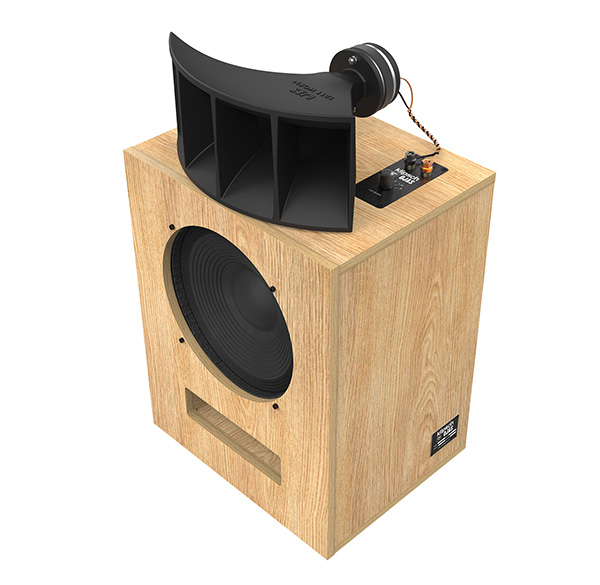
"Paul Klipsch was a genius," Roy Delgado told me recently, with the sound of genuine amazement in his voice. "Me, I'm just a tinkerer." I've spoken to Delgado, Klipsch's chief audio engineer, a handful of times over the past few years and find him affable, plainspoken, and almost absurdly humble. His LinkedIn page describes him simply as "engineer at Klipsch." His bio on the Klipsch Museum website lists his interests as "a closer relationship with God [and] the pursuit of the ever-elusive largemouth bass." To be sure, Delgado holds several patents, has an intimidating grasp of loudspeaker design, and is anything but a tinkerer. But it was still weird to see him—dressed in the T-shirt, light jeans, and work boots of an Arkansas fishing enthusiast—at the Nine Orchard Hotel during last year's New York Fashion Week.


We were there for the launch of a loudspeaker, a collaboration between the Little Rock–based Klipsch Group and Ojas, the nom de solder of artist and designer Devon Turnbull.

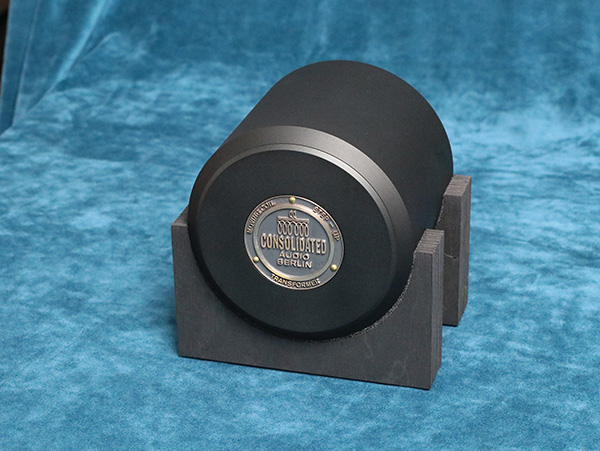
Brilliant Corners #24: Consolidated Audio "Monster Can" & Fairchild 235 MC Step-Up Transformers

One of my favorite things about this pastime is the modesty of its aims. Despite the sometimes-astronomical sums spent on gear, and the small handful of drama queens who populate various corners of this hobby, all we're doing is trying to enjoy recorded music at home. No one here is reversing planetary warming or solving the Riemann hypothesis. The sole purpose of the pursuit we write about in these pages is to please, enlighten, and entertain. I like that about it.


This means that aesthetics matter. During a recent trip to Japan, I found myself marveling at the many vintage audio components used in both public listening spaces and people's homes, and the high prices these meticulously restored devices command. I found many of them lovely, the patina of age only adding to their allure. In the West, where we believe in eternal progress, it's common to ask whether these components' performance is up to contemporary standards. "Sure, it looks cool, but how does it sound?" we might ask, as though the physical beauty of the gear is a distraction or, worse, a ploy. Recall the old audiophile joke about the initials of the design-forward Danish manufacturer Bang & Olufsen standing for "beauty only."

Brilliant Corners #23: Japanese Kissaten

The Eagle, Tokyo.


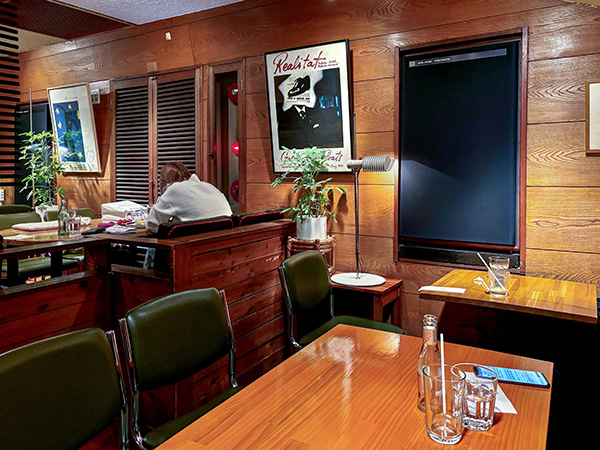
Arriving in Japan from the United States is like being turned upside down. This condition lasts for much of the first week. When I visited in November, the time difference between Tokyo and New York was 14 hours. "The floating world" is a term for the pleasure-addled urban culture of Edo-period Japan, but it's also an apt description for the twilit and not-entirely-unpleasant weirdness of first arriving in Tokyo. Everything seems slightly unreal.


I'd come to Japan for several reasons, one of which was simply to spend more time in what for me is the most enjoyable place on the planet. Another was to explore the country's distinctive listening spaces, which I've been thinking and occasionally writing about over the past few years. During that time, listening bars and cafés from Boulder to Sydney have been popping up like mushrooms after a rainstorm, and for many of these new venues, Japan's jazz kissas (or kissaten in the Japanese plural) are both the model and spiritual mothership.

Brilliant Corners #22: Sutherland Dos Locos and Manley Oasis phono stages

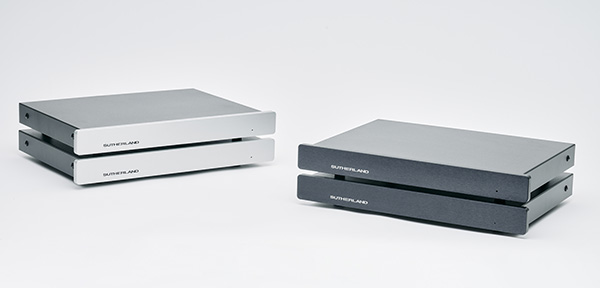
"Give me the seduction, give me the pleasure," Ron Sutherland was nearly shouting into the phone. "I want to turn off the analytical mind and just enjoy myself!"


Sutherland speaks in the chipper Midwestern cadences of a comic character actor from the 1940s, sort of like a grown-up Eddie Bracken from The Miracle of Morgan's Creek, and I'd never heard him sound so excited. He was talking about his new phono stage, the Dos Locos, the first product he's designed collaboratively, having enlisted a group of audiophile friends who listened to and critiqued each iteration. "These friends are excellent listeners," Sutherland related, "whereas I'm a gearhead, and don't have the patience or discernment for that kind of listening. Sometimes I'd change something and they'd say, 'You made it worse!'" It sounded like he preferred the group dynamic. "There was something very intimate about this back-and-forth process," he told me. "And compared to working alone, it was a lot more fun!"

Brilliant Corners #21: German kitchens, Japanese amps, and Afropop gems

I have a day job at a museum. One of my favorite things about working there is taking the elevator from my office down to one of the floors open to the public; I walk into the galleries through a discreet panel in the wall. This makes me feel like I'm in one of those horror-movie manors with a tunnel concealed behind a bookshelf. Sometimes I startle people, which I kind of enjoy.


Mostly I like spending time looking at art, especially in the early mornings when the galleries are empty. Lately, I've been watching art handlers hanging a roughly 100'-long tapestry depicting some manner of planetary jetsam—or maybe they are aquatic plants—by Nigerian artist Otobong Nkanga. And I make regular trips to a small theater to watch mesmerizing footage of Orchard Street in working-class lower Manhattan, shot in 1955 by veteran filmmaker Ken Jacobs. Captured on warm, saturated 16mm film, the long-gone people on the screen appear as vividly alive as the museumgoers around me.


My favorite-ever thing at the museum, though, is a life-sized kitchen. Austrian architect Grete Lihotzky designed it for a Frankfurt housing complex in 1927.

Brilliant Corners #20: The Hunt for Red October

No one I know enjoys dating. Some friends detest it so much they won't go near it. Maybe they believe the love of their life is waiting to be discovered at a Zumba class or in line at the King Kullen. Or maybe they've quietly given up. Admit it: Dating offers a low probability of success, and if you think too much about just how low, the whole thing begins to seem ridiculous. Yet how do you meet a potential partner without, well, meeting them?

Brilliant Corners #19: Music Among the Fairchildren

Pull down the shades, find a comfortable seat, and come with me on an imaginary journey to the year 1956. The Eisenhower-Nixon ticket wins reelection, the United Methodist Church begins to ordain women, and a can of Campbell's tomato soup costs 10 cents. Elvis Presley's two-week residency at Las Vegas's New Frontier Hotel and Casino is received so poorly by the middle-aged guests that Newsweek likens it to "a jug of corn liquor at a champagne party." And a Seattle couple gives birth to Kenneth Bruce Gorelick, who will become known professionally as Kenny G.


The hobby that will become "high-end audio" is still called plain old "audio." The top marginal tax rate is 91%, the US boasts more income equality than present-day socialist Sweden, and most of the country's top earners are not panic-room wealthy but merely rich. The prices of hi-fi gear reflect this: Two of the finest power amplifiers you can buy—the McIntosh MC-60 and the Marantz Model 2 (both monophonic, of course)—retail for $198. That's about $2266 in today's dollars, and while certainly not cheap, these products are accessible to a far larger group of hi-fi enthusiasts than "the best" of today (including from McIntosh itself).

Advertisement
Advertisement
Advertisement