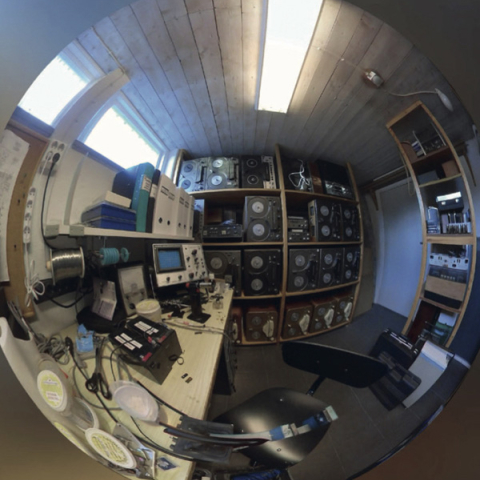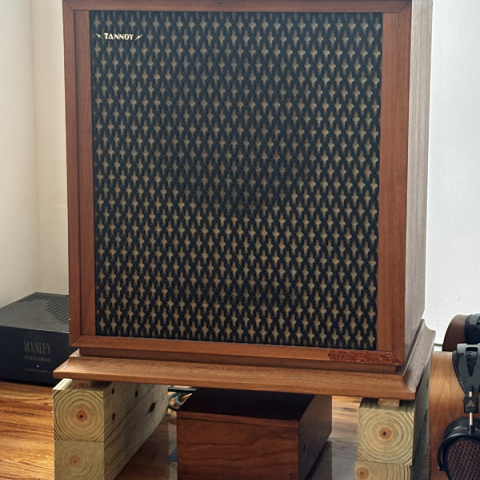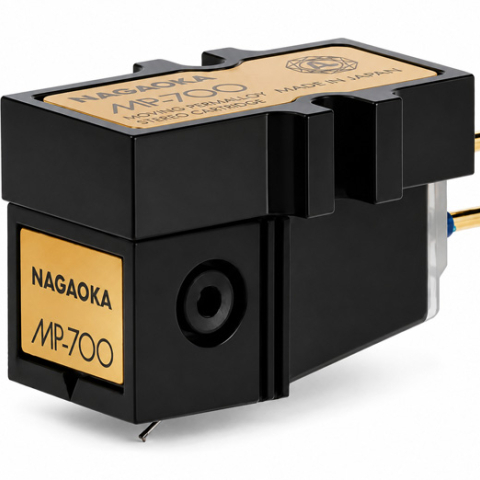
About a decade ago, The Wall Street Journal posted a short video about Itsushi Hamasaki, a diffident and rather nondescript man living in Tokyo. As the voiceover informs us, to free up money for his loudspeakers—a pair of hulking horns costing north of $100,000—Hamasaki lives in a 250 ft2 apartment and hasn't bought a stitch of clothing in 15 years. And because the speakers occupy most of his tiny living space, every time he opens his refrigerator, he has to move the couch.
The video is one of those looks at the bizarre side of this pastime that general-interest publications come up with from time to time, perhaps to break up their coverage of celebrity weddings and especially obese pets. These stories, which tend to have a gawking and sometimes moralistic tone, seem intended mostly to amuse the public or maybe warn parents to keep their children away from lonely men with long tonearms.
What the stories always leave out is that we fuss with our gear because it's fun and, more often than not, communal. We enjoy reading about it, talking about it, and sometimes even putting our thoughts about it into writing. Occasionally, an alcoholic beverage gets involved. Then again, I know people like Hamasaki—and I don't mean two, I mean dozens—whose homes and personal lives reflect a similarly monomaniacal preoccupation with audio.
Obsession is nothing if not ambiguous. What looks like dedication and expertise can quickly mutate into something that resembles insanity. I've been to homes where the listening room was locked to keep out family members, homes where the bathroom doubled as an office to make more room for the hi-fi, homes where records covered the kitchen counters and filled the tub. I don't know about you, but there are times when I take a good hard look at my home and wonder whether someday there might be a photo of it in a textbook on late-stage hoarding.
This is an odd way to frame a story about Daniel Kim and his remarkable phono cartridges, which captivated me at the final High End Munich. By all appearances, Kim is a high-functioning member of society: For the past 18 years, he has worked as a tenor at the Plauen-Zwickau Opera House in Zwickau, Germany. He's also a dad and seems to take just as many vacations as a regular person. Plus, Kim is delightful: Pleasantly devoid of sharp angles and given to childlike excitement, he sometimes resembles a ball of mirth. I dare you to spend five minutes in his presence without wanting to hug him.
But his audio pursuits are another matter. A student of vintage equipment, Kim named his business Analogtechnik (footnote 1), reflecting his fascination with phono cartridges. He restores and rebuilds them, and in 2018 began to build his own. "As a professional musician, my goal has always been to reproduce the sound of live music as faithfully as possible," he told me. In this pursuit, he has pulled no punches, creating what must be some of the most exotic—and least practical—phono cartridges touched by human hands.
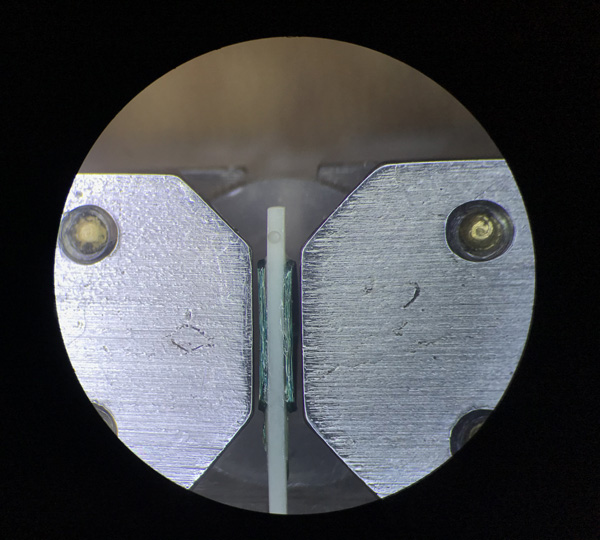 For starters, Kim took as his North Star the DST, a moving coil cartridge made between 1958 and 1962 by Neumann, a manufacturer of mainly professional audio equipment in Berlin. Famously, Neumann attempted to solve the compromises presented by a conventional cantilever, which offers a degree of give that allows the stylus to track a record groove more effectively. But the cantilever also introduces dynamic compression by keeping the stylus farther from the generator than is ideal. Neumann's gambit was to bring the coils, magnets, and other moving bits out of the cartridge's housing and attach them directly to the business end of the cantilever, right above the stylus, effectively rendering said cantilever's length and compliance irrelevant.
The DST and its successor, the DST 62, were not a commercial success. They proved terrifically difficult to manufacture and therefore quite expensive. When first imported to the US, the DST 62 sold for $79.50, about twice as much as the Ortofon SPU, Shure M3D, Pickering U38/AT, and other top phono cartridges of the era.
Kim isn't the first to try to build on Neumann's idea. After the DST cartridges became something of a sleeper hit among Japan's audio fanatics in the 1980s, various tributes have appeared, often the work of artisans obsessed with capturing their distinctive sound. The first of these was the Lumière cartridge, followed by the Audio-Technica AT-ART1000, the various iterations of the Tzar, several DST variants from Lithuania's DaVa, and even a replica (of the original DST) from Holland's J.P. van Vliet. These cartridges tend to be small in number and high in price.
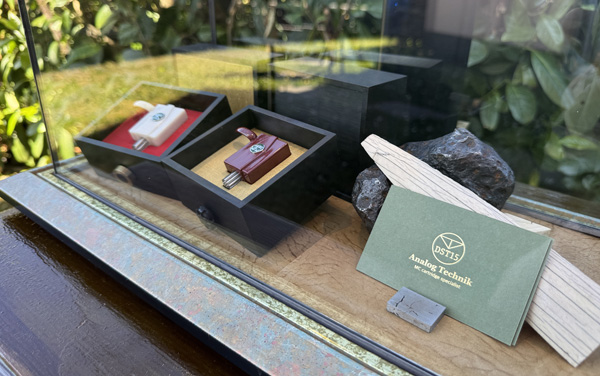
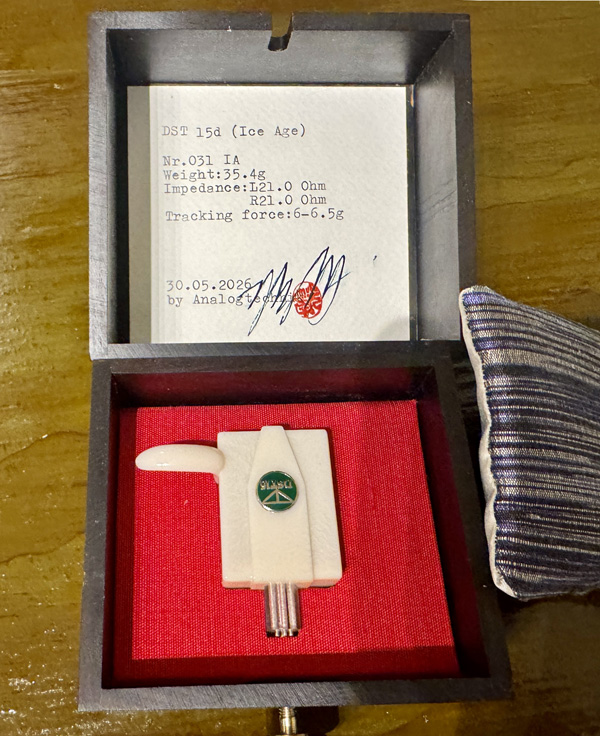
But Daniel Kim's creations have taken the Neumann approach to a new level of painstaking obsession. Consider his DST15 Ice Age stereo cartridge: It has pole pieces made from meteorite iron, a platinum bridge, and a cantilever fashioned from the tusk of a woolly mammoth (hence the Ice Age designation). It is also beautiful: Its chunky rectangular body, a dead ringer for the original's Bakelite exterior, will induce swooning in a certain kind of nostalgic audiophile (read: me). Kim insists that these materials were chosen not out of a penchant for the exotic but simply because they sound better.
"When I developed the Ice Age cartridge using samarium-cobalt magnets, I began looking for a cantilever material that would not be affected by their strong magnetic field or eddy current effects, while also providing high rigidity and excellent internal damping," Kim wrote in a recent email. "After making a test cantilever from a key taken from an old piano at the Zwickau Theater, where I work, I became convinced that it offered a more natural and musically convincing presentation. Later, when I learned that elephant ivory can no longer be used, I turned to legally available mammoth ivory. Its denser structure and long aging process produce an even more stable material and a more natural and refined sound."
In his design process, Kim gives little consideration to convenience. For one, like the original DST—and unlike the Tzars, DaVas, and the ART1000—the DST15 Ice Age is technically not a cartridge but an integrated pickup head with an SME-style collet mount. Once mounted in a tonearm, it allows no adjustment of overhang or zenith. The Ice Age also preserves the Neumann's stylus-to–mounting-collar distance of 32mm, considerably shorter than the 52mm of the Ortofon SPU G pickup head, which became the basis for nearly all conventional pivoted tonearms. So to play an Analogtechnik cartridge, you need a tonearm that uses external headshells and is the correct length to accommodate a Neumann DST. Good luck finding one (more on this shortly).
It gets weirder. The 35.5gm Ice Age makes a 28gm Ortofon SPU G look like a welterweight, and like the original DST, it requires a whopping 6–6.5gm of vertical tracking force, numbers sure to make many record collectors squirm. While some vinyl enthusiasts claim that 6gm of VTF is perfectly safe for your records provided that the cartridge is installed correctly, others emphatically disagree. After all, it was not so long ago that manufacturers tried to outdo each other by introducing cartridges that required less and less downforce, an absurd pursuit that resulted in some pretty gutless LP playback.
Regardless of how you feel about its abundant tracking force, the DST15 makes more demands of a tonearm than any cartridge I can think of. If your attitude toward LP playback is even slightly casual, this €9100 device is decidedly not for you. But if you happen to be an Itsushi Hamasaki– level audio obsessive, read on.
For starters, Kim took as his North Star the DST, a moving coil cartridge made between 1958 and 1962 by Neumann, a manufacturer of mainly professional audio equipment in Berlin. Famously, Neumann attempted to solve the compromises presented by a conventional cantilever, which offers a degree of give that allows the stylus to track a record groove more effectively. But the cantilever also introduces dynamic compression by keeping the stylus farther from the generator than is ideal. Neumann's gambit was to bring the coils, magnets, and other moving bits out of the cartridge's housing and attach them directly to the business end of the cantilever, right above the stylus, effectively rendering said cantilever's length and compliance irrelevant.
The DST and its successor, the DST 62, were not a commercial success. They proved terrifically difficult to manufacture and therefore quite expensive. When first imported to the US, the DST 62 sold for $79.50, about twice as much as the Ortofon SPU, Shure M3D, Pickering U38/AT, and other top phono cartridges of the era.
Kim isn't the first to try to build on Neumann's idea. After the DST cartridges became something of a sleeper hit among Japan's audio fanatics in the 1980s, various tributes have appeared, often the work of artisans obsessed with capturing their distinctive sound. The first of these was the Lumière cartridge, followed by the Audio-Technica AT-ART1000, the various iterations of the Tzar, several DST variants from Lithuania's DaVa, and even a replica (of the original DST) from Holland's J.P. van Vliet. These cartridges tend to be small in number and high in price.
But Daniel Kim's creations have taken the Neumann approach to a new level of painstaking obsession. Consider his DST15 Ice Age stereo cartridge: It has pole pieces made from meteorite iron, a platinum bridge, and a cantilever fashioned from the tusk of a woolly mammoth (hence the Ice Age designation). It is also beautiful: Its chunky rectangular body, a dead ringer for the original's Bakelite exterior, will induce swooning in a certain kind of nostalgic audiophile (read: me). Kim insists that these materials were chosen not out of a penchant for the exotic but simply because they sound better.
"When I developed the Ice Age cartridge using samarium-cobalt magnets, I began looking for a cantilever material that would not be affected by their strong magnetic field or eddy current effects, while also providing high rigidity and excellent internal damping," Kim wrote in a recent email. "After making a test cantilever from a key taken from an old piano at the Zwickau Theater, where I work, I became convinced that it offered a more natural and musically convincing presentation. Later, when I learned that elephant ivory can no longer be used, I turned to legally available mammoth ivory. Its denser structure and long aging process produce an even more stable material and a more natural and refined sound."
In his design process, Kim gives little consideration to convenience. For one, like the original DST—and unlike the Tzars, DaVas, and the ART1000—the DST15 Ice Age is technically not a cartridge but an integrated pickup head with an SME-style collet mount. Once mounted in a tonearm, it allows no adjustment of overhang or zenith. The Ice Age also preserves the Neumann's stylus-to–mounting-collar distance of 32mm, considerably shorter than the 52mm of the Ortofon SPU G pickup head, which became the basis for nearly all conventional pivoted tonearms. So to play an Analogtechnik cartridge, you need a tonearm that uses external headshells and is the correct length to accommodate a Neumann DST. Good luck finding one (more on this shortly).
It gets weirder. The 35.5gm Ice Age makes a 28gm Ortofon SPU G look like a welterweight, and like the original DST, it requires a whopping 6–6.5gm of vertical tracking force, numbers sure to make many record collectors squirm. While some vinyl enthusiasts claim that 6gm of VTF is perfectly safe for your records provided that the cartridge is installed correctly, others emphatically disagree. After all, it was not so long ago that manufacturers tried to outdo each other by introducing cartridges that required less and less downforce, an absurd pursuit that resulted in some pretty gutless LP playback.
Regardless of how you feel about its abundant tracking force, the DST15 makes more demands of a tonearm than any cartridge I can think of. If your attitude toward LP playback is even slightly casual, this €9100 device is decidedly not for you. But if you happen to be an Itsushi Hamasaki– level audio obsessive, read on.
 Tonearm follies
My attempt to find a tonearm with which to play Daniel Kim's cartridge quickly devolved into a misadventure, a months-long purgatory of bad vibes, bad luck, and missed connections.
Given that I needed an arm made specifically for the DST's unusual stylus-to-collar length, I reached out to the only person I'm aware of who makes such a thing. A German in his 70s who resides in Spain, Alfred Bokrand has been known for making relatively inexpensive transcription-length tonearms he sells online, including arms made for DST-type cartridges. One of his latest offerings is based on the Neumann DZT tonearm. It represents a breakthrough in Bokrand's business model and pricing: It retails for $5995 and has a US distributor (footnote 2). In response to my email, Bokrand generously offered to send me his tonearm to assist with this review. Mission accomplished! I had an armboard drilled for the Spanish arm and began watching the tracking number impatiently.
The first Bokrand DZT was sent to the wrong address. When the second arrived, it didn't work. There were two grave problems with the tonearm's operation, one of which the designer seemed aware of. So it went back to Spain, and Bokrand assured me that a third sample would be sent promptly. After several months of dwindling communication, which eventually ceased, I was informed by the US distributor, Robin Wyatt of Robyatt Audio, that the maestro was busy filling paid orders and that mine was not at the top of his to-do list. There's more to say about this unhappy interaction, but as Mark Twain or Art Dudley might have written, I will draw the curtain of charity over this scene and move on.
My prospects brightened when Daniel Kim reminded me that the Neumann's stylus-to–mounting-collar distance is only 2mm longer than that of Ortofon's now-discontinued SPU A pickup head, and that tonearms for the SPU A are still offered by a handful of manufacturers. So I contacted Thomas Schick (footnote 3), whose lovely 12" tonearm I'd been using happily for ages. As it happened, Schick does make a tonearm for the SPU A, and he kindly agreed to ship one to Brooklyn.
As it also happened, Schick mailed it shortly after the current US administration announced its "Liberation Day" tariffs, and soon FedEx informed me that the package would not be delivered until I paid several hundred dollars to cover the new levies. In the ensuing confusion, Schick's package appeared to vanish from the FedEx tracking system. It turned up again some four months later, but during its time as a federal hostage, the package and the tonearm inside had been damaged. Back to Thomas Schick it went.
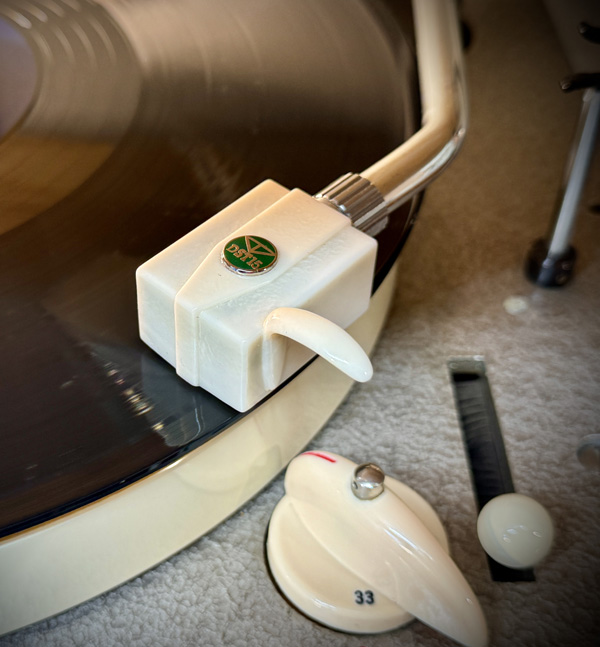 I was beginning to think that Huehuecoyotl, the Aztec god of music, dance, and mischief, didn't want me to hear the Analogtechnik cartridges, which had been languishing in my home for an unacceptably long time. But the coyote god took pity on me. Soon, a beautifully made GrooveMaster 3 tonearm (footnote 4) made for the SPU A arrived from Marco Bouwer of Audio Creative in the Netherlands without any incident whatsoever. Better yet, it worked like a dream and sounded lovely. After nearly a year, I was in business. Phew! Thanks for your patience, Daniel.
Now that the Analogtechnik DST15 Ice Age was mounted on the business end of the GrooveMaster, which itself was bolted to a newly drilled armboard on the plinth of my Garrard 301, the fun could begin.
Well, almost. First I needed to sort out the step-up transformer. While the DST15 sounded great routed straight into the resistive input of the Manley Steelhead, Kim suggested it works best with a SUT. But presented by the Consolidated Audio 1:20 transformer I've come to love with nearly every cartridge I've listened to, the DST15 sounded treble-forward and thin. The conventional formula holds that a cartridge should see a load that's around 10 times higher than its internal impedance. But given the DST15's 21 ohm impedance and the 117 ohm load presented by the SUT, I expected the sound to be zaftig in the bass and a bit rolled in the treble, the opposite of what I was hearing.
I got more confused when Kim sent me his favorite SUT, a vintage unit from German manufacturer Malotki designed for Neumann cartridges, with an astonishingly high turns ratio of 1:62.5. With this transformer connected to a standard 47k ohm moving magnet input, the cartridge sees a 12 ohm load, meaning the load impedance is lower than the cartridge's internal impedance. How could this possibly work? Yet just as Kim had led me to believe, the Malotki and the DST15 sounded magical to gether, reminding me that simple formulas are helpful until they are not.
I was beginning to think that Huehuecoyotl, the Aztec god of music, dance, and mischief, didn't want me to hear the Analogtechnik cartridges, which had been languishing in my home for an unacceptably long time. But the coyote god took pity on me. Soon, a beautifully made GrooveMaster 3 tonearm (footnote 4) made for the SPU A arrived from Marco Bouwer of Audio Creative in the Netherlands without any incident whatsoever. Better yet, it worked like a dream and sounded lovely. After nearly a year, I was in business. Phew! Thanks for your patience, Daniel.
Now that the Analogtechnik DST15 Ice Age was mounted on the business end of the GrooveMaster, which itself was bolted to a newly drilled armboard on the plinth of my Garrard 301, the fun could begin.
Well, almost. First I needed to sort out the step-up transformer. While the DST15 sounded great routed straight into the resistive input of the Manley Steelhead, Kim suggested it works best with a SUT. But presented by the Consolidated Audio 1:20 transformer I've come to love with nearly every cartridge I've listened to, the DST15 sounded treble-forward and thin. The conventional formula holds that a cartridge should see a load that's around 10 times higher than its internal impedance. But given the DST15's 21 ohm impedance and the 117 ohm load presented by the SUT, I expected the sound to be zaftig in the bass and a bit rolled in the treble, the opposite of what I was hearing.
I got more confused when Kim sent me his favorite SUT, a vintage unit from German manufacturer Malotki designed for Neumann cartridges, with an astonishingly high turns ratio of 1:62.5. With this transformer connected to a standard 47k ohm moving magnet input, the cartridge sees a 12 ohm load, meaning the load impedance is lower than the cartridge's internal impedance. How could this possibly work? Yet just as Kim had led me to believe, the Malotki and the DST15 sounded magical to gether, reminding me that simple formulas are helpful until they are not.
 Can we listen to records already?
I began with Territórios (LP, Rocinante R017) by the young classical guitarist Gabriele Leite, a native of Brazil who makes her home in New York City. Her rendition of Five Bagatelles by 20th century English composer William Walton is a revelation. Leite imbues it with a freedom, playfulness, and sensuality one doesn't always associate with English music, an interpretation worlds away from the comparatively staid one by Julian Bream, for whom this music was written.
What struck me about the DST15's rendition of this record was its shockingly fast impulse response, which made other moving coil cartridges sound approximate and a little plodding. That quicksilver quality caused Leite's clusters of notes to sound like they were being played on a real instrument in real space, and also made the music sound less predictable and freer.
At the same time, those notes were reproduced with as much color, density, and texture as I could wish for. But unlike the ponderous rococo fleshiness of some sumptuous-sounding cartridges, this harmonic richness and heft were wedded to extraordinary speed and felt agile, natural, and always at the service of the music.
The other immediately obvious quality of Kim's stereo cartridge is the unrestrained, fierce dynamics, which compound the sense of liveness I mentioned, giving the music an opportunity to startle. For me, dynamics are the breath of life and the source of drama in reproduced music, and the DST15 proved itself to be one of the most dramatic sounding cartridges I've heard.
 Which made me reach for Pure Johnny Cash (McIntosh Sessions Volume 2), a double album of outtakes and undubbed tracks from Cash's Sun Records catalog, pressed on vinyl at 45rpm. Engineer Dave Gardner mastered it from original tapes (albeit with a digital step) that had belonged to Shelby Singleton, the producer who bought Sun Records from Sam Phillips. The results are pretty awesome.
With the DST15 tracing "Train of Love," Cash's voice, with its signature mix of reverence and mayhem, materialized between the speakers with a disconcertingly bloody, dense physicality. In my living room, Cash and the Tennessee Two, one of the most distinctive trios in American music, sounded not like a country oldies act on a scratchy K-tel platter but like a tight rock'n'roll band with a punk streak a mile wide. The menacing bass line that Luther Perkins plays on the muted strings of the electric guitar whipped through the air in my room, each note landing like a jab.
Kim's large-and-lovely cartridge pressed all my favorite sonic buttons but didn't gloss over detail or wallow in obvious frequency-response deviations. It reminded me a little of Ortofon's wonderful SPU Royal N, excelling in the same areas—color, dynamics, presence, and drama—while managing to turn the pleasure knob a bit higher. It reminded me even more of my Aidas-modified Fairchild 225A, though without that mono cartridge's high-frequency issues.
To be sure, the DST15 is a bit of a fusspot, as its delightful performance depends to an unusual degree on precise setup, especially when it comes to the vertical tracking angle. When the VTA was off, the sound took on an edginess that could be unpleasant. Lacking a traditional suspension, the cartridge is uncommonly sensitive to footfall. And it isn't the best tracker, especially given that the GrooveMaster's magnetic antiskate adjustment tops out at 4gm. Finally, it's important to note that the usual sort of hard-bristle stylus brush can damage the exposed coils hovering just above the conical tip, so Kim included a long, soft-hair brush for occasional fuzz-removal duties.
Which made me reach for Pure Johnny Cash (McIntosh Sessions Volume 2), a double album of outtakes and undubbed tracks from Cash's Sun Records catalog, pressed on vinyl at 45rpm. Engineer Dave Gardner mastered it from original tapes (albeit with a digital step) that had belonged to Shelby Singleton, the producer who bought Sun Records from Sam Phillips. The results are pretty awesome.
With the DST15 tracing "Train of Love," Cash's voice, with its signature mix of reverence and mayhem, materialized between the speakers with a disconcertingly bloody, dense physicality. In my living room, Cash and the Tennessee Two, one of the most distinctive trios in American music, sounded not like a country oldies act on a scratchy K-tel platter but like a tight rock'n'roll band with a punk streak a mile wide. The menacing bass line that Luther Perkins plays on the muted strings of the electric guitar whipped through the air in my room, each note landing like a jab.
Kim's large-and-lovely cartridge pressed all my favorite sonic buttons but didn't gloss over detail or wallow in obvious frequency-response deviations. It reminded me a little of Ortofon's wonderful SPU Royal N, excelling in the same areas—color, dynamics, presence, and drama—while managing to turn the pleasure knob a bit higher. It reminded me even more of my Aidas-modified Fairchild 225A, though without that mono cartridge's high-frequency issues.
To be sure, the DST15 is a bit of a fusspot, as its delightful performance depends to an unusual degree on precise setup, especially when it comes to the vertical tracking angle. When the VTA was off, the sound took on an edginess that could be unpleasant. Lacking a traditional suspension, the cartridge is uncommonly sensitive to footfall. And it isn't the best tracker, especially given that the GrooveMaster's magnetic antiskate adjustment tops out at 4gm. Finally, it's important to note that the usual sort of hard-bristle stylus brush can damage the exposed coils hovering just above the conical tip, so Kim included a long, soft-hair brush for occasional fuzz-removal duties.
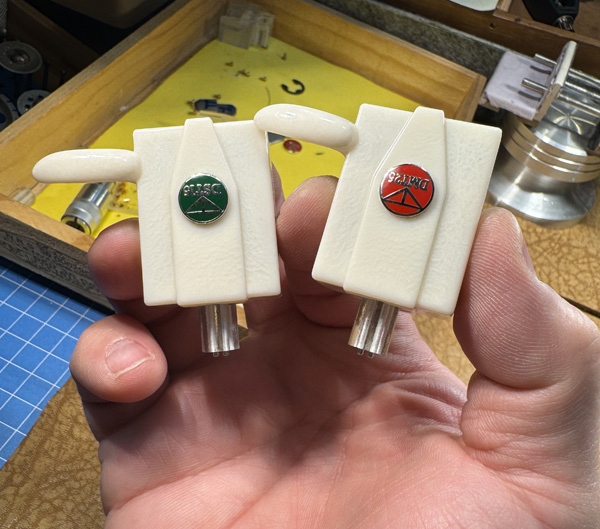 When it arrived in Brooklyn, the DST15 was packed alongside the DMT25, a pickup head similar in most ways to its stereo sibling except for its "double mono" design, meaning that its two coils carry a mono signal to both channels. Kim told me that when designing a mono cartridge, he experimented with many single-coil configurations but finally found the sound he was looking for with this unusual scheme. Among the DMT25's advantages is its ability to play stereo LPs. It is particularly adept at making sense of "electronically rechanneled" fake stereo productions of the 1960s and '70s.
I don't mean to give this mono cartridge short shrift, but in my system, it sounded pretty much identical to the DST15, which is to say that it had the same colorful, muscular, whippet-fast sound and was just as good at making music memorable and dramatic. And though it doesn't offer the uncanny groove-noise rejection of the best single coil cartridges, it proved spectacular at playing mono records.
One more thing. My friend John DeVore, who has more phono cartridges than anyone I know, owns an original Neumann DST 62, and a few months ago, we met at his workshop to compare it to Kim's version. We listened to them in an older Bokrand arm on John's Garrard 401 and compared notes. An alcoholic beverage may have gotten involved. In the end, the mammoth-powered contender from Saxony crushed the vintage original, sounding more forthright, refined, colorful, and exciting—better in just about every way. I don't know what this proves, but it sure was fun.
The Analogtechnik cartridges are products of love and obsession. Like most things born of extreme dedication, they don't fit neatly into the usual scales of value. They ask for a lot but reward the similarly obsessed listener with a window on the music that's distinctive and maximally dramatic. I feel grateful to have had a chance to live with them.
When it arrived in Brooklyn, the DST15 was packed alongside the DMT25, a pickup head similar in most ways to its stereo sibling except for its "double mono" design, meaning that its two coils carry a mono signal to both channels. Kim told me that when designing a mono cartridge, he experimented with many single-coil configurations but finally found the sound he was looking for with this unusual scheme. Among the DMT25's advantages is its ability to play stereo LPs. It is particularly adept at making sense of "electronically rechanneled" fake stereo productions of the 1960s and '70s.
I don't mean to give this mono cartridge short shrift, but in my system, it sounded pretty much identical to the DST15, which is to say that it had the same colorful, muscular, whippet-fast sound and was just as good at making music memorable and dramatic. And though it doesn't offer the uncanny groove-noise rejection of the best single coil cartridges, it proved spectacular at playing mono records.
One more thing. My friend John DeVore, who has more phono cartridges than anyone I know, owns an original Neumann DST 62, and a few months ago, we met at his workshop to compare it to Kim's version. We listened to them in an older Bokrand arm on John's Garrard 401 and compared notes. An alcoholic beverage may have gotten involved. In the end, the mammoth-powered contender from Saxony crushed the vintage original, sounding more forthright, refined, colorful, and exciting—better in just about every way. I don't know what this proves, but it sure was fun.
The Analogtechnik cartridges are products of love and obsession. Like most things born of extreme dedication, they don't fit neatly into the usual scales of value. They ask for a lot but reward the similarly obsessed listener with a window on the music that's distinctive and maximally dramatic. I feel grateful to have had a chance to live with them.
Footnote 1: Instagram: analogtechnik, Daniel Kim (@analogtechnik). Footnote 2: Robyatt Audio. Tel: (908) 334-3241. Email: info@robyattaudio.com. Web: www.robyattaudio.com. Footnote 3: Thomas Schick. US distributor: MoFi Distribution, 1811 W. Bryn Mawr Ave., Chicago, IL 60660. Web: mofidistribution.com.
Footnote 4: Groovemaster 3: Web: https://audio-creativeshop.nl/
For starters, Kim took as his North Star the DST, a moving coil cartridge made between 1958 and 1962 by Neumann, a manufacturer of mainly professional audio equipment in Berlin. Famously, Neumann attempted to solve the compromises presented by a conventional cantilever, which offers a degree of give that allows the stylus to track a record groove more effectively. But the cantilever also introduces dynamic compression by keeping the stylus farther from the generator than is ideal. Neumann's gambit was to bring the coils, magnets, and other moving bits out of the cartridge's housing and attach them directly to the business end of the cantilever, right above the stylus, effectively rendering said cantilever's length and compliance irrelevant.
The DST and its successor, the DST 62, were not a commercial success. They proved terrifically difficult to manufacture and therefore quite expensive. When first imported to the US, the DST 62 sold for $79.50, about twice as much as the Ortofon SPU, Shure M3D, Pickering U38/AT, and other top phono cartridges of the era.
Kim isn't the first to try to build on Neumann's idea. After the DST cartridges became something of a sleeper hit among Japan's audio fanatics in the 1980s, various tributes have appeared, often the work of artisans obsessed with capturing their distinctive sound. The first of these was the Lumière cartridge, followed by the Audio-Technica AT-ART1000, the various iterations of the Tzar, several DST variants from Lithuania's DaVa, and even a replica (of the original DST) from Holland's J.P. van Vliet. These cartridges tend to be small in number and high in price.
Tonearm folliesMy attempt to find a tonearm with which to play Daniel Kim's cartridge quickly devolved into a misadventure, a months-long purgatory of bad vibes, bad luck, and missed connections.
I was beginning to think that Huehuecoyotl, the Aztec god of music, dance, and mischief, didn't want me to hear the Analogtechnik cartridges, which had been languishing in my home for an unacceptably long time. But the coyote god took pity on me. Soon, a beautifully made GrooveMaster 3 tonearm (footnote 4) made for the SPU A arrived from Marco Bouwer of Audio Creative in the Netherlands without any incident whatsoever. Better yet, it worked like a dream and sounded lovely. After nearly a year, I was in business. Phew! Thanks for your patience, Daniel.
Now that the Analogtechnik DST15 Ice Age was mounted on the business end of the GrooveMaster, which itself was bolted to a newly drilled armboard on the plinth of my Garrard 301, the fun could begin.
Can we listen to records already?I began with Territórios (LP, Rocinante R017) by the young classical guitarist Gabriele Leite, a native of Brazil who makes her home in New York City. Her rendition of Five Bagatelles by 20th century English composer William Walton is a revelation. Leite imbues it with a freedom, playfulness, and sensuality one doesn't always associate with English music, an interpretation worlds away from the comparatively staid one by Julian Bream, for whom this music was written.
Which made me reach for Pure Johnny Cash (McIntosh Sessions Volume 2), a double album of outtakes and undubbed tracks from Cash's Sun Records catalog, pressed on vinyl at 45rpm. Engineer Dave Gardner mastered it from original tapes (albeit with a digital step) that had belonged to Shelby Singleton, the producer who bought Sun Records from Sam Phillips. The results are pretty awesome.
With the DST15 tracing "Train of Love," Cash's voice, with its signature mix of reverence and mayhem, materialized between the speakers with a disconcertingly bloody, dense physicality. In my living room, Cash and the Tennessee Two, one of the most distinctive trios in American music, sounded not like a country oldies act on a scratchy K-tel platter but like a tight rock'n'roll band with a punk streak a mile wide. The menacing bass line that Luther Perkins plays on the muted strings of the electric guitar whipped through the air in my room, each note landing like a jab.
Kim's large-and-lovely cartridge pressed all my favorite sonic buttons but didn't gloss over detail or wallow in obvious frequency-response deviations. It reminded me a little of Ortofon's wonderful SPU Royal N, excelling in the same areas—color, dynamics, presence, and drama—while managing to turn the pleasure knob a bit higher. It reminded me even more of my Aidas-modified Fairchild 225A, though without that mono cartridge's high-frequency issues.
When it arrived in Brooklyn, the DST15 was packed alongside the DMT25, a pickup head similar in most ways to its stereo sibling except for its "double mono" design, meaning that its two coils carry a mono signal to both channels. Kim told me that when designing a mono cartridge, he experimented with many single-coil configurations but finally found the sound he was looking for with this unusual scheme. Among the DMT25's advantages is its ability to play stereo LPs. It is particularly adept at making sense of "electronically rechanneled" fake stereo productions of the 1960s and '70s.
I don't mean to give this mono cartridge short shrift, but in my system, it sounded pretty much identical to the DST15, which is to say that it had the same colorful, muscular, whippet-fast sound and was just as good at making music memorable and dramatic. And though it doesn't offer the uncanny groove-noise rejection of the best single coil cartridges, it proved spectacular at playing mono records.
Footnote 1: Instagram: analogtechnik, Daniel Kim (@analogtechnik). Footnote 2: Robyatt Audio. Tel: (908) 334-3241. Email: info@robyattaudio.com. Web: www.robyattaudio.com. Footnote 3: Thomas Schick. US distributor: MoFi Distribution, 1811 W. Bryn Mawr Ave., Chicago, IL 60660. Web: mofidistribution.com.