

Analog Corner #216: The Power of Vinyl and the NVO SPA-II phono preamplifier
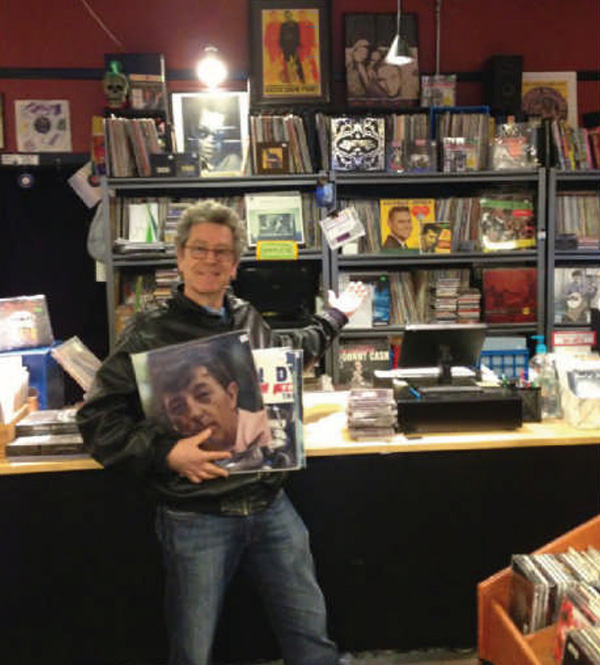
I was in Seattle last February to take part in one of the popular "Music Matters" events promoted by retailer Definitive Audio. Definitive's Mark Ormiston and Craig Abplanalp and their crew really know how to produce a memorable evening for both their customers and the manufacturers who fly in to demonstrate their gear. I was there to talk about . . . guess what?
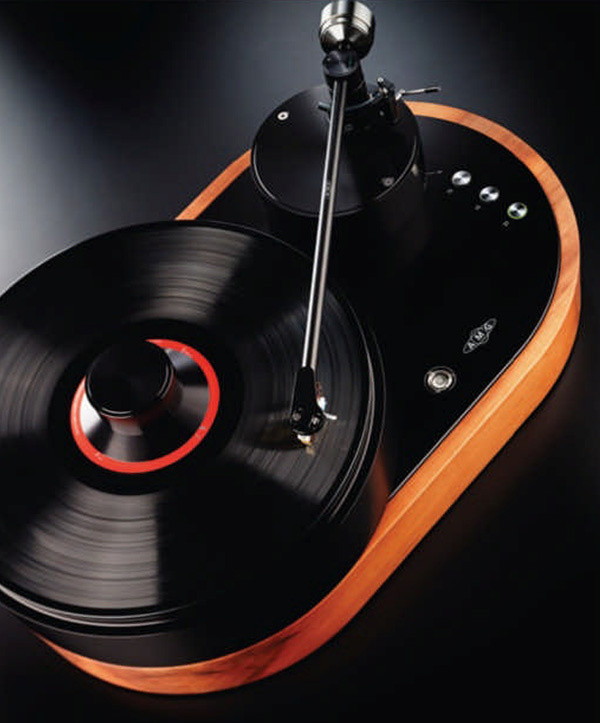
Analog Corner #217: AMG Viella 12 turntable and 12J2 tonearm, Teresonic Clarison Gold interconnect
There are incredible values in audio, and then there are incredible values. The ones that deserve italics are those like Pioneer's SP-FS52 floorstanding speaker, designed by TAD's Andrew Jones and recently reviewed.
Analog Corner #217: Sutherland Engineering Insight phono preamplifier
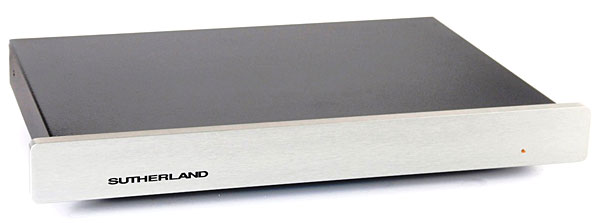
Veteran phono-preamplifier designer Ron Sutherland has been partial, of late, to battery power. Getting off the grid can produce superb results, as demonstrated by his Hubble phono preamp ($3800), powered by 16 alkaline batteries.
I favorably reviewed the Hubble in the February 2010 issue, and remember loving most everything about itparticularly its drop-dead-quiet backdrops, its solid, weighty bottom end, and its fully fleshed-out instrumental textures. I was less enthused by its somewhat soft, muted high-frequency transients, though of course tastes and associated gear will differ. I need more grit, particularly for rock; you may not.
Analog Corner #218: I've Been Everywhere, Man
In the old days, this column would have covered last May's High End show in Munich and T.H.E. Show Newport Beach. Today, live online blogging renders obsolete magazine reports that arrive in your mailbox months after the events. It also makes life difficult for a monthly magazine columnist. I wasn't home a good part of the month, so how much serious listening do you think I managed? But what a month!
Analog Corner #219: DSA Phono II preamplifier, Stein Music and Miyajima phono cartridges
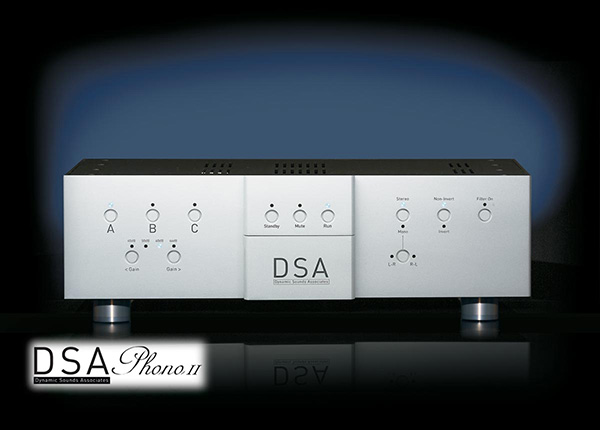
Shortly after the July 2013 issue of Stereophile hit the newsstands, I received an e-mail from audio restoration expert Doug Pomeroy, who specializes in the digital preservation of disc pressing metal parts, acetates, and 78s . . . His and my opinions about digital sound couldn't be more divergent.
Analog Corner #220: Rega's RP8 turntable Aims for Mass Extinction
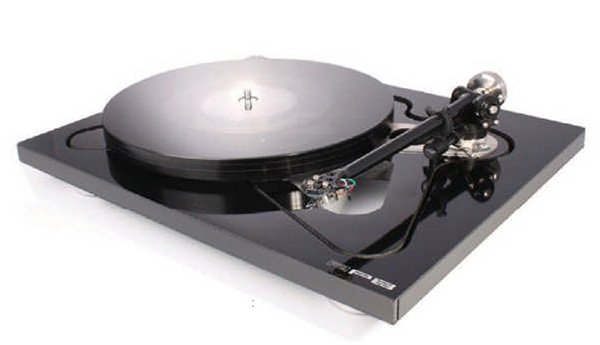
Rega Research sold more turntables in 2012 than in any of its previous 40-odd years of business, and is on target to do so again in 2013. How many turntables is that? I know but can't yet say.
Analog Corner #221: Trinity Electronic Design & Thrax Phono Preamplifiers
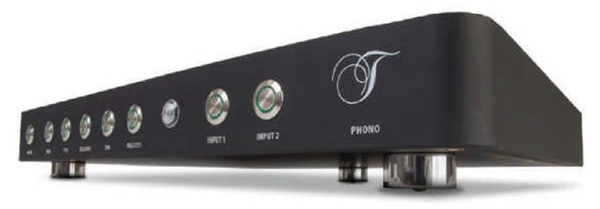
The quest for vinyl quiet seems, at best, quixotic. By "vinyl quiet" I don't mean "quiet vinyl," which we now reliably get from pressing plants like QRP, RTI, Pallas, and a few others. I'm referring to makes of phono preamplifiers who set as a primary design goal electronic "quiet," ie, an absence or minimum of electronic noise. A stylus coursing through the groove of even the quietest LP still produces a considerable amount of noise.
Analog Corner #222: The Thales TTT-Compact turntable & Simplicity tonearm
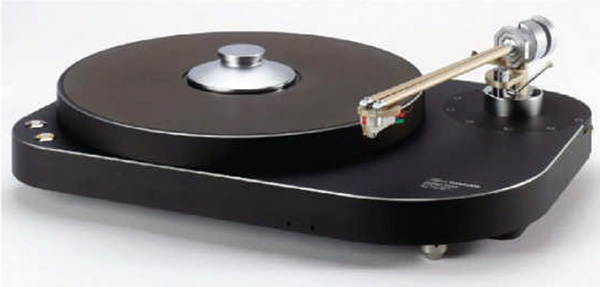
Though clearly built more for performance than for looks, the Thales TTT-Compact ($13,200), designed and built in Switzerland by Micha Huber, ranks among a handful of today's most elegant new turntables. Like the Spiral Groove SG 1.1 or the AMG Viella 12, the TTC-C, true to its name, is compact and self-contained, with its belt and built-in motor hidden under the platter.
That Huber was once a watchmaker is evident in every aspect of the densely packed TTT-Compact, which measures approximately 18" wide by 3.5" high by 12" deep. From the packaging and instructions to its muted, satiny finish, the TTC-Compact exudes sophistication of design and execution.
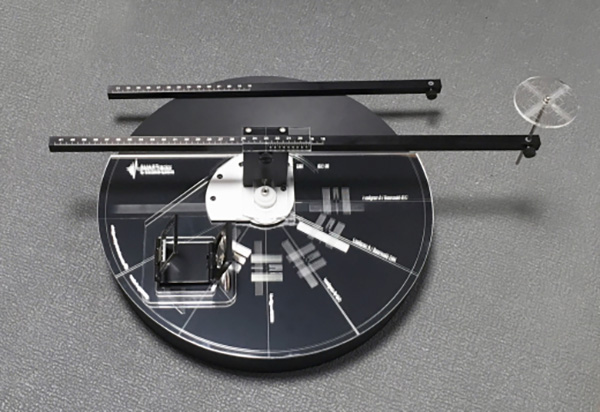
Analog Corner #223: Acoustical Systems SMARTractor & Hagerman Trumpet Reference Phono Preamp
On analogplanet.com you'll find coverage of my visit in November 2013 to the 10th annual Manila Hi-Fi Show, which took place the weekend of the devastating typhoon Haiyan (Filipinos call it Yolanda). Because the people I met there are such big Stereophile fans, I wanted to be sure to give them a shout-out in this column, too.
Despite the weather, which prevented audiophiles living on other islands of the archipelago from flying in for the event, at least 2000 managed to attend. These are passionate, enthusiastic audiophilesand the high proportion of young people, particularly among the vinyl buyers, was encouraging.
The greeting I received throughout the show was beyond my most vivid egomaniacal daydreams. I was treated so well that I don't know how to express my gratitude, other than to just say "Thanks"and get back to work.
Analog Corner #224: Lyra Etna MC phono cartridge

Is the high-performance audio industry stagnating? Are designers simply repackaging the past? Cynics claim so, but to me it seems that making that case gets harder by the day, as a parade of veterans continue to produce their best work.