

Analog Corner #225: Why, in 2014, Does Vinyl Continue to Grow?
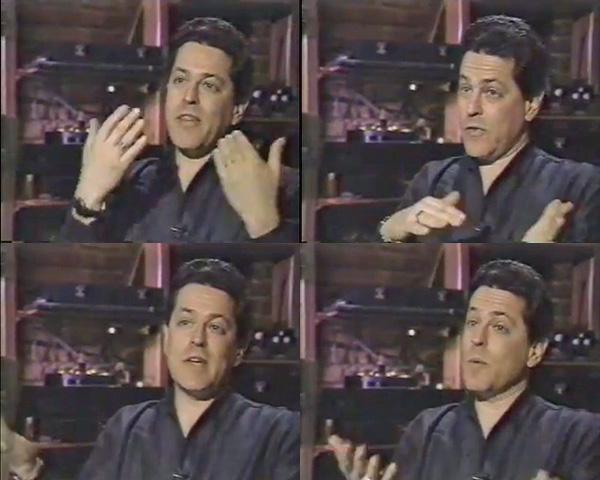
Michael Fremer advocating vinyl and analog on MTV in 1993.
Vinyl sales in America rose 30% in 2013, according to Nielsen SoundScan, which keeps a tally of recorded media sales. Because Nielsen SoundScan only skims the surface of the record retailing picture, missing considerable "nook and cranny" sales, the real number is probably far greater. The SoundScan numbers also omit sales of used vinyl, which are considerable.Analog Corner #226: VPI Classic Direct Drive Signature turntable
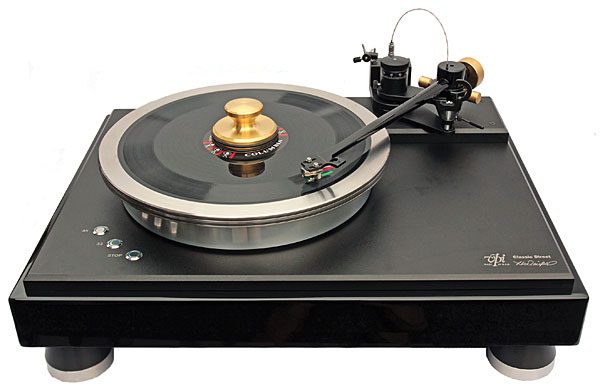
VPI Industries' Harry Weisfeld has tried, built, and marketed almost every known way of spinning a platter. He began in the early 1980s, before many recent turntable enthusiasts were born, with the belt-driven HW-19, and since then has produced rim-driven models, and 'tables with motors outboard or inboard, one or three pulleys, one or three belts, and platters of acrylic or aluminum alloy. But while Weisfeld has owned quite a few direct-drive 'tables, he'd never come up with his ownuntil now.
Analog Corner #227: VPI JMW Classic 3D 12" tonearm
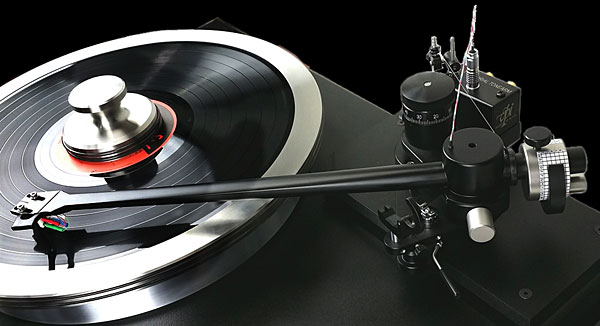
In 1995, Harry Weisfeld's son Jonathan was killed in an automobile accident. Jonathan was a charismatic young man whom I had come to knowa genuinely gifted artist and musician who, at the time of his death, was helping his father develop the tonearm that would be named for him: the JMW Memorial Arm. The design of the original JMW Memorial Arm focused on providing easily adjustable and repeatable VTA and SRA via a massive threaded tower that bolted to the plinth. The bearing point, on the other hand, sat near the end of a relatively long and not particularly rigid metal platform cantilevered off the VTA/SRA tower.
Analog Corner #228: A Challenge to Dogma, the ViV Laboratory Rigid Float tonearm
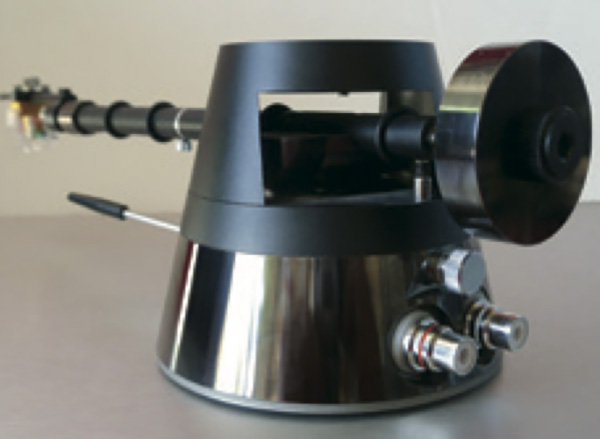
At the 2013 High End Show, in Munich, a tonearm designer displayed a pivoting tangential tracker. A nearly invisible length of monofilament wrapped around the arm's perimeter controlled the pivoting headshell of the box-girderlike arm.
It may very well have worked as promised, but was it practical? And with so many tiny moving parts, would it sound any good? I don't knowit was a silent displayand inquisitive attendees kept bumping the difficult-to-see monofilament, dislodging it from its track.
The odds weren't good that this contraption, however well intended, would ever get past the prototype stage, though I was going to look for it at the 2014 Munich show, in May. Sometimes, designers obsessed with one particular performance parameter lose sight of the forest for the trees.
The designer of ViV Lab's Rigid Float tonearm, Koichiro Akimoto, also had in mind an unusual design goal, based on his belief that the geometry of pivoted tonearms, as we know it, is wrong.
Analog Corner #229: Three Expensive Phono Preamplifiers, Phasemation, PBN, Qualia
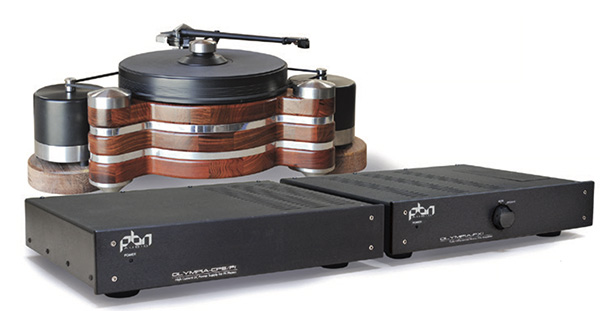
Other than being well built and high priced ($15,000, $22,000, $60,000), these three phono preamps have very little in common, in design or in sound. One has vacuum tubes, including a direct-heated 5U4G rectifier tube (the Phasemation). Two are solid-state (the PBN and Qualia). Two feature separate chassis for the left and right channels (the Qualia and Phasemation). All three have outboard power supplies. Two come from Japan (the Qualia and Phasemation), one is made in the US (PBN). All three are elegantly built, inside and out. Two are physically attractive, one is lab-grade butt ugly. One has a host of convenience features, including various equalization curves and three inputs (Phasemation). One offers no adjustability whatsoever (Qualia). One has two gain settings and multiple loading options (PBN). Two are designed to be used only with moving-coil cartridges, while the third (Phasemation) can also accommodate moving-magnets. One is fully balanced and dual- differential (PBN), two are not.
Analog Corner #230: Transfiguration Proteus MC phono cartridge

I've lost track of how many Transfiguration cartridges I've reviewed over the years. In all that time I've never met their designer, Immutable Music's Seiji Yoshioka, but every year he sends me an exceptionally tasteful holiday greeting card. I've never reciprocated. The truth isn't always pretty.
The Transfiguration cartridges I've reviewed, too, have always conveyed a midrange musical truth that hasn't been flashy or pretty. But it's always been honest and convincing, particularly of the reality of voices. If you said that the Transfigurations lacked character, you wouldn't be wrongunless you intended it as a criticism.
Analog Corner #232: HiFiction Simplicity II tonearm, Miyajima Labs Madake phono cartridge, Rogers High Fidelity PA-1A phono preamplifier
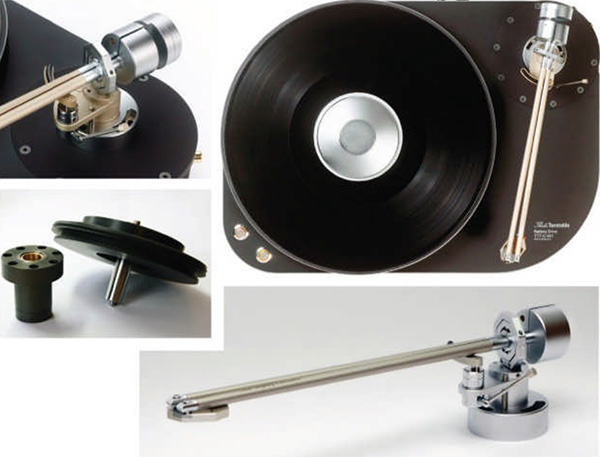
In my January 2014 column, I reviewed HiFiction's Thales TTT-Compact turntable and Simplicity tangential-tracking pivoted tonearm, an intriguing combo from Micha Huber, a talented Swiss watchmaker turned turntable designer.
The TTT-Compact's particulars, including its battery-powered motor and exceptional ease of setup, are described in detail in that review, which includes a link to a useful animation that shows how the design, as Huber says, "reduces the perfectly tangential tracking to pivot points, while the pick-up cartridge is taken and aligned on the Thales' Circle."
Suffice it to say that while the HiFiction tonearm is named Simplicity, its design is anything but.
Analog Corner #233: Pear Audio Blue Kid Thomas turntable & Cornet 2 tonearm
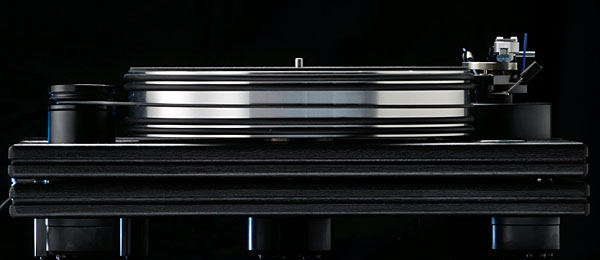
Pear Audio Analogue's Peter Mezek can keep you up all night spinning fascinating turntable tales. Had my mind not been numbed by Sunday evening, October 12, the last day of the 2014 Rocky Mountain Audio Fest, I might have insisted that he do just that.
Over dinner that evening he regaled Pear Audio's North American importer, Michael Vamos of Audio Skies, and me with turntable stories dating back to the late 1970s and the Linn Sondek LP12, which, until the early '80s, he distributed in Czechoslovakia. In the mid-'80s, Mezek was involved in the development and distribution of the Rational Audio turntable, designed for Mezek by Jirí Janda (pronounced Yeerzhee Yahnda), who died in 2000. For those of you old enough to remember, Janda, a founder of NAD, designed that company's 5120 turntable; among other features, it had a flat, flexible, plug-in tonearm that you could easily swap out, much as you can with VPI's current models.
Analog Corner #234: Do You Believe in Magic?
When a magician pulls a quarter from someone's ear or saws a woman in half, I believe in magic. I know it's an illusionnot realbut that doesn't mean that magic isn't real.
What's real is that the magician's illusion is believable because your eyes see it and, until sometime latereven if only a fraction of a secondyour brain doesn't argue. The best your brain can do is tell you, "Yes, you saw that, but you know it didn't happen."
Funny, then, how anti-audiophiles always claim that the ear is more easy to fool than the eye. Yet books have been devoted to cataloguing optical illusions. Do you believe that a railroad track's two rails meet at the horizon? Sure looks like it! The brain and ear are easily fooled, yet our very survival depends on their reliability. And the survival of an audio reviewer's credibility depends on his ability to be fooled as rarely as possible.
Analog Corner #235: Kiseki & Lamm
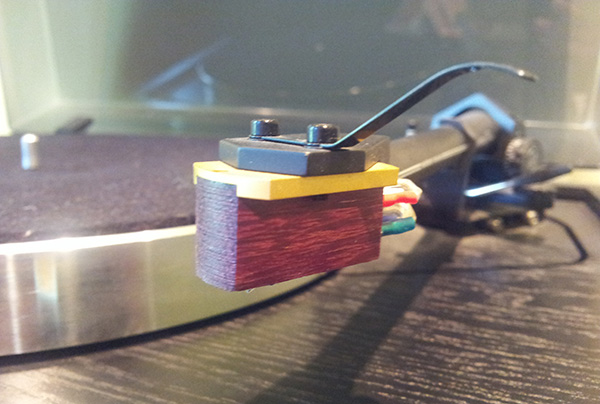
At the 2011 Consumer Electronics Show, Herman van den Dungen handed me a surprise: a brand new Kiseki Blue cartridge manufactured from new-old-stock parts. It wasn't mine to take homeonly to look at, to prove it was real.
Herman van den Dungen may not be a household name even for audiophiles, but his products are: his PrimaLuna electronics are exported from the Netherlands to the US and distributed by tube connoisseur and collector Kevin Deal for PrimaLuna USA.
In the 1980s, Kiseki was legendary among audiophiles, even if their cartridges' prices were beyond the reach of most. But the brand's history is less well knownand younger analog devotees may not have heard of Kiseki at all.