

Wadia 27ix & Wadia 270 transport
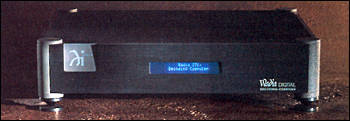
History teaches us that the full flowering of any social phenomenon takes place after the seeds of its destruction have been sown. That tourist magnet, London's Buckingham Palace, for example, was built decades after the English Revolution and the Restoration had redefined the role of the British monarchy as being merely titular, and made the elected Parliament the real seat of power.
Wadia Digimaster 2000 Mk.2 digital processors
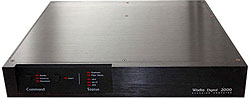 During my reviews of digital processors in the past year or so, I've made comparisons with the Wadia 2000 Digital Decoding Computer first reviewed by Arnis Balgalvis in Vol.13 No.1. I've felt that, as good as the 2000 is, other processorsmany costing less than the 2000's $8500 price tagare now superior.
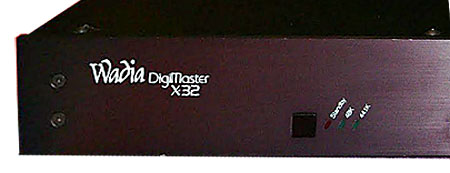
However, a visiting Wadia representative looked inside our sample and used the word "ancient" to describe its circuitry in relation to current production. In addition, I was never able to audition the 2000 with a glass fiber-optical interface, standard equipment on Wadia's transports. Similarly, the $2000 Wadia X-32 had undergone a minor circuit revision, including the inclusion of the glass optical input. Consequently, a follow-up of these two excellent processors seemed in order.
During my reviews of digital processors in the past year or so, I've made comparisons with the Wadia 2000 Digital Decoding Computer first reviewed by Arnis Balgalvis in Vol.13 No.1. I've felt that, as good as the 2000 is, other processorsmany costing less than the 2000's $8500 price tagare now superior.
However, a visiting Wadia representative looked inside our sample and used the word "ancient" to describe its circuitry in relation to current production. In addition, I was never able to audition the 2000 with a glass fiber-optical interface, standard equipment on Wadia's transports. Similarly, the $2000 Wadia X-32 had undergone a minor circuit revision, including the inclusion of the glass optical input. Consequently, a follow-up of these two excellent processors seemed in order.Wadia Digimaster X-32 digital processor
During an Audio Engineering Society meeting where a former colleague of mine was giving an arcane technical discussion of the optical considerations of data retrieval from a Compact Disc, a longtime AES member whispered to me: "What happened to the good old days of AES meetings when we talked about things like tape bias and saturation?"
Wadia Digital 1000 Decoding Computer
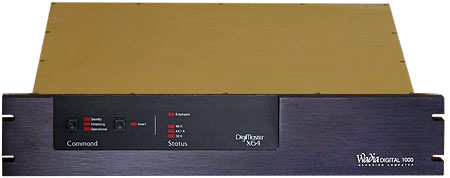
Rather a mouthful, the name of this digital decoder is derived from that of the designer, Robert Wadia Moses. The "computer" part of the title relates to the custom digital filter function generated by a set of 32-bit microprocessors: for simplicity's sake, I shall abbreviate the name to "WD1000." A more expensive version, called the '2000, sells for $6995, and carries some additional features and details. The resampling rate is increased to 64x in the '2000, with the additional optical and digital input switching and the main power supplies each contained in separate additional enclosures.
Wadia Digital 170iTransport digital iPod dock
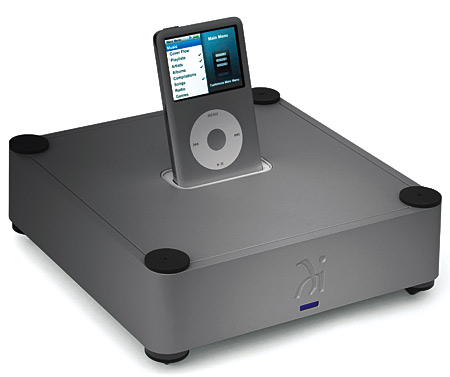
Last December, when Wadia Digital announced that it was releasing an iPod docking cradle that could access the digital signal before it had passed through the player's own D/A converter, many audiopundits were surprised. I was disbelieving, and nearly told Wadia's John Schaffer that he was shining me on. After all, Apple has tiptoed around the whole issue of consumers being able to digitally copy their iTunes files, going so far as to wrap its iTunes Music Store files in digital rights management (DRM) code.
Wattson Audio Madison LE D/A processor
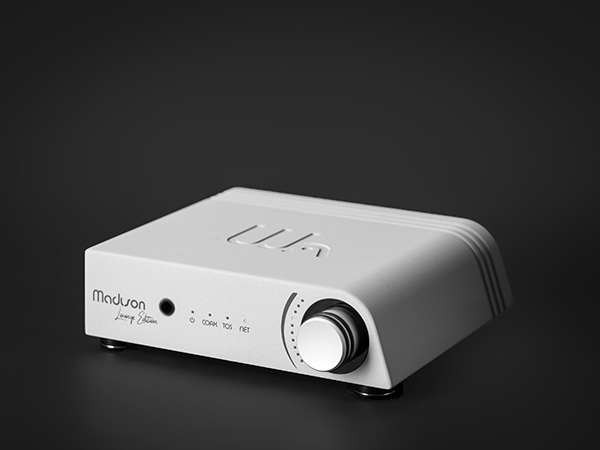
After it was delivered, I weighed the box containing Wattson Audio's DAC-equipped Madison LE Streamer on my bathroom scale. It was hardly bigger than a shoebox. It weighed 8.3lb.
When I opened the main box, I found two smaller boxes. The little brown one contained a fist-sized power supply in a chassis of extruded aluminum, with a label attached that said "AC/DC Hybrid Adaptor" next to a circle containing a sun cross symbol and the words "Designed, Engineered and Built in Switzerland" in capital letters circling its top edge. Below the circle was more writing: "Wattson Audioa CH Precision company."
The Wattson Madison LE's 2.3lb chassis was inside a larger white box with black block letters saying "Madison." Under that, written in cursive, were the words "Lounge Edition." The L in LE is for Lounge, not Limited as you might expect.
I've reviewed a few DACs but never one this small, light, and elegantly formed.
Wavelength Audio Proton USB D/A converter
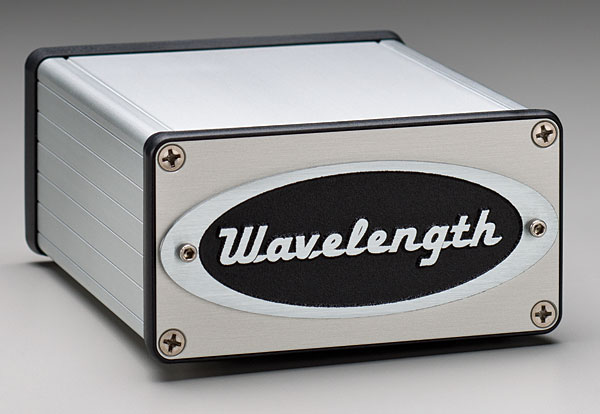
I don't remember where I was when the Berlin Wall came down, and I already don't remember what I was doing when Liz Taylor died. (I suppose I was busy not thinking about Liz Taylor.) But I do remember when USB-based computer audio became a serious medium: That was when Gordon Rankin, of Wavelength Audio, introduced asynchronous data streaming, with his proprietary Streamlength software. After that, things picked up speed.
Wavelength Cosecant v3 USB digital/analog converter
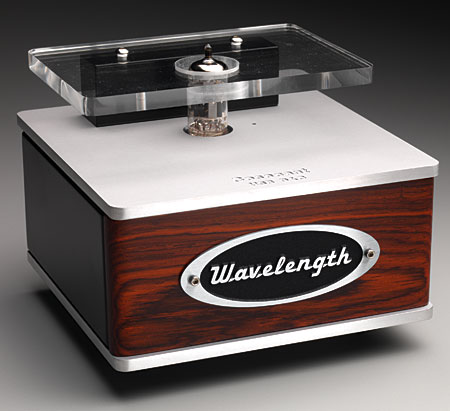
While my enthusiasm for the long-discontinued Sony">http://www.stereophile.com/cdplayers/708play">Sony PlayStation 1 remains high (see the July 2008 Stereophile), I freely acknowledge that not every high-end audio enthusiast wants a CD player with an injection-molded chassis, a Robot Commando handset, and a remarkable lack of long-term reliability: Yes, the Sony sounds wonderful, but sound isn't everything.
Weiss DAC202 FireWire D/A converter
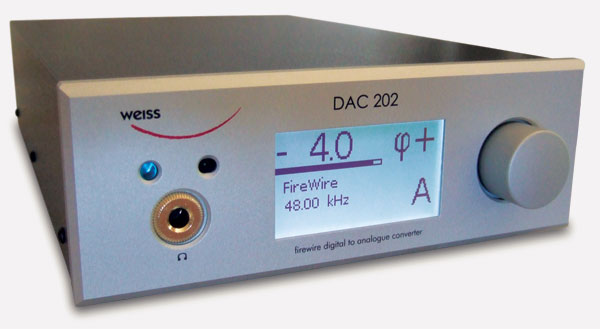
One of the better digital front-ends I've ever heard was demonstrated for me a number of years ago at the house of an audiophile friend: a Weiss Engineering combo of Jason CD transport and Medea digital-to-analog converter. That front-end remains in my mind as one of the only digital systems I've heard that could compete with the very best that vinyl has to offer while still doing what digital does best. In other words, there were warmth and musicality, staggering dynamics, and real silent backgrounds. When, recently, I saw that the Swiss company had come out with a DAC featuring onboard volume control, a headphone amp, and a FireWire input, I knew I had to give it a listen.
Weiss DAC204 D/A processor
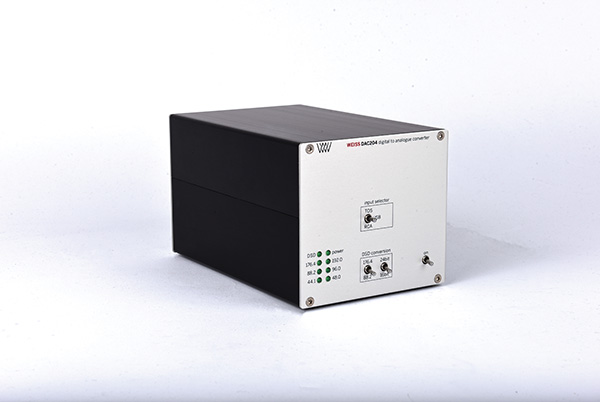
Weiss Engineering D/A processors are widely known for their high quality, in both home-audio and pro-audio circles. Over several Stereophile reviews, they have always measured well. Oh, and did you know they'd won a Grammy Award? Weiss Engineering founder and chief designer Daniel Weiss won the 2021 Grammy Award for Technical Merit for his pioneering work during the '80s and '90s designing digital equipment for mastering studios.