

Simon Yorke Designs Series 9 turntable & tonearm
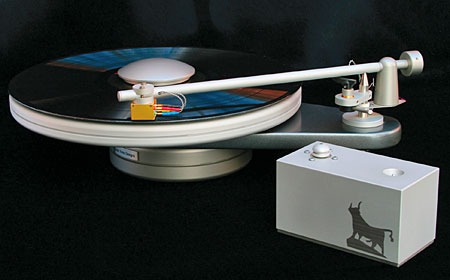
Simon Yorke is an artist, a machinist, an electronics wiz, and a political idealist. He's also an analog enthusiast who melds aesthetic and technical considerations into eye-catching, densely packed, compact record-playing devices that are ruggedly built and functionally elegant. His turntables' smooth, matte-gray, metallic finishes and efficient lines make them among the most visually pleasing ever made.
SME 3009 Series III tonearm
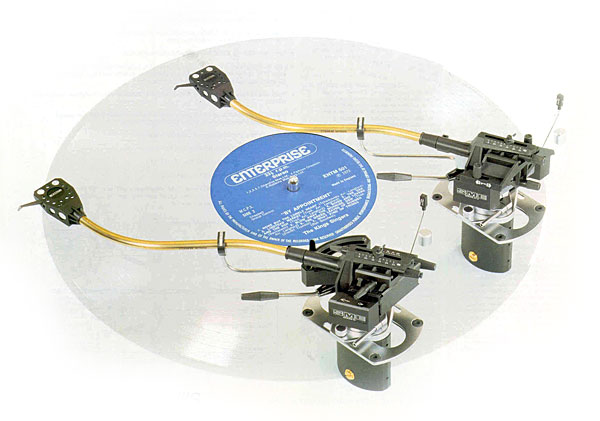
The third iteration of SME's 3009 is one of the most versatile tonearms around. For the same reason, it is also one of the most tedious to set-up because, since every parameter is adjustable, every parameter must be adjusted.
SME 3009 tonearm
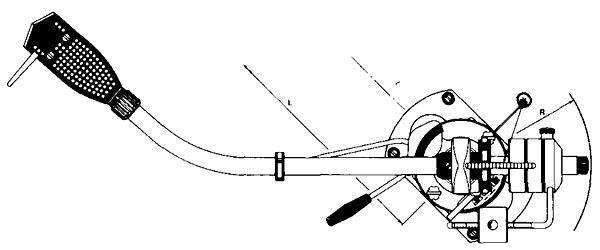
This is by no means a new product. It was available in a stereo version as far back as 1961, and apart from a couple of minor refinementsthe addition of a bias compensator and a new, lightweight shellit is still the same arm, and it still has the reputation of being the perfectionist's tonearm.
SME 60 record player
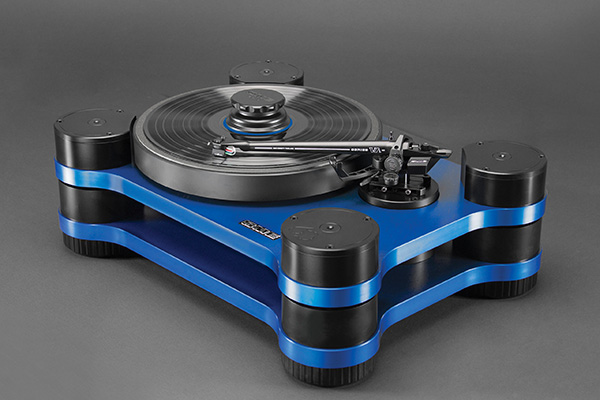
Creating a new flagship model is never an easy task for an audio company. A good designer will have already incorporated all his or her best ideas into the prior flagship. For a follow-up, you typically get a scaled-up version of what came before, incorporating the kind of improvements a bigger budget will allow.
SME's history is well-documented. The company started out, in 1946, as an engineering company for hire. In 1959, after a few years supplying parts for the scale modeling and various other high-tech industries, company founder Alastair Robertson-Aikman wanted a better tonearm for his personal use. He leveraged the capabilities of his small engineering company to create what eventually became the legendary 3009 and 3012 tonearms. The reputation of the new arms spread quickly, and from the mid-1960s through the 1970s, SME dominated the high-end tonearm market. SME's corporate slogan was The Best Pick-Up Arm in the World, and few people at the time would have challenged that claim.
SME Model 20/12 turntable & 312S tonearm
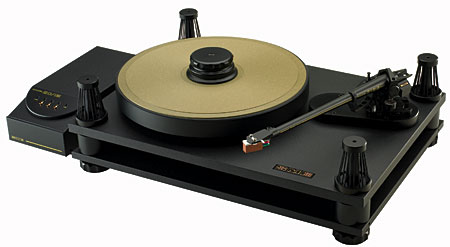
Much has happened in the analog world since I reviewedhttp://www.stereophile.com/analogsourcereviews/796">reviewed; SME's flagship Model 30/2 turntable for the March 2003 Stereophile (footnote 1). Back then, spending $25,000 on a turntable (without tonearm) was an odd extravagance intended only for those seriously committed to the format, and who already owned large LP collections. Although new LPs were being pressed in growing numbers, the resurgence of vinyl was still spotty, and the long-term prognosis for the old medium remained in question.
SME Series V tonearm
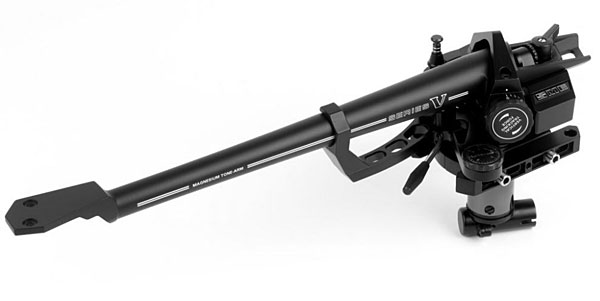
Once upon a time, SME made "the best tonearm in the world." That claim may have been justifiable through the 1960s and early '70s, but then something happenedSME failed to keep pace with their competition in coping with the increasing popularity of low- to medium-compliance, highish-mass, moving-coil cartridges. I had just about written SME off as a serious high-end company when, at the 1984 Summer CES, I saw the first prototype of the Series V.
Spin Doctor #13: Acoustic Signature Verona NEO turntable, TA-5000 NEO, TA-7000 NEO tonearms, Ultra Carbon TC-40 record weight
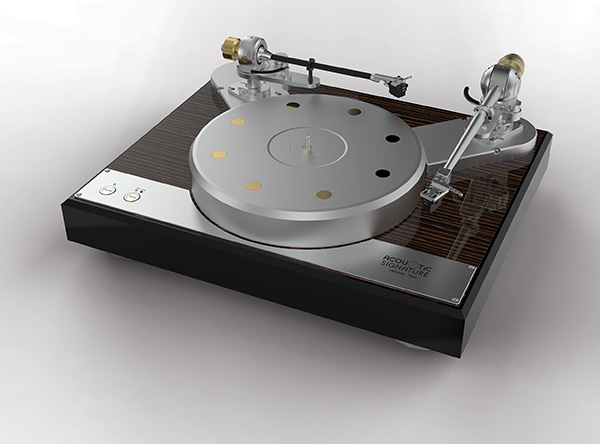
I sometimes joke about how audio designers create products that resemble themselves, not just in how they look, but also in the design approach used, and especially the way they sound. So, we have tall, cool, pragmatic Scandinavians making gear like the lean, elegant Børresen loudspeakers, while the Italians build luscious curvy equipment endowed with natural wood and leather, like Sonus Faber speakers and Unison Research amplifiers. Continuing this blatant stereotyping, we have Acoustic Signature founder Gunther Frohnhöfer, a stout German known for creating precision-built turntables that are as solid-looking as he is.
When I visited the Acoustic Signature factory in 2023, I watched as they hewed massive slabs of aluminum into beautiful, heavyweight turntables. This approach is the opposite of the lightweight-but-rigid philosophy embraced by Rega, and while the resulting performance has different strengths, I would argue that it is at least equally valid. As with Rega, Acoustic Signature products have a purposeful simplicity, in a way that would allow a nonaudiophile to instantly recognize what their function is.
Spin Doctor #17: Paging Dr. Löfgren, ViV Laboratory's Rigid Float 9ha tonearm
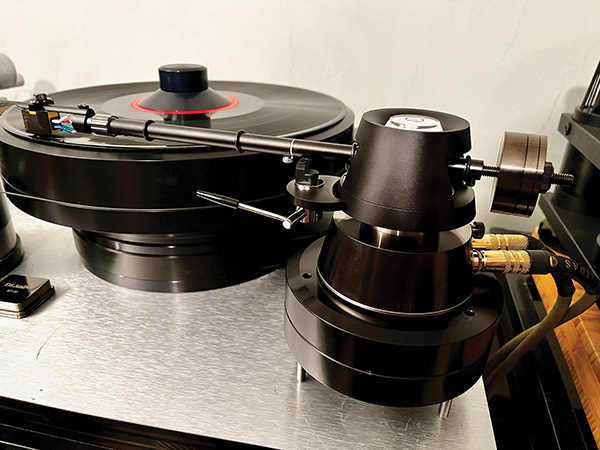
It started one evening when I was killing time watching YouTube videos and stumbled across a 2017 talk given by Jonathan Carr, Lyra's brilliant cartridge designer (footnote 1). After discussing his design and Lyra's manufacturing processes for about 18 minutes, Carr opens the floor to questions. Someone asks which of the many cartridge setup parameters he feels is the most important. I was floored when the first thing Carr said was that "horizontal tracking error is not very important at all." What? I couldn't believe I was hearing this from the guy who writes owner's manuals with super-specific specifications, like tracking force measured to a 100th of a gram and loading recommendations with wide but oddly specific ranges like 97.6 to 806 ohms. Did he really believe that the tonearm geometry calculations of Löfgren, Stevenson, et al, weren't such a big deal?
For decades I have painstakingly used the best tools available to perfect these settings with every cartridge I install; now a guy whose opinion I respect deeply is saying it's not very important.
Spin Doctor #21: the Kuzma Safir 9 tonearm
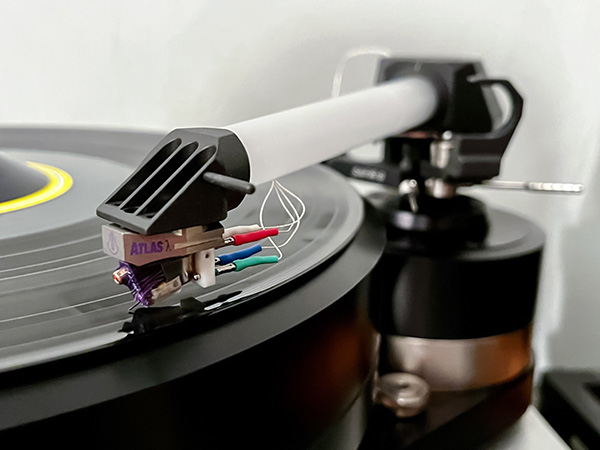
The British audio scene from the late 1970s through the mid-1980s was pretty strange. Audio as a hobby was a big deal, with widespread appeal to a much younger crowd than today. Audiophiles were guided by a flurry of what my friends called "hi-fi pornos," audio magazines that filled the racks at the newsagents.
Far more than you see today, there was a strong nationalist bent, with some writers displaying an open bias against anything that wasn't British. Magazines' editorial departments presented readers with a clear, specific doctrine of how a system should be built and what components readers should acquire.
As a schoolboy with no system of my own, I lapped up these suggestions, and when I returned to the US in 1980 to attend university, I was finally able to start building a system that conformed to the system-building rules that had been drilled into me.
Spin Doctor #26: The Sorane TA-1 tonearm and the Ortofon MC 90X phono cartridge
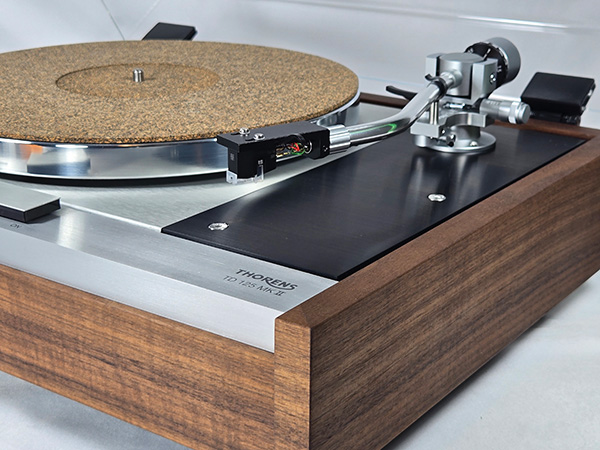
Photo by Dave Archambault@vinylnirvana.com.
A friend who sells high-end audio gear once pointed out that people who shop for separate tonearms are very different from those interested in phono cartridges or turntables in general. If you think about it, this makes sense. Almost everyone buying a new turntable needs a cartridge to go with it, and most turntables come equipped with a tonearm. Tonearm shoppers are more avid enthusiasts than general consumers.
It wasn't always that way. In earlier days of high fidelity, 60 or more years ago, people putting together a cutting-edge phono playback system would typically buy what was known as a motor unit: a Thorens TD 124, Garrard 301, or a few years later the Garrard 401 or Technics SP-10. They would match it up with a tonearm from a company like SME or Ortofon.