

Listening #197: Simon Brown & The Wand tonearm
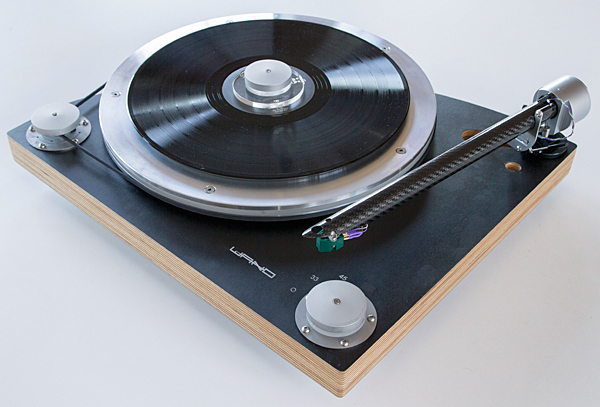
There's a noise I make when I'm having trouble with something inanimate: a deep, growly huff that starts in my diaphragm and comes out in one or two quick, staccato bursts. I huff this huff when I drop a tool or can't budge a seized bolt or the bottom falls out of a trash bag. It annoys my family and scares my dog.
I made that noise at least a half-dozen times while installing and setting up the Wand, a unipivot tonearm designed and manufactured by Design Build Listen Ltd., in Dunedin, New Zealand.
Listening #67
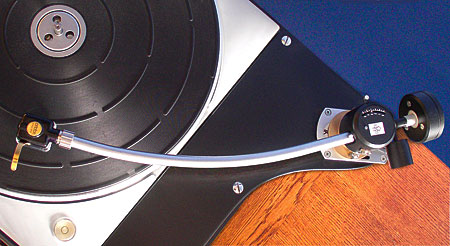
I can't help wondering: how did the mainstream audio press, cheered Dynaco and Marantz and McIntosh and Quad for switching to transistors a couple of generations ago, greet the first tube-revival products from Audio Research and the like? What was the reaction when moving-coil cartridge technology, considered all but dead by the early 1970s, became the perfectionist hi-fi norm just a few years later? And what would the same people make of the fact that a high-mass, transcription-length pickup arm—with interchangeable pickup heads, no less—is one of the most recommendable phono products of 2008? The mind boggles.
Listening #87
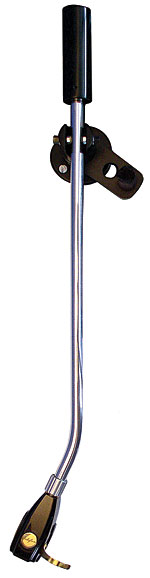
Even katydids are supposed, by some, to drink.—Shirley Jackson, 1959 (misheard)
MoFi Electronics MasterDeck turntable
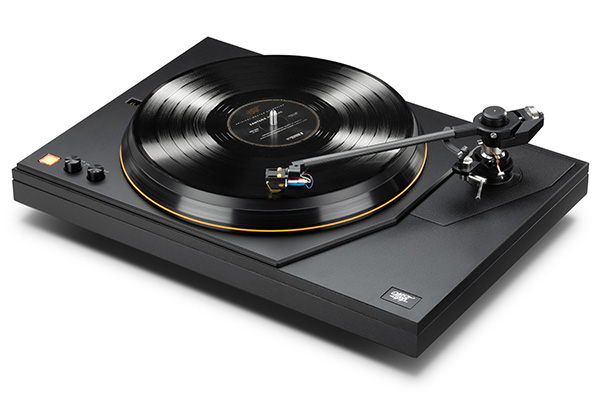
Perhaps the most intriguing aspect of the MoFi Electronics MasterDeck turntable ($5995), as the brainchild of Allen Perkins in his role as MoFi's Chief Analog Designer, lies in the question of how his background as a jazz drummer has shaped his approach to turn table design. How does the rhythmic sensibility of a percussionist translate into the meticulous engineering of a turntable?
"It's a little complicated," Perkins wrote over email. "Being a drummer, I am sensitive to timing in music, so it makes me sensitive to problems. However, it does not provide any direction for solutions. It could be seen as an annoying awareness as a listener, like perfect pitch. In my case, it is an advantage because I love to solve problems, in general, so I persevere and have a built-in sense to assess what I've done."
Naim Aro tonearm
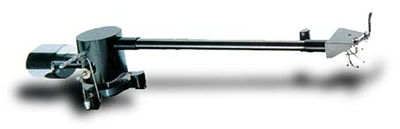
When I was visiting Santa Fe last Easter (footnote 1), one of the subjects I raised with JA was Naim's ARO tonearm. This unique unipivot design has languished in Class K of Stereophile's "Recommended Components" listing for far too long. JA explained that the regular reviewers have quite enough to do, thank you, just keeping up with speakers, electronics, and especially digital. The esteemed Martin Colloms is happily using an ARO on his Linn Sondek, and wrote a review for the English magazine Hi-Fi News & Record Review in May 1991, but since there is a very small but nevertheless vociferous overlap in US readership between the two magazines, it is Stereophile policy not to have two reviews by the same reviewer of a given piece of gear.
Naim ARO tonearm & Armageddon turntable power supply
Stuff that works, stuff that holds up/
The kind of stuff you don't hang on the wall/
Stuff that's real, stuff you feel/
The kind of stuff you reach for when you fall.
The kind of stuff you don't hang on the wall/
Stuff that's real, stuff you feel/
The kind of stuff you reach for when you fall.
Ortofon RS-212 tonearm
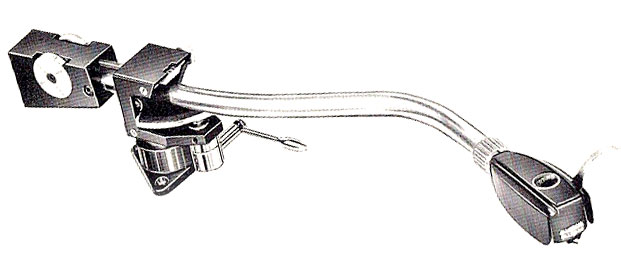
The RS-212 is one of the most impressive-looking tonearms we've seen in many a moon. Our first reaction to it, in fact, was much the same as our reaction to the first big, professional Ampex tape recorder we ever saw: it reminded us of one of those precision-engineered and cleanly styled electronic devices you see in hospitals and industrial laboratoriesdevices which make no attempt to cater to the current fashion in interior decorating or depth-researched consumer preferences, but which are designed simply to do a job neatly and efficiently. This arm, in short, is practically guaranteed to impress your Magnavox-oriented friends with the quality of your phono system, no matter how oblivious they may be to its actual sound.
Pear Audio Blue Kid Howard turntable & Cornet 2 tonearm
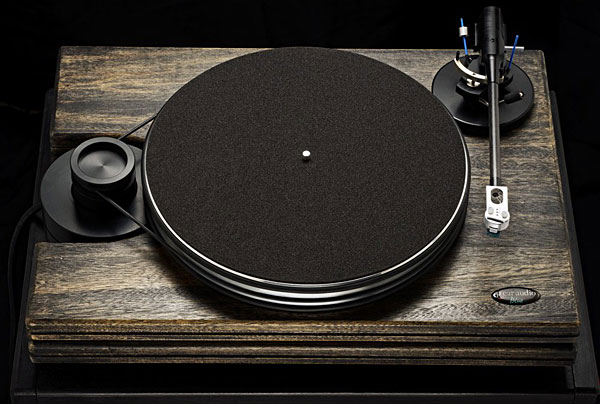
There's nothing new under the sun, or so we are told. Nevertheless, in the early 1990s, a British designer named Tom Fletcher upset the audio status quo with a turntable that combined otherwise-familiar elements in a manner that was, at the very least, new with a lower-case n. Fletcher's product, the Space Deck, was perhaps the first original design in British phonography since the Roksan Xerxes of 1985; and his company, Nottingham Analogue, went from nothing to something in no time at all.
Rega P3-24, RB301, & Elys 2 turntable, tonearm, & phono cartridge

It's now been eight years since a Rega P3 turntable passed through my listening room. While the new P3-24 superficially resembles the P3 (and virtually every other Rega 'table), the company has made some significant changes, including upgrading to the high-quality, low-voltage (24V), electronically adjusted motor used in the more expensive P5, P7, and P9. As in those models, an electronic circuit trims the phase angle of the P3-24's motor coils, thus substantially reducing motor vibrations. In 1998, during a factory tour, a Rega engineer demonstrated the circuit's effectiveness to me. As he adjusted the circuit board's pot, vibrations from the motor dramatically decreased, until it was difficult to tell if the motor was spinning or not. Back then, this "hand-trimmed" motor technology was available only in the P9. The P3-24 uses a less sophisticated version of the same basic idea.
Rockport Technologies System III Sirius turntable and tonearm
Andy Payor hurls a briefcase full of engineering and scientific mumbo-jumbo at in an attempt to justify the $73,750 price of the latest and greatest edition of his Rockport Technologies turntable, but really—isn't this all-air-driven design a case of analog overkill? After all, defining a turntable's job seems rather easy: rotate the record at an exact and constant speed, and, for a linear tracker, put the stylus in play across the record surface so that it maintains precise tangency to a radius described across the groove surface. By definition, a pivoted arm can't do that, so the goal there is to minimize the deviation. That's basically it. Right?