

Spin Doctor #29: Static, the Wand Master Turntable & Dark-Light tonearm, and Very Large Choirs

The largest regularly scheduled choral singing event in the world is the Estonian National Song Festival, or Laulupidu, which comes around about once every five years in Tallinn, Estonia's capital city. The numbers are pretty mind blowing.
Spin Doctor #35: The Supatrac Nighthawk tonearm
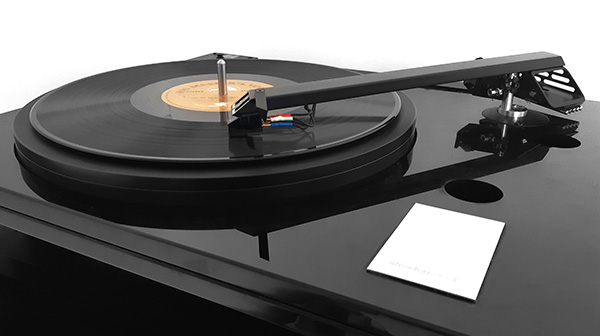
When people ask me what I do for a living, I reply that I'm a turntable setter upper. That seems to me like it should be descriptive enough, but it typically results in follow-up questions that have me explaining a whole audiophile subculture that few nonaudiophiles even realize exists.
Spin Doctor #38: the Sorane ZA-12 tonearm and Parks Audio Waxwing phono preamp
In 1936, the great blues pioneer Robert Johnson recorded his song "Cross Road Blues," which many interpret as his telling the story of how he went to a crossroads and fell to his knees to make a deal with the devil, selling his soul in exchange for musical genius.
Spin Doctor #7: Korf Audio TA-SF9R tonearm, Zu Audio DL-103 Mk.II Rev B phono cartridge, Gates CB100 transcription turntable
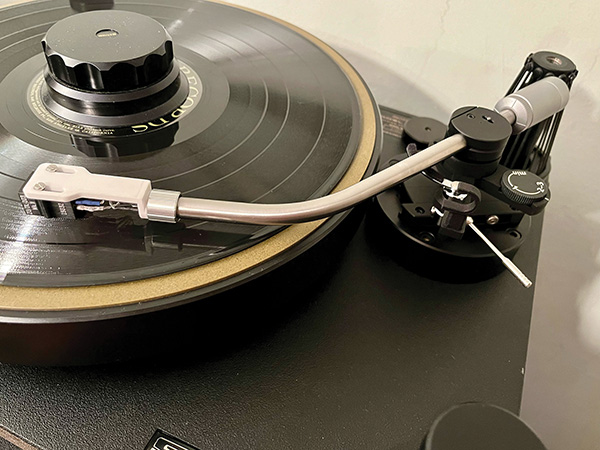
About four years ago, the stand-alone tonearm market went through a bit of a crisis. First, in December 2019, SME announced that it would stop selling tonearms separately, effective immediately. From that point on, SME tonearms would be available only in combination with SME turntables. . .
Five months later, in May 2020, we received the second blow in this double whammy of bad tonearm news. That's when the Ichikawa Jewel Company of Japan, maker of Jelco tonearms, announced without warning that they were shutting down operations, closing their doors for good. They blamed a combination of an aging workforce, worn-out tooling that needed to be replaced, and the coronavirus pandemic. . .
We lost two key players all at once, but it's not as if we suddenly had nowhere to turn for tonearms. Turntable manufacturers like Acoustic Signature, Clearaudio, Origin Live, Pro-Ject, Rega, and VPI all sell their tonearms separately . . . A number of smaller tonearm specialists have popped up in recent decades: Acoustical Systems, Graham, GrooveMaster, Kuzma, Reed, Schick, Schröder, and at the ultrahigh end, Swedish Analog Technologies. Now we can add Korf Audio to the list.
Spiral Groove Centroid tonearm
Spiral Groove's new Centroid tonearm ($6000) arrived just a few days before press time, so it would be risky to say anything definitive about it. But I will take that risk: using the system described in my">http://www.stereophile.com/turntables/spiral_groove_sg2_turntable/">my review of the SG2 turntable, this may be the best tonearm I've heard. Its sound is different in ways that will open people's ears, and I predict that it will affect the design of every tonearm from now on. The Centroid's design deserves and will await full coverage in its own review, but here are the basics: It's a fluid-damped unipivot design unlike any other that gives the user fine adjustment of all relevant parameters.
Spotheim La Luce turntable and SpJ tonearm
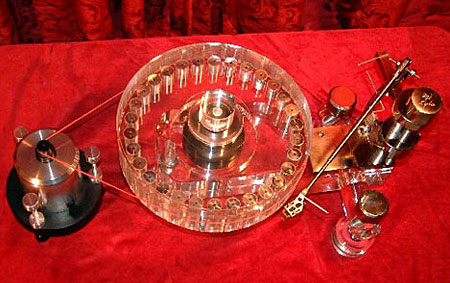
The La Luce turntable's elegant form usually stops audiophiles dead in their tracks. Then comes a long, low "Wow." I'm hardly immune myself. And that's not even considering the sound, which has always been wonderful, as it was in the Joseph Audio/Cardas room at CES '98.
Technics Grand Class SL-1200/1210GR2 record player
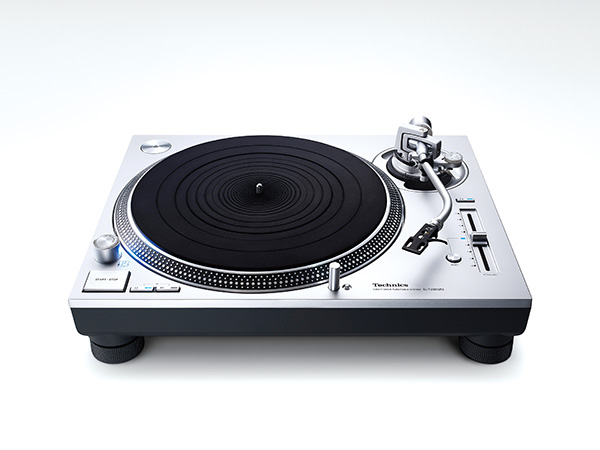
In the early 1980s, I worked in a pop band playing AM radio hits, grooving behind my Yamaha drums and Zildjian cymbals as sweat drenched my body and my ears rang. We danced. We pranced. My shiny silk jumpsuit led upwards to a 2"-high afro, which women ran fingers through in hopes of finding contraband smokes ... Then overnight, everything changed.
At the beginning of the previous decade, Technics had released the SP-10, the first direct drive turntable. That was followed in short order by the SL-1100. Clive Campbell, aka Jamaican-American DJ Kool Herc, pioneered the simultaneous use of two Technics SL-1100s, initially at his sister's birthday party in the Bronx, inspiring "block parties" (rigging streetlamps for power) and hip-hop culture. Kool Herc isolated drumbeats from records by James Brown (with drummers Clyde Stubblefield and John "Jabo" Starks) and the Incredible Bongo Band (powered by master studio drummer Jim Gordon), among others, creating "breaks" for heated dance-floor partying. Soon, Lace Taylor (aka Afrika Bambaataa) and Grandmaster Flash (The Message) took Kool Herc's inventions into the mainstream, and hip-hop went global.
The Tri-Planar Tonearm
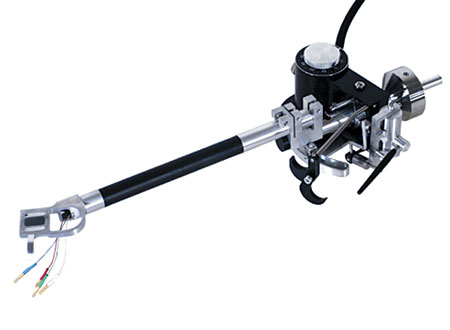
While brushing my teeth this morning, it occurred to me that there are significant similarities between a toothbrush and a tonearm/cartridge. The bristles would be analogous to the cartridge and the brush handle to the tonearm. In either case it is the business end of the device that does all the work. The bristles track the contours of your ivories in search of hazardous waste deposits, while the cartridge tracks the record groove transducing wall modulations into an electrical signal. I think that this is where the old adage came from: "A used cartridge is like a used toothbrush—nobody wants one!"
The Well-Tempered Arm
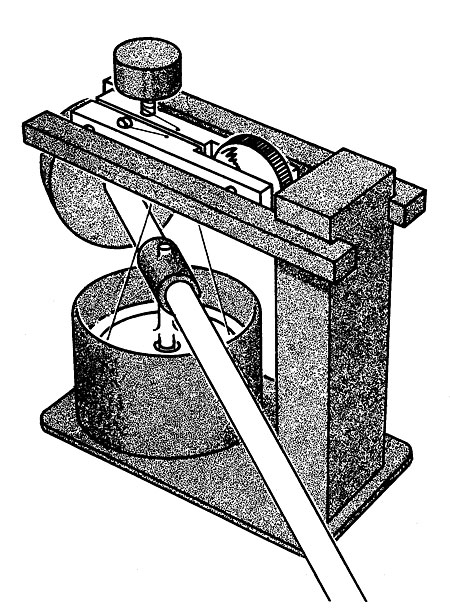
Remember Rube Goldberg? He was a cartoonist during the late 1920s to early 1950s who specialized in devising the most outlandish and ingenious devices ever conceived by man, before or since. A Rube Goldberg mousetrap, for example, would occupy an entire small room. In taking the bait, the mouse would tip a balance beam, dropping a steel ball into a gutter, down which the ball would roll to strike a paddle whose spin would wind up a string that hoisted a weight into the air until it reached a trigger at the top, which would then release the weight to drop onto the unsuspecting mouse. Splat!
Transcriptors Vestigal tonearm
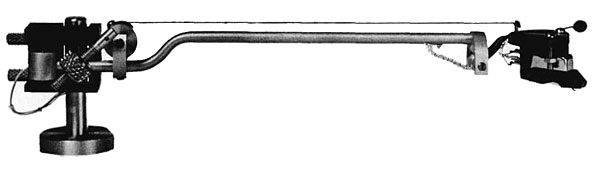
Because this is an unusual and controversial tonearm design, and has had astonishing claims made for its performance by the manufacturer, this in-depth report goes deeper and is longer than is usual for Stereophile. We will return to a reasonable balance of reportage in the next issue.
The manufacturer's initial advertisement for their mis-named "Vestigal" arm (footnote 1) was so laced with nonsense that we will admit to having been skeptical about the product from the outset.