

Listening #128
Writing is easy. See? I just did it. Three whole sentences, written between breakfast and lunch. (I had to pause and think about one of them.) Payday, here I come.
Listening #130
Whether the subject is hi-fi equipment, films, restaurants, power tools, or condoms (see the April 2005 "Listening"), reviewing should be off-limits to the perennially unhappy. I'm reminded of that dictum by the flap over the recent film Identity Thief, which was savaged by reviewer Rex Reednot because the film is weak, but because its star, Melissa McCarthy, is heavy. Reed, whose career as the Paul Lynde of film reviewing was punctuated by a starring role in a flop called Myra Breckenridge, mentioned in his review McCarthy's size not once but numerous times, thus exposing himself as a bullying hack who wields his harshest criticisms not when they are merited but as unconscious expressions of his own personal anguish. Hate speech of any sort is the crayon of the unhappy; that is doubly true of people who write for a living.
Listening #135

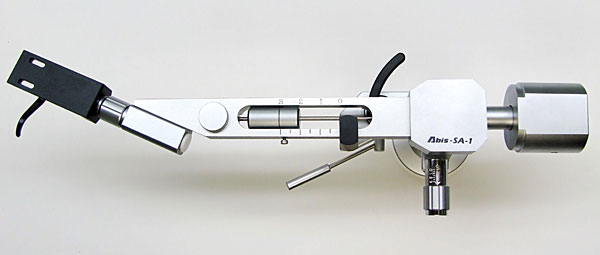
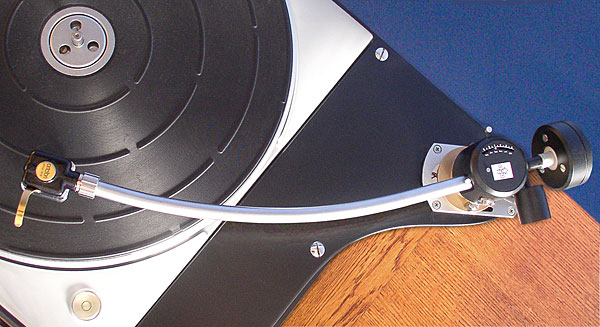
In the wake of my October 2013 "Listening" column and its negative take on the Pete Riggle Woody tonearm, I was surprised and gratified by the offer of another new arm: a gesture of trust not unlike sending one's children to a sleepover at Casey Anthony's house. The supplier was Phillip Holmes, of Texas-based Mockingbird Distribution, and the new tonearm was the Abis SA-1, the design and manufacture of which was commissioned by the Japanese firm Sibatech, itself a distributor of dozens of high-end audio brands, including Zyx, Mactone, Zerodust, and, perhaps most famously, Kondo.
Listening #142
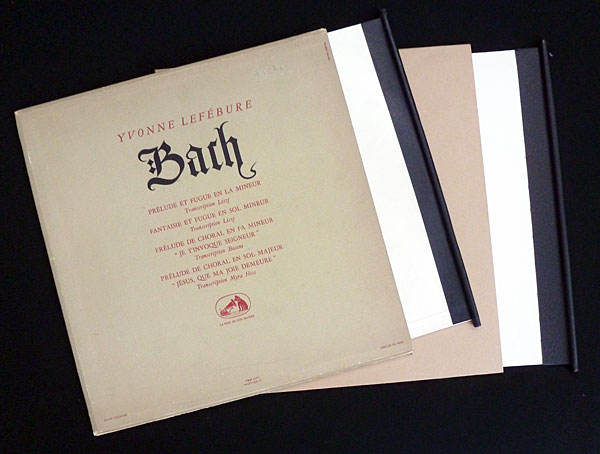
". . . with faithfully replicated artwork."
That's how a press release, dated June 16 of this year, described the manner in which the next wave of Beatles LPsmono releases claimed to be mastered direct from the original analog mixdown tapes, and not the 44.1kHz digital files that Apple Records and Universal Music Enterprises (which now owns EMI) considered good enough for their last wave of Beatles LPsare being packaged for sale. Hope, as Emily Dickinson once observed, is that thing with the feathers. Which, as we all know, evolved from the dinosaurs.
Listening #145
Kids, you tried your best and you failed miserably. The lesson is: Never try.Homer Simpson
Months ago, as we put together the most recent installment of "Recommended Components," Phillip Holmes, of Mockingbird Distribution, got in touch and asked if we would please remove from our list the Abis SA-1 tonearm, which Mockingbird distributes (and which I first wrote about in our March 2014 issue, footnote 1). As it turns out, Abis is making some changes to the arm, and Holmes didn't think it would be right to let the recommendation endure until we'd had a chance to try the new one.
Listening #151
Before hitting the Refresh key on last month's column, which was dedicated to the challenges one encounters when evaluating audio cables and other accessories, I'd like to share with you a true story: a cautionary tale, as it were, about the hazards of writing reviews for a living.
Seven or eight years ago, just as spring was returning to upstate New York, I made my annual trek to Montreal for Salon Son et Image: one of my favorite audio shows for a number of reasons, not the least being the fact that I can travel there by train.
Listening #170: Audio Origami UniArm
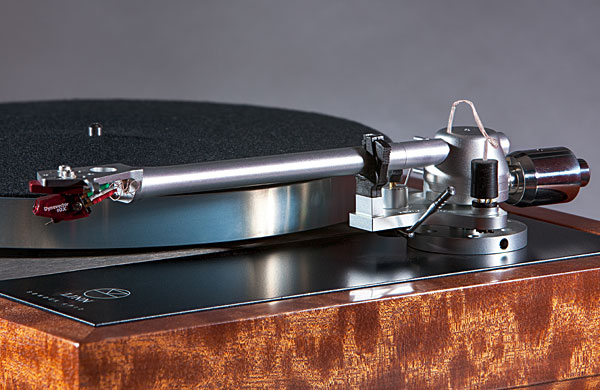
My first attempt at writing this piece began with a list of the Top Ten Audio Products I Wish Were Still in Production. Unfortunately, that proved unworkable. Although some of my selectionsthe Audio Research SP-6C preamplifier, the Stax ELS-F81 loudspeakerwere straightforward, it turned out that most of the others were burdened with complications. Examples: It's no longer feasible to mass-produce Bakelite headshells for a revival of the original Ortofon SPU or similar phono pickup. It's no longer possible to obtain the precisely correct vacuum tubes and other components required to return to production the Leak Stereo 20 amplifier. And I'm certain that a torch- and pitchfork-wielding mob would prevent the manufacture of an authentic Altec 604B drive-unit, unless those audio villagers were first allowed to "improve" the design.
Listening #180: Swissonor TA10 tonearm
Everything you know is wrong.The Firesign Theatre
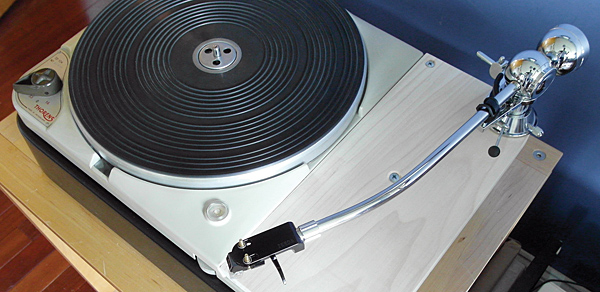
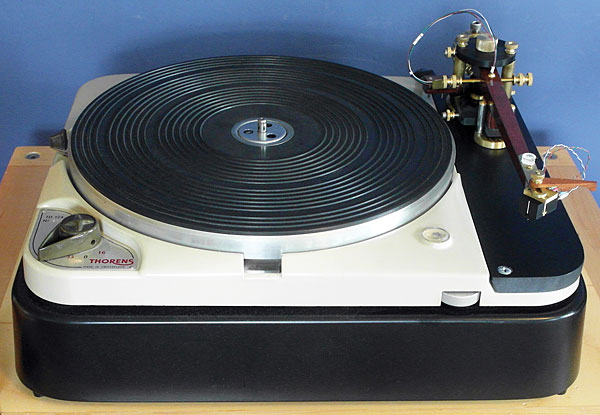
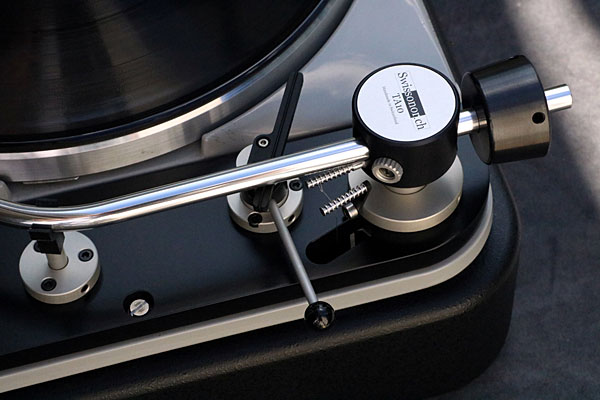
The Swissonor TA10, a contemporary tonearm designed for the Thorens TD 124 turntable (19591970), challenged me to set aside some of the things I thought I knew about phonography. On at least one of those counts, it succeeded.
Handmade in Switzerland and modeled on the Thorens TP 14 tonearm of the 1960s, the TA10 ($3990) improves on its predecessor with an effective length of 240mm, which Swissonor says is the longest that can be achieved with a stock TD 124 armboard (the TP 14's effective length was only 210mm), and replaces the non-universal plug and socket of the TP 14's removable headshell with the more common SME standard found on most contemporary headshells, pickup heads, and tonearms.
Listening #182: Audio-Creative GrooveMaster II tonearm
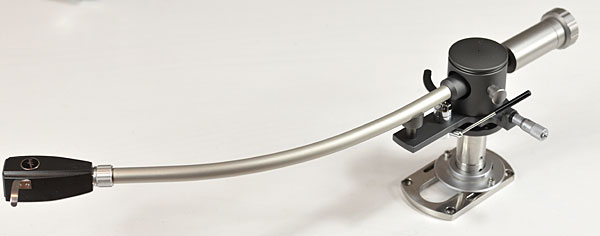
In my youth, I unwittingly trained myself in the art of deferred pleasure. I did this by investing my allowance in every mail-order product that caught my eyethings I saw in the back pages of the magazines and comic books I lovedthen settling in for a wait that always seemed interminable. This happened most often in summer months, when extra chores brought extra cash, and when school didn't interfere with keeping vigil at the mailbox.
Listening #194: Sorane ZA-12 tonearm
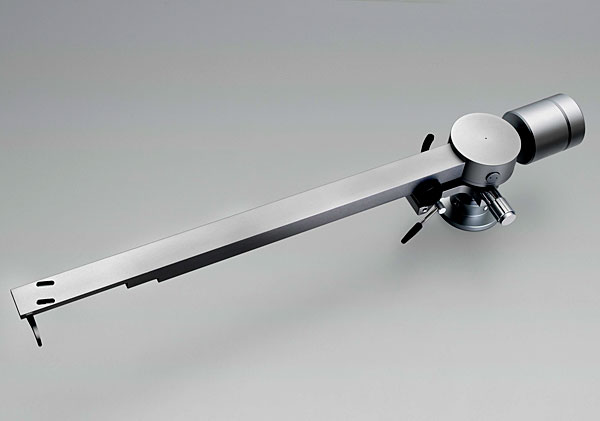
Peter J. Walker (19162003), founder of Quad Electroacoustics and designer of some of the most well-regarded products in the history of domestic audio, famously believed that a properly designed audio-frequency amplifier should have no sound of its own. As for suggestions that his Quad II amplifier (19531971) sounded better than most, Walker was unmoved: "We designed our valve amplifier, manufactured it, put it on the market and never actually listened to it."