

Music Hall Ikura LP player & Ortofon 2M Blue phono cartridge
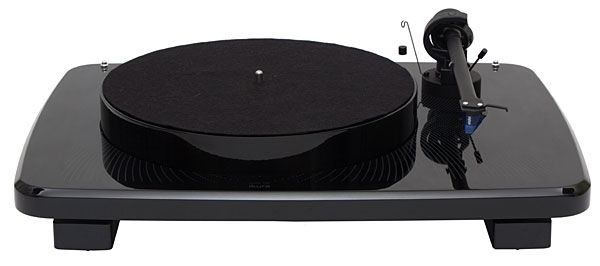
The call I received from Music Hall's Leland Leard surprised me: "Hey, Bob, I think you'd be the perfect guy to review our new Ikura turntable!"
Hmm. It had been four years since I'd reviewed a record player: Pro-Ject's Debut III, in the February 2010 issue. And with the surging popularity of vinylhell, Rough Trade NYC's enormous new record store, in the Williamsburg section of Brooklyn, even sells turntablesthe thought of a plug-and-play turntable-tonearm-cartridge combination for $1200 intrigued me. Sure, Lelandsend it on.
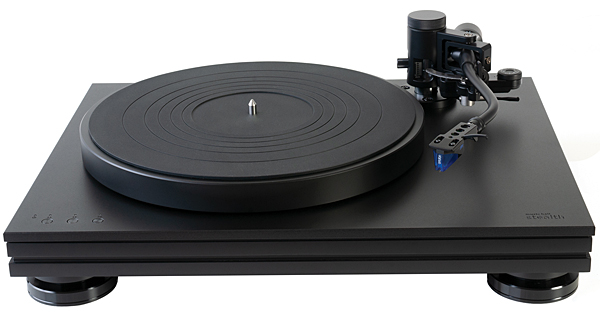
Music Hall Stealth record player
The earliest direct-drive record player I've discovered is Garrard's Model 201 from 1930. It only played 78s. In their advertising, Garrard claimed the 201 was the world's first "transcription turntable." It employed Garrard's latest in a line of what they called "prestige" motors: an AC-induction "Super Motor." Garrard described the 201's platter as "plush covered" and said it was "popular with HiFi enthusiasts and used by the BBC." The 201 was superseded by the 201A, which rotated at both 78 and 33 1/3 rpm. The venerable Garrard 301 that followed was an idler-drive design.
Oracle Delphi Mk.VI Second Generation turntable
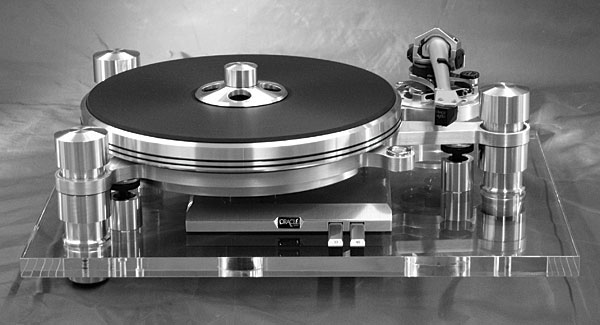
The stats are impressive: Quebec's Oracle Audio Technologies, formerly Trans Audio (footnote 1), has been in business for 37 years, during which they've sold nearly 11,000 Oracle Delphi turntables. That's not bad for a perfectionist turntableand especially not bad for a perfectionist turntable whose first and most estimable competitor, the Linn Sondek LP12, was well established by the time of the Delphi's debut, in 1979.
Oracle Delphi Mk.VI turntable

Thirty years have not diminished the beauty and elegance of Oracle's Delphi turntable. In my opinion, it still ranks among the best-looking turntables ever made. I bought an original Mk.I, used, in 1982, and very positively reviewed the Delphi Mk.V in the December 1997 Stereophile.
In its three decades the Delphi has undergone many upgrades both technical and aesthetic. Not surprisingly, so has the price. The Mk.II Delphi sold for $1250 in 1986; the Delphi Mk.VI with Turbo power supply and dedicated power cord now sells for $8500, which, in today's market, I think is reasonable for what you get. The review sample came with an Oracle/SME 345 tonearm ($3100) and a Benz-Micro Thalia high-output MC cartridge ($1700), for a total cost of $13,300or $11,600 for just 'table and arm.
Oracle Delphi turntable
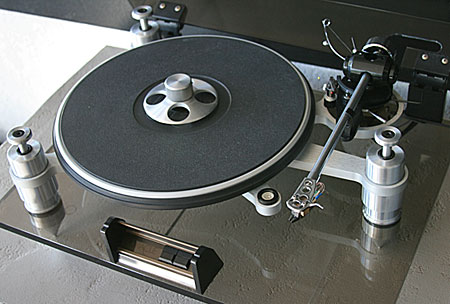
The Oracle Delphi Mk.II ($1250) is both a turntable and work of art. It is a visually stunning product, retaining a level of styling that, in my view, has never been equalled by any other audio component. It also adds enough sonic improvements to the original Delphi that it ranks close to the VPI HW-19, and is superior, in naturalness of sound quality, to the SOTA Star Sapphire.
Pear Audio Blue Kid Howard turntable & Cornet 2 tonearm
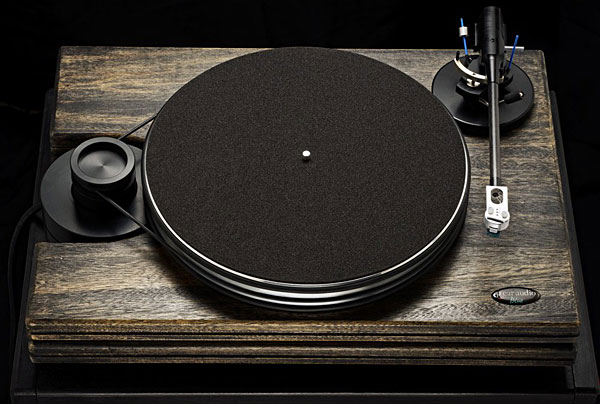
There's nothing new under the sun, or so we are told. Nevertheless, in the early 1990s, a British designer named Tom Fletcher upset the audio status quo with a turntable that combined otherwise-familiar elements in a manner that was, at the very least, new with a lower-case n. Fletcher's product, the Space Deck, was perhaps the first original design in British phonography since the Roksan Xerxes of 1985; and his company, Nottingham Analogue, went from nothing to something in no time at all.
Pro-Ject Debut Carbon EVO turntable
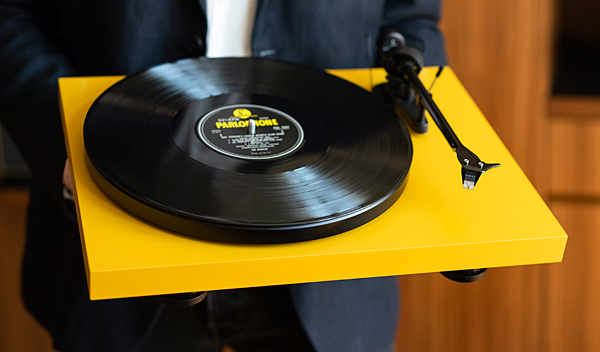
A few months ago, a friend asked me to recommend a record player. This friend knows and loves music as much as I do; when he visits, we spend our time drinking wine and listening to records. Last time, it was Scott Walker, Fela, Joni Mitchell, Jacques Brel, Burzum, and both glorious sides of The Chronic.
"How much do you want to spend?" I asked cautiously. His answer: $500, tops.
Pro-Ject Debut III record player
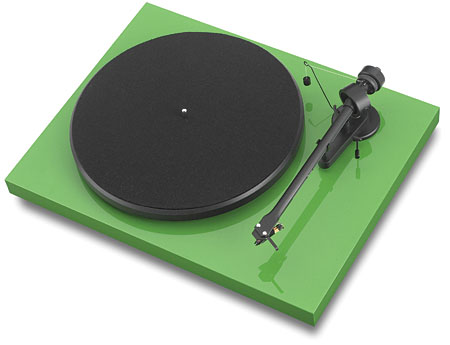
In the January 2010 issue of Stereophile I gushed">http://www.stereophile.com/integratedamps/marantz_pm5003_integrated_amp… effusively about the $450 Marantz PM5003 integrated amplifier. Not only was I impressed with the sound, build quality, and features of this very affordable component, but, intrigued by how it might be combined with other gear to build a complete entry-level system for about a thousand bucks, I began to ponder other entry-level components that might nicely complement it. My goal here, of course, is to inspire a new generation of young audiophiles. I felt a turntable would be a good place to start.
Pro-Ject Debut PRO record player
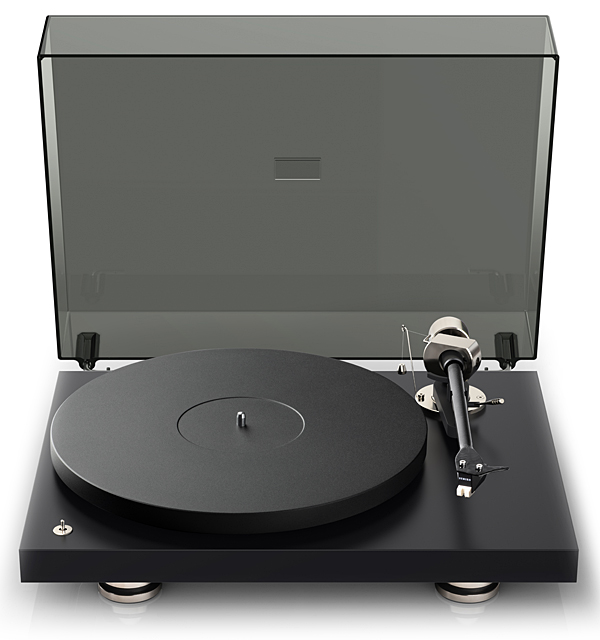
I enjoy few things more than setting up a turntable. Whether it's for myself or for a friendwhether it's a budget model with a layered MDF plinth and nonadjustable tonearm, or a megabuck, state-of-the-art behemothI relish the ritual.
Back in the day, I used to huff and puff, scream and shake, thanks to the heebie-jeebies I'd get when attempting to raise a turntable to ultimate performance. But with experience comes wisdom. My buddy and Sound & Vision contributor Michael Trei makes turntable setup look like child's play. I've learned by watching Mike that, when a turntable setup tries your patience, the thing to do is keep calm and carry on.
Pure Fidelity Harmony Record Player
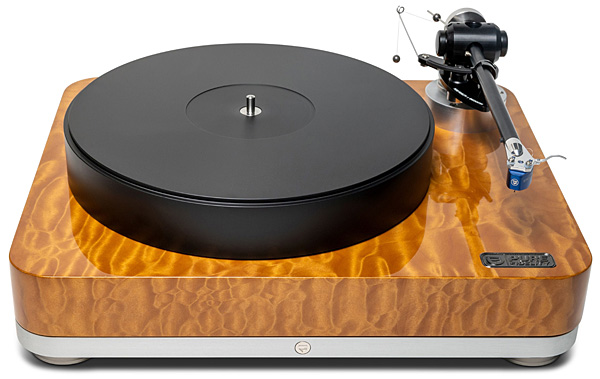
When scouring the labyrinthine halls of big audio shows for products to review in Stereophile, I use three main markers to determine which rooms to visit: a must-hear designation from Editor Jim Austin; a company or brand whose products always light my fire; and systems fellow Stereophile correspondents have described, in a text or an in-person conversation, as worth checking out. Other times, though, I just follow my nose.